
25 Innocence - The I Ching
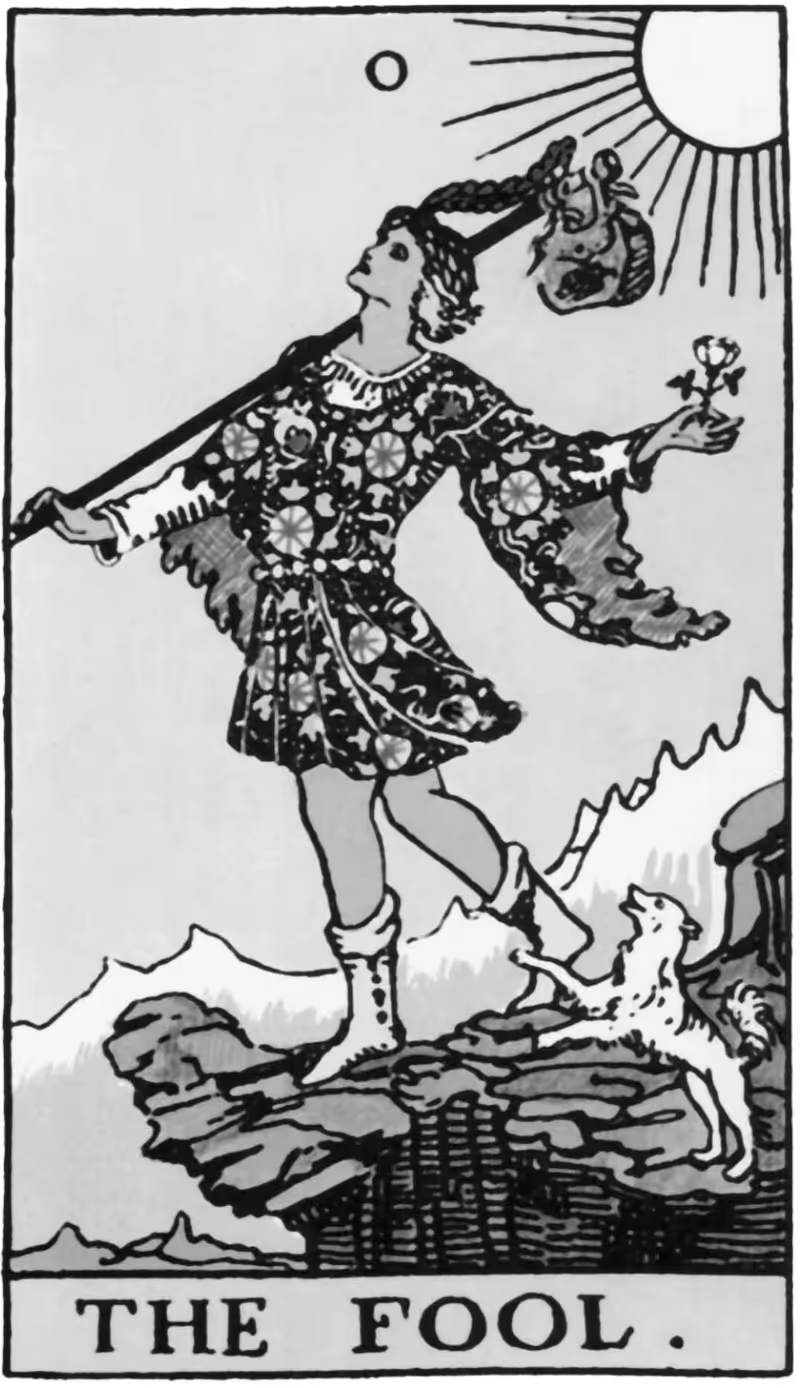
Here, we have the image of Thunder coming down from Heaven. The ideogram is directly “without wrong”, thus the image of natural innocence and foolishness. When lightning strikes a beautiful old tree or burns down a building, it is like an animal that stings or bites: there is no morality in nature. This is the state of Adam before the fall, who has not yet eaten the fruit of the Tree of Knowledge of Good and Evil.
Judgement: The Judgment gives us a self evident proposition in the fashion of a nursery rhyme.
1 As many of our troubles are self created, an innocent fool will often have less problems or, at the very least, will think less of them. Following nature, or God, makes life very easy.
2 This is a way of saying “Don’t count your chickens before they hatch”. It can also be understood as the high magick wisdom from Crowley’s Liber AL: I:44. For pure will, unassuaged of purpose, delivered from the lust of result, is every way perfect. It is only when thought comes into the equation that natural creativity is harmed:
3 Here is a more specified form of innocence. Rather than the natural state, this is innocence of a specific crime. Though it is this innocence that connects us spiritually to that greater form, consider the “Fool on the Hill” the innocent Christ punished unjustly.
4 Regrets only come when we lose innocence. An animal who does not understand wrong or punishment cannot regret its actions.
5 An innocent energetic being can often shake off wounds that would kill a burdened man. Think of animals with grievous wounds that go on living for years. It calls to mind another nursery rhyme:
6 When an innocent being enters the world, the world does its best to destroy them, for the world despises what it has lost. Wilhelm Reich believed that this is why Christ was crucified. A healthy, energetic person evokes bitter hatred in a sick person with a hardened heart. This is why children often face so much hardship and punishment.
A good illustration of this hexagram is Wagner’s Parsifal: a foolish boy, innocent and ignorant, shoots a swan not knowing any better, and when confronted by the Grail Knights asks “Who is Good?”, believing it to be a name. It is only after the witch Kundry kisses him that he learns all at once about good and evil, guilt and remorse. Yet he is still pure enough to raise the Grail and win back the Spear of Destiny. This is the movement from the Unconscious to the conscious.
We are born pure and innocent, and so too is nature and God. Yet, the image of lightning coming down from Heaven is a frightening one, just as Christ is terrifying in his innocence. Heraclitus saw God as an innocent child playing with blocks, building them up, and knocking them down. An innocent child can do “wrong” without knowing “wrong”.
We must reconnect with this natural, childlike innocence if we want to love the world and move with the Tao.