
29 Water (The Abyss) - The I Ching
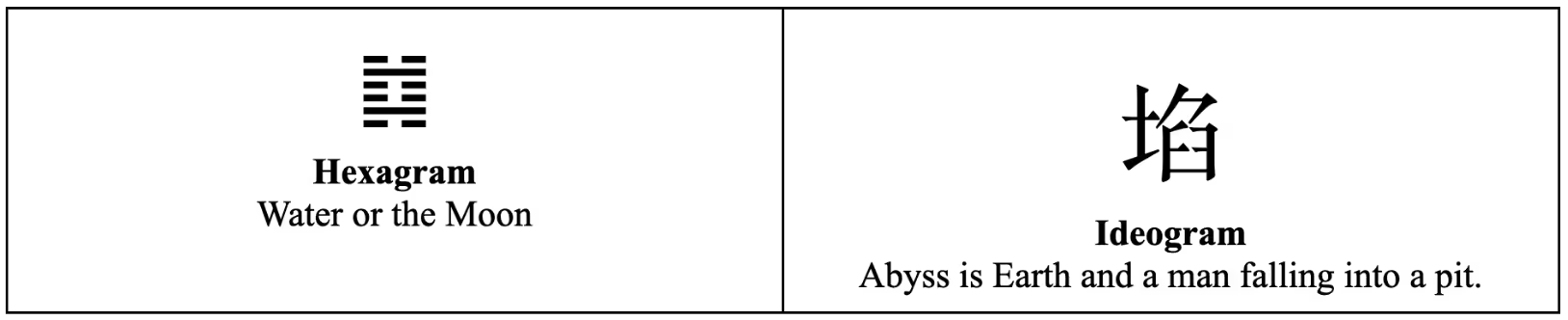
In water doubled we have the image of deep waters, an abyss. The ideogram shows a man falling from the ground into a pit. This is the Unconscious, the unknown depths we can fall into at any time. Water has always represented the dangerous unknown, not only because men drown in it, but also for the mysterious life it holds. When, like Narcissus, we look into water, we are met not only with our reflection, but with all that lives below the surface.
Judgment: In “Beyond Good and Evil” Nietzsche writes “If thou gaze long into the abyss, the abyss will also gaze into thee.”. It is in darkness that we are met with teeming life, hidden beneath mundane appearances. Nietzsche also wrote that the abysses are for the profound; when we have depth, and grow accustomed to diving within, we can meet the challenge of the abyss.
1 Repeating the judgment, but here we go in. Consider the “leap of faith” which must be taken to advance in the world, one must leave their comfort zone for the treacherous unknown. The work of man is to make the unknown known.
2 Freud and Jung knew well that while terribly dangerous, the Unconscious held immense value. The waters that drowned many sailors also held their gold. We must brave the abyss to retrieve treasures.
3 The water trigram also represents the moon. As such, this hexagram is not only abyssal water, but the dark of night. Everyone remembers their childhood fear of the dark, the terrible phantasms our minds populated that black canvas with, and the nightmares we encountered when we fell into the sea of dreams.
4 The waters can also be wine in a cup, liquor is an abyssal water in itself, but in it, we find the “Spirit”. Christians believe wine can be Christ’s blood and Pagans believed wine held Dionysus. In divine drunkenness, great truths can be found. Spiritual euphoria is often described as “intoxication”.
5 The dark waters can be dredged. Consider Bowie’s song “Station to Station”, where in his magical circle he dredges the ocean. In fairy tales, heroes are often given the “impossible task” of emptying a pond with a thimble or spoon, but through magic, it is accomplished.
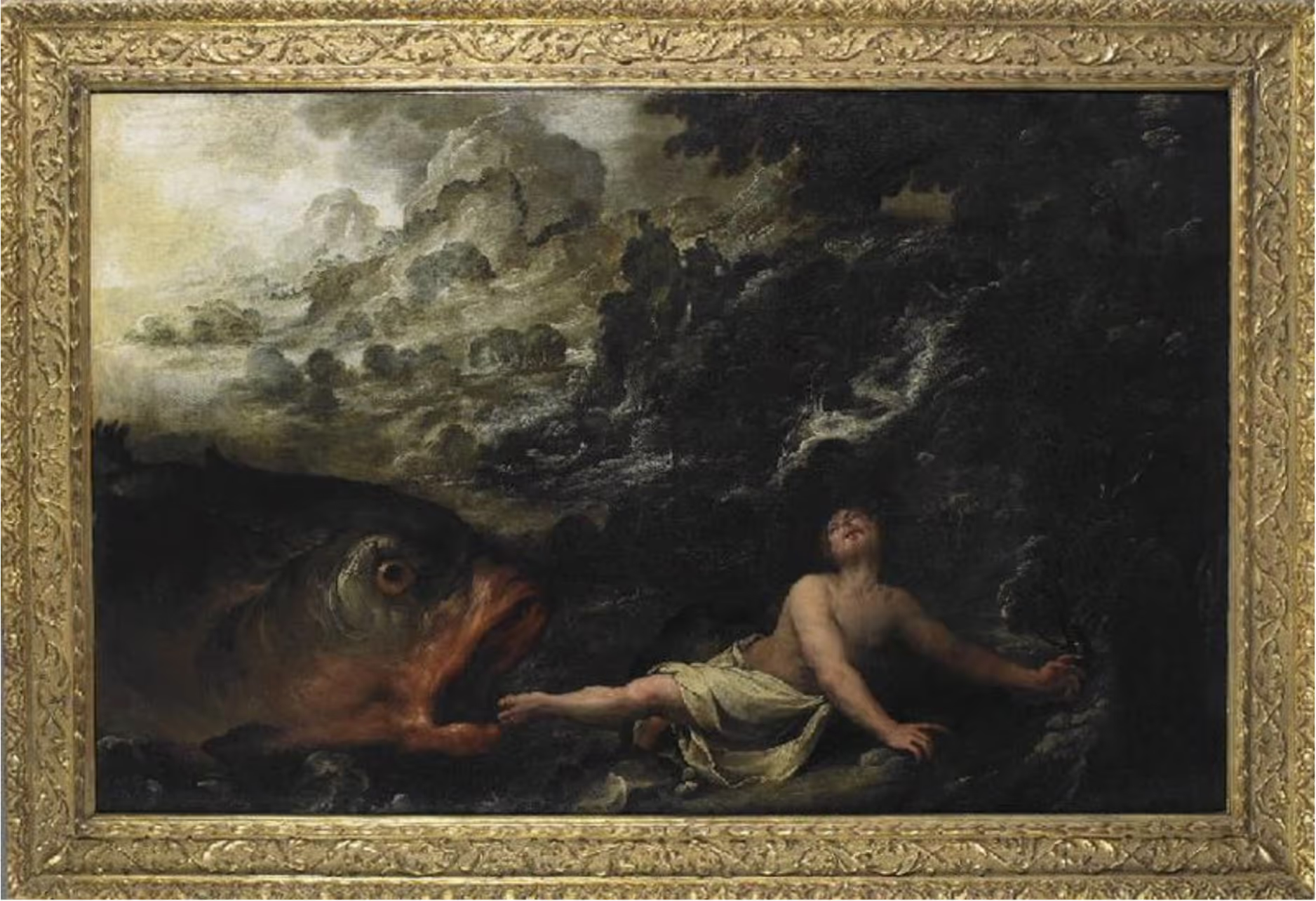
6 If one avoids the confrontation with the Unconscious and refuses to brave the depths, they will not be able to grow. Our challenges must be met. Consider the prophet Jonah who avoids God’s call to preach to Nineveh, boards a boat, but is met with a divine storm, cast into the waters, and swallowed up by the great fish. In refusing a spiritual depth he is met with a literal depth.
Jung wrote at length of water as a symbol of the Unconscious, but perhaps his most profound look at it was a description of the Joyce family. James Joyce sent his daughter Lucia to Jung for analysis due to her schizophrenia, saying “we swim in the same waters”, to which Jung said “where you swim, she drowns”. This is the nature of the depths. For many it is a challenge too great to withstand, thus the danger shown in the hexagram.
The hexagram corresponds to the sephiroth Yesod, which is the first step out of the material world of Malkuth. It is the dreaming in which the archetypal forms that lay the foundation of matter swim. The great work is moving from this dreamy confusion to the solar Tiphereth above, to the higher divine forms. To reach our ultimate potential, we must cross the great water.