
34 Great Power - The I Ching

Great Power is pure gain.
Lines
1
Power in the toes. Don’t go.
2
Pure luck.
3
The small use force, sages use subtlety. A ram butting a fence and entangling his horns.
4
The fence breaks, it is free. A chariot’s power is in its wheels.
5
Carelessly losing a ram.
6
A ram butting a fence, unable to retreat, unable to advance.
Qabalah
Chokmah to Kether: the Path of Aleph. The Fool.
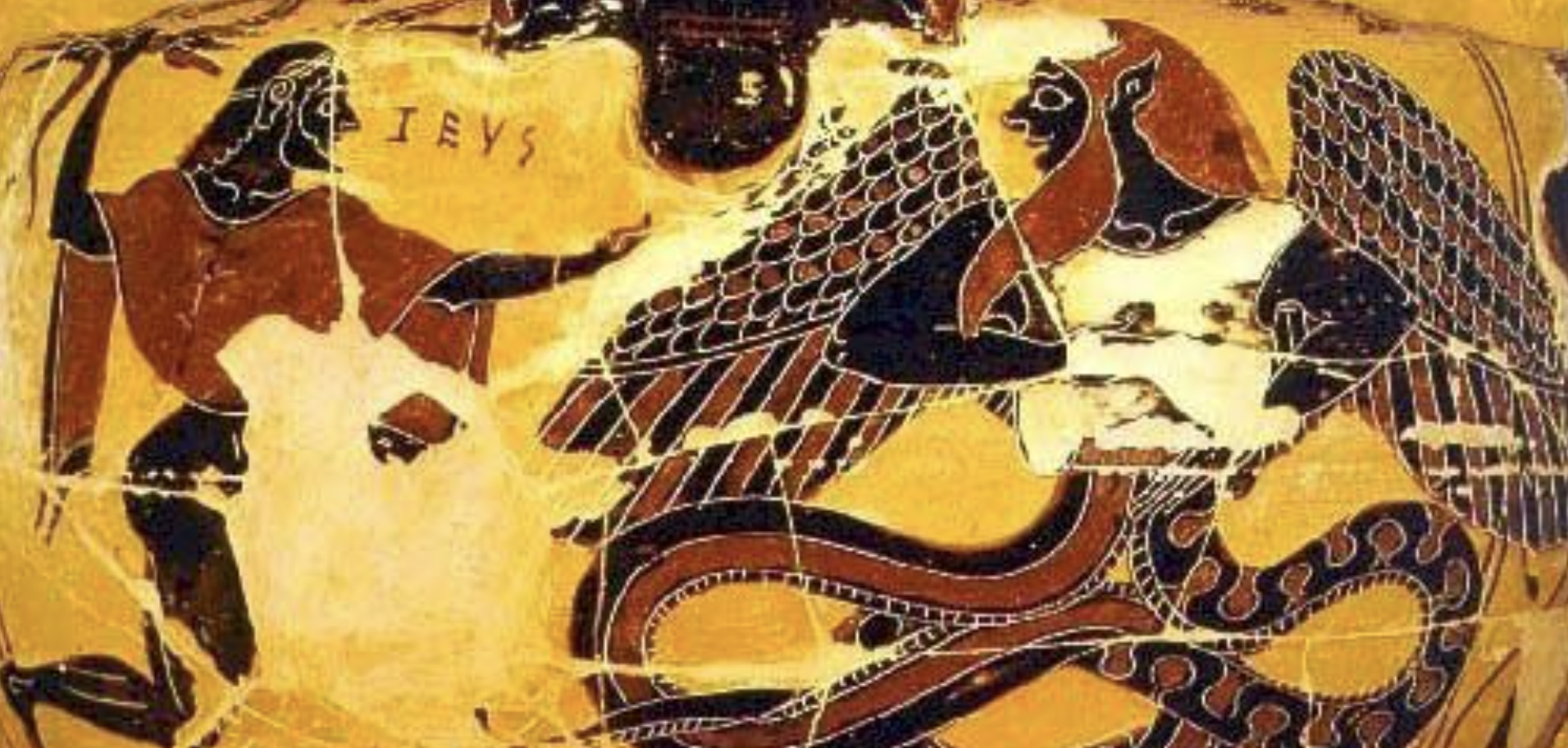
In this hexagram we find Thunder in Heaven, a great storm. The ideograms show us that the power in question is distinctly martial. Together they give the image of the War in Heaven, of Jupiter casting down thunder bolts and, more generally, of force majeure.
Judgment: Force can indeed be profitable, when one is strongest. “Might makes right” allows only for control so long as one can maintain dominance. This is an unsustainable dynamic, as there is always a bigger fish or a faster gun.
1 The energy here is in the toes, the lowest part of the body and thus the lowest form of energy. This is unconscious action, or acting blindly on impulse. Consider the situation that leads to stubbing your toe: movement without awareness.
2 Purifying this unconscious lack of awareness is exactly what allows for luck. William S Burroughs writes on this in his work The Discipline of DE:
If you rap your knuckles against a window jamb or door, if you brush your leg against a desk or a bed, if you catch your feet in the curled-up corner of a rug, or strike a toe against a desk or chair go back and repeat the sequence. You will be surprised to find how far off course you were to hit that window jamb that door that chair. Get back on course and do it again.
3 “Don’t force things”. Many people approach life full force, exerting their energy into whatever they happen into. They break their backs because they cannot take it easy. Power itself is intoxicatingly simple, for it appears to work up to a point. Consider that many things are fragile and complex, and when met with too much force, they shatter. This is why wisdom is subtle. Think of Excalibur, something which could not be drawn by the strongest hands, but was easily lifted by the young King Arthur.
As for the Ram, aggressive actions, beyond breaking fragile situations, will get you stuck in even worse predicaments. This line is warning of an excessive use of force.
4 Yet again, enough force, or a properly applied force, is often necessary. The Ram is strong enough to break the fence it was entangled in. The Chariot here is pointing to momentum. Powerful momentum creates a greater collision. A chariot without momentum is just a wooden box.
5 In carelessness and rest, our power is lost. Nietzsche writes of it in Zarathustra:
Ah, who hath not succumbed to his victory!
Ah, whose eye hath not bedimmed in this intoxicated twilight!
Ah, whose foot hath not faltered and forgotten in victory—how to stand!
One must maintain a constant vigilance to ensure one's energies are strong.
6 Here the ram is fully stuck, unable to move. It remains full of energy and will try to free itself with aggression, but it is hopeless without thought. When we are in difficult situations which we can’t force our way out of, it is best to think, and then act with subtlety and intelligence. It is only then we can free ourselves.
This hexagram shows us the wisdom held dearly by Spider-Man: with great power comes great responsibility. A person who lacks physical strength will naturally become clever to avoid failure, but cleverness in the strong is ideal. This is the character of those Gods who wield thunder in the heavens. People and animals often are simply weak and clever or strong and dull. The I Ching shows us the proper combinations of nature to produce greatness, and this is its great lesson for the strong.
If we utilize our power well, anything can be had, but we must maintain our strength and direct it properly, or it will destroy both our targets and ourselves.