
41 Loss (Pouring Out) - The I Ching
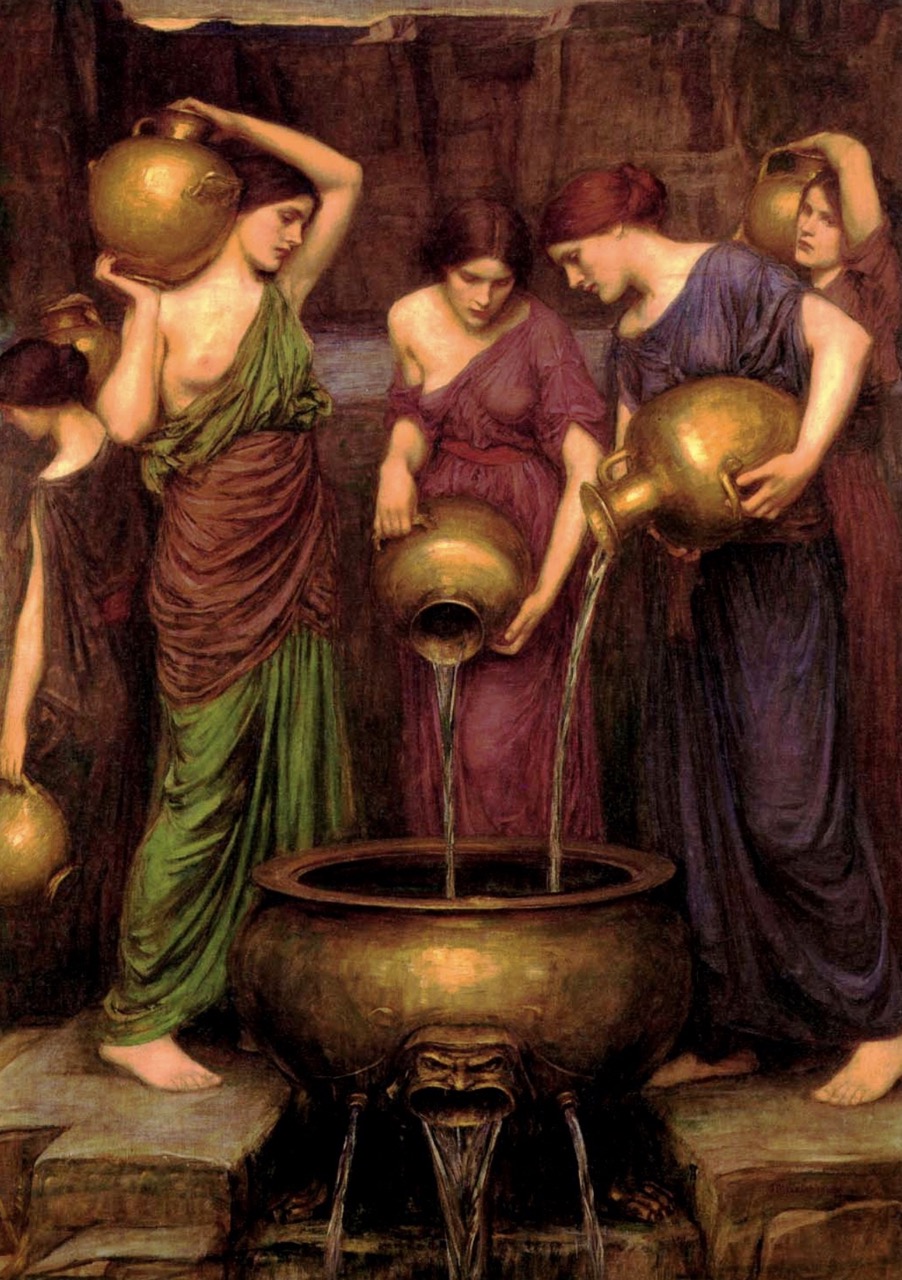
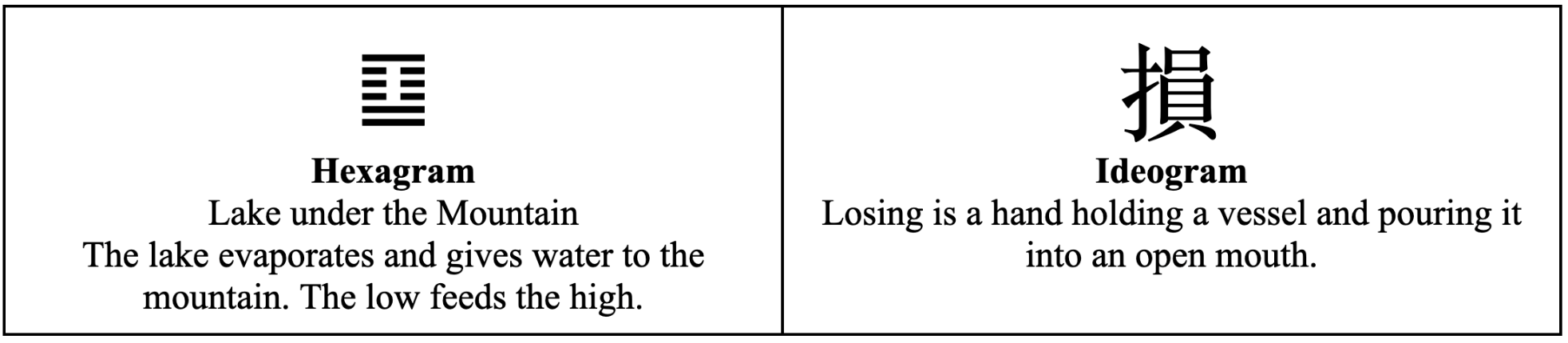
Losing? Have faith. Go far. How? Use two vessels for the sacrifice.
Lines
1
Finish up and hurry ahead. Pouring wine is losing it.
2
Not loss, gain.
3
Three on the path lose one. One on the path gains one.
4
Lessening his sickness. Hurry and have joy.
5
Gaining ten pairs of turtle shells; their oracles are undeniable.
6
Not loss, gain. Acquire servants without homes.
Qabalah
Chesed to Netzach: The Path of Kaph. Fortune.
In this hexagram, we find the image of loss and transfer, the lake below the mountain evaporating to form the clouds above it. This is the water cycle. The ideogram shows us the image of pouring out food or drink, a transfer of energy and a cycle of loss and gain.
Judgment: A sacrifice is a loss that we have faith will become a gain. When we give up the bird in the hand, it is with the hope we will gain two in the bush. When ancient people sacrificed animals, or even people, they were losing something extremely valuable in hopes that the Gods would help them. As for the vessels, “two are better than one”.
1 One mustn’t tarry and think, or get lost in drink. There are several meanings to glean here. One is revealed in the nature of the second sentence, a self evident statement, as was written in hexagram 25. This is saying “you can’t have your cake and eat it too”. We can also read this as the literal loss that comes with drinking: pissing it all away. The drink, the money, and the time; all are lost in drunkenness. On the positive, this is “pouring one out”, a libation to a God or lost friends.
2 This can be affirming the sacrifice, coping with the loss by declaring it a gain. Additionally, this shows that we can gain without loss, or if we don’t make profit, we can at least break even.
3 Here we see a vital part of the cycle, and of the hexagram in general: homeostasis, or naturally enforced equilibrium. Three loses one to become two, and one gains one to become two. Balance is reached through loss and gain.
4 It’s easy to think of loss negatively: losing money, trust, sleep, things, it. Loss can be beneficial: losing weight, inhibitions, and for Christians, losing their life.
5 Turtle and tortoise shells are the earliest form of divination in China: they are the root of the I Ching and of the Chinese written language. Questions were carved into the shells, they were placed over fires which cracked the bone, and these fractures would be interpreted. This line shows divine affirmations.
6 Thoreau echoes this notion with the line “Goodness is the only investment that never fails”. This is giving a job to someone, discovering talent, making good use of untapped resources.
The equilibrium between two is a key element for grasping this hexagram: the vessels, lose and gain, the people, on the path, and the ten pairs of shells.
Lana Del Rey says it well in her song Video Games: the world was built for two.
King Solomon understood this too, and wrote of it in Ecclesiastes 4:
9
Two are better than one,
because they have a good return for their labor:
10
If either of them falls down,
one can help the other up.
But pity anyone who falls
and has no one to help them up.
11
Also, if two lie down together, they will keep warm.
But how can one keep warm alone?
12
Though one may be overpowered,
two can defend themselves.
This perfect duality will be reached whether by loss, or as we shall see in the next hexagram, by gain.