
54 Marrying - The I Ching
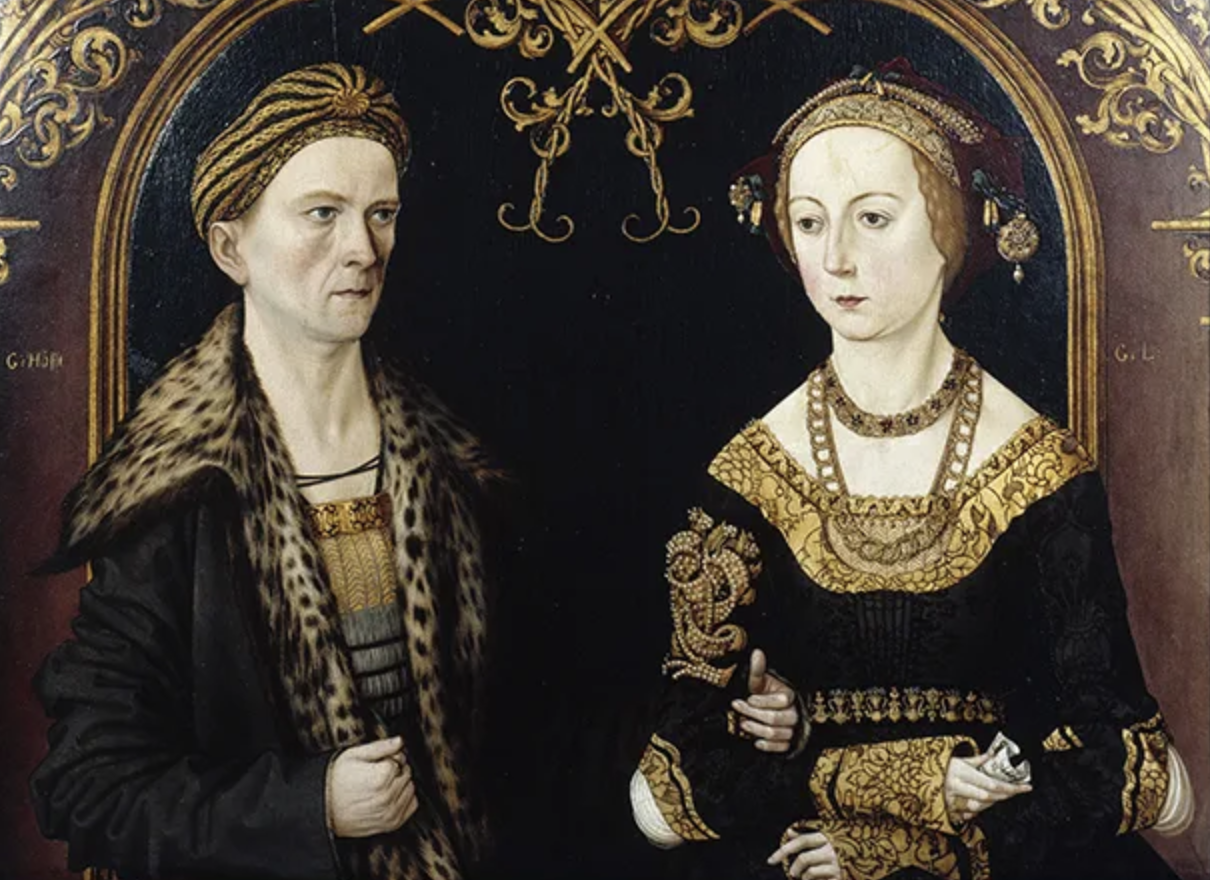
Marriage Portrait of Jakob Fugger, Hans Burgkmair the Elder. 1498.,

The maiden marries, a hopeless journey.
Lines
1
The maiden marries as a concubine. Lame, but walking.
2
Blind, but seeing. The hermit is pure.
3
The maiden marries out of necessity. She comes back as a concubine.
4
The maiden marries at the wrong time. Even a late marriage has its time.
5
The Great Emperor’s sister married. Her dress was plainer than the concubines. The Moon is almost full.
6
A woman carries a basket without fruit. A man slaughters a sheep without blood.
Qabalah
Path of Teth: Chesed to Gevurah. Lust.
Following, hexagram 17 and the companion to this one, shows the masculine pleasure in submitting. This hexagram shows the feminine submitting to masculine authority. Thunder is active and violent, Lake is joy and peace, thus Thunder dominates. The ideogram gives the image of submission and return as walking with a broom, this is a “sweeping victory” or a woman doing domestic chores.
Judgment: Marriage is an ideal image, both materially and magically. The I Ching is a text about bringing together opposing forces, but this arrangement is ill fated; the lower trigram is the first, and so here the feminine moves toward the masculine, a role reversal that leads to her humiliation.
1 She marries and is made a concubine. This is like being lame but still able to walk, taking a lowly job to avoid homelessness, or the necessity of starting out at the bottom of the “corporate ladder” to later attain. It’s important to keep in mind that the concubine, while in a position inferior to the wife, is still kept. This was considered exponentially preferable to remaining a burden on one's family.
2 The Blind Seer is like one eyed Odin, or blind Tiresias, granted an even greater sight from their blindness. This is the blind devotion of someone who remains chaste while they await their beloved, unable to see what is around them. Tiresias is particularly apt for this hexagram: transformed into a woman for seven years after striking a pair of serpents, he had knowledge of both sexes. To settle an argument between Zeus and Hera, he said women experienced nine times more pleasure than men, and for this she blinded him.
3 A woman desperate to marry becomes a concubine. Her position is not an improvement on the first line, but the necessity here implies she is escaping from an even worse situation.
4 When the time is wrong, it’s better to wait. While the previous lines show compromise and desperation for marriage, this line gives power to the bride. She has waited, perhaps past the proper time, but marries all the same. This encourages love in the groom; by making him wait she begins to gain power.
5 A classic image of wealth without display. It is common for resentful wedding guests to try to “outdo” the bride, but this bride’s royal nature does not need ostentatious outfits to show her beauty. This is an alchemical line, for she is the moon nearing fullness, promising the mysterium coniuntionis. The marriage of the sun and moon is the perfect union of opposites. This is taking humble components to create perfection.
6 As was foretold in the judgment, the union fails. The bride fails to produce an heir, her basket empty. The man fails to consummate the marriage, the lack of blood. With both marriage and alchemy, the right ingredients are an absolute necessity. In many cultures, marriages are arranged according to magical principles in the hope that they can produce powerful love. Yet compatibility and love are fickle and will not bend to such tricks.
The lines here paint a rather sad image of a woman forcing herself into a marriage, and finding herself degraded. This hexagram corresponds to the tarot card Strength, or Lust, which shows the proper position more clearly displayed in 17 Following: that of a woman taming a man, rather than being a concubine to a beast.
Anyone familiar with desire knows that dominance and submission are often not unrelated. Beauty and the Beast shows the situation of this hexagram transforming into that of the prior: Belle begins as an imprisoned servant and ends as a bride, for she tamed the wild beast.
The lines show a lowly position that can become a high one. This is one of the most common subjects of fairy tales. Beyond Beauty and the Beast, one can find countless examples of wise women using bad circumstances to the best of their advantages, beginning as peasants and coming out as princesses.