
56 The Wanderer - The I Ching
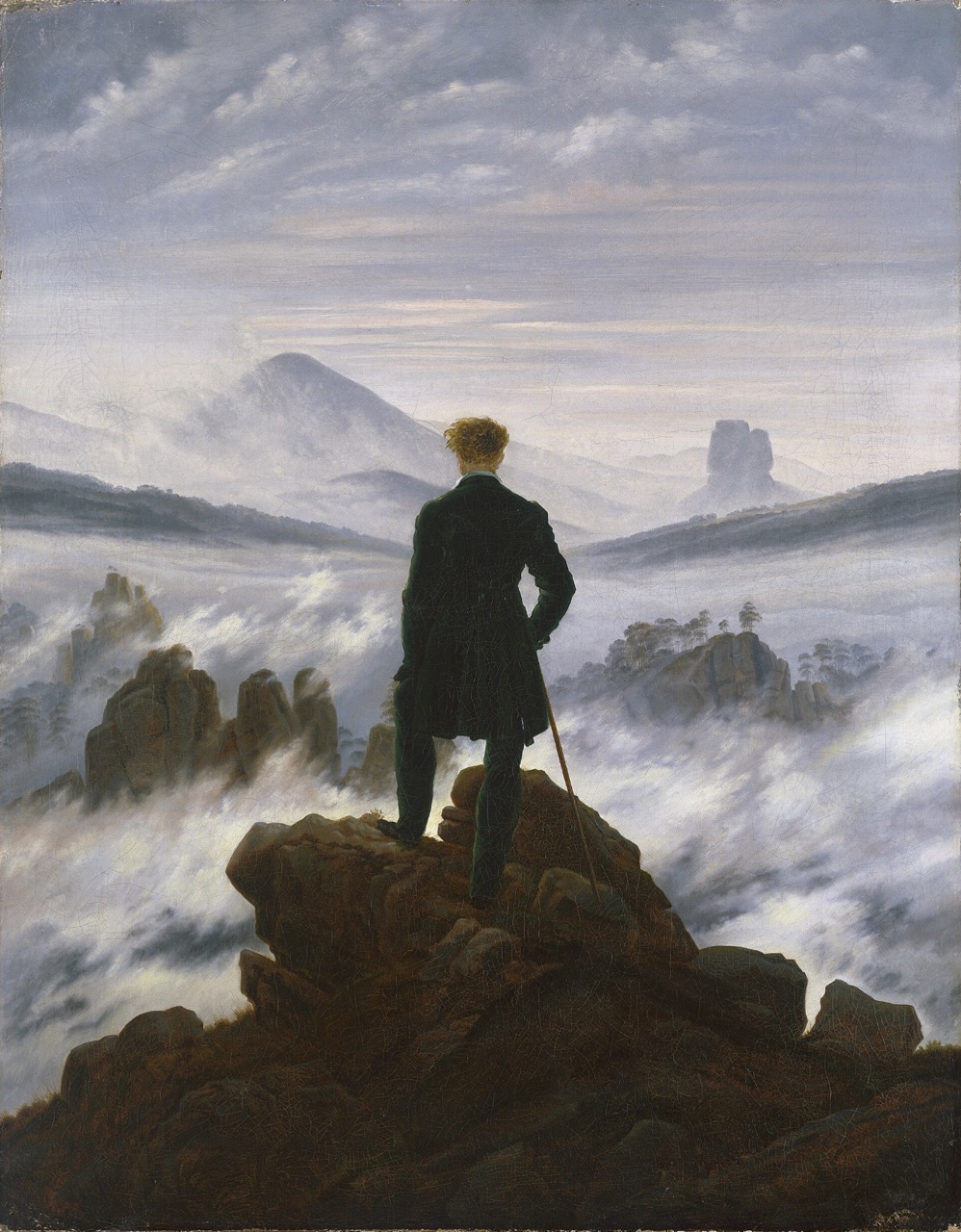
Wanderer Above the Sea of Fog, Caspar David Friedrich. 1818.

The Wanderer has a little luck.
Lines
1
The Wanderer wastes and wastes. This brings him trouble.
2
The Wanderer in his lodge. He thinks of his means. He has a young servant.
3
The Wanderer burns his lodge and loses his young servant.
4
The Wanderer in his dwelling. With his means and his hatchet. He says “My heart is heavy”.
5
Shooting a pheasant and losing one arrow. There will be praise and a title.
6
A bird burns its nest. The Wanderer laughs, then weeps and weeps. Losing an ox at ease.
Qabalah
Path of Nun: Tiphereth to Netzach. Death.
In this hexagram, we see an individual setting off on his own, but his progress is halted by his self-destructive instincts The trigrams give us fire on the mountain, an image intrinsically linked to the most famous of wanderers, Moses. When God speaks to him in the form of a burning bush atop Mount Sinai, he frees the Israelites and takes them to Canaan, the promised land. When they are afraid, he makes them wander in the wilderness for forty years. The ideogram backs this with the image of men moving under a flag, men on a mission.
Judgment: The wanderer is not without luck. If it was used properly he would be able to make his great journey. We shall see in the coming lines how his luck runs out.
1 This line refers to wasting both time and money. When making a journey, dillydallying can cost a great deal of time or the missing of a deadline. If there is a set budget for the trip, it’s bad to waste it on trifles. Or it may be that the whole journey is the waste itself, should he fail.
2 The journey is well enough here: he finds a place to stay, he considers his next steps, and he finds a servant to assist him. This is the journey nearly all people go on, seeking a home, a way to live, and the people who will help them do so.
3 Here we see the Scorpionic nature of the hexagram clearly. The wanderer burns down his own house, just as a scorpion stings itself. The Talking Heads express perfectly the subject of this hexagram in their song Burning Down the House, a strange man who burns down his own house and seeks to go start a life somewhere else. This is “burning bridges” and setting fire to your relationships and life.
4 Now the wanderer finds another place to stay, he has the tools to start anew, and yet he is dissatisfied. We can think of people who lived comfortably, but through circumstance lost their home and position, and now must work to create a new life. Many will always be bitter about what they have lost, and feel degraded by the work of starting at the bottom.
5 The pheasant was a traditional gift when coming to the royal court. While hunting it, the wanderer loses an arrow, but succeeds all the same. This is reminiscent of a nursery rhyme motif:
Robin-a-bobbin
He bent his bow,
Shot at a pigeon
And killed a crow;
Shot at another
And killed his own brother
We can see how this aligns with the destructive pursuits depicted in the hexagram.
6 Another burning down of one's house. In this case, the wanderer sees this sight and is amused, only to realize it is an omen of his own tragedy. As for the loss of the ox, a similar nursery rhyme says it well:
The tailor shot and missed his mark,
and shot his own sow through the heart
The lines show us one who travels about and scorns his own luck. This is the fable of the Scorpion and the Frog: a scorpion seeks to cross a river, but unable to swim, asks a frog for help. The frog is worried about helping the scorpion because of its sting. The scorpion says if it stings the frog, they will both drown, it wouldn’t do such a thing. The frog agrees to help the scorpion cross the river, but midway across, it stings the frog. The frog asks why it would sting him knowing they will both die, to which the scorpion says it is his nature.
This is a deeply karmic lesson. In legends of Hindu and Chinese cultures, helping someone is seen as exceedingly dangerous, for it interferes with fate and binds the helper and helped together. This is something that happens occasionally in the tabloids, someone will be rescued from drowning or helped after an accident, and sue those who helped them.
Another image to keep in mind, after the cosmic nature of the previous hexagram, is the Greek word “Planet” which literally means “wanderer”, for the orbit of the planets is a grand stellar journey. Seen this way, the lodges and dwelling where the wanderer stays are the Lunar Mansions and Zodiac signs. The dillydallying is retrograde motion, and the burning down of the house is the displeasure some planets suffer in certain parts of the sky.
In hexagram 38 we looked at the concept of Xenia: the divine virtue of hospitality in a host. This hexagram should remind us of the other side of the Xenia: the responsibility of the guest to be good. When we make a great journey let us remember the wisdom offered by many a national park: Take only pictures, leave only tracks.
We are all guests in the house of life, therefore we should be careful not to leave it worse than when we entered.