
Building a Temple to Knowledge
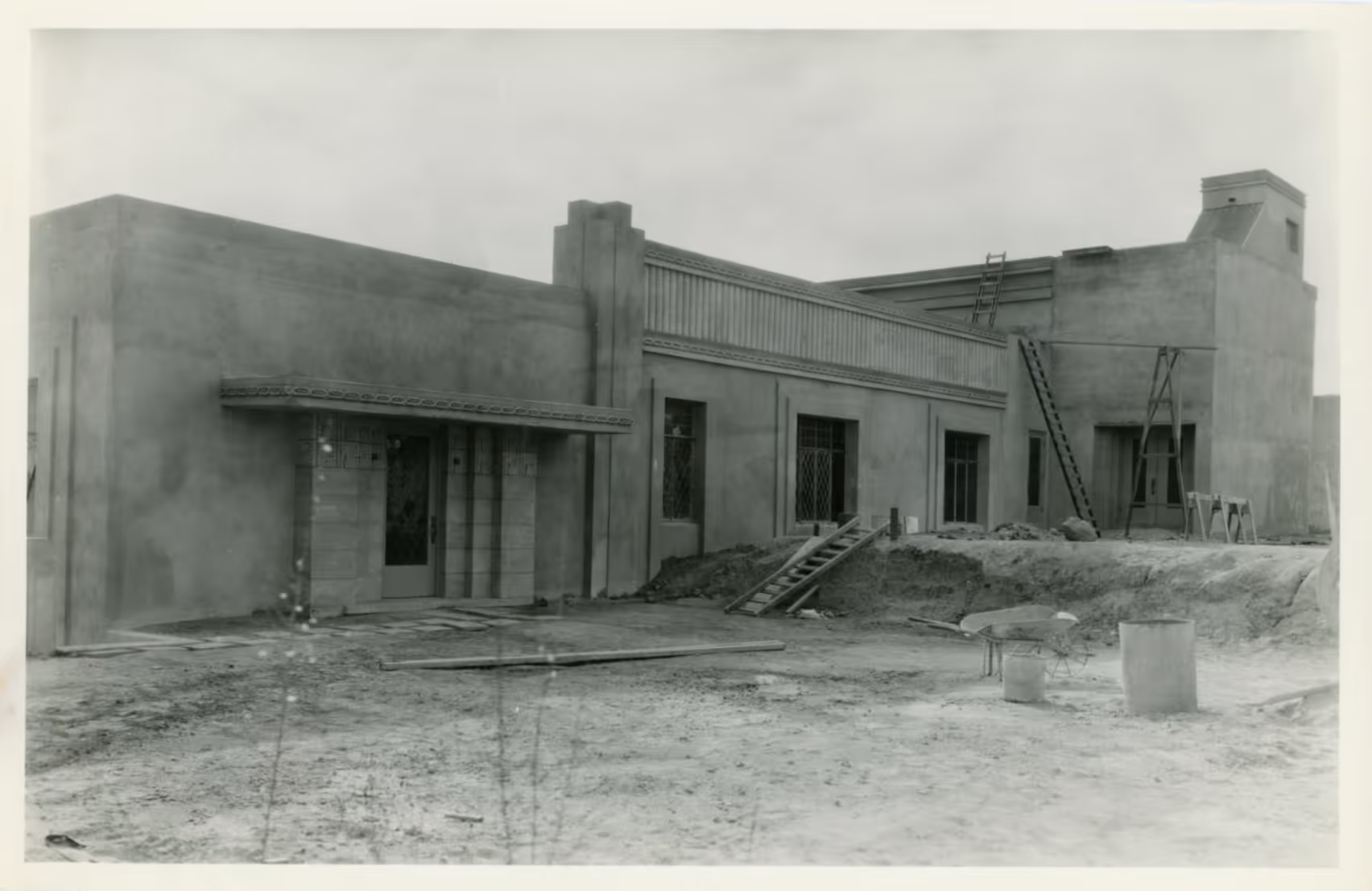
Library Construction. Courtesy of The Philosophical Research Society Library.
Fascinated by all sects of ancient wisdom, Manly Palmer Hall decided to take a break from ministry. He was with the Church of the People for several years and would soon leave on an expedition to investigate the overlap of the world religions. Caroline Lloyd and her daughter Alma Estelle, two members of the congregation, approached Hall in anticipation of his journey. Lloyd told Hall that his generosity of spirit through the years had meant more to her than she could say, and that she would be gifting him with a regular allowance collected from the oil field established on her land as a token of her gratitude. Having already written three works on his philosophical fascinations, this stipend gave Hall the freedom to follow his curiosities further, wherever they may lead.
It wasn’t long before Hall was befriending booksellers around the globe, perusing their shops for buried treasure. “One kindly old gentleman had a basement which could only be reached by stepladder,” Hall writes, “If you could win his confidence, he might roll up the rug, raise the trapdoor, and take a ladder that was hanging on the wall. He would then disappear with a pocket flashlight and, after some time, books would appear along the edge of the opening.”🜚. From Rosicrucian manifestos to Vedic scripts, early Masonic writings to astrological anthologies, 16th century Alchemical manuscripts to Max Müller’s Buddhist volumes, Hall built a collection that grew along with a dream. He imagined opening a space where others could access these relics, where he could provide educational resources to fellow seekers, put his own books together, and even lecture on Sundays.
The building and its grounds would function as a repository to further one’s intimate relationship with the Spirit, a “temple to knowledge” in his own words. Initial building plans for The Philosophical Research Society expanded on that intention, at the core of the design was a respect for divinity. Robert Stacy-Judd’s initial illustrations showed tall ceilings and spacious halls, with natural light touching all corners of the interior and visions of Mayan revival made manifest throughout the campus.
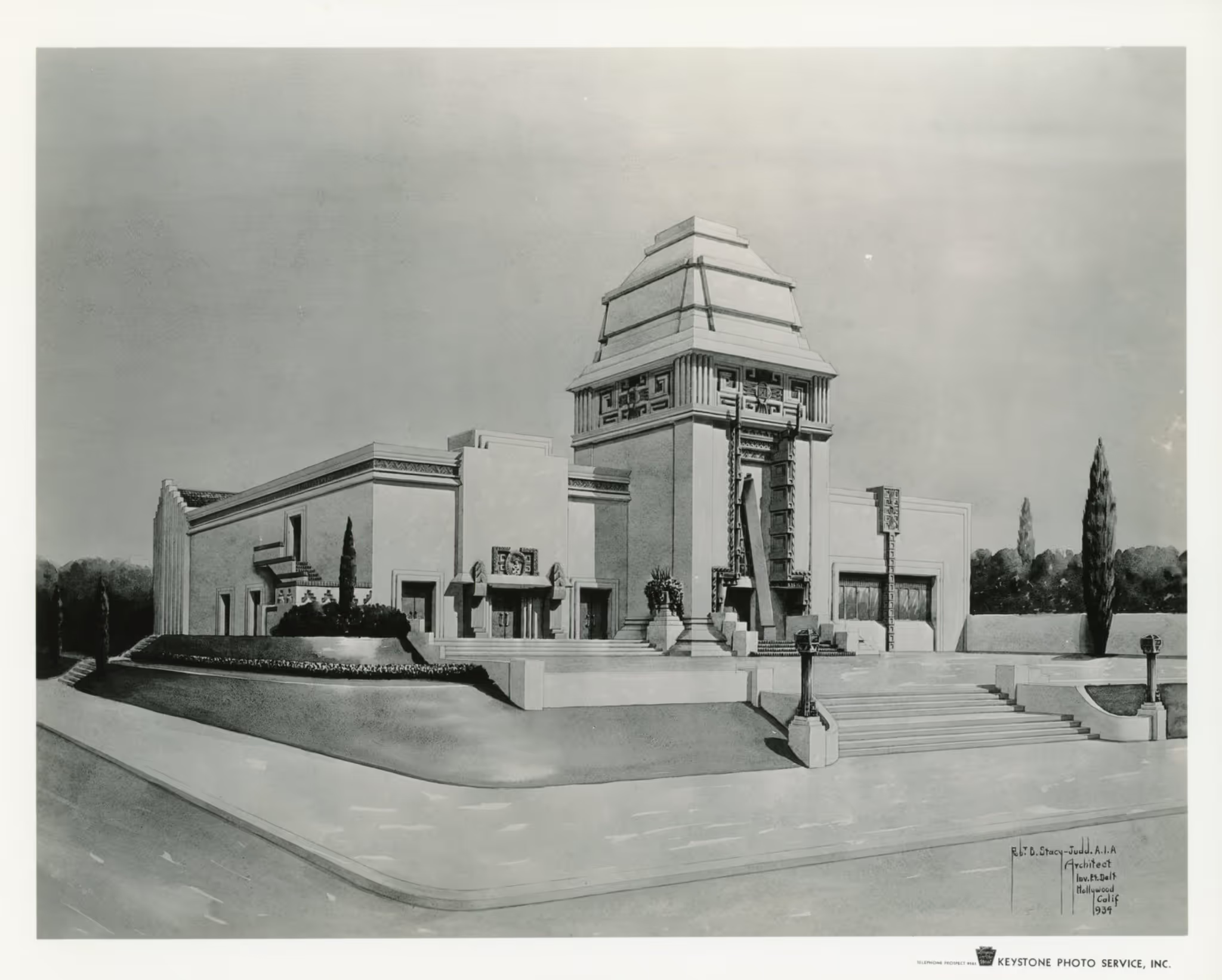
While the structures that developed after the ground was broken in 1935 instead retained a subtlety, one look at any doorway, pathway, or surface still revealed the Mayan inspired aesthetics, along with the care and intention of the grander vision. Source, Krishna, God, and the Tao were in the details.
Today, The Philosophical Research Society still retains its meditative posture in the Los Feliz neighborhood of Los Angeles, California. Reverence arises upon entering the courtyard, somehow silent despite its being yards away from a high-traffic intersection. The auditorium, bookstore, gallery, and library offer their own unique atmospheres to commune through time with sages, seers, thought leaders, and devotees. It’s clear what attracted guest lecturers like Alan Watts, Stephan Hoeller, and Marianne Williamson throughout the decades to this devotional athenaeum. But there is no prerequisite that a visitor must be deep in the research of Native American tribal mythologies or Tarot studies to gain entry. Instead, PRS takes one deliberate step back, building and maintaining a community that is like-hearted rather than like-minded. For those looking to further their unique contemplations and trade contemplations with others, whether they be about esoterica or the daily hardships of living, this is Shangri-La. Almost every day some kind of workshop, group meeting, game night, or mindful gathering is being offered at the Society with an open invitation.
The facility’s dedication to “all truth seekers” seems mystifying. How could a place retain total openness of spirit through 90 years of global ideological divide? Confucius often suggested that an individual who cultivates themselves with awareness can nurture a heart-centered dynamic in their own family. Along with many other heart-centered families, their own family can then nourish a well governed state. Kingdoms and countries composed of these well governed states can then operate in harmony, inspiring a heart-centric humanity. Hall put this principle to work in constructing The Philosophical Research Society. A small group of individuals consciously cultivating themselves would make up the staff. As this staff maintains this temple to knowledge welcoming all truth seekers, the Society’s heart-centered dynamic maintains a lasting impact on the institutions within its immediate vicinity, in time rippling out to reach all corners of the Earth.
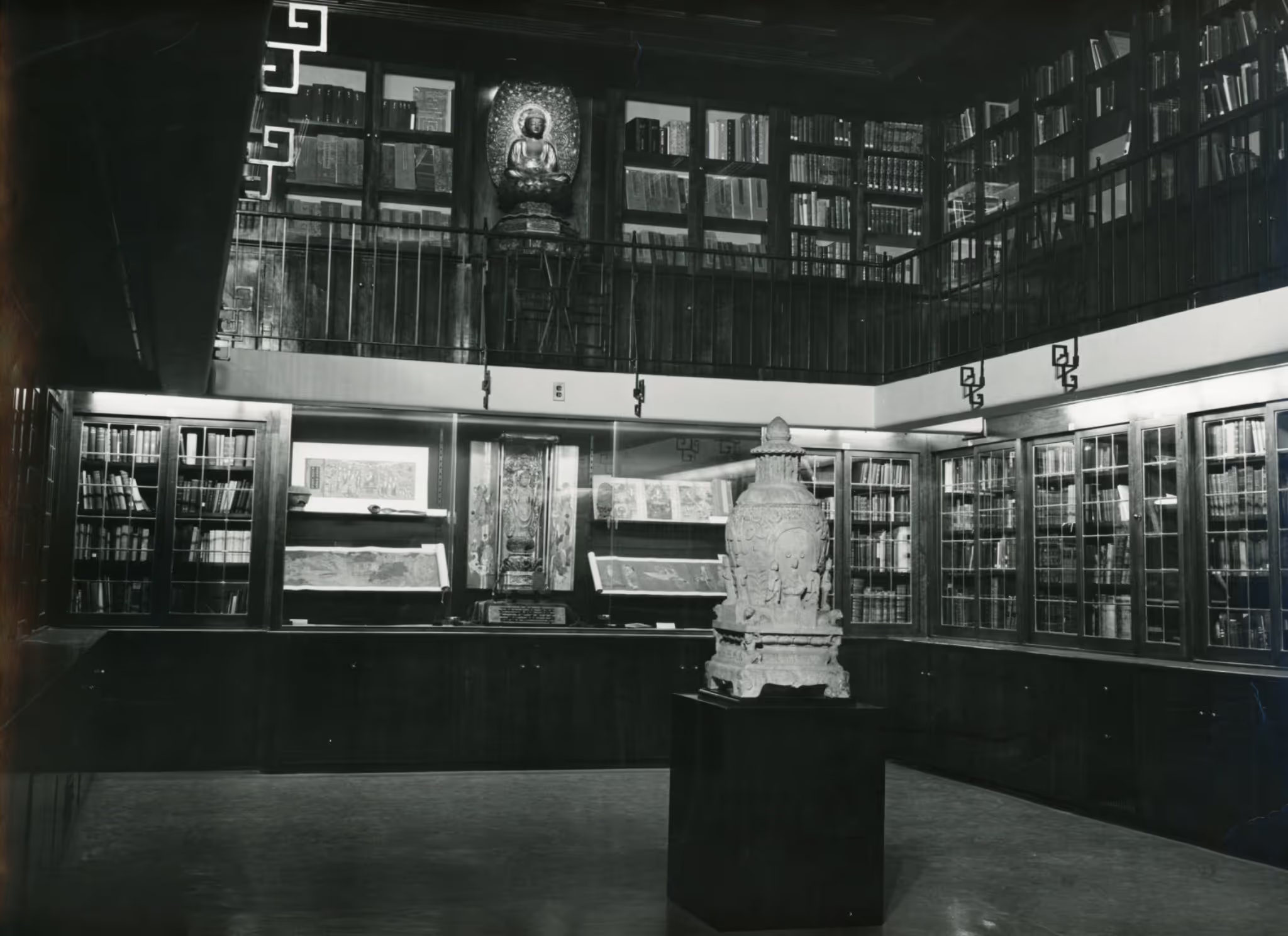
One gets the sense that everyone working onsite shares in the beauty of this belief, and that the strength of this belief amplifies in joining the team. Spending time around those like-hearted, whether coworkers or visitors, is recognized by both Shipping Manager Amanda Brass and Librarian dama as a massive privilege of the work. More hidden treasures are revealed to these two each and every day as they assist seekers in thumbing through the archives.
With radical openheartedness acting as the foundation on which this historic temple was built, PRS has served for almost a century as an arrow pointing toward a more inclusive future. Its example urges us to listen to those sharing unfamiliar ideas, to share our own ideas with respect, and to commune over those timeless ideas shared long ago. In Manly Hall’s own words “There is an old saying that there are seventy-two names for God, but only one God. Likewise there are many nations, races, and social orders but only one basic purpose—to advance the brotherhood of all that lives.”🝞.
Hall, Manly Palmer. THE LITTLE WORLD OF PRS A Field Tour of The Philosophical Research Society. the Philosophical Research Society, Inc., 1982.
🝞 p.08.
🜚 p.17.
All photos courtesy of The Philosophical Research Society Library.