
From Signal To Noise
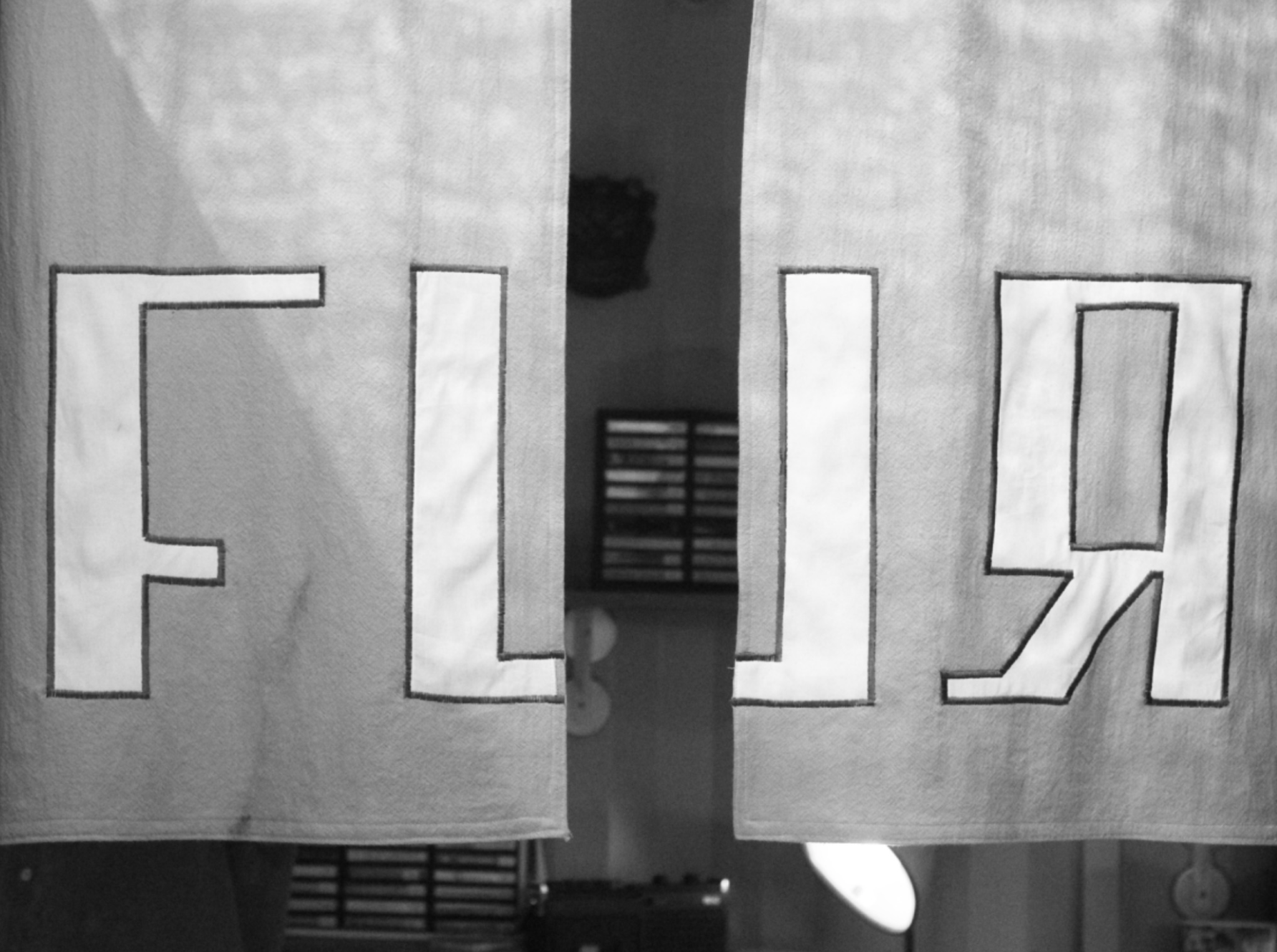
Out of a storage unit turned bunker, Figueroa Unanimous Radio broadcasts hidden knowledge. Their station presents a curation of culturally significant musics buried by the streaming era, reintroducing endangered audio with a welcoming DIY ethos. Tuning in, you’ll hear rare field recordings, private press records, and out-of-print cassettes, hand-picked and spun to engage your sonic curiosities. Transmissions are aired via the website listenfur.org from a confidential location in Highland Park, Los Angeles.
The physical space is often used for live auditory experiments and performances while the digital space offers hundreds of archival broadcasts for the study of music cultures. Over two years, what once functioned as an independent online radio station has become an unparalleled sound-recording ‘mouseion.’ Passive listening is out of the question.
We met with Matt LaCasse, Nicholas Phillips, and Spencer Richardson—the team behind the station—to ask about the nature of their ongoing collaboration, their musical suggestions, and their plans for FUR’s inevitable expansion.
Tetragrammaton: It feels like FUR is revealing itself as it's being built.
Spencer Richardson: People are seeing how the sausage gets made along the way, I like that it feels like people have seen the evolution of it.
Matt LaCasse: You’re interviewing us three now but you very well could be bringing in other people too…sure we started it, the template of it, but we want it to be ever-growing. And that’s in the spirit of the music that we’re presenting too, “no real formula”.
Nicholas Phillips: It’s nonhierarchical and decentralized. And we invite people in that share that ethos.
TG: If a new person comes in and presents an idea that’s out of the context of what you may have originally envisioned for FUR, is there a process of consulting each other about it before anything gets OK’ed?
ML: Independently we’re all pretty good at feeling it out. And if it’s something that’s in the same wheelhouse, then we’ll present it and talk it through. It’s very much ‘all hands on deck’ so the artist has to be involved, and not everybody wants to do all the things outside of their practice. That’s been a challenge, finding candidates who are willing to do extra because we’re pretty ‘bare bones’.
TG: Liz Pelly’s book Mood Machine: The Rise of Spotify and the Costs of the Perfect Playlist suggests that music cultures are being flattened and eroded by passive listening trends specific to the streaming era. Do you guys view FUR as an active protest to these trends?
SR: I don’t think the three of us huddled together and were like ‘we’re doing something about this Spotify thing!’, there’s just no world where we would be highlighting music that we feel you could get on something like an algorithmic playlist.
ML: There’s so many trends that people are expected to follow because somebody says something is cool…I feel like we want to break that whole mold, we want to say ‘listen to this and you decide’.
NP: Everything’s becoming marginal or digital… and physical media serve as their own historical documents, so what better time than now is there to preserve nonmarketed music?
TG: In her essay Quantum Listening, Pauline Oliveros theorizes that through the act of listening, connections are made within us that provide ‘the basis for compassion and love.’ Does broadening the spectrum of what we listen to also broaden the spectrum of our own compassion?
NP: Oh, totally…and the more you realize you don’t know, the more you see the connections…I think that’s really special.
SR: Early on there was a lot of sifting through Matt’s ethnographic collection. If you hear Vietnamese cave singers and then you hear some Inuits, and there’s something there that you realize sounds similar, then you just start to feel like clearly we have to all be a little more alike than we are different…and these people didn’t sound this way because they heard those people…It’s fascinating that there were similarities before there was any way to have those cross-continent connections.
TG: What archival broadcast would each of you suggest to a first-time listener?
NP: I would refer back to a saying that Matt taught me about judging the quality of a collection; ‘close your eyes and just pick.’ I feel like it's the same thing, you can’t really go wrong.
ML: If you stand by what you’re doing you should be able to present anything…but I would feel out the person a little bit. At the end of the day you want people to listen to your station, and if you completely derail them in that first moment, then you may not get a second chance.
SR: Yeah, because there is some heavy stuff in there…there’s a couple I could point to that I think are special…This tape. I would recommend that one.
ML: That’s a great one.
SR: It’s a split tape. One side is Roberto Marinelli who is better known by his pseudonym LXSS, or Laxative Souls, and the flipside is Masaki Eguti. The first song of the Roberto Marinelli side is one of my favorites.
TG: And what’s next for FUR?
ML: Relocation to the Arctic…
SR: Finding an igloo bunker to broadcast out of.
ML: …You know the igloos get up to 60 degrees inside? It’s amazing. They coat the roof with animal skin. And they use lanterns. I was just reading about them.
NP: We’re certainly walking toward the light that is FUR becoming a nonprofit. Expanding programming. We want to have more events and enrichment programs… just trying to get the community involved.