
Homo Noeticus - Our Future Selves
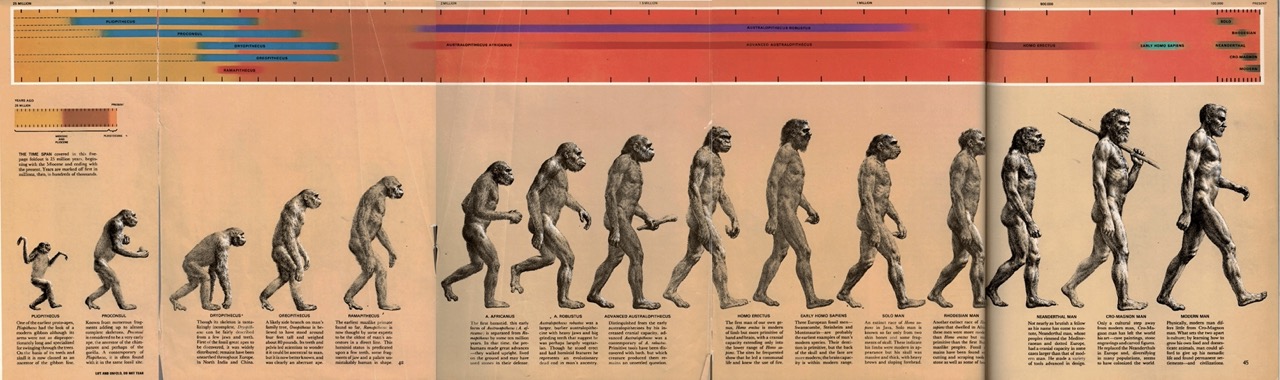
To know something noetically is to know it intuitively, beyond the realm of ordinary human perception. Homo noeticus, a term coined in 1973 by author John White when he helped establish the Institute of Noetic Sciences (IONS), refers to an evolved human living in an expanded state of consciousness, outside of an egocentric worldview.
One of the pioneers in the field of noetic sciences was Mexican neurophysiologist Jacobo Grinberg-Zylberbaum, the eldest child of a Yiddish-speaking Jewish family that immigrated from Poland to Mexico in the early 20th century. In 1994, he disappeared, leaving behind his radical take on noetic consciousness known as Syntergic Theory, preserved in several books he authored. Part neuroscientist, part consciousness researcher, and part student of shamanic traditions, Grinberg-Zylberbaum spent his career trying to find out how consciousness interacts with reality. Syntergic Theory is a model which proposes that consciousness is not produced by the brain, but rather emerges through an interaction between the brain and a deeper informational structure underlying the universe itself. He called this information structure ‘the lattice’ and described it as a pre-physical field of consciousness that permeates everything in existence. His ideas are carried on by the IONS’ science team, who operate on the hypothesis that consciousness is fundamental, rather than a byproduct of the brain.
“In thinking of how mind could affect matter, it’s much easier for me to imagine that if matter is ultimately composed of mind that when mind goes ‘tweak’ matter has to go ‘twang’ in some way because it’s ultimately the same thing,” explained Dean Radin, IONS chief scientist and a classically trained violinist who sees this interaction as a matter of resonance. According to Radin, to know something noetically is to know it intuitively and with a deep certainty that can’t be explained. That concept makes a lot of sense if we view it through the lens of the lattice, where our consciousness exists in a field of information: all of life is conscious, so fundamental truths create a natural resonance within us.
Syntergic Theory states that the human brain generates its own energetic field, and perception arises when that field and the lattice interact. Reality, in other words, is not something that happens "out there," nor is it something generated entirely "in here." Instead, it is a co-creative process between observer and observed, just like the Hermetic axiom states - “as within, so without.” He believed that what we perceive depends on the quality and coherence of the consciousness doing the perceiving. This is referred to as the "directionality factor,” the mechanism through which we direct our awareness to select one possibility from an infinite field of information. Our experience of reality is based largely on what we are capable of noticing.
The future of the human race likely depends on our consciousness making a quantum leap toward coherence, both interpersonally and within ourselves.
“It requires great sincerity and enormous responsibility to accept that the “external” events that alter us and trigger personal changes are actually the byproduct of one’s individual mental continuum intertwined with the mental continua of other individuals,” said Grinberg-Zylberbaum, speaking on how humbling it is to see ourselves as co-creators of reality. He believed taking responsibility for our perspective will create ‘correlated bodies,’ mutually dependent events that can ripple through the lattice well beyond the range of individual influence and affect the collective. This is the mechanism by which consciousness evolves simply.
Syntergic Theory argues that spiritual development is less about acquiring new beliefs and more about refining perception, suggesting that higher states of consciousness correspond to greater levels of neural synergy and integration. As our brains become more coherent, our perspective expands and we gain access to broader dimensions of experience. The result is a fundamentally different relationship with reality itself, the hallmark of our evolution from third dimensional homosapiens into the higher dimensional expression of homo noeticus.
From a Hermetic perspective, this makes perfect sense. If reality is fractal, then the same principle that governs the evolution of individual consciousness also governs the evolution of humanity as a whole. Both can move in unison from fragmented towards integrated consciousness. French philosopher and theologian Pierre Teilhard de Chardin described humanity's evolution as a movement toward the ‘Omega Point’, a state of increasing unity and complexity. Grinberg-Zylberbaum envisioned something similar, seeing humans not as static beings but participants in an ongoing evolutionary process. He believed the process of evolution itself was changing, driven more by increased connection with the lattice than purely physical adaptations.
Like previous stages of evolution, this transformation is very much a matter of survival. The future of the human race likely depends on our consciousness making a quantum leap toward coherence, both interpersonally and within ourselves. This cultivation of coherence as a precursor to living in peace is universally recommended by mystics throughout history, using methods like meditation, prayer, self-observation and yogic practice to refine the interface between our consciousness and the lattice. When we become less reactive and fragmented, we’re increasingly capable of perceiving the true, noetic nature of reality.
Whether through the lattice, the observer effect in physics, or other models of multidimensional embodiment, evidence continues to suggest that perception determines our experience of reality. If we’re taking radical responsibility for how we perceive reality, perhaps we’ve already crossed the threshold into becoming homo noeticus. “Awakening to that potential for self-directed growth in body, mind and spirit to a higher state of being was, I believed (and still do), the true and permanent solution to the many worldwide problems which we sought to address at IONS — problems collectively called the human condition,” White wrote in his Enlightenment 101: A Guide to God Realization and Higher Human Culture.
“Acutely, palpably, I felt destiny working in me and all humanity, impelled by the awesome divine intelligence which had created the cosmos and everything in it. I therefore began communicating that understanding in order to help awaken my human family to its future,” White continued. “Homo noeticus seemed a useful term to convey that message. The message can be stated simply: the human potential can change the human condition.” In other words, our personal and collective potential for ever-increasing coherence may be actualized as we come to know and integrate with our true nature.