
Ian F. Svenonius Defines Rock ’n’ Roll
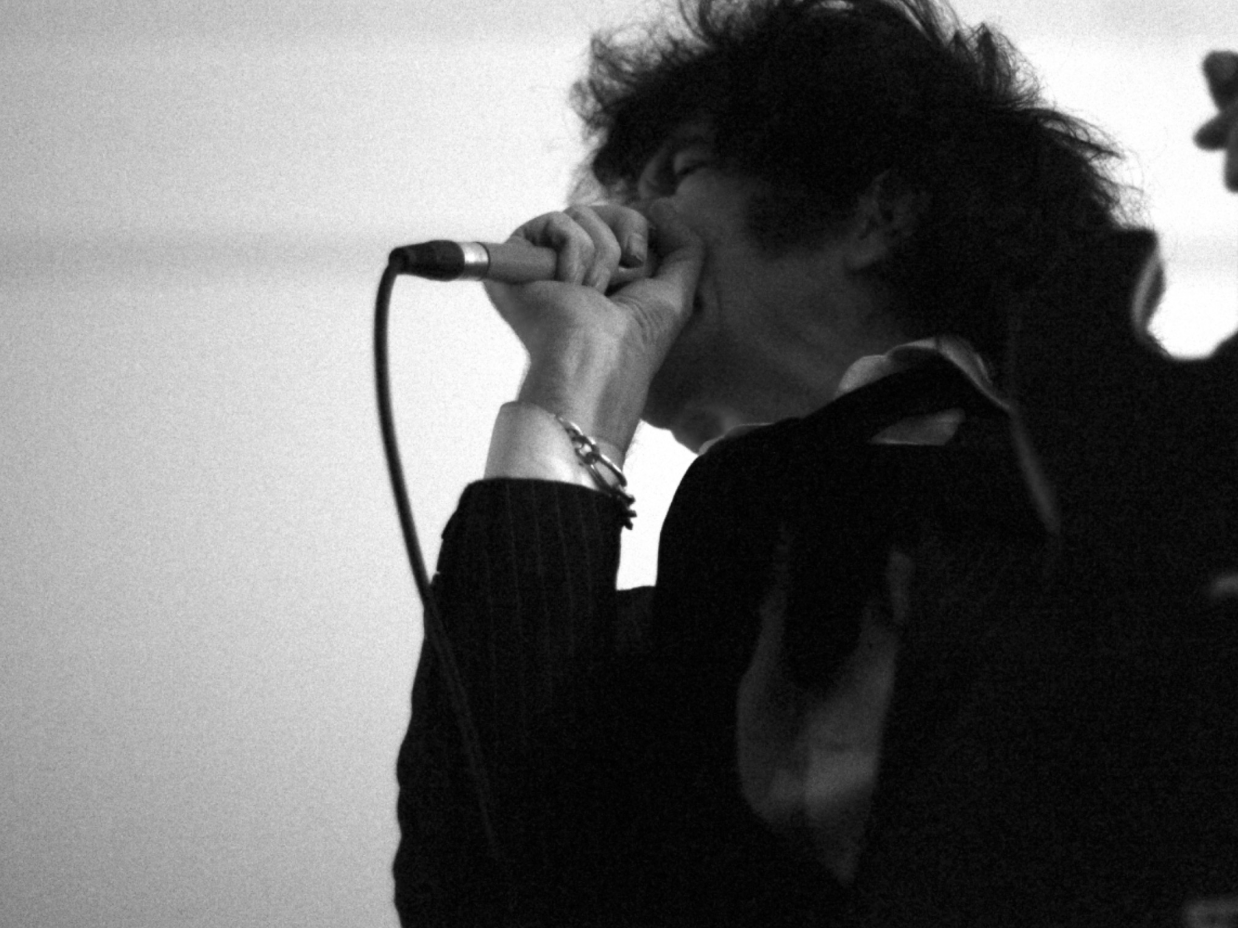
It begins with a séance. Each participant, trained for the task at hand, slows their heart rate and hones their focus. They huddle around the candlelit dining room table of a renowned psychic medium. “This group is here to summon their deceased heroes and heroines, to ask for messages of guidance in their own musical pursuits, to understand the magic of Rock ‘n’ Ro—” She chokes on a familiar voice, rising out of the formless to address the room…
A resulting transcript from this ritual has since been edited and organized by séance participant and Rock ’n’ Roll maverick Ian F. Svenonius into a comprehensive text titled Supernatural Strategies for Making a Rock ‘n’ Roll Group. Svenonius’s manual shares a collection of potent advice from Rock ‘n’ Roll’s departed souls with those living and looking to go electric. A singular work at the crossroads of the mystical and the practical, the book was both feared and embraced upon its 2013 release. Akashic Books recently resurrected Supernatural Strategies with a second edition, putting this once out-of-print artifact back on shelves.
For those wondering why art industries have been set up in favor of the dollar, or for artists strategizing to avoid compromising the integrity of their work, Svenonius has crafted a piece of required reading that has only become more relevant with time. Supernatural Strategies is a pocket-sized guide packing countless revolutionary ideas, the wisdom in each chapter sure to outlast manipulation of artistic expression in all its subversive forms for centuries to come. We recently met with Svenonius in an undisclosed location to drink coffee and talk about a handful of ideas presented in his visionary opus.
TG: In 2012 you interviewed Henry Rollins for Soft Focus and offhandedly mentioned to him that you have an FBI file…Do you think that they started a file on you because you were writing the Supernatural Strategies?
IFS: Well, I got visited by the FBI because of an email…it’s just one of those things where we’re just in a surveillance state…that’s like theater or something, them visiting you…it was weird…
TG: Where did you grow up?
IFS: I’m from Maryland.
TG: When you were growing up in Maryland were kids forming groups?
IFS: Well the D.C. punk scene was happening. I lived right outside D.C. so…I learned about punk when I was in Junior High…and then I learned about these bands that were actually happening in the city and it was like “Oh wow!”…that was the aspiration, to just be a part of that. And then there’s always this kind of thing of like “well of course you’re gonna be in a band” because that was the currency of expression…If you’re on the Left Bank in France you’re doing a painting or something but if you were in D.C. in the early eighties, its punk rock.
TG: You start Chapter One of Supernatural Strategies by making a call to create something embarrassing…which I think is such good advice especially now…I don’t know if anybody’s telling anybody to do that.
IFS: Yeah. I mean we’re living in a timeline where the past used to be kind of a myth or a rumor or this idea…now we’re inundated with the greatest example of everything at all times. It's a very overwhelming and kind of like stultifying climate to be in creatively because you are just smothered by all the best examples. You didn’t used to be able to just access every cool Suicide clip that existed and every obscure B-side…you were kind of stuck.
TG: Even finding the Suicide album was hard.
IFS: Yeah exactly, you had to go search for it. But now its not only the Suicide album, its like every cool tidbit, or these great photos…anyway, its spread a real conservatism in expression in general because everything now is about repeating these incredible examples of the past and conforming to the standards. And at the same time, there’s a real consequence to doing the wrong thing or saying the wrong thing, right? So…there’s this idea that if you did something dumb it’s just gonna be with you forever, you know? So if you wear a goofy hat then suddenly it’s like that’s all you are. You can’t outlive these moments anymore.
TG: You’ll be “the goofy hat guy” for the rest of your life.
IFS: Exactly. Iggy Pop did his goofy performance with all the fake blood and the nazi armband in the early 70’s, and we know about it…but it doesn’t define Iggy Pop. Iggy Pop did thousands of other things and that’s just like one thing he did…but now there’s this fear. There’s a real fear and there’s just this mandate for absolute conformity, and the easiest way to be sure that you’ll be okay is to be exactly like something else that everybody likes. “Everybody likes Joy Division, I’ll make a band that’s exactly like Joy Division. The only difference is we won’t have the kind of like weirdness. It won’t be eccentric like Joy Division but it’ll sound like the institutionalized aspects of Joy Division.” So the book was written before this paradigm but it’s actually more poignant now than ever…Art and language have developed over thousands of years to be things which could speak in different ways simultaneously. There were nuances, and there was double entendre, and there was humor, and there was irony, and all this stuff developed. But in the digital age we’re all supposed to be absolutely literal and all you can say is what a good person you are, and tell everyone what a good person you are, it’s really disgusting. And it’s absolutely the antithesis of Rock ’n’ Roll and, really, art in general. These things were always supposed to be things which kind of were outside of morality and outside of logic and rationalism. They were supposed to be our sort of entryway into magic and the dream world, and the surreal and absurdity…And now actually art is the greatest enforcer of this kind of like insane conformity.
TG: Yeah, where expression used to be “let’s explore”…
IFS: Or even just “let’s say something”.
TG: “Let’s say something and see what happens!”
IFS: “Let’s say something that’s like…insane.”
TG: Yeah, totally, 100% “and see how it goes down…”
IFS: So we’re living in a digital world of absolute oppression…people I don’t think have countenanced the amount that it’s repressed and oppressed them, and how much it’s destroyed our world. It’s not only destroyed every industry and every livelihood and every pastime, it’s also destroyed our ability to communicate. When you talk to somebody now you really are like essentially looking over your shoulders both ways and parsing your words in a way that’s incredibly repressive…
TG: It makes you surveil yourself.
IFS: Yeah, you’re surveilling yourself at all times.
TG: It’s spooky.
IFS: So…we have to comport ourselves like we’re in a Victorian court and that’s fine, but the problem is that it’s extended into art and expression…The CIA is famous for assassinating people and overthrowing governments, but their main thing is really the arts…
TG: What is the fear about the arts? Is it because it’s magic?
IFS: Yeah. The artist is a schmuck. And they can completely change society with an idea. They’re very powerful. The Nazis were obsessed with degenerate art, they were like “we gotta get rid of this degenerate art”. Stalin had his dictums about art and the CIA financed Jackson Pollock…this is all well known but the point is it’s because the ruling class understands the power of the artist much more than the artist.
TG: You talk in Supernatural Strategies about the magic of something that you’re working on with a group…it can’t be exacted. The magic has its own life and does its own thing…What do you think happens in the space between a group’s initial intention and the point where they might turn around and go “this had this effect that I disagree with”?
IFS: I don’t know…you can say something and people might interpret it in all kinds of different ways. The Sex Pistols said “anarchy”. They weren’t really anarchists…Johnny Rotten is like a hipster who likes krautrock and he’s kind of a perverse guy, but then it inspires Crass Records…All these politically-minded hippies hear the word “anarchy” and they’re like “oh wow, this shows real potential…”. I’m not saying one is better than the other, I’m just saying that’s a good example…
TG: How do you see Rock ’n’ Roll moving forward?
IFS: Well Rock ’n’ Roll, let’s define it, has no definition. All Rock ’n’ Roll is is an expression that typically has a beat and is electric. That’s essentially what Rock ’n’ Roll is. It’s not like other music that has some kind of parameters—cha cha music or classical music—there’s these conventions and if it steps outside of those conventions it’s no longer that music, mambo music or techno even. Brian Eno is in the Rock ’n’ Roll section and so is Chuck Berry, so you have this really broad idea of what Rock ’n’ Roll is. And that’s why it’s so great…I think the reason it still resonates with people is because it can be made by anybody. It’s the one art that didn’t just become purely a corporate form. You think about professional sports, people used to all play sports and then sports became professional, and now, people don’t really play sports. They watch sports. And that’s kind of what Rock ’n’ Roll was becoming I think…the Punk thing kind of wrested that away from the industry because what’s good about Rock ’n’ Roll is its amateurism…It’s anybody’s game, anybody can step in…So what’s next for Rock ’n’ Roll? I mean, I don’t know. The problem with it now is because of this digital conformity mandate but I would say that’s a problem that pervades all the arts…and on the other hand there’s a lot of this kind of identity thing that’s essential to it now. Where it used to be this idea of inventing yourself, now there’s this sort of essential idea of identity…it’s sort of like tied in a lot with identity politics, which is fine, but it’s not what makes Rock ’n’ Roll interesting…
TG: I’m sure there could also be a parallel between home recording becoming so accessible, singular people creating worlds, and there being less of a call to the group…There’s less of a feeling of “this is about an idea that’s bigger than us.” It becomes “this is about me finding my identity.”
IFS: 100%. People used to have to be in a band and there was all this compromise because you had to put up with these other people. It was a collective voice…the band used to be characterized by this subsuming of the individual… “we are the Rezillos”, “we are The Who”, and you don’t really have that anymore.
TG: The last thing I want to touch on is this idea mentioned throughout the book as well as in the Escape-ism track Last of the Sellouts, the idea that opportunity is something to be incredibly wary of. Can you speak a bit more on that?
IFS: Well I mean…as (you) get poorer and poorer it gets harder and harder to say “no” to an opportunity, but ideally you would just say “no” to almost every opportunity because you don’t wanna be a part of any of that shit. Ideally you would be like Woody Guthrie. But Woody Guthrie didn’t have a cell phone bill…