
11 Yes (Good) - The I Ching
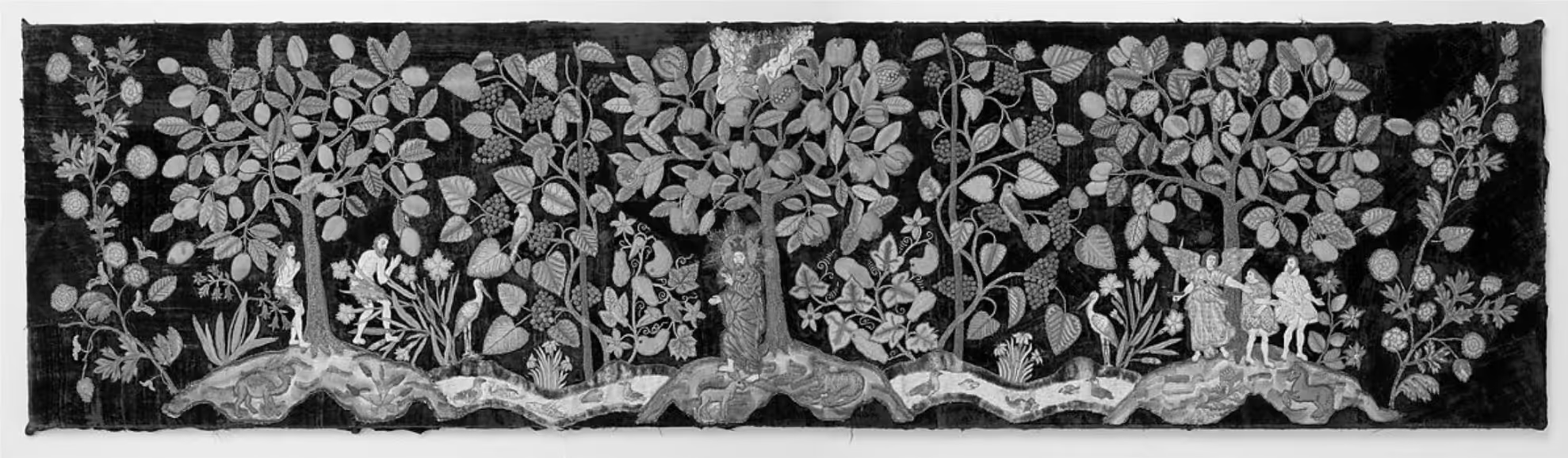
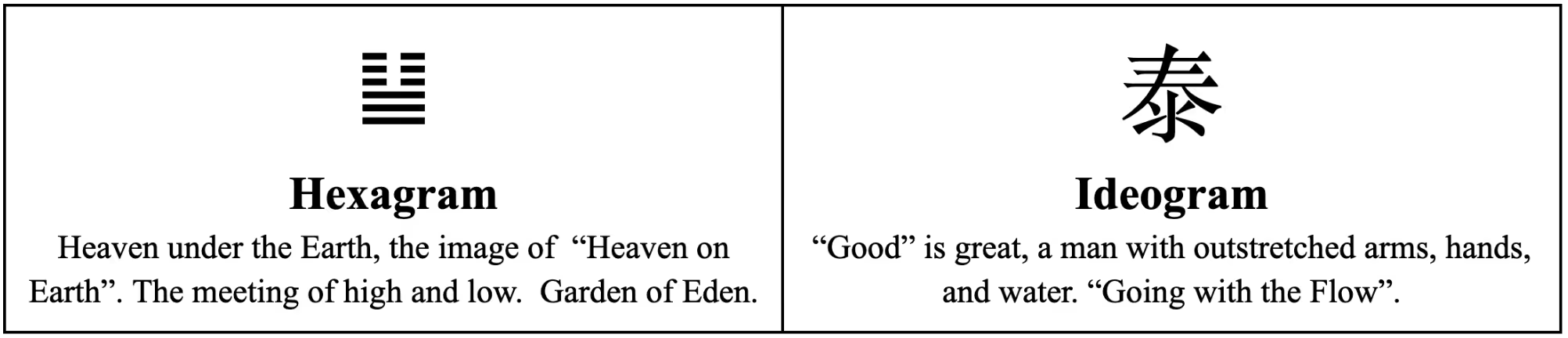
In this Hexagram, we are once again given an image of something close to the perfection of Heaven: the Prelapsarian World, the Garden of Eden. Unusually here, Heaven, which traditionally remains high, is below the Earth. They are interwoven and unified before the Fall. This is “Heaven on Earth”, but in the text we see that the seeds of decay have been sown, and that this pleasurable condition will not last.
1 The opening line is remarkably close to Christ’s Parable of the Tares in Matthew 13.
In this line we see the intermingling of the Low and the High, Matter and Spirit, Earth and Heaven. “Et in Arcadia ego” - even in Paradise, evil has been seeded.
2 The condition of material existence necessitates our affirmation of difficulty. We must find the balance in any situation.
3 A profoundly Solomonic wisdom, there is a time for every thing. One could say the I Ching itself is the “clock” that indicates what sort of “time” it is. As for the affirmation at the end, it is a direct mirror to Solomon’s words in Ecclesiastes 9:7 :
4 As in previous hexagrams, we get by with a little help from our friends.
5 In a way, this is another image of the High and Low coming together - the union of the Holy Spirit and Mary, the Divine and the Mundane marrying.
6 By the final line, the condition has decayed. The divine structure has fallen, and individuals must take hold of their own fate.
Qabalistically, this Hexagram illustrates the axiom “Malkuth is in Kether”, base matter exists within the Divine. Before the Fall, God was interwoven with the world. It is the nature of things to change, and accordingly this state of Paradise could never last. Though the state is finite, the hexagram affirms that it does return time after time.