
22 Shining - The I Ching
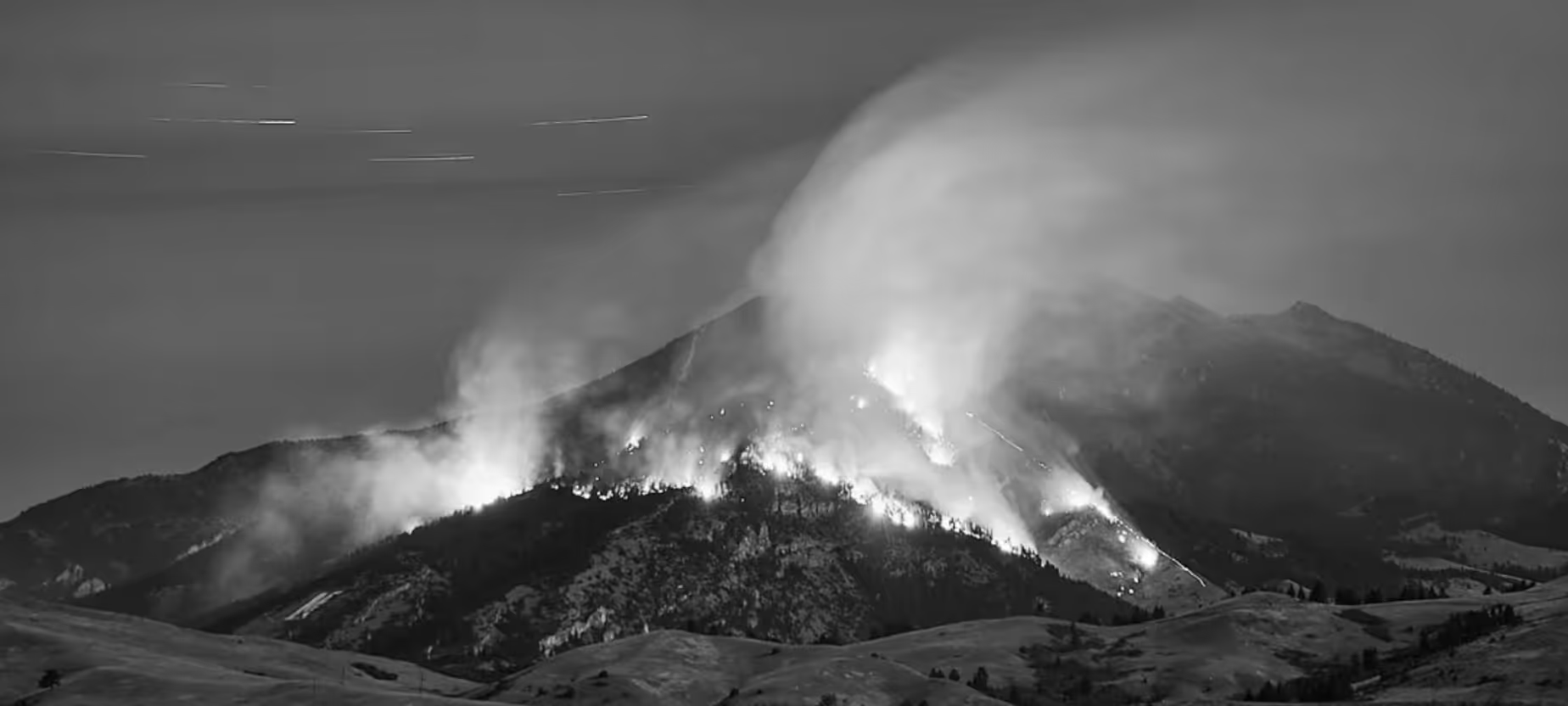
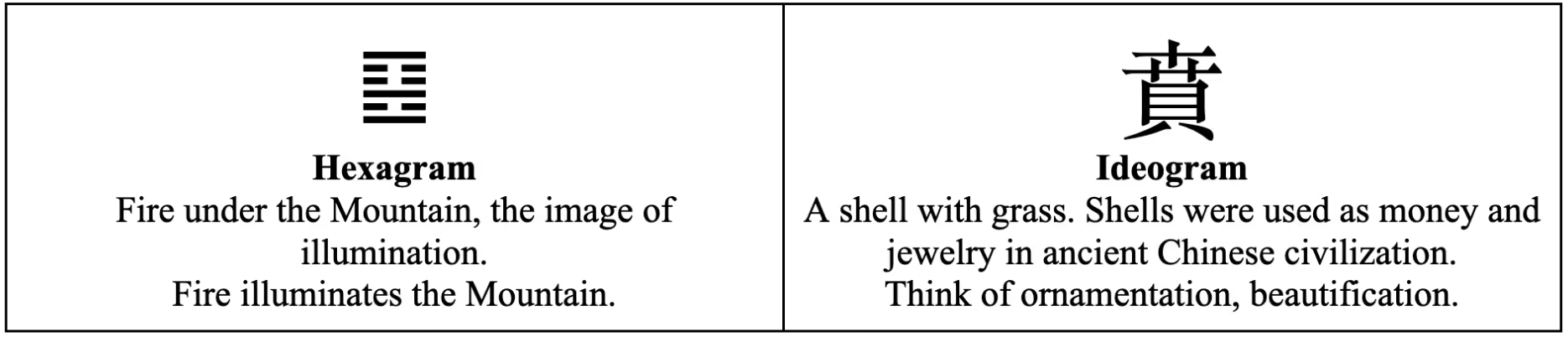
The hexagram gives us the image of fire at the foot of a mountain, and the resulting beauty and illumination. The ideogram shows grass, and a cowrie shell - the currency of ancient China, Africa, and India. Just as gold was used for both money and jewelry, so too were cowrie shells. The image is that of a cowrie shell necklace; something to make the face shine.
Judgment: Jewelry and beauty are a sign of prosperity, but one should not go too far lest they risk being gaudy.
1 When we make our feet beautiful, walking is a joy. Consider the excitement of a child with new shoes, ready to show them off.
2 A beard on its own is a sort of ornament to the face, when we decorate it further, it can show power. We can think of the Postiche, the golden false beards worn by ancient Egyptian Pharaohs.
3 Jewelry can become dull when worn regularly, in which case we shine it to make it glimmer and sparkle again. The shine is the valuable part of jewelry, consider how jewelry mirrors the natural glimmering of water.
4 Here we see an echo of Bellerophon riding a winged Pegasus and then falling, or perhaps more vividly, Christ on a White Horse from Revelation 19:
And as he appears in 1 Thessalonians
This is the shining of the Divine.
5 Though the thread of silk is small, it is very strong, having greater tensile strength than a comparable steel wire. It looks weak on its own, but will make something fit for a king when put to use.
6 Here there is shining without a source, the white light of what is beyond the shining sun and stars. An almost universal feature of near death experiences is the vision of endless white light.
Mankind has left behind an endless history of beauty. From primordial times when we gathered the smoothest rocks and shells, to the modern day mining of gold, silver and jewels, we have always valued what shines. In the luminous we see the divine, and hope for life in the hereafter.
The correspondence with the Path of Nun and the Tarot card Death is significant here, from it we can see the beautification of the dead - a vital practice for the ancient Egyptians and Chinese, who fantastically decorated the bodies of the dead, their tombs, and their graves (even pyramids are graves). This is also the simple act of putting coins over the eyes of the dead.
Adding “Earth” to the titular ideogram gives us the word for Grave: 墳. A grave is beautified earth.