
The Ancient Sky - Cancer
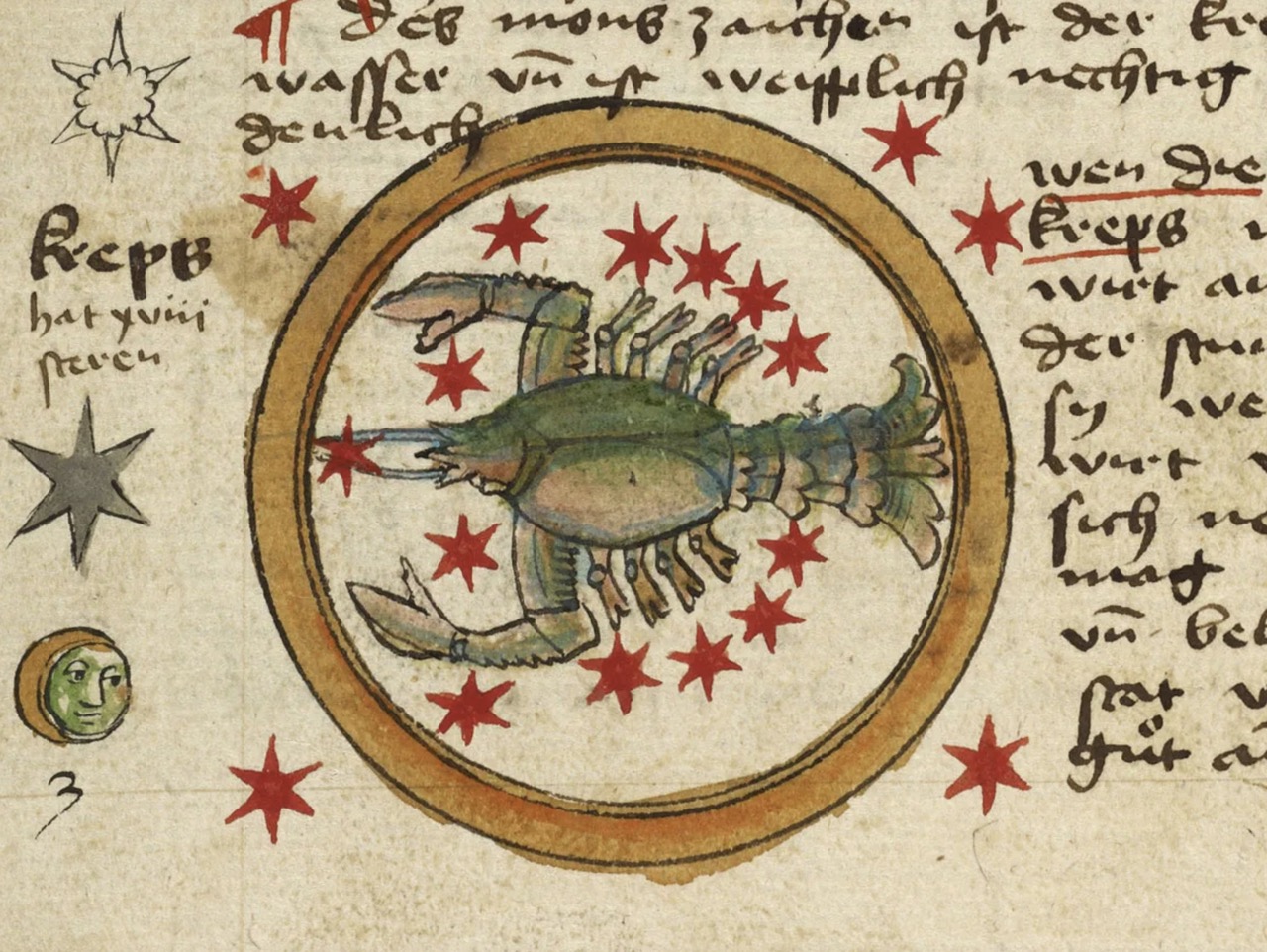
The Giant Crab scuttles quietly across the summer heavens. Often overlooked in favour of the brighter, boastful figures of the zodiac, the faint stars of Cancer were charted by the Babylonians as the Crayfish, revered by the ancient Egyptians as the sacred scarab of rebirth, and immortalised by the Greeks as a creature of fierce, unwavering loyalty. Despite the relative dimness of its constituent stars, for thousands of years stargazers have watched the sun reach its highest northern peak within Cancer’s borders, standing at the very threshold of the summer solstice before beginning its slow retreat back toward the dark.
As the summer heat matures the crops and the longest days of the year begin, the sun leaves the restless, dual nature of Gemini and enters the constellation of Cancer. With this move, the world shifts from outward curiosity into the deep, protective waters of home, ancestry, and sustenance. Cancer is the fourth sign of the ancient zodiac, bridging the gap between the height of solar power and the inward pull of seasonal change.
To ancient civilisations, this faint, inverted Y-shape of stars was defined not by a single blazing beacon as other constellations were, but by a misty, glowing smudge at its centre known as Praesepe, the Beehive Cluster, that farmers and sailors read like a weather vane. When the Beehive shone clearly in the night sky, the weather promised to stay fair, but if the cluster vanished into an invisible haze, a summer storm was gathering on the horizon. Like all of the constellations, its physical materialisation is mirrored in its mythology, and the quiet, protective vigilance of the stars is explained by a myth of maternal devotion, duty, and sacrifice.
In the ancient Greek telling, the story of Cancer is bound to the Twelve Labours of Heracles. Driven by a bitter, relentless hatred for her husband Zeus’s illegitimate son, the goddess Hera sought to thwart Heracles at every turn. When the hero traveled to the fetid, mist-shrouded swamps of Lerna to slay the multi-headed Hydra, Hera saw an opportunity to stop him. Knowing the beast was nearly invincible, she summoned Karkinos, a colossal crab lurking in the shallows of the marsh, and commanded it to attack the demigod while he fought for his life against Hydra.
Emerging from the mud, the giant crab clamped its pincers onto Heracles’s heel, attempting to drag him down into the mire and leave him vulnerable to the Hydra’s venomous fangs. Enraged by the sudden pain, Heracles, son of Zeus, swung his massive club and shattered the crab’s thick carapace, killing it instantly. Despite its failings, Hera was moved by the beast's unhesitating obedience and willingness to throw itself against an unbeatable foe on her behalf. In gratitude for Karkinos’ loyalty, she gathered its broken form from the swamp and placed it among the stars as the constellation Cancer, forever denying it the brightest stars in the sky as a subtle reminder of its defeat, yet granting it eternal life.
Yet the celestial crustacean’s roots reach far beyond Greek tragedy, stretching back to the river valleys of ancient Babylon. In their astronomy, recorded in the MUL.APIN, this patch of sky was known as Al-lul, the Crayfish, a creature tied to the life-giving waters of the Tigris and Euphrates and the subterranean freshwater ocean of the god Enki. To the ancient Egyptians, the constellation was not a crab at all, but Khepri, the sacred scarab beetle who rolled the newborn sun across the sky each morning. With the summer solstice, the sun reached its highest point in the heavens within Cancer during antiquity, and the Egyptians saw these stars as the ultimate symbol of creation, renewal, and the eternal cycle of life rising out of darkness.
It is unusual, perhaps, for such a minor mythological figure to be immortalised amongst the twelve Zodiacs. Karkinos is ignored in many classical tellings of the labours of Heracles, and described in varying detail when it is included, yet Cancer marked the great turning point of the year’s journey. Its presence signalled the peak of summer's warmth and the quiet, inevitable shift toward the harvest and the autumn to come. The myth of Cancer reminded ancient humanity that true devotion does not require dazzling power or certain victory, only the courage to stand firm in defense of one’s own. Still today, the faint crab keeping watch over the summer sky stands as a quiet testament to loyalty, resilience, and the protective shelter of home.