
4 Youth (Foolishness) - The I Ching
Les Jeux et Plaisirs de l’Enfance, Claudine Bouzonnet-Stella. 1657.
Chris Gabriel November 29, 2025
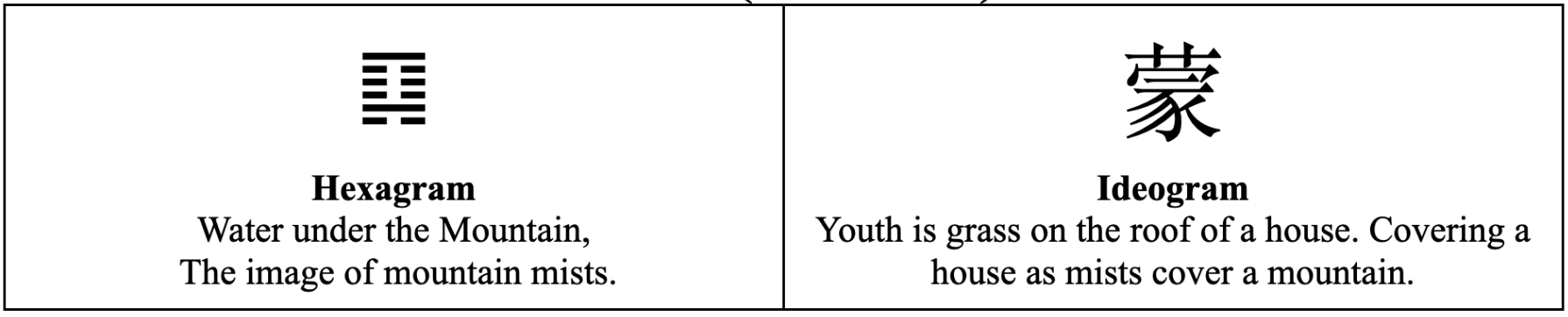
Judgment
I don’t seek young fools, young fools seek me.
They bite their questions at me.
If they ask too many, I get annoyed and will say no more.
Lines
1
To enlighten a fool, don’t spare the rod. It loosens their shackles.
2
To make the fool wise, let him enjoy a wife. Their child will be able.
3
Don’t choose a woman who sees a rich man and gets on her knees, she is worthless.
4
Trapped in foolishness.
5
The foolish child is blessed.
6
Attacking fools will get you nothing. It’s better to defend them.
Qabalah
Yesod to Netzach: The Path of Tzaddi. The Emperor.
Yesodic phantasies obscure the vision of Netzach
The sprout we met in hexagram 3 has grown into a foolish youth. Here, the struggle is no longer for existence, but for understanding. We are dealing with youth, foolishness, confusion, and what is obscured. The hexagram offers the image of a misty mountain; we can imagine a climber looking up, unable to see what is ahead. This is the situation of a child, they stand at the very foot of the mountain of their life, and are unable to see any of what lay ahead. The ideogram gives us the image of a house with grass covering the roof. We can think of a house so covered in ivy that we can barely see it. Both give us a clear picture of what is obscured.
The Bible describes this state precisely:
11 When I was a child, I spake as a child, I understood as a child, I thought as a child: but when I became a man, I put away childish things. 12 For now we see through a glass, darkly; but then face to face: now I know in part; but then shall I know even as also I am known.
This hexagram is about seeing through a glass, darkly. The lines, however, offer advice to the dazed and confused youth. The Judgment here is notable, and has always guided my personal ethics in reading both the tarot and I Ching: “Never read someone too often, and never ask the same question again and again”. To fall foul of this, the tarot will start to give “bad” cards, the I Ching will tell you quite directly to stop, as we see here.
1
Line one shows us that physical discipline is a necessity for enlightenment; the mind is free when the body is put in its proper place. This is universal in spiritual traditions. Fasting, meditation, even torment are used to free and enlighten the mind.
2
For those who don’t seek religious enlightenment, the best thing is to have love and to make a family. This is the highest achievement for someone who isn’t seeking things beyond the material.
3
As such, choosing a proper partner is very important, the line here warns of what we would call “a golddigger”. The right wife is necessary to make a good family.
4
Without heeding these wisdoms, we can become trapped, totally confused, blind, and lost in our own confusion. Many live their lives this way.
5
The foolish virgin scorned in the Biblical parable is redeemed here. A foolish virgin makes a perfect student for wisdom. Untouched by the world, they will be able to see beyond it.
The foolish child in this line is the divine youth of myth and folklore, like the Egyptian Harpocrates and Tom Thumb of the Brothers Grimm. They are always in danger of being eaten, endangered, and trapped, yet they always find a way out, for they have a profound destiny in their future.
6 All of us can find ourselves getting irritated with the ignorance and stupidity of others. It is an aggravating thing, but attacking them is silly for we cannot gain from them. By protecting the fool, they can eventually grow wise.
Youth is the proper time to be foolish and confused. We can experiment and learn, and begin to see clearly the contours of the great mountain of life that we are to climb.