
Inhabiting the Space of Sensitivity
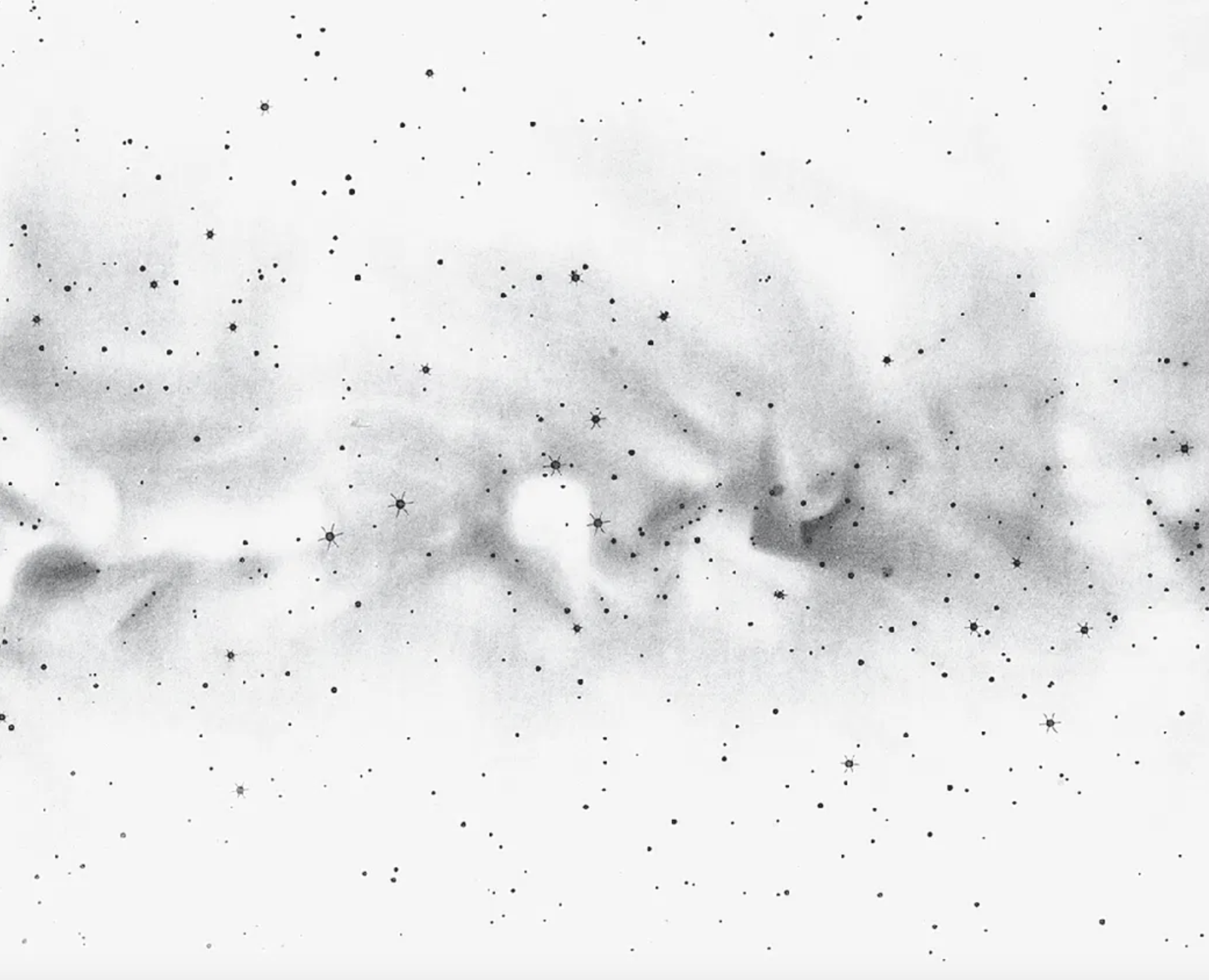
Die südliche Milchstrasse, Anton Pannekoek. 1928.
Tuukka Toivonen March 17, 2026
Volumes have been written about how digital and consumerist distractions shorten our attention spans and hamper our cognitive abilities. Much, too, is being said about how algorithmic technologies, while undoubtedly powerful, are diminishing our ability to think, learn and create in original ways. But how well do we understand that most subtle and most wondrous of faculties on which those endangered abilities rely – sensitivity itself? Are we cherishing and consciously fostering it, allowing it to speak to and gently guide us towards the things that revitalize us and away from those that don’t? Are we ensuring that our sensitivity cooperates with our cognitive thinking abilities to bring forth the highest levels of insight and intelligence within us, genuinely letting incoherence become a catalyst for coherence, as David Bohm’s observations suggest it can?
In an earlier life, I used to view sensitivity as a weakness – the lack of a thick skin. ‘Being sensitive’ meant getting deflated all too easily by others’ comments and dreading their reactions to whatever one might do or create. In Finland where I grew up, ‘a sensitive youth’ (herkkä nuori) denoted a fragile and ‘pure’ young soul who could not bear the hard realities of life. The binary subtext was that such a young person could survive life’s inevitable blows only by toughening up and shedding their excessive sensitivity. In this cultural scheme, sensitivity could only be defined as a burden and a problem to be dispensed with. As I matured and entered a graduate school full of wine and cheese tasting societies, I began to associate sensitivity with a certain sense of sophistication. It was a quality that only those with the time for the so-called finer pleasures could hope to cultivate and demonstrate in specific contexts.
Both of these understandings, I eventually came to realise, grossly missed the mark when it comes to sensitivity and the profound role it actually plays in human life and its unfolding. The more artists I met, the more I noticed that a keen sensitivity appeared key to their creativity, much more so than I had appreciated based on my own academic approach to the creative process. This was not a faculty activated exclusively during moments of sketching, painting or designing, but a far more holistic quality of suppleness and awareness that resonated inwardly and outwardly without any real on-off switch. I would notice how my attuned friends would spot the stealthiest of cats with great ease from a distance or how they would run up to large dogs without a whiff of hesitation, picking up the emotions of their newfound canine friends and instantly entering what seemed like a shared moment of aliveness across species lines. For these friends, great sensitivity was ever-present and active, coloring and energizing every moment and seamlessly guiding their outward behavior.
As deeply inspiring as these episodes were, it took still longer – and many challenging life experiences – for me to register just how untethered I had become from my own sensitivity. It was not until making time to properly slow down that I finally realized the steep costs this had imposed, in the form of a diminished sense of direction, meaning and joy in day-to-day life.
As I sought to restore my fullest abilities to perceive, feel and bring about a deeper coherence, I found myself spending more time in what I now call the Space of Sensitivity. Put simply, this is a sphere that exists for the unhurried and non-judgmental sensing of the fullest range of signals within one’s mind and body.
Such sensing often begins with the detection of various distress signals within oneself, for these tend to be hitched to neglected sources of incoherence. These signals may include moments of impatient irritation, weight pressing down on the chest, abdominal discomfort or headaches triggered by recurrent thoughts or dreams. Fully embracing these signals and their subtle sensorial qualities is vital, for it is such continued observation that begins to dissolve that distress and excavate its lessons.
“Sensitivity can then re-establish its role as a basis for our emotions, enlivening all that we experience and infusing it with rich meaning.”
These lessons of discomfort come in many forms: one may suddenly notice having compromised one’s true wishes to maintain relational harmony, or that one behaved with unnecessary aggression after having been made to feel helpless in the face of unexpected criticism. Through such watchfulness, one begins to identify persisting factors that distort or mute one’s sensitivity, from constant over-stimulation to an internalized need to rush to decisions or the belief that what one genuinely thinks and feels doesn’t really matter that much. Fear, in its many guises, may surface as a key culprit, as may addictive and compulsive tendencies of various kinds, along with the terror of simply spending time with one’s self. A range of practices, from hypnosis and somatic or psychedelic therapy to movement and meditation, can be of help in accessing a deeper layer of root causes that may not be so easily detected.
The Space of Sensitivity is nothing but a convenient conceptual container for inner sensing processes of various kinds. As such, it is not a ‘thing’ or a separate entity. Yet conjuring up such a space is helpful because it foregrounds and re-values these crucial processes in the context of day-to-day life, giving one permission to seriously engage with them and inviting one to treat them as sacred. It becomes easier to attend to inner signals of incoherence, which really are engines of coherence, with great intensity and on a continuous basis. This launches us on a path towards a full recovery of our sensitivity in a very different way compared to more casual reflective activity. Sensitivity can then re-establish its role as a basis for our emotions, enlivening all that we experience and infusing it with rich meaning.
As Bessel van der Kolk has found through his influential work on trauma recovery, the restoration of sensitivity allows us to finally ‘want what we truly want’ and consistently make decisions that serve us. Even more radically, as our embodied intelligence becomes so accessible to us that we need little time to read its messages, we become adept at moving from incoherence to coherence and making decisions quickly. Our sensitivity becomes integral to our very being, making it total, unified, unimpeded, natural, immediate. Once we reach a state of non-division between the ‘senser’ and the ‘sensed’ (to echo the non-dualism of J Krishnamurti), our lives can again unfold as one unified movement with little need for resistance or self-fragmentation. We also regain the power to ‘resonate externally’, as inner harmony frees up our energies and helps us to perceive the more-than-human world vividly and in a way that engenders involvement. The deeper significance of restoring our sensitivity is not as the restoration of some narrow or secondary or purely aesthetic ‘compartment’ within us, but as the rejuvenation of our highest intelligence in the most holistic – and ecological – sense.
Hoping sincerely that your journey into the mysteries of sensitivity will continue well beyond this short moment, I will leave you with an invitation to contemplate the following words of the legendary Japanese monk and philosopher Dōgen (1200–1253):
‘The total world in ten directions is one transparent pearl…The total body is a pair of right dharma eyes. The total body is a true human body. The total body is one word. It is transparently illuminating. The total body is the total mind. When one is a total body, there is no obstruction for it; it is graciously smooth and tumbles [freely].
Tuukka Toivonen, Ph.D. (Oxon.) is a sociologist interested in ways of being, relating and creating that can help us to reconnect with – and regenerate – the living world. Alongside his academic research, Tuukka works directly with emerging regenerative designers and startups in the creative, material innovation and technology sectors.