
Otis Black (Lost Songs Project)
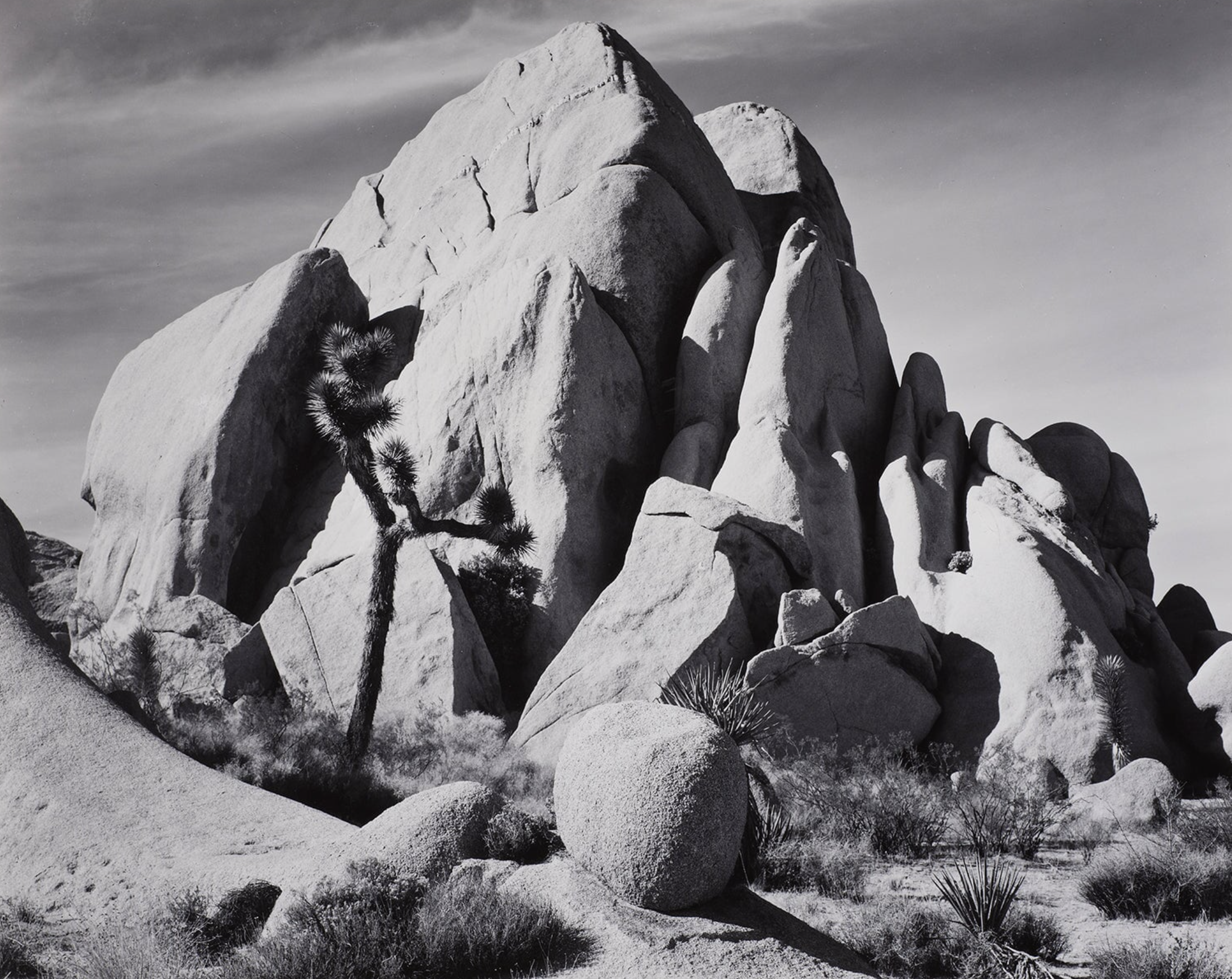
In Joshua Tree National Monument, Ansel Adams. 1942.
Molly Hankins March 26, 2026
Welcome to the latest edition of Lost Songs Project, a series telling the stories behind songs lost to the world until now. We spoke with the LA-based country-Americana artist Otis Black and his co-writer and co-producer Cody Marksohn about their unreleased album, ‘Hellhounds.’ The two songwriters met through a mutual friend and bonded during the 2020 lockdown when Cody, bored out of his mind in Los Angeles, went to help Otis remodel an old house he’d just purchased in Joshua Tree. Even though they barely knew each other, Cody had a family background in construction, was desperate for a project to keep him busy, and knew Otis was someone he eventually wanted to write music with, so he braved the desert summer heat and joined him.
“There’s not a lot to hide behind when it’s 114 degrees and you’re sawing reclaimed wood,” Cody said of the strange period when they went from being musical acquaintances to friends. “But Otis is a great guy and he needed help. I’ve done a bunch of renovations, so I knew how to help. And I think the fact of the matter is that if Otis wasn’t talented, I probably would’ve ignored his texts. But I thought, this guy’s great, I like him a lot and he’s really fucking talented. So why would I not strengthen our relationship? I wanted to be around him. And he’s a crazy musician. So spending more time with someone like that, even doing terrible shit, is still fun.”
Otis had previously been signed to a record label as a 20 year old under the name Otis English. Even with the quick success of his first single “Young Kids, Old Love” in 2016, and subsequently being put in writing sessions with different producers every week, he still wasn’t able to make a living in music. By his own admission, Otis gave up. After the renovation in Joshua Tree was finished, Cody was able to get him to start writing again with the intention of pitching the music to other artists. But as the two hit a flow in their collaboration, it became obvious to both of them that Otis was the right artist to record these songs.
They’ve shared a few tracks off the album with us, and knowing the backstory of how they came to be, you start to hear the liminal space of the blazing desert where they forged their connection amidst the mounting uncertainty of that time period, and how they filled that time with urgent action. Where the action would lead, both in the remodel and song-writing, wasn’t nearly as important as the joy of doing it and building their relationship but both projects became very real very quickly.
Hellhounds 2. Holy Water 3. Carolina 4. Drinking and Driving
MH: Cody, you’ve been writing and producing for other people for a long time, how far into writing these songs did you realize Otis was meant to be the artist?
CM: I always believed. Back when he was signed, he was being put in writing sessions everyday, and I think those people just weren’t taking advantage of being in the room with him. You gotta let him do what he’s good at and then build a song from there, not be like “uhhh so-and-so wants an EDM pop thing with a huge drop. Otis - do it.” Some people are great at that, but I think with Otis, just don’t get in his way and he’ll get to where he’s going. It was very clear very quickly to me, but you can’t force someone or just be like, “you’re doing it!”
OB: I honestly probably would have appreciated that approach.
CM: Well, I guess that’s kind of what our wives did.
OB: My wife’s good at that.
CM: Otis came over one night when we were really at the entry of our flow-state of writing this stuff together. I think we had a few things we knew were sick and we were like, “we love making music, let’s just keep writing this stuff cause we like it. And Otis said “I gotta talk to you about something. I think I wanna be the artist and make this album.” And I was like “Oh my God yes. That’s the best thing I’ve ever heard, that is incredible.” I was so in, and since then almost every time we got together we wrote at least half a song, it felt easy. We were doing our thing with no parameters or assignment. It was just whatever we thought is good, whatever we believed in - that’s what we’re going to do.
OB: I don’t feel like our process is fully getting out of my way. This was a collaborative effort, with me starting by finding something on the guitar or piano for that matter, any instrument that’s in my hand that makes me feel inspired in the moment a just start singing gibberish. Every single one of these songs starts from that point. Then Cody will hear something that I said in my gibberish melodic thing, and be like “that was cool.” Then he’ll start breaking down or…
CM: I translate it.
OB: Lyrically, yea. It’s always taken me a long time to write lyrics. I can churn out an album in a week if it’s just instrumental stuff. Lyrics have always been a troubling point for me and I really have to take time with it to get them right. Cody’s coming from a hip-hop background and a rapping background. I’ll say a few lines and Cody will be able to change around the things that I’m saying,the words that I might be mumbling and paint the beginning of a picture.
CM: For as long as Otis has been learning the musical side, I’ve been obsessing over lyrics. I can’t play instruments or sing melodies, but if someone else is doing that, it’s my favorite thing in the world to go, oh - here’s what you’re saying.
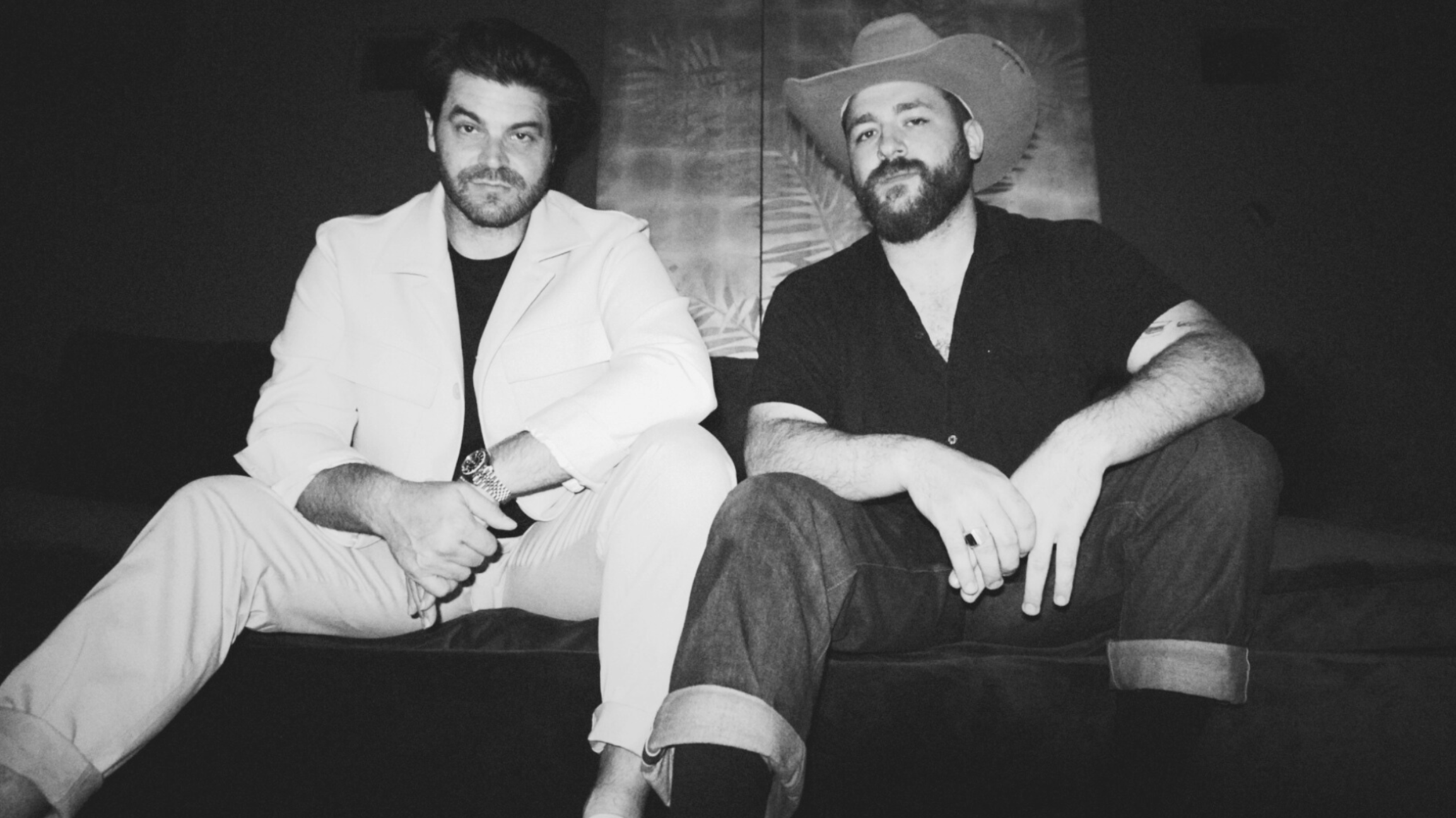
Otis Black & Cody Marksohn
OB: We’ve talked about this a few times and realized how you write is very much a showing of the type of music you grew up listening to. I grew up listening to a lot of classic rock. My favorite band of all time is Zeppelin. When you actually break down the songs of rock music, there’s not a lot going on. It’s not really a lyric-based art-form. It’s like energy and music. And while Led Zeppelin is my all time favorite band, if I were just to pay attention to the lyrics, it loses everything. That’s not what the focus is on, the focus is on the arrangement, the production, the composition of it. And that’s why I feel I’ve always had a problem with coming up with lyrics on the spot is because that’s not what I was raised to do, whereas Cody growing up listening to hip-hop and rap; lyrics are the only thing he focuses on. So coming together on this was an extremely symbiotic relationship.
MH: Are there plans to ever release these songs?
OB: I have to release it at this point. Imagine we come this fucking far and I’m like actually, I want to be a carpenter again.
CM: I feel like there’s such a positive response amongst friends and family that at this point, this is real.
OB: The day I came to Cody and said I think I have to be the artist on this, happened because my lovely wife sat me down. She said, “You’re doing like, sixteen different things right now and you’re turning 30 soon and you should really focus on what you really want to do. You gotta pick something and really stick with it.”
CM: Otis is the only 30 year old I know who was born in the ‘70s.
OB: So I would be over at Cody’s one to two days a week, kinda for funsies, kinda…
CM: Kind of as an outlet.
OB: Well yea, which leads me to ‘Hellhounds,’ which is the first song, the album intro. It’s kind of ambiguous when you listen to the lyrics but it’s about you. Well actually it's about me, trying to get away from writing. I didn’t realize this til after we wrote it by the way; I was driving home, or to the bar where I work, and I was listening to lyrics and went, I think I know what this song’s about, cause when we wrote it I wasn’t really sure. To me that song is about letting a dream go but it still follows you around like an itch on the back of your neck And the lyrics in ‘Hellhounds’ reflect that. It’s like I’m trying my best to get away from the thing that I believe is what I’m here to do, which is to write songs.
MH: It feels like there’s a stark contrast between the timeless sound of these songs and the time y’all wrote them in, which is relatively recently. Do you guys feel that?
CM: Big time. Otis and I had this conversation back and forth a bunch of times through writing this, where we’ve been like, everywhere you look, you’re wondering is that real? Is that video real? Is that dog real? Is this news real? Nothing is revealing itself in a completely believable way. Someone plays a song for you and they say ‘A.I. made that.’ So there’s no artist I can be a fan of now and find their music? It’s just like churned out. So for us, as we wrote it we thought, you know what’s really cool about this? It feels real. Like it’s all real performances on real instruments, no samples, every part of it is a real person playing music.
OB: A couple of these songs are not even technically produced, it’s one mic and one take all the way through, which I really like because it shows a lot of variety. We have full twelve-piece band productions and we still can strip it back to just bare bones, and it creates a lot of dynamic within the album-sphere, the thing that it exists within. But it was semi-conscious. I mean Cody and I had a lot of talks about howthe human element, even if it’s not as prevalent in pop culture, is still something that’s sought after. That was our approach to this. Nothing is quantized, nothing is auto-tuned, it’s all raw on the paper. And I feel like people still want that. I want that.
CM: Same.
OB: And we set out to make an album that we want to listen to.
Find Otis and, someday, ‘Hellhounds’ at Instagram.com/OtisBlackOfficial.
Molly Hankins is an Initiate + Reality Hacker serving the Ministry of Quantum Existentialism and Builders of the Adytum.