
AI, Bauhaus and the Case for Philosophical R&D
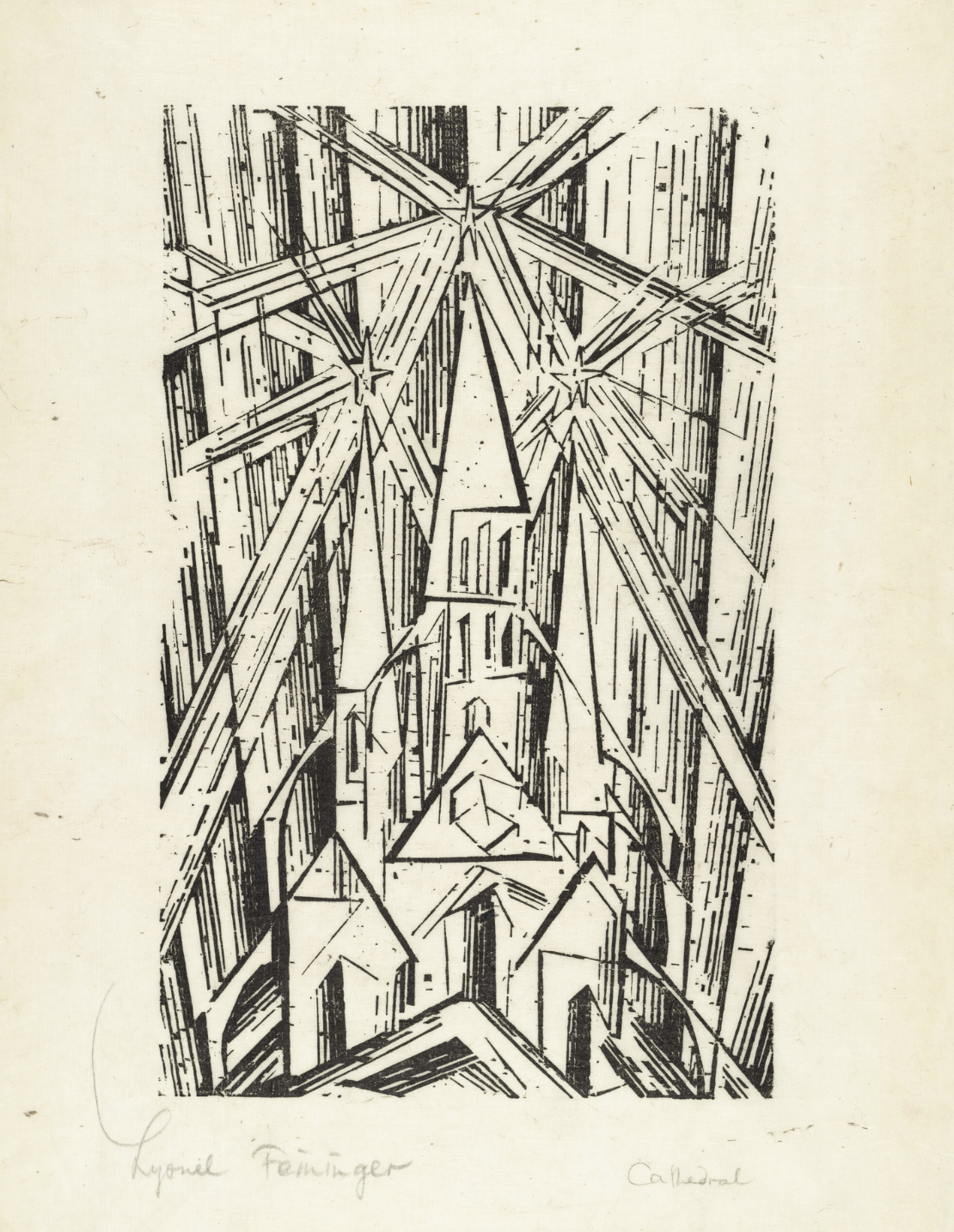
Cathedral (Kathedrale), Lyonel Feininger. 1919. Used as the cover for the Bauhaus Manifesto.
Molly Hankins January 13, 2026
As we begin our co-evolution with AI, questions are being raised from all sectors about the existential implications of this technological quantum leap. According to philosopher Tobias Rees, investment in philosophical AI R&D, and using the ideas generated to further long-term thinking when it comes to responsibleAI engagement practices, is absolutely essential. He believes the true danger of AI is the conceptual lag of humans more than the rapid progression of the tech. “I am adamant that those who build AI understand the philosophical stakes of AI,” Tobias said in an interview with Noema Magazine. “AI defies many of the most fundamental, most taken-for-granted concepts — or philosophies — that have defined the modern period and that most humans still mostly live by.” This millennium, technology has been evolving faster than our ability to learn how to responsibly use it, but the stakes have become much higher with the emergence of general intelligence.
Rees is not worried about AI being smarter than humans but he does believe it’s critical to study how to use it in complement with our human intelligence. “For example, AI has much more information available than we do and it can access and work through this information faster than we can. It also can discover logical structures in data —patterns — where we see nothing. Perhaps one must pause for a moment to recognize how extraordinary this is. AI can literally give us access to spaces that we, on our own, qua human, cannot discover and cannot access. How amazing is this?” Rees asks. The dimensions of life that open up by learning how to work with increasingly sophisticated AI are barely conceivable at this stage in our co-evolution, but awfully exciting to consider.
For instance, what would happen if we used AI to generate data about ourselves, in order to understand our patterns and how we can work on our personal development goals? Rees asks us to, "Imagine an on-device AI system — an AI model that exists only on your devices and is not connected to the internet — that has access to all your data. Your emails, your messages, your documents, your voice memos, your photos, your songs, etc. I stress on-device because it matters that no third parties have access to your data. Such an AI system can make me visible to myself in ways neither I nor any other human can. It literally can lift me above me. It can show me myself from outside of myself, show me the patterns of thoughts and behaviors that have come to define me.” These insights, if taken to heart and acted upon, could offer specific means for disrupting patterns that are often operating at an unconscious level.
“Bauhaus brought artists, engineers and designers together with the mission of elevating architecture to the 20th century and beyond. Now, 25 years into the 21st century, we are well into the most prolific technological advancement in human history, and most of us don’t even know what questions to ask about it.”
To understand why this kind of self-reflective partnership is even possible, we have to pause on what makes contemporary AI fundamentally different from earlier technology. For most of technological history, machines mirrored human logic in advance; we told them what to do and how to do it. Intelligence lived upstream in the designer’s assumptions, rules, and categories. The machine merely executed. What we are encountering now is something more strange and less predictable. “We do not give them their knowledge. We do not program them. Rather, they learn on their own, for themselves, and, based on what they have learned, they can navigate situations or answer questions they have never seen before. That is, they are no longer closed, deterministic systems. Instead they have a sort of openness and a sort of agentive behavior, a deliberation or decision-making space that no technical system before them ever had,” he explained.
Rees points to the Bauhaus School, founded in 1919 in Germany by architect Walter Gropius. He believed that the introduction of new building materials such as steel, concrete, and large-scale glass represented such a fundamental rupture to the field of architecture - which had been working with essentially the same building materials for centuries - that a multi-disciplinary educational think-tank was needed to understand how to best utilize them. Rees says, “We need philosophical R&D labs that would allow us to explore and practice AI as the experimental philosophy it is. Billions are being poured into many different aspects of AI but very little into the kind of philosophical work that can help us discover and invent new concepts — new vocabularies for being human — in the world today.” Bauhaus brought artists, engineers and designers together with the mission of elevating architecture to the 20th century and beyond. Now, 25 years into the 21st century, we are well into the most prolific technological advancement in human history, and most of us don’t even know what questions to ask about it.
AI ethics think tanks done Rees’s way, with a philosophical R&D approach and participating voices from many different disciplines, are how we prevent the future of AI from being determined solely by corporate incentives, security panic, or political agendas. If we don’t make the investment in understanding the nature of our relationship with AI, Rees predicts that people will keep trying to understand the new in terms of old paradigms, which won’t work, and we’ll get decades of turbulence as a result. Answering the question ‘how do we evolve the human concepts that will determine what AI becomes in the world?’ may spare us some of the growing pains of co-evolving with AI, particularly general artificial intelligence. Rees founded limn, a philosophical R&D lab, which has a YouTube full of elegantly simple explanations of this complex subject, and serves as an invitation to get us thinking about what’s to come with AI, and what kind of relationship we want to have with it.
Molly Hankins is an Initiate + Reality Hacker serving the Ministry of Quantum Existentialism and Builders of the Adytum.