
Responsibilities of the Audience Member
Derek Simpson May 12, 2026
Each artwork, from a crude drawing to a classic album, a middle school stage production to a haiku, is a gift from creator to receiver.
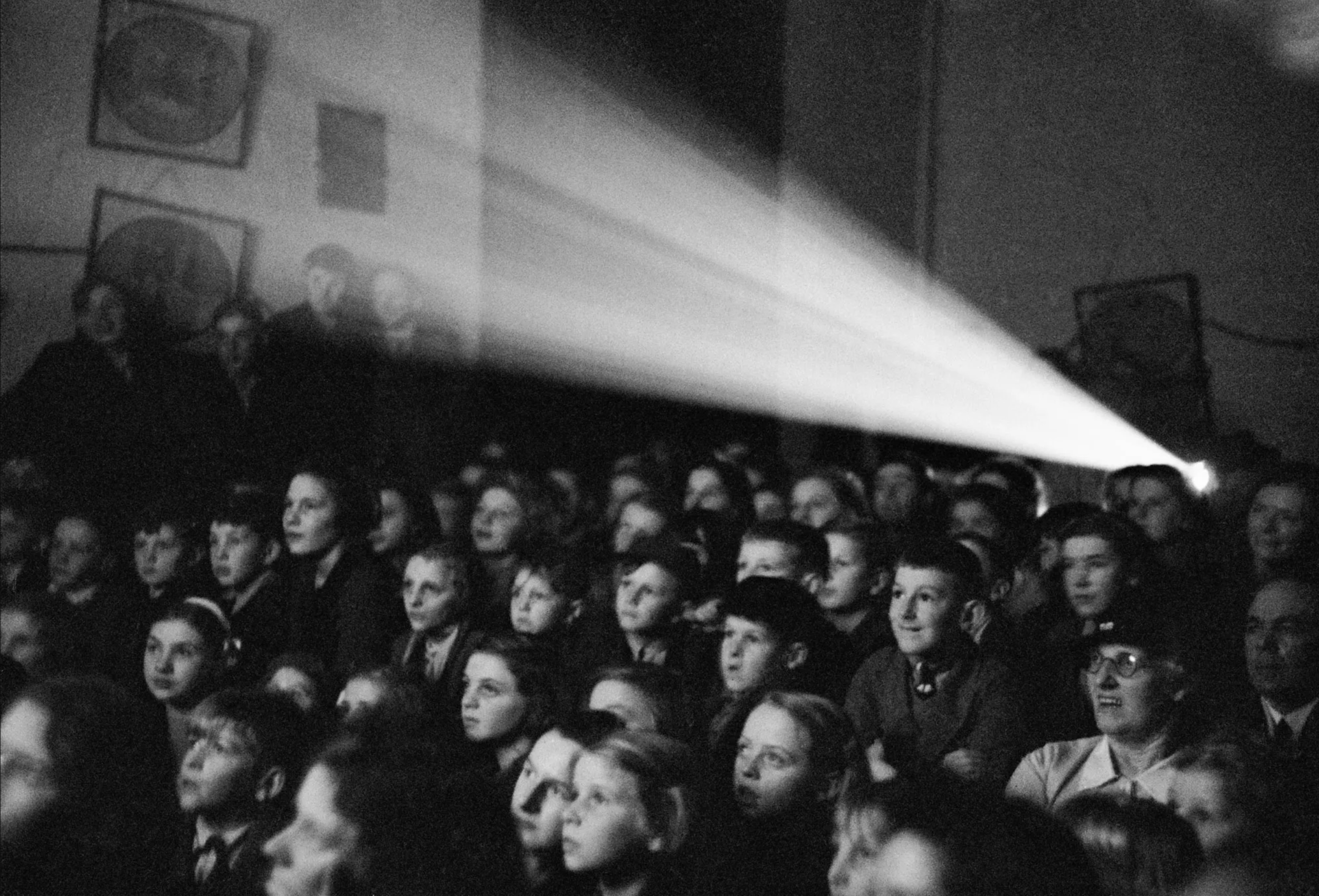
Like a mirror, the artwork directly reflects the individual and when an audience can be made up of many individuals, the artwork has the potential to reflect an entire culture of singular human experiences, presenting a sacred space for internal exploration en masse.
With art experiences more readily available to us now than at any other time throughout history, we are presented with an unprecedented opportunity: to consistently rise to the responsibilities of being an audience member, receiving, reacting, and responding to all artworks with heart.
Receiving
Close your eyes for ten seconds or so, take a single deep breath in and let it out fully. After you’ve exhaled, gently open your eyes.
Immediately, you might notice something, a sense of calm energy. In most moments, we are so overwhelmed with input it feels like there isn’t any choice in where our attention goes. If you focus on your breath with eyes closed for long enough, you will come to a deeper understanding; that you have a wealth of readily available energy moving through you, as all of us do, which can crystalize into attention when met with sensory input.
Attention is one of our most valuable assets. Plenty of ancient meditation techniques are centered around the focusing, refocusing, and harnessing of attention. As attention drifts in our meditation, we use breath, candlelight, or a mantra as an anchor. As an audience member, the artwork is our anchor. It gives us a focal point for our otherwise unwieldy attention.
As a song fades out, we may think we know what’s happening. We’ve heard thousands of fade-outs and we’ll hear a thousand more. But when we treat the artwork as our anchor and choose to receive this particular fade-out to its delicate end, our experience changes. The aim is to pay careful attention to the artwork, to diligently maintain our attention, and to save our attention from what may not be a worthwhile investment.
Alongside more deliberate focus, consciously curating our input is what we do to save our attention. It’s also how we make sure that when we are paying attention to an artwork, we’re showing up in our most honest and open state—ready to maintain our attention with calm vigilance.
Throughout the process of consciously curating, we become aware of all the nuances of our own tastes and sensitivities. Learning how and when we’d like them challenged comes out of experimenting and asking questions:
Do we read the novel or listen to the audiobook?
Do we put it on in the car or sit still with it in the living room?
Do we listen on headphones or speakers?
With some practice, we can continue to watch the ways in which our tastes and sensitivities change throughout our lives. We may even be surprised at the artworks we are one day choosing to receive, as well as how we’re choosing to receive them.
“As we remember the temporal nature of our past art experiences, we naturally respond with wonder and gratitude to their familiarity.”
Reacting
As an audience member receiving an art experience, the first feeling we get is an instinctive hit. Within a fraction of a second after the lights dim and the curtain opens, old bonds break and new ones form. Our earliest memories, the food we ate for breakfast this morning, and all other input we’ve received throughout our lives serve as the countless data points that connect us to the artwork in front of us. It’s a reaction happening at a cellular level, faster than we can consciously perceive, and it is our task as an audience member to notice each reaction as it takes place.
While noticing, we may recognize that a reaction tends to pull on our attention. This pull can severely undermine our relationship with the artwork. We choose not to finish a book based on the headline of a negative review, we cast aside a series in protest of an unsavory cast member, we voice a slight judgement about a song that a colleague put on at work. If a reaction makes itself present in the form of an opinion, it is within our best interest to note it and continue on. A reaction is a gift of nature, but it is not a final judgement of the artwork, just a signal revealing to us our biases and prejudices. As we come into this awareness, we gradually eliminate the possibility of our reaction becoming a detriment to our art experience. In time, it may no longer impair our ability to receive the artwork’s many exquisite subtleties but keeping the relationship honest is up to us.
It may even help us to look for the humor in our reactions. Oftentimes we don’t even have to dissect them, their silliness is apparent on the surface. Any reaction noticed and taken lightly is a reaction well received.
If we give ourselves the gift of a repeat-viewing or a second listen, we notice that our new reaction is different from our first. Naturally, the artwork’s context has grown and changed to reflect our own growth, and our reaction has grown and changed in tandem. With each of our reactions in a constant state of change, we can think of them like clouds. They come and they go. The artwork remains.
Responding:
One of our greatest modern privileges is the limitless access to artworks, new and old. We don’t have to venture to basements all over town, dig through dusty shelves and broken crates like our parents and grandparents did, we have a world of culture and art at our fingertips. It’s a miracle, and although all this access seems to expand exponentially by the day, it is not promised.
As we remember the temporal nature of our past art experiences, we naturally respond with wonder and gratitude to their familiarity. Yet our hearts can open even wider to those unfamiliar, if only we let it. We must realize that the only artworks that enrich our lives are the ones we choose to embrace.
It’s not to be expected that we’ll connect quickly with every artwork. There are some times when we go see a movie, note our reactions, maintain our attention, receive the whole experience, and exit the theater unsatisfied. Our best response here is to listen closely. The nuances of discontent are vast. It’s helpful to hear more of what’s going on inside us before we allow a criticism to be voiced:
Was there a creative choice in the film that we found to be distasteful?
Did we show up to the theater with an expectation that the film did not rise to?
Can we honestly say that while watching the film we were fully present?
As we contemplate, we narrow our field and get closer to what infringed on our experience. The closer we get, the better. Now we can trust that all has been considered, that our critiques are coming from a space totally explored, and that we can speak with clarity in response to the artwork.
Listening for intent may also help us process a challenging artwork with ease, opening more pathways for connection. We can ask ourselves:
What reasons would the artist have had to make that choice?
What was the artwork trying to communicate?
Who was this made for?
Complicated feelings often arise in the wake of an art experience. When we choose to respond to these complicated feelings with heart, the artwork becomes a vehicle for our own growth as well as the growth of the culture surrounding. This is a gift that we can return to the artwork itself, and share with each other as members of the largest known audience to date. We hold the power to turn an expression into a conversation, and we hold the power to make that conversation one which serves us all.