
Film
<div style="padding:56.25% 0 0 0;position:relative;"><iframe src="https://player.vimeo.com/video/1131882992?badge=0&autopause=0&player_id=0&app_id=58479" frameborder="0" allow="autoplay; fullscreen; picture-in-picture; clipboard-write; encrypted-media; web-share" referrerpolicy="strict-origin-when-cross-origin" style="position:absolute;top:0;left:0;width:100%;height:100%;" title="Carlo Rovelli on The Order of Time clip 7"></iframe></div><script src="https://player.vimeo.com/api/player.js"></script>

Woody Allen
1h 30m
10.29.25
In this clip, Rick speaks with Woody Allen about the liberation from reality that the magic of movies has to offer.
<iframe width="100%" height="265" src="https://clyp.it/vhqmuhgf/widget?token=1a9ad43ba175746f93a40671ccb0a3d6" frameborder="0"></iframe>
Film
<div style="padding:54.17% 0 0 0;position:relative;"><iframe src="https://player.vimeo.com/video/1131859554?title=0&byline=0&portrait=0&badge=0&autopause=0&player_id=0&app_id=58479" frameborder="0" allow="autoplay; fullscreen; picture-in-picture; clipboard-write; encrypted-media; web-share" referrerpolicy="strict-origin-when-cross-origin" style="position:absolute;top:0;left:0;width:100%;height:100%;" title="An American Werewolf in London clip"></iframe></div><script src="https://player.vimeo.com/api/player.js"></script>
The Healing Wisdom in a Cup of Sayu
Tuukka Toivonen October 28, 2024
Contemporary society has invented a virtually infinite variety of beverages to help keep us hydrated and provide us with refreshment…

Woodblock Print, c.1800.
Tuukka Toivonen October 28, 2025
“It means that this ability to improve, to be healthy and happy, is always within us. […] Illness occurs when we don’t live according to the law of nature—when we are in dis-ease with nature.” —Kazuko Hillyer Tatsumura, in Healing Your Healing Power (2020)
Contemporary society has invented a virtually infinite variety of beverages to help keep us hydrated and provide us with refreshment. The mere act of selecting a coffee, tea, soda, smoothie or milk to suit our taste has become a feat of some complexity, requiring special attention. But, in the midst of such abundance, how often do we pay serious attention to the temperature of the drink we choose? Beyond opting for cold drinks in the summer or hot teas and coffees in cooler seasons, how likely are we to think about temperature beyond this crude hot-cold binary? And how attuned are we to sensing which drink temperature might actually feel best and have a beneficial effect on our bodies?
I gave little attention to such subtleties until recently, when I began to notice a strange habit proliferating among my Japanese friends. Instead of unthinkingly accepting the usual offer of cold water with ice while sitting at a Tokyo restaurant, they would insist on being served sayu instead. While the word literally translates as ‘white’ or plain hot water (白湯), what normally arrives is a cup of warm water that is comfortable to drink—neither too hot or tepid.
The standard response to a casual inquiry about a person’s preference for sayu is that it helps one’s body and intestines remain warm. Prodded further, a sayu drinker usually goes on to explain that excessively cooling the insides of one’s body is not only unnecessary and uncomfortable but also harmful to health, especially for women. The slight inconvenience of politely refusing icy drinks therefore seems well worth the effort as it is viewed as a way to ward off disease.¹ For many of my friends it therefore appears to be the natural and obvious thing to do (even if the vast majority of restaurants in Japan do not appreciate this preference just yet!).
When the opportunity arose, a few months back, to join a well-known Japanese holistic summer retreat rooted in East Asian notions of self-healing I began to reflect further on the significance of sayu. I began to see how the simple practice of ingesting warm water might conceal within it an entire system of thought, built around notions of energy, balance, and non-interference in natural processes.
The minimalistic retreat in the foothills of Mt. Ariake—housed in calming wooden buildings carefully embedded in the local terrain—was designed around the three simple pillars of food, rest and light movement. Nurtured by two daily macrobiotic meals, ample sleep and long walks along pristine mountain rivers and forest paths away from urban noise, I proceeded to undergo an unexpected, quiet transformation during my five-day stay. This culminated in a profound sense of lightness, insight and joy and there was a sensation of simultaneous physical and mental healing and wholeness. I found myself leaving the retreat with a greatly strengthened interest in the nature of self-healing.
Soon after returning to my urban life I began to perceive how, my regenerative research interests notwithstanding, I had previously hesitated to fully embrace the total intelligence of my own body, from astonishing intrinsic ability to heal to its tendency to align with myriad rhythms beyond its boundaries. I had not appreciated deeply enough the ways that such intelligence—from subtle bodily sensations to circadian rhythms, the fluctuations of the nervous system and the aliveness of the microbiome—sustain us as living beings and constantly interact with and adapt to the world around us.
“The underlying system of healing views nature’s energy as immensely more powerful and superior to anything that humans might themselves invent or implement.”
Having been through a powerful healing experience in a setting that was distinctly non-interventionist was, therefore, a rather humbling experience. I began to wonder anew whether our conscious rational selves had much to do at all with fundamental healing processes. Perhaps we were no more in charge of the dynamics of our bodily health than we were able to consciously control our billions of gut microbes. Is our equating of self-healing with ‘self-care’ a delusion, owing to a misplaced confidence in the ability of the self to direct and, indeed, lead the healing process? Just as millions of cells within our body regenerate second-by-second through what is an essentially automated process, perhaps healing in general was simply something that our bodies did naturally when not disrupted or hampered in some way. I came to understand that the essential thing to do—very nearly the only thing we could do—was to create the conditions that would allow natural processes to unfold to their fullest extent, without disturbance from things like chronic stress, excessive stimulation or the ingestion of harmful foods and drinks.
This basic principle—doing what we can to enact ideal conditions for self-healing while minimizing harmful disruptions—lies at the very heart of East Asian medicine as it is generally practiced in Japan, China and beyond. Though rarely articulated at this level of abstraction, the daily nutritional choices and other health-related behaviors of contemporary Japanese people (including those that have to do with temperatures) still reflect this central principle and it is through this lens that they can be situated and understood as a coherent whole. Part of an expansive field of richly diverse practices, the underlying system of healing views nature’s energy (expressed as ki in Japan and chi in China) as immensely more powerful and superior to anything that humans might themselves invent or implement. This means that even medicinal herbs, central as they are for Eastern medicine, are administered with great caution and moderation, so as to avoid negative effects from excessive energy. Humans may seek to borrow from nature’s wisdom and power, but we must do so from a position of humility and great care. In the final instance, Eastern traditions hold that the natural flows of energy and unimpeded healing processes ultimately sustain health and vitality. This transcends the restoration of health after disease: those who engage in resonant practices can hope to reach tremendous levels of vitality, energy and thriving well beyond minimal standards of health, defined as the absence of illness.
Although too vast a topic to properly explore here, the more one begins to engage with Eastern healing beliefs and practices, the more one starts to also question the role of the self in relation to healing. Could it be that genuine self-healing can only unfold when we side-step, or overcome, our conventional or habitual focus on the self and the ego? Perhaps a more helpful way to understand ‘self-healing’ as a phenomenon is through a paradoxical inversion of terms: rather than perceiving it as a process of ‘healing by yourself’ or ‘through a self-led practice or process’, it seems to be equally—or perhaps even primarily—about ‘healing from the self’ and from its afflictions. A part of me was left with a strong intuition that it was only through reducing the centrality of the self could we allow organic healing processes to reach their fullest potential.
Through all these experiences and reflections, my friends’ preference for sayu over water with ice began to make a lot more sense. Even if the drinkers themselves could not always fully articulate the underlying philosophy, theirs was a practice that sought to be in tune with the body’s naturally occurring processes and energies, causing the least amount of disturbance and stress on internal organs and the body as a whole. With time, I have also personally become more attuned to how it feels to ingest drinks of different temperatures and I pay much more attention to keeping myself warm as the seasons change, especially when short on sleep or healthy food.
In the meantime, even as adjustments such as these tend to be made by individuals in the context of private lives, I have noticed that in some cases their influence can reverberate more widely, encouraging social change. Beyond merely fulfilling their own preferences and protecting their own bodies, perhaps my sayu-drinking friends are subconsciously quietly reshaping their wider environment by gently prompting others to get curious about what they ingest and why. With a bit of luck, maybe even the baffled restaurant staff asked to serve warm water instead of cold drinks will one day start inquiring into the healing secrets concealed in a plain cup of sayu.
*I would like to thank my wife, Eri, for first opening my eyes to Eastern healing systems — including the subtle benefits of sayu — and for so beautifully embodying that wisdom in her own gentle way of being.
Tuukka Toivonen, Ph.D. (Oxon.) is a sociologist interested in ways of being, relating and creating that can help us to reconnect with – and regenerate – the living world. Alongside his academic research, Tuukka works directly with emerging regenerative designers and startups in the creative, material innovation and technology sectors.
¹ There is a vast health literature in Japan that echoes this belief. For instance, the highly regarded immunologist Toru Abo (1947-2016) elaborated as follows: “Since energy is utilized more easily when it is first burned or transformed, when you’re deprived of heat you waste energy. In other words, if your body is cold, you need a certain amount of energy to warm it. Wearing something that makes your body cold, staying too long in a cold environment such as an air-conditioned room, or making your intestines cold by drinking too many cold drinks all cause you to lose energy. If you’re already in a weakened state, this can lead to illness.” (From Toru Abo’s Secret of Immunity, 2020, p.31)
Film
<div style="padding:75% 0 0 0;position:relative;"><iframe src="https://player.vimeo.com/video/1131480929?badge=0&autopause=0&player_id=0&app_id=58479" frameborder="0" allow="autoplay; fullscreen; picture-in-picture; clipboard-write; encrypted-media; web-share" referrerpolicy="strict-origin-when-cross-origin" style="position:absolute;top:0;left:0;width:100%;height:100%;" title="Personal Legacies- Materiality and Abstraction clip 13"></iframe></div><script src="https://player.vimeo.com/api/player.js"></script>

Iggy Pop Playlist
Iggy Confidential
Archival - February 23, 2025
Iggy Pop is an American singer, songwriter, musician, record producer, and actor. Since forming The Stooges in 1967, Iggy’s career has spanned decades and genres. Having paved the way for ‘70’s punk and ‘90’s grunge, he is often considered “The Godfather of Punk.”
The I Ching
Chris Gabriel October 25, 2025
If you have interacted with the I Ching, you may know it as a book of poetry used for divination. You throw coins, draw the hexagram, and check the guide in the back to find the number. You read the six line poem and contemplate. This is a very modern means of interacting with the oracle and misses the soul, the meat, and the true purpose of the work…
A diagram of I Ching hexagrams sent to Gottfried Wilhelm Leibniz from Joachim Bouvet.
Chris Gabriel October 25, 2025
What is the I Ching?
If you have interacted with the I Ching, you may know it as a book of poetry used for divination. You throw coins, draw the hexagram, and check the guide in the back to find the number. You read the six line poem and contemplate. This is a very modern means of interacting with the oracle and misses the soul, the meat, and the true purpose of the work!
The I Ching is by far the oldest “book” in the world. In primordial times, the story goes, a dragon named Fu Xi sat patiently and studied nature. While looking at the shell of a turtle, the Trigrams came to him as an eightfold set of elements. From these, he constructed the I Ching and taught humanity his wisdom.
The Chinese written language is one of the oldest, nearly 5,000 years old, yet the trigrams predate it, and are in fact the basis for it.
The Trigrams alone existed for a long time, then the 64 hexagrams came about, a stacking of two trigrams. Long after that, they were numbered and named. Far later, the accompanying poems were written. By our modern focus on the writing, we are essentially missing the whole picture.
In this exploration of the I Ching we will focus on the symbolism of the Trigrams, and the ideogrammic study of their names. By focusing on the oldest, and most visual parts of the text, we will illuminate the oracle.
This Translation
I studied the I Ching for 7 years before I started this translation in 2022. After reading Carl Jung’s work on the I Ching, I was moved enough to buy a copy, though I found the text academic, and harder to grasp than the visual Tarot.
It was after studying Ezra Pound and Ernest Fenollosa’s “Ideogrammic Method” of interpreting Chinese characters that I began to grasp the nature of the I Ching as a set of natural images, much like the Tarot, but “Eastern” enough for the ‘Western’ world to be blind to.
We are reading what we should be seeing.
Aleister Crowley recognized the 64 hexagrams as a direct mirror to the 32 paths of the Qabalah. He mapped the Tao, the Yin and Yang, and the eight trigrams to the Tree of Life, but did not follow through with his translation and commentary. I sought to complete the work he began, and as such have created the first fully corresponded I Ching.
My study of Nursery Rhymes then gave me the profoundly simple and effective language with which I could express the “simple and easy” truths of the text. I sought to make the I Ching accessible to anyone.
The Cosmology of the I Ching
As with all things, we start with the Tao.
1
Form of Tao
The Tao that is spoken
Is not the Tao
The Name that is Named
Is not the Name
The Nameless is the origin of Heaven and Earth
The Name is the Mother of the ten thousand things
The Desireless sees its marvels
The Desirer sees only its shadows
Two move as One
Yet their names are different
One is Mystery; Mystery within Mystery
This is the gate to all marvels
-Tao Te Ching
From the “Creative Nothing” of the Tao, duality emerged. Magickally, this is expressed as 0=2, but we can understand it also as, Yin and Yang, a feminine and a masculine energy. These are the black and white halves of the whole. Yang is light and masculine and is symbolized by a solid line —, Yin is dark and feminine and is symbolized by a broken line - -.
Within these halves exist a dot of the opposite, these are the “four elements”. Younger Yang is two solid lines, while Older Yang is a solid line topped by a broken one. Younger Yin is two broken lines, while Older Yin is a broken line topped by a solid line.
These four also mirror the first line of the I Ching:

Heaven Origin Prosperity Reap Pure
The four characters following the first fill the rest of the book endlessly, they are essentially the four elemental virtues of the I Ching.
元 -Yen
亨 -Heng
利 -Li
貞- Ching
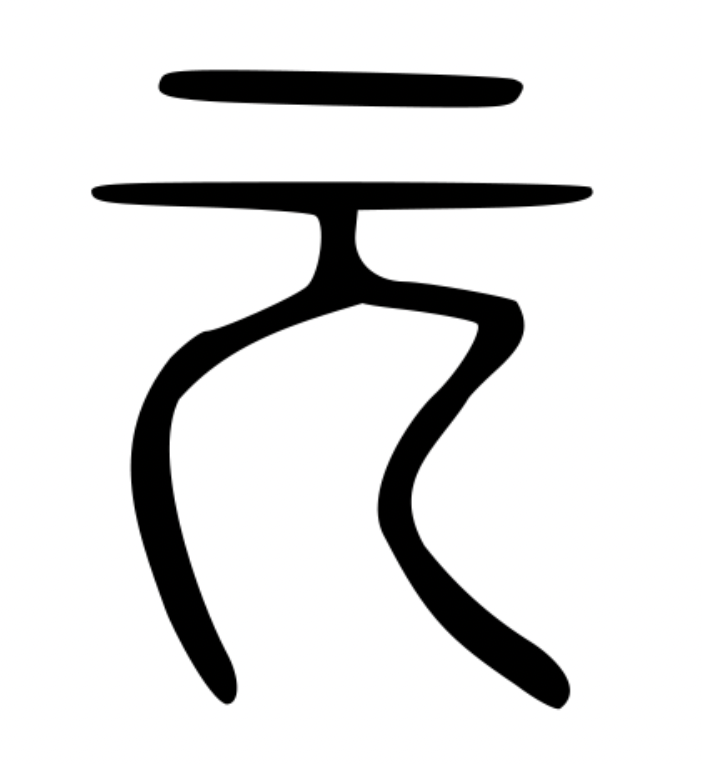
元
Yen depicts a Man with a big Head.
This is often translated as some form of “Origin” or, “Generation”, etc. It is “first”, in the way that the Head of an organization is - , the Capo.

亨
Heng depicts a Child and a Shrine.
Often translated as “progress” and “prosperity”, this is the prosperity in the way that the children of God, the Sons of Heaven experience prosper. Or, progress and prosperity through child sacrifice is an equally possible understanding.

利
Li depicts wheat and a knife
It is “harvesting” and “gaining”, reaping rewards gains after sowing work.
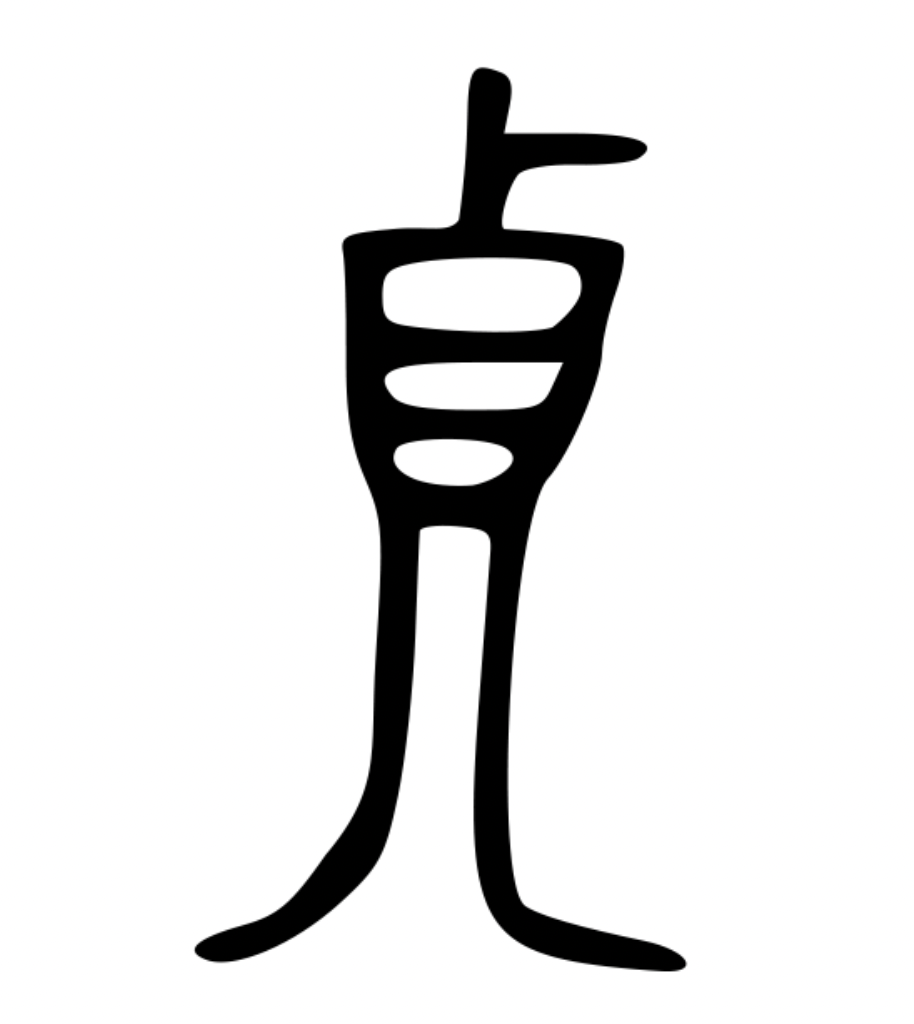
貞
Ching, or Ding depicts a vessel.
It is purity, like the Grail.
They can mapped to the Western elements as:
Fire: Yen, Younger Yang
Water: Ching, Younger Yin
Air: Heng, Older Yang
Earth: Li, Older Yin
Film
<div style="padding:56.25% 0 0 0;position:relative;"><iframe src="https://player.vimeo.com/video/1130079853?badge=0&autopause=0&player_id=0&app_id=58479" frameborder="0" allow="autoplay; fullscreen; picture-in-picture; clipboard-write; encrypted-media; web-share" referrerpolicy="strict-origin-when-cross-origin" style="position:absolute;top:0;left:0;width:100%;height:100%;" title="George Washington Carver clip 1"></iframe></div><script src="https://player.vimeo.com/api/player.js"></script>
The ALL In All of the Creative Process
Molly Hankins October 23, 2025
Hermetic teachings tell us that to be in the creative process is to engage with the very same energy which creates and sustains all of life…

Theatrum Chemicum Britannicum, 1652.
Molly Hankins October 23, 2025
Hermetic teachings tell us that to be in the creative process is to engage with the very same energy which creates and sustains all of life. THE ALL of consciousness, known as God or The Creator, becomes all there is in the material realm by way of directing divine will is an idea described by The Kybalion, which contains a comprehensive breakdown of Hermetic principles, as a vibratory transmission. “It is taught that the process consists of the lowering of vibration until a very low degree of vibratory energy is reached, at which point the grossest possible form of matter is manifested. This process is called the stage of involution, in which THE ALL becomes ‘involved’ or ‘wrapped up’ in its creation,” The Kybalion explains. The artist who becomes so immersed in their creation that they come to live inside it is mirroring the very act of divine creation emanating from the original source of consciousness.
Eventually this involutionary process begins to reverse into an evolutionary process subject to the Hermetic principle of Rhythm which states that, like our breath, all must go in and out of being. During the outpouring of creative energy, the principle of Vibration brings inspiration into matter until the cause of this outpouring finally ceases. Only then does the evolutionary process of individualization begin, which will extend mental energy back from the material world towards the divine, as described by the principle of Mentalism.
To engage mentally is to offer divine attention, the Latin root of the word attention coming from the Latin attendere, to reach towards or stretch out. Attention leads to creation, creation leads to individualization, and that extension of mental energy reaches out to reconnect and unify us with the original source of divine, primordial creativity - THE ALL. We can experience this passively via the principle of Vibration just by giving our attention to the creative work of another. Thiscan have measurable, physical impact on us; changing our brainwave state, stimulating the nervous system and triggering the release of hormones.
For Hermeticists, offering our attention to THE ALL in meditation is the portal to access the endless well of divine creative energy. When we close our eyes in meditation and pry our attention away from the grip of the material world, we return attention to THE ALL, the source of all creation. the font of divine inspiration, the all which contains THE ALL.. In drawing from this well, the artist becomes a pure channel for the will of THE ALL. Much of the work of Hermetic students involves removing the blockages of subconscious programming in order to become a pure channel, unimpeded by human limitation and societal conditioning.
The Kybalion asks, “Have the Venus of Medici, the Sistine Madonna, the Apollo Belvidere, spirits and reality of their own, or do they represent the spiritual and mental power of their creators?” Both are true, and for Hermeticists the paradox of that truth is an indicator of its divinity. Only when we recognize paradox are we mentally extending and thereby evolving ourselves beyond the duality of life in the material realm back towards a more holistic, divine understanding. Of course some of Shakespeare’s personality complex is contained in his characters, but so are truths so universal we recognize THE ALL coming through them, even hundreds of years after these works were written.
“Just as every portion of a hologram contains the image of the whole, every portion of the universe enfolds the whole.”
“The ALL is in the earthworm, and yet the earthworm is far from being THE ALL,” The Kybalion states. “And still the wonder remains, that though the earthworm exists merely as a lowly thing, created and having its being solely within the mind of THE ALL - yet THE ALL is imminent in the earthworm, and in the particles that go to make up the earthworm. Can there be any greater mystery than this of ‘All in THE ALL; and THE ALL in all?” This explanation is both philosophically and technically grounded in the holographic model of reality, described by author Michael Talbot in his book The Holographic Universe.
The holographic model suggests that every part of THE ALL, including the earthworm, contains all the information about the whole of THE ALL. In the same way a tiny piece of a holographic image contains the whole image but in lower resolution, so too is the ALL contained in every expression of life. Talbot explained that, “The idea that consciousness and life (and indeed all things) are ensembles enfolded throughout the universe has an equally dazzling flip side. Just as every portion of a hologram contains the image of the whole, every portion of the universe enfolds the whole. This means that if we knew how to access it we could find the Andromeda galaxy in the thumbnail of our left hand. We could also find Cleopatra meeting Caesar for the first time, for in principle the whole past and implications for the whole future are also enfolded in each small region of space and time. Every cell in our body enfolds the entire cosmos.” We see this when comparing the striking similarities between images of a neural network in the human brain to images of the interconnected webs of galaxies in outer space.
In keeping with the famous occult axiom, “As above so below, and as below so above,” we maximize our enjoyment of the human experience by engaging in the creative dance of involution and evolution. As we engage in involution, pouring energy into our creations, we’re performing the same creative process as THE ALL. To share our creations with others is to kick off the evolutionary aspect of Rhythm and Mentalism, inviting the mental aspect of the process that extends our consciousness back towards THE ALL to begin. The Kybalion encourages us not to get hung up on asking ourselves why THE ALL creates, because to speculate is useless from our limited human perspective, a low-resolution experience of divine consciousness. From this place we can’t conceive how THE ALL in high-resolution expresses itself creatively, much less why.
The Kybalion does make one concession for those seeking to understand why THE ALL creates, which is that there must be some satisfaction derived from the creative act. We access this divine satisfaction in the material world through giving our attention to creating and to experiencing the creations of others. As conscious fragments of THE ALL, perhaps our ability to participate in this process is why we were created.
Molly Hankins is an Initiate + Reality Hacker serving the Ministry of Quantum Existentialism and Builders of the Adytum.
Film
<div style="padding:56.21% 0 0 0;position:relative;"><iframe src="https://player.vimeo.com/video/1130075824?badge=0&autopause=0&player_id=0&app_id=58479" frameborder="0" allow="autoplay; fullscreen; picture-in-picture; clipboard-write; encrypted-media; web-share" referrerpolicy="strict-origin-when-cross-origin" style="position:absolute;top:0;left:0;width:100%;height:100%;" title="Abbott and Costello meet Frankenstein clip 2"></iframe></div><script src="https://player.vimeo.com/api/player.js"></script>
Mollie Engelhart
2h 5m
10.22.25
In this clip, Rick speaks with Mollie Engelhart about the importance of supporting local farmers.
<iframe width="100%" height="265" src="https://clyp.it/32b4c3ko/widget?token=bdb53831868b270368a805e88caf2130" frameborder="0"></iframe>
Film
<div style="padding:75% 0 0 0;position:relative;"><iframe src="https://player.vimeo.com/video/1130071994?badge=0&autopause=0&player_id=0&app_id=58479" frameborder="0" allow="autoplay; fullscreen; picture-in-picture; clipboard-write; encrypted-media; web-share" referrerpolicy="strict-origin-when-cross-origin" style="position:absolute;top:0;left:0;width:100%;height:100%;" title="Firing Line clip 7"></iframe></div><script src="https://player.vimeo.com/api/player.js"></script>
The Language of the Body (1992)
Kathy Acker October 21, 2025
I have now been bodybuilding for ten years, seriously for almost five years. During the past few years, I have been trying to write about bodybuilding. Having failed time and time again, upon being offered the opportunity to write this essay, I made the following plan…

Roper’s Gymnasium, 1831.
One of the leading figures of the late 1970s and early 80s literary Punk movement, Kathy Acker was a radical in every sense. Her writing pioneered an experimental auto-fiction and incorporated cut-up techniques, developed some thirty years earlier by William Burroughs and Brion Gysin. Consistently, she wanted to push the boundaries of language and redefine the meaning of the novel. So too in this text, written towards the end of her life, Acker considers the inexpressibility of bodybuilding through traditional language. Drawing on thinkers like Elias Canetti, Wittgenstein, and Heidegger, the essay links the meditative rhythms of training to deeper existential questions: Can we know the body? What is the relationship between control, chaos, and meaning? And what can we learn about art and creation through pushing our bodies.
Kathy Acker October 21, 2025
Preface Diary
I have now been bodybuilding for ten years, seriously for almost five years. During the past few years, I have been trying to write about bodybuilding. Having failed time and time again, upon being offered the opportunity to write this essay, I made the following plan: I would attend the gym as usual. Immediately after each workout, I would describe all I had just experienced, thought and done. Such diary descriptions would provide the raw material. After each workout, I forgot: to write. Repeatedly. I...some part of me... the part of the ‘I’ who bodybuilds... was rejecting language, any verbal description of the processes of bodybuilding. I shall begin describing, writing about bodybuilding in the only way that I can: I shall begin by analyzing this rejection of ordinary or verbal language. What is the picture of the antagonism between bodybuilding and verbal language?
A Language Which is Speechless
Imagine that you are in a foreign country. Since you are going to be in this place for some time, you are trying to learn the language. At the point of commencing to learn the new language, just before having started to understand anything, you begin forgetting your own. Within strangeness, you find yourself without a language.
It is here, in this geography of no language, this negative space, that I can start to describe bodybuilding. For I am describing that which rejects language.
Elias Canetti, who grew up within a multitude of spoken languages, began his autobiography by recounting a memory. In this, his earliest remembrance, the loss of language is threatened: “My earliest memory is dipped in red. I come out of a door on the arm of a maid, the door in front of me is red, and to the left a staircase goes down, equally red...” A smiling man walks up to the child; the child, upon request, sticks out his tongue whereupon the man flips open a jackknife and holds the sharp blade against the red tongue.
“...He says: ‘Now we’ll cut off his tongue.“’
At the last moment, the man pulls the knife back.
According to memory, this sequence happens every day. “That’s how the day starts,” Canetti adds, “and it happens very often.” ’ I am in the gym every three out of four days. What happens there? What does language in that place look like? According to cliche, athletes are stupid. Meaning: they are inarticulate. The spoken language of bodybuilders makes this cliche real. The verbal language in the gym is minimal and almost senseless, reduced to numbers and a few nouns. “Sets”, “squats”, “reps”,... The only verbs are “do” or “fail” adjectives and adverbs no longer exist; sentences, if they are at all, are simple.
This spoken language is kin to the “language games” Wittgenstein proposes in his The Brown Book. In a gym, verbal language or language whose purpose is meaning occurs, if at all, only at the edge of its becoming lost.
But when I am in the gym, my experience is that I am immersed in a complex and rich world.
What actually takes place when I bodybuild?
The crossing of the threshold from the world defined by verbal language into the gym in which the outside world is not allowed (and all of its languages) (in this sense, the gym is sacred) takes several minutes. What happens during these minutes is that I forget. Masse’s of swirling thought, verbalized insofar as I am conscious of them, disappear as mind or thought begins to focus.
In order to analyze this focusing, I must first describe bodybuilding in terms of intentionality.
Bodybuilding is a process, perhaps a sport, by which a person shapes her or his own body. This shaping is always related to the growth of muscular mass.
During aerobic and circuit training, the heart and lungs are exercised. But muscles will grow only if they are, not exercised or moved, but actually broken down. The general law behind bodybuilding is that muscle, if broken down in a controlled fashion and then provided with the proper growth factors such as nutrients and rest, will grow back larger than before.

Domenico de Rossi, Dancing Faun. c.1704
In order to break down specific areas of muscles, whatever areas one wants to enlarge, it is necessary to work these areas in isolation up to failure.
Bodybuilding can be seen to be about nothing but failure. A bodybuilder is always working around failure. Either I work an isolated muscle mass, for instance one of the tricep heads, up to failure. In order to do this, I exert the muscle group almost until the point that it can no longer move.
But if I work the same muscle group to the point that it can no longer move, I must move it through failure. I am then doing what are named “negative reps”, working the muscle group beyond its power to move. Here is the second method of working with failure.
Whatever way I chose, I always want to work my muscle, muscular group, until it can no longer move: I want to fail. As soon as I can accomplish a certain task, so much weight for so many reps during a certain time span, I must always increase one aspect of this equation, weights reps or intensity, so that I can again come to failure.
I want to break muscle so that it can grow back larger, but I do not want to destroy muscle so that growth is prevented. In order to avoid injury, I first warm up the muscular group, then carefully bring it up to failure. I do this by working the muscular group through a calculated number of sets during a calculated time span. If I tried immediately to bring a muscle group up to failure by lifting the heaviest weight I could handle, I might injure myself.
I want to shock my body into growth; I do not want to hurt it.
Therefore, in bodybuilding, failure is always connected to counting. I calculate which weight to use; I then count off how many times I lift that weight and the seconds between each lift. This is how I control the intensity of my workout.
Intensity times movement of maximum weight equals muscular destruction (muscular growth).
Is the equation between destruction and growth also a formula for art’
Bodybuilding is about failure because bodybuilding, body growth and shaping, occurs in the face of the material, of the body’s inexorable movement toward its final failure, toward death.
To break down a muscle group, I want to make that group work up to, even beyond, capacity. To do this, it helps and even is necessary to visualize the part of the body that is involved. Mind or thought, then, while bodybuilding, is always focused on number or counting and often on precise visualizations.
Certain bodybuilders have said that bodybuilding is a form of meditation.
What do I do when I bodybuild? I visualize and I count. I estimate weight; I count sets; I count repetitions; I count seconds between repetitions; I count time, seconds or minutes, between sets: From the beginning to the end of each workout, in order to maintain intensity, I must continually count.
For this reason, a bodybuilder’s language is reduced to a minimal, even a closed, set of nouns and to numerical repetition, to one of the simplest of language games.
Let us name this language game, the language of the body.
“In ordinary language, meaning is contextual. Whereas the cry of the beggar means nothing other than what it is; in the cry of the beggar, the impossible… occurs in that meaning and breath become one.”
The Richness Of The Language Of The Body
In order to examine such a language, a language game which resists ordinary language, through the lens of ordinary language or language whose tendency is to generate syntax or to make meanings proliferate, I must use an indirect route.
In another of his books, Elias Canetti begins talking from and about that geography that is without verbal language:
A marvellously luminous, viscid substance is left behind in me, defying words...
A dream: a man who unlearns the world’s languages until nowhere on earth does he understand what people are saying.
Being in Marrakesh is Canetti’s dream made actual. There are languages here, he says, but I understand none of them. The closer I am moving toward foreignness, into strangeness, toward understanding foreignness and strangeness, the more I am losing my own language. The small loss of language occurs when I journey to and into my own body. Is my body a foreign land to me? What is this picture of “my body” and “I”? For years, I said in the beginning of this essay, I have wanted to describe bodybuilding; whenever I tried to do so, ordinary language fled from me. r
“Man,” Heidegger says, “is, the strangest.” Why! Because everywhere he or she belongs to being or to strangeness or chaos, and yet everywhere he or she attempts to carve a path through chaos:
Everywhere man makes himself a path; he ventures into all realms of the essent, of the overpowering power, and in so doing he is flung out of all paths. ’
The physical or material, that which is, is constantly and unpredictably changing: it is chaotic. This chaos twines around death. For it is death that rejects all of our paths, all of our meanings.
Whenever anyone bodybuilds, he or she is always trying to understand and control the physical in the face of this death. No wonder bodybuilding is centered around failure.
The antithesis between meaning and essence has often been noted. Wittgenstein at the end of the Tractatus:
The sense of the world must lie outside the world. In the world everything is as it is, and everything happens as it does happen - in it no values exist, and if they did, they’d have no value.
For all that happens and is the case is accidental.
If ordinary language or meanings lie outside essence, what is the position of that language game which I have named the language of the body? For bodybuilding (a language of the body) rejects ordinary language and yet itself constitutes a language, a method for understanding and controlling the physical which in this case is also the self.
I can now directly talk about bodybuilding. (As if speech is ever direct.)
The language game named the language of the body is not arbitrary. When a bodybuilder is counting, he or she is counting his or her own breath.
Canetti speaks of the beggars of Marrakesh who possess a similar and even simpler language game: they repeat the name of God.
In ordinary language, meaning is contextual. Whereas the cry of the beggar means nothing other than what it is; in the cry of the beggar, the impossible (as the Wittgenstein of the Tructutus and Heidegger see it) occurs in that meaning and breath become one.
Here is the language of the body; here, perhaps, is the reason why bodybuilders experience bodybuilding as a form of meditation.
“I understood the seduction there is in a life that reduces everything to the simplest kind of repetition,” Canetti says. A life in which meaning and essence no longer oppose each other. A life of meditation.
“I understood what those blind beggars really are: the saints of repetition…”
The Repetition Of The One: The Glimpse Into Chaos Or Essence

Robert Mapplethorpe, Lisa Lyons. 1980.
I am in the gym. I am beginning to work out. I either say the name “bench press”, then walk over to it, or simply walk over to it. Then, I might picture the number of my first weight; I probably, since I usually begin with the same warm-up weight, just place the appropriate weights on the bar. Lifting this bar off its rests, then down to my lower chest, I count “1”. I am visualizing this bar, making sure it touches my chest at the right spot, placing it back on its rests. “2”. I repeat the same exact motions. “3”... After twelve repetitions, I count off thirty seconds while increasing my weights. “1 “.. The identical process begins again only this time I finish at “10”... All these repetitions end only when I finish my work-out.
On counting: Each number equals one inhalation and one exhalation. If I stop my counting or in any other way lose focus, I risk dropping or otherwise mishandling a weight and so damaging my body.
In this world of the continual repetition of a minimal number of elements, in this aural labyrinth, it is easy to lose one’s way. When all is repetition rather than the production of meaning, every path resembles every other path.
Every day, in the gym, I repeat the same controlled gestures with the same weights, the same reps,... The same breath patterns. But now and then, wandering within the labyrinths of my body, I come upon something. Something I can know because knowledge depends on difference. An unexpected event. For though I am only repeating certain gestures during certain time spans, my body, being material, is never the same; my body is controlled by change and by chance.
For instance, yesterday, I worked chest. Usually I easily benchpress the bar plus sixty pounds for six reps. Yesterday, unexpectedly, I barely managed to lift this weight at the sixth rep. I looked for a reason. Sleep? Diet’ Both were usual. Emotional or work stress? No more ban usual. The weather? Not good enough. My unexpected failure at the sixth rep was allowing me to see, as if through a window, not to any outside, but inside my own body, to its workings. I was being permitted to glimpse the laws that control my body, those of change or chance, laws that are barely, if at all, knowable.
By trying to control, to shape, my body through the calculated tools and methods of bodybuilding, and time and again, in following these methods, failing to do so, I am able to meet that which cannot be finally controlled and known: the body.
In this meeting lies the fascination, if not the purpose, of bodybuilding. To come face to face with chaos, with my own failure or a form of death.
Canetti describes the architecture of a typical house in the geographical labyrinth of Marrakesh. The house’s insides are cool, dark. Few, if any, windows lookout into the street. For the entire construction of this house, windows, etc., is directed inward, to the central courtyard where only openness to the sun exists.
Such an architecture is a mirror of the body: When I reduce verbal language to minimal meaning, to repetition, I close the body’s outer windows. Meaning approaches breath as I bodybuild, as I begin to move through the body’s labyrinths, to meet, if only for a second, that which my consciousness ordinarily cannot see. Heidegger: “The. being-there of historical man means: to be posited as the breach into which the preponderant power of being bursts in its appearing, in order that this breach itself should shatter against being.”
In our culture, we simultaneously fetishize and disdain the athlete, a worker in the body. For we still live under the sign of Descartes. This sign is also the sign of patriarchy. As long as we continue to regard the body, that which is subject to change, chance, and death, as disgusting and inimical, so long shall we continue to regard our own selves as dangerous others.
Kathy Acker (1947–1997) was an American experimental novelist, poet, playwright, performance artist, and postmodernist writer, whose idiosyncratic style redefined contemporary writing and made her one of the most insightful and influential voices of her generation.
Film
<div style="padding:54.17% 0 0 0;position:relative;"><iframe src="https://player.vimeo.com/video/1130070137?badge=0&autopause=0&player_id=0&app_id=58479" frameborder="0" allow="autoplay; fullscreen; picture-in-picture; clipboard-write; encrypted-media; web-share" referrerpolicy="strict-origin-when-cross-origin" style="position:absolute;top:0;left:0;width:100%;height:100%;" title="Psycho clip 2"></iframe></div><script src="https://player.vimeo.com/api/player.js"></script>

Larry Levan Playlist
Archival 1967-1987
Larry Levan was an influential American DJ who defined what modern dance clubs are today. He is most widely renowned for his long-time residency at Paradise Garage, also known as “Gay-Rage”, a former nightclub at 84 King Street in Manhattan, NY.
Film
<div style="padding:56.25% 0 0 0;position:relative;"><iframe src="https://player.vimeo.com/video/1130054072?badge=0&autopause=0&player_id=0&app_id=58479" frameborder="0" allow="autoplay; fullscreen; picture-in-picture; clipboard-write; encrypted-media; web-share" referrerpolicy="strict-origin-when-cross-origin" style="position:absolute;top:0;left:0;width:100%;height:100%;" title="Rosemary's Baby clip 1"></iframe></div><script src="https://player.vimeo.com/api/player.js"></script>

Hannah Peel Playlist
Archival - October 13, 2025
Mercury Prize, Ivor Novello and Emmy-nominated, RTS and Music Producers Guild winning composer, with a flow of solo albums and collaborative releases, Hannah Peel joins the dots between science, nature and the creative arts, through her explorative approach to electronic, classical and traditional music.
Film
<div style="padding:54.61% 0 0 0;position:relative;"><iframe src="https://player.vimeo.com/video/1130019548?badge=0&autopause=0&player_id=0&app_id=58479" frameborder="0" allow="autoplay; fullscreen; picture-in-picture; clipboard-write; encrypted-media; web-share" referrerpolicy="strict-origin-when-cross-origin" style="position:absolute;top:0;left:0;width:100%;height:100%;" title="The Birds clip 1"></iframe></div><script src="https://player.vimeo.com/api/player.js"></script>
Rivering (Museum of Suspense IV)
Ale Nodarse October 16, 2025
To study rivers is to adopt another life…

Charles François Daubigny, River Landscape with Moon. c. 1860, Leopold Museum, Vienna.
Ale Nodarse October 16, 2025
“To study rivers is to adopt another life.”
A white orb glistens. A sky swells forth. Daubs of orange-pink glow incandescent before falling into a warm blue — falling further again into a muted violet. And the sky folds on itself, so that the rivershore appears as an isthmus, a dark ground set between the sky and the sky’s double. The painting, Charles François Daubigny’s River Landscape with Moon (c. 1856–66, Leopold Museum), is a lesson in reflection.

Charles-François Daubigny, Night Journey. 1862.
The artwork is a study, among many, which Daubigny produced of the River Oise during the 1850s and 60s. As with most studies, it implies speed. The brush moves quickly, oil paint crossing atop the wooden panel as the horsehair bristles make themselves seen. Paint structures its own topography. In this case, the first ground layer of cream-colored oil remains visible beneath the secondary, darker tones. The effect (which a screen fails to capture) proves luminous. The light of the moon suffuses the landscape. It emerges as if from below, flickering through and under everything.
Daubigny knew the river he painted well. He had chosen to live and to paint upon it by setting himself within a floating studio called Le Botin or “The Little Box.” While the works within the Museum of Suspense have dwelt on the suspended figure in painting, Daubigny placed the artist and studio quite literally adrift –– and made a series of etchings to “document” the novelty of such a transformation. In one, the Night Voyage, Daubigny views himself and his boat from above, his little box a luminous if isolated flicker. (In reality, Daubigny was often accompanied by family and by fellow painters. Monet, too, would set up a floating studio.) In another scene, The Boat Studio, the box is amplified (fig. 3). The view to the landscape at the picture’s center emerges as a painting in miniature, while finished artworks sit to the painter’s right. They are the products of the little box and the river upon which it floats. The undated River Landscape with Moon most likely numbers among these.

Charles-François Daubigny, The Boat Studio. 1861.
On the etched “picture” closest to us, Daubigny adds a single word along the lower right corner -“Realism” (realisme), . This word was to insist on truth. This is how it was. It was also to insist on possibility: a subtle testimony to all that might emerge, beautiful and strange, when suspense took its place as a fixed condition rather than a momentary exception. The river suspended and estranged the painter, who willed the familiar unfamiliar and set it near at hand.
Today, we are familiar both with the moon and with the blue orb viewed from its horizon. Ventures to outer space, both scientific and commercial,) continue to insist and to capitalize upon the power of such a vantage. While a view from the moon back to earth may no doubt be a life-changing thing, Daubigny’s study reminds us that, when it comes to wonder, the river may suffice. Something of the moon is already, really, there. And there is another life.
¹ Jim Harrison, The Theory and Practice of Rivers (Livingston, 1989), 24.
²Bonnie Grad, “Le Voyage en Bateau: Daubigny’s Visual Diary of River Life,” The Print Collector’s Newsletter (1980): 123–27.
³See Edouard Manet’s painting of Monet Painting in His Studio Boat (1874; Neue Pinakothek, Munich). To an extent, Manet revealed the artist’s isolation and the distance between artist and subject, in Monet’s (and Daubigny’s) works, as exaggerated. See Harmon Siegel, Painting with Monet (Princeton University Press, 2024), 218–221.
Alejandro (Ale) Nodarse Jammal is an artist and art historian. They are a Ph.D. Candidate in History of Art & Architecture at Harvard University and are completing an MFA at Oxford’s Ruskin School of Art. They think often about art — its history and its practice — in relationship to observation, memory, language, and ethics.