Wounds
Sofia Luna December 16, 2025
For most of human existence, our wounds signified that we were part of the natural world…

Robert White, Compleat Discourse of Wounds (1678).
Sofia Luna December 16, 2025
For most of human existence, our wounds signified that we were part of the natural world. They wrote the story of life without separation as we not only blended into, but were an active part of the ecosystem. Last week, noticing a boy having breakfast with his mother rocking a severely bruised eye, it felt like a novelty. In a modern, western world, physical wounds and battle scars have all but disappeared from everyday reality. What, I wondered, are the global repercussions of the sterilisation of our physical plane?
We no longer walk through irregular terrains filled with natural pigments, or scramble over cliffs with battered bodies. We construct buildings to keep nature out and monuments to hold our ambitions together. We walk with slicked back hair, and polished suits through angular concrete landscapes. We refine and decorate our avatars, surgically 'enhance' our geometries, and homogenise the surface of our lives and our bodies the same way we do to our walls. We call this progress. Beneath our skin, though, lies irregularity—festering deep, invisible wounds, not of flesh but of spirit.
In the gradual fabrication of the modern metropolis, we transferred our bodily wounds to earth. To her soil, her small ferns, to past predators, waters, rivers, and birds—not realising that they too, give us life. We looked away from the damage caused as we dreamt of a human centric world, building structures to keep dangers out. And they did but the fact that wounds incrementally disappeared from the visual field made it really difficult for us to track what was hazardous to our new existence.
As our infrastructures mutated, so did our wounds, but our definitions of danger stayed the same. Only in cases of mass destruction or abuse in focused areas are we able to look from afar and say “yes, there is a problem we need to work on!”.That which invisibly infects the collective beyond time and space is really hard to put a finger on, and so is difficult to heal. Consequently, moving from tiger scratches 20,000 years ago to inexplicable spirit aches have left us living "in a space without a map," as Joanna Macy remarked.
Few of us could survive in a forest right now, but we need not be that adventurous—a lot of humans can't even deal with free time at home. We require constant stimulation, and have become completely averse to the uncharted. We follow paths that have been clearly traced before in fear of getting lost. Is this a place worth existing in? A lot of people have started to realise it is not and I have witnessed the ample collective inkling that we should recalculate our relationship with the world and ourselves.
“Wounds are holes, holes are doors, doors into something, openings, where, if we choose to enter them, the person that walks out is not the same who walked in.”
We have been so isolated from nature that we don't even consider its absence as one of the causes for global unsettlement or the sharp rises in anxiety, loneliness, depression and spiritual voids that so many of us experience. Isn't she Mother Earth? We are the child that has cut their parent off and have been left traumatised.
We talk about rewilding gardens but it is time to talk about rewilding society. We are hungry for something that was taken from us. When certain religions first appeared, they replaced our connection to the wild with a relationship to something more abstract. Slowly we have been extracted out of the symbiotic relationship we had with our planet, as institutions of belief arranged themselves on top of everything and everyone as the source. Religion replaced nature. It reasoned with the invisible and colonised our imagination for the past millennia. Thank God, time, and the increasing access to information, that what was hiding underneath—the incoherence, the imposed patriarchy, intolerance, and the general abuse of power that was then mimicked by corporations— was exposed. Today, younger generations are unsubscribing from this expired belief system and in that process have started seeking something else. Many of us are returning back to nature, to our nature.

Caravaggio, The Incredulity of Saint Thomas (1602)
Hosting Shinrin-Yoku experiences (the science backed Japanese practice of Forest Bathing, known to balance the body and mind) one quickly sees how fulfilling, cleansing, healing, energising, and surprisingly simple the practice feels when all you do is walk through a forest, fully present, without the intrusion of technology. This evidence shows how much nature feels like home—how nurturing she is, how much our bodies need her, and yet, how absent she is in modern cities.
I have found that the more I heal my insides, the closer I feel to the natural world, the more natural it feels to live in this world, and the more I unearth my own self and the old memories of the soul. Wounds are holes, holes are doors, doors into something, openings, where, if we choose to enter them, the person that walks out is not the same who walked in. Unhealed wounds propagate, the same way good energy creates more good energy and healed wounds attract healed people. There is no need to try and save the entire world, because the entire world is simply the one You inhabit—you choose what to do with it.
I write this to speak into reality a transformation, I believe, is happening to many. We are interconnected, and in this floating rock, no one experiences anything alone, the Human Experience is shared. Regardless of the 'never-ending horrors', we are on our way back to nature. And Nature is not just a tree, a fish and a squirrel. Nature is you, in essence. Nature is beauty, it is The Grand, it is Vast. It is Vital, it is Infinite, it is Eternally Alive. It is Robust, Real, Complex. It is Us. It is also everything we are not right now, and everything we are becoming.
Sofia Luna explores and builds tools that facilitate this time's modern cognitive shift. She is a Colombian artist, creative consultant, entrepreneur and imaginator living In The Middle of The Future.
Film
<div style="padding:72.58% 0 0 0;position:relative;"><iframe src="https://player.vimeo.com/video/1147131629?badge=0&autopause=0&player_id=0&app_id=58479" frameborder="0" allow="autoplay; fullscreen; picture-in-picture; clipboard-write; encrypted-media; web-share" referrerpolicy="strict-origin-when-cross-origin" style="position:absolute;top:0;left:0;width:100%;height:100%;" title="Othello clip 2"></iframe></div><script src="https://player.vimeo.com/api/player.js"></script>
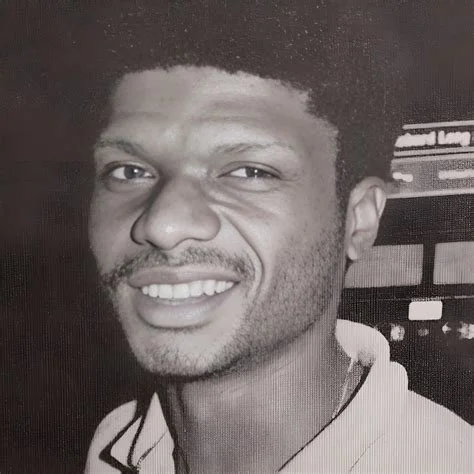
Larry Levan Playlist
Archival 1967-1987
Larry Levan was an influential American DJ who defined what modern dance clubs are today. He is most widely renowned for his long-time residency at Paradise Garage, also known as “Gay-Rage”, a former nightclub at 84 King Street in Manhattan, NY.
Film
<div style="padding:55.83% 0 0 0;position:relative;"><iframe src="https://player.vimeo.com/video/1146275986?badge=0&autopause=0&player_id=0&app_id=58479" frameborder="0" allow="autoplay; fullscreen; picture-in-picture; clipboard-write; encrypted-media; web-share" referrerpolicy="strict-origin-when-cross-origin" style="position:absolute;top:0;left:0;width:100%;height:100%;" title="The Valley of Gwangi clip 2"></iframe></div><script src="https://player.vimeo.com/api/player.js"></script>
6 Divorce - The I Ching
Chris Gabriel December 13, 2025
Fight, but not to the bitter end…
Chris Gabriel December 13, 2025
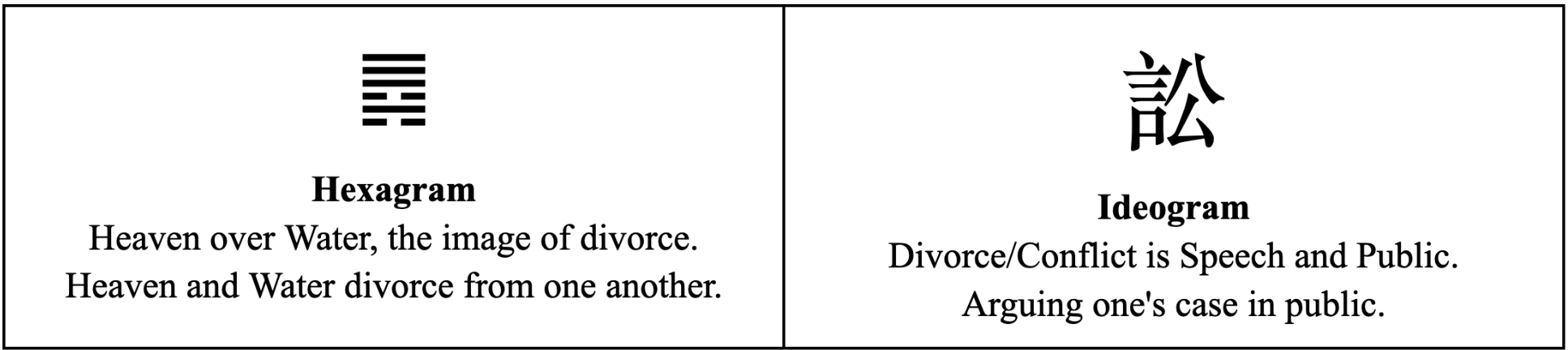
Judgment
Fight, but not to the bitter end.
Lines
1
Don’t draw it out, there will be rumours.
2
Unable to fight, he goes back to his small town.
3
Live off your old deeds. Working for the king brings nothing.
4
Unable to fight, go back to yourself. Be calm.
5
Fight, and fortune follows.
6
Sometimes you are given a ribbon, and by morning you’ve been stripped of it three times.
Qabalah
Imperfectly, Kether to Yesod, or Gimel ג directly. The High Priestess.
Kether only makes contact with Tiphereth below, not Yesod. The path between them is the lunar Gimel.
Heaven to the Moon.
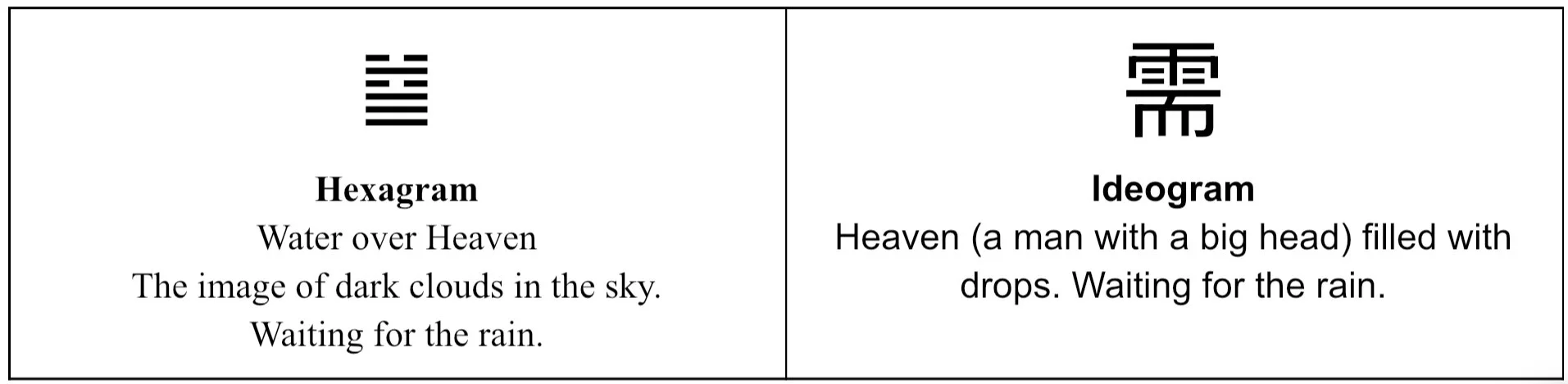
The rain we had been waiting for comes down, and when it rains, it pours. This storm can lead to relief, but in the moment it can be exceedingly troublesome and unpleasant. The ideogram shows public dispute: the airing out of dirty laundry. Often called conflict, strife, or contention, the clearest title is divorce. We are dealing with separation, the splitting of water from the sky as they go their separate ways. Divorce is very difficult but the hope is that it will eventually calm and peace. This is not necessarily about splitting a marriage, but all splits: arguments, breakups, and lawsuits.
1
Just as the judgment says, it is best to get things done quickly or to give it up when the time is right. Consider very public, very ugly divorce procedures and court cases, they invite gossip and bad attention.
2
This is like a classic “divorced dad” joke, where after divorcing he moves back to his home town and lives in a little apartment. In this case, this is the right action to take!
3
When new work doesn’t come, we have to live off our old work.Consider this as dipping into personal savings when you’re in trouble.
4
We often see people who are divorced “become themselves” again; they pick up old hobbies, or spend time with old friends.
5
Fight when the time is right and you’ll have victory.
6
Even when there are apparent victories, especially with divorces involving children, they are often appealed, reversed, and continually fought over.
In the previous hexagram, we eagerly awaited what comes down here. It was the calm before the storm. As a religious person may yearn for the horrors of an Apocalypse, with hope that something greater is on the other side of trials, we must have faith that we will get through the troubles that come our way.
George Harrison puts it perfectly:
A cloudburst doesn't last all day
Seems my love is up and has left you with no warning
It's not always gonna be this gray
All things must pass
His wisdom echoes chapter 23 of the Tao Te Ching:
A Terrible wind won’t last all morning
A Terrible storm won’t last all day
Who causes these?
Heaven and Earth.
Heaven and Earth can’t make something last
Why could Man?
As humans, we cannot keep our relationships and friendships forever - all things must pass. When it’s time to part ways with someone, don’t make it ugly.
Film
<div style="padding:73.33% 0 0 0;position:relative;"><iframe src="https://player.vimeo.com/video/1146275114?badge=0&autopause=0&player_id=0&app_id=58479" frameborder="0" allow="autoplay; fullscreen; picture-in-picture; clipboard-write; encrypted-media; web-share" referrerpolicy="strict-origin-when-cross-origin" style="position:absolute;top:0;left:0;width:100%;height:100%;" title="Citizen Kane clip 2"></iframe></div><script src="https://player.vimeo.com/api/player.js"></script>
Mediating Planetary Co-Existence
Tuukka Toivonen December 11, 2025
Heather Barnett, an artist who works with slime mold, recently told me she viewed herself not simply as a practitioner of art but as a mediator. Through years of collaborative experimentation she had found herself, without intending to, acting as an intermediary between two mutually foreign forms of intelligence — slime molds and human beings…

Yggdrasill, The Mundane Tree. From a plate of the Prose Edda, Oluf Olufsen Bagge. 1847.
Tuukka Toivonen December 11, 2025
Heather Barnett, an artist who works with slime mold, recently told me she viewed herself not simply as a practitioner of art but as a mediator. Through years of collaborative experimentation she had found herself, without intending to, acting as an intermediary between two mutually foreign forms of intelligence — slime molds and human beings. Curating the often astonishingly clever behaviors of these oatmeal-loving, network-making slime molds for human audiences, she uncovered new synergies and creative connections. In live performances, she invited audiences to mimic the physical movements of such ‘lesser beings’, resulting in surprising patterns of group behavior. This workconjured up a kind of interspecies awareness and relationship in Heather, and those who saw it, where none had previously existed. Another experienced artist I spoke to, Julia Lochmann, expressed a similar ethos of intermediation — in this case, one focused on seaweed-human relations. Both practitioners had set up collectives for like-minded slime mould and seaweed enthusiasts that brought artists together with scientists, students, designers and even entrepreneurs. These conversations prompted me to reflect further on the significance of those who mediate immersively between different organisms or environments. Could their experimental, connective engagements open up new possibilities for a deeper planetary co-existence? And what could those of us with less experience in this area learn from seasoned intermediators?
At a basic level, to mediate is to form a link between two previously disconnected or estranged entities. By occupying an intermediary position, one takes on the task of facilitating an agreement or reconciliation of some kind, and fostering mutually beneficial forms of co-existence. Mediators of various kinds abound in our daily lives; people who introduce us to opportunities and ideas we did not know about or familiarize us with technologies we knew not how to operate. Those who teach us novel languages mediate a new relationship between us and other cultures. With a little help from such fluent speakers and cultural mediators, it becomes far easier to pick up the meanings, structures and nuances — even the perceptual and aesthetic inclinations — of new languages and cultures. What once seemed indecipherable becomes more and more intelligible, accessible and rich in meaning. We gradually enter a shared world. and then, for a moment, we feel awed by the uplifting resonance — a sense of synchrony, agreement or correspondence — that we discover between ourselves and an aspect of the world that used to be alien to us.
“We have long positioned humans as the only ‘intelligent’ species while denying the cognitive abilities, agency and aliveness of every other life-form. We now possess the opportunity to change course…”
In their revelatory book on the search for planetary intelligence, one that involves animals, plants, and machines, the author James Bridle dedicates a chapter to exploring how plants perceive the world and what scope might exist for us to relate to them at a sensorial and existential level. Bridle recounts an experiment by two biologists from the University of Missouri during which a recording was made of the sound of cabbage white caterpillars feeding on a cress plant (Arabidopsis thaliana). The scientists subsequently removed the caterpillars, playing back only their sounds to the cress plant, which caused the plant to switch on its chemical defenses for deterring predators, despite their absence. Having ensured this reaction arose exclusively in response to the specific sound of caterpillars, there was only one conclusion to be drawn: the cress plant could hear. Bridle reads this and other eye-opening experiments on ‘plant sensing’ as suggestive of
multiple distinctive worlds and as expressions of common ways of being and perceiving that cross species lines:
‘We share a world. We hear, plants hear; we all hear together. We all feel the same sun, breathe the same air, drink the same water. Whether we hear the same sounds in the same way, whether they are meaningful to us in the same way, is beside the point. We exist, together, in the shared experience and creation of the more-than human world’ (Bridle 2023: 69-70).¹

Atlas des Champignons, M. E. Descourtilz. 1827.
Bridle’s work engages in acts of mediation that takes notable interspecies experiments and discoveries, and translates them into relational transformations. It reveals how profoundly illusionary our prior assumptions of a disconnected existence have been, and how false the idea that plants, animals, fungi and ourselves inhabit essentially separate worlds is. By submitting to a vacuous kind of objectivity, Bridle shows we have tried to make the world conform to our man made, fixed conceptualizations, and in doing so have limited the full use of our own perceptual capabilities. We have long positioned humans as the only ‘intelligent’ species while denying the cognitive abilities, agency and aliveness of every other life-form. We now possess the opportunity to change course, and to whole-heartedly cohabit the shared world Bridle so animatedly writes about. We can do this through updating our mental constructs and discovering new resonances between ourselves and the living world. Much like the feelings of connection we gain when learning a new language, might we feel a similar (or perhaps an even greater) sense of enchantment and resonance as we regain the ability to participate fully in the more-than human world — a world where intelligence is present everywhere?
I suspect that mediators — whether nominally classified as artists, writers, scientists, naturalists or entrepreneurs — matter precisely because they have the power to help us see such novel possibilities for planetary co-existence. They awaken us to ways of being, to a new type of sensing and relating that we have struggled to notice or thought could not be accessed within the confines of contemporary society. And not only that: they often perform intermediation work not only in theory but in practice, experimentally and at scale. Such practical work can range from the curation of intimate group experiences within local forest ecologies to masterfully finding correspondences and agreements between the seemingly incompatible tendencies of financial interests and living systems.
It strikes me that today’s mediators may have something fundamental in common with the healers and shamans whom the ecological philosopher David Abram encountered in Nepal and Indonesia at the end of the last millennium. Focused on maintaining harmonious and mutually nourishing relations between human settlements and the wider ecologies they were part of, these traditional practitioners of magic and medicine could ‘slip out of the perceptual boundaries that demarcate his or her particular culture’ while exhibiting a ‘heightened receptivity to the meaningful solicitations—songs, cries, gestures —of the larger, more-than-human field’ (Abram 1996:9).² There is a certain perceptual kinship between these traditional practitioners and the contemporary mediators I have discussed, one found in a shared style of viscerally inhabiting and bridging multiple worlds. It is remarkable that for the traditional shamans and magicians Abram observed, their role as human-nonhuman intermediaries appeared to be their primary function, while healing activities were of only secondary importance.
Surely the kinds of mediators — whatever their formal identities — who can radically shrink the distance between us and myriad other life forms that constitute this planet have a far more important role to play than we have hitherto realized. And surely it will be through myriad acts of intermediation, whether initiated by seasoned practitioners or ourselves, that we will find it easier to once again experience the more-than-human world as intelligible, rich in meaning, even wondrous — and, perhaps most importantly, as truly shared.
Tuukka Toivonen, Ph.D. (Oxon.) is a sociologist interested in ways of being, relating and creating that can help us to reconnect with – and regenerate – the living world. Alongside his academic research, Tuukka works directly with emerging regenerative designers and startups in the creative, material innovation and technology sectors.
¹ Bridle, James. 2023. Ways of being: Animals, plants, machines: the search for a planetary 1 intelligence. London: Penguin Books.
² Abram, D. 1996. The spell of the sensuous: Perception and language in a more-than-human 2 world. New York: Pantheon books.
Film
<div style="padding:56.25% 0 0 0;position:relative;"><iframe src="https://player.vimeo.com/video/1146273077?badge=0&autopause=0&player_id=0&app_id=58479" frameborder="0" allow="autoplay; fullscreen; picture-in-picture; clipboard-write; encrypted-media; web-share" referrerpolicy="strict-origin-when-cross-origin" style="position:absolute;top:0;left:0;width:100%;height:100%;" title="Yosemite Valley 1924 clip 2"></iframe></div><script src="https://player.vimeo.com/api/player.js"></script>
Film
<div style="padding:72.92% 0 0 0;position:relative;"><iframe src="https://player.vimeo.com/video/1144921411?badge=0&autopause=0&player_id=0&app_id=58479" frameborder="0" allow="autoplay; fullscreen; picture-in-picture; clipboard-write; encrypted-media; web-share" referrerpolicy="strict-origin-when-cross-origin" style="position:absolute;top:0;left:0;width:100%;height:100%;" title="It's a Wonderful Life clip 2"></iframe></div><script src="https://player.vimeo.com/api/player.js"></script>
“1601” (1880)
Mark Twain December 10, 2025
The following is supposed to be an extract from the diary of the Pepys of that day, the same being Queen Elizabeth’s cup-bearer…
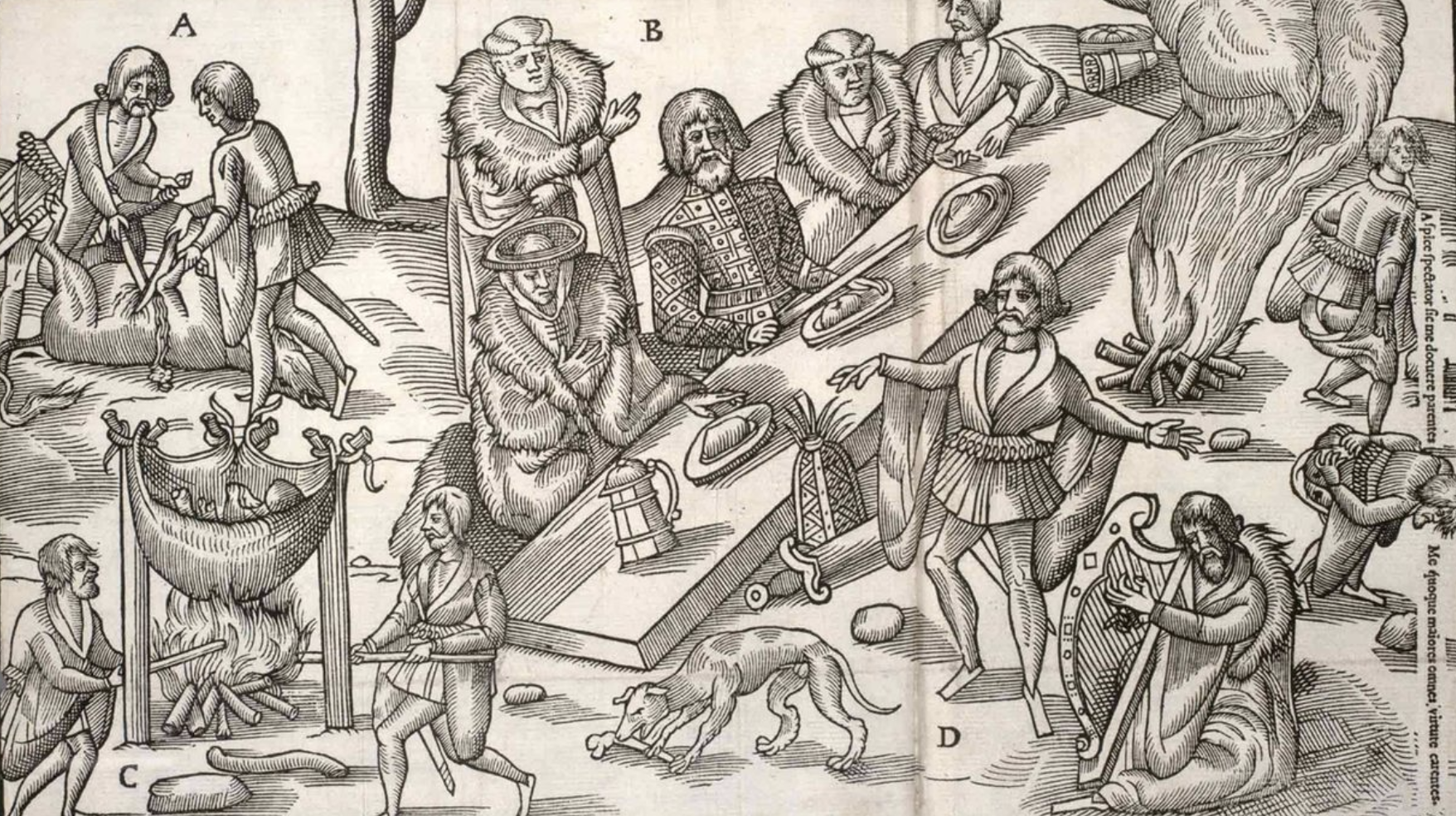
The Image of Irelande, John Derrick. 1581. (Featuring two flatulentists on the right side)
“Between you and me, the thing is dreadfully funny'“, said Mark Twain in regards to ‘1601’, his strangest, most misunderstood, and perhaps least accessible work. Written first as private joke to a paternal figure figure in his life, and then anonymously submitted and rejected from a periodical, it takes the form of a diary entry from the court of Queen Elizabeth in the year 1601 as, alongside notable figures from the Elizabethan period including William Shakespeare, Sir Walter Raleigh, Ben Jonson, and Francis Bacon, she discusses first flatulence, and then sexuality. Twain was not attempting to parody Elizabethan England, where such frank and bawdy conversations were not taboo, but instead comparing the foolish restrictions of 19th century America with the boisterousness of England some 300 years earlier. The very conventions that Twain was ridiculing meant that the work was never formally published in his lifetime, and he only claimed authorship in 1906. The work was lauded as a satiric tour de force by those who read it, an elegant and absurd condemnation of the critical morality of a bourgeois society, and a testament to the spirit of Tom Sawyer that ran through Twain. ‘It is not the word that is the sin”, he said, “It is the spirit back of the word”.
Mark Twain December 10, 2025
Conversation, as it was by the Social Fireside, in the Time of the Tudors [Date, 1601.]
[Mem. - The following is supposed to be an extract from the diary of the Pepys of that day, the same being Queen Elizabeth’s cup-bearer. He is supposed to be of ancient noble lineage; that he despises these literary canaille; that his soul consumes with wrath, to see the queen stoop to talk with such; and that the old man feels that his nobility is defiled by contact with Shakespeare, etc., and yet he got to stay there till her Majesty chooses to dismiss him.]
Yesternight toke her maiste ye queene a fantasie such as she sometimes hath, and had to her closet certain that doe write playes, bokes, and such like, these being my lord Bacon, his worship Sir Walter Ralegh, Mr. Ben Jonson, and ye child Francis Beaumonte, which being but sixteen, hath yet turned his hand to ye doing of ye Lattin masters into our Englishe tong, with grete discretion and much applaus. Also came with these ye famous Shaxpur. A righte straunge mixing truly of mighty blode with mean, ye more in especial since ye queenes grace was present, as likewise these following, to wit: Ye Duchess of Bilgewater, twenty-six yeres of age; ye Countesse of Granby, thirty; her doter, ye Lady Helen, fifteen; as also these two maides of honor, to-wit, ye Lady Margery Boothy, sixty-five, and ye Lady Alice Dilberry, turned seventy, she being two yeres ye queenes graces elder.
I being her maites cup-bearer, had no choice but to remaine and beholde rank forgot, and ye high holde converse wh ye low as uppon equal termes, a grete scandal did ye world heare thereof.
In ye heat of ye talk it befel yt one did breake wind, yielding an exceding mightie and distresfull stink, whereat all did laugh full sore, and then—
Ye Queene.—Verily in mine eight and sixty yeres have I not heard the fellow to this fart. Meseemeth, by ye grete sound and clamour of it, it was male; yet ye belly it did lurk behinde shoulde now fall lean and flat against ye spine of him yt hath bene delivered of so stately and so waste a bulk, where as ye guts of them yt doe quiff-splitters bear, stand comely still and rounde. Prithee let ye author confess ye offspring. Will my Lady Alice testify?
Lady Alice.—Good your grace, an' I had room for such a thunderbust within mine ancient bowels, 'tis not in reason I coulde discharge ye same and live to thank God for yt He did choose handmaid so humble whereby to shew his power. Nay, 'tis not I yt have broughte forth this rich o'ermastering fog, this fragrant gloom, so pray you seeke ye further.
Ye Queene.—Mayhap ye Lady Margery hath done ye companie this favor?
Lady Margery.—So please you madam, my limbs are feeble wh ye weighte and drouth of five and sixty winters, and it behoveth yt I be tender unto them. In ye good providence of God, an' I had contained this wonder, forsoothe wolde I have gi'en 'ye whole evening of my sinking life to ye dribbling of it forth, with trembling and uneasy soul, not launched it sudden in its matchless might, taking mine own life with violence, rending my weak frame like rotten rags. It was not I, your maisty.
Ye Queene.—O' God's name, who hath favored us? Hath it come to pass yt a fart shall fart itself? Not such a one as this, I trow. Young Master Beaumont—but no; 'twould have wafted him to heaven like down of goose's boddy. 'Twas not ye little Lady Helen—nay, ne'er blush, my child; thoul't tickle thy tender maidenhedde with many a mousie-squeak before thou learnest to blow a harricane like this. Wasn't you, my learned and ingenious Jonson?
Jonson.—So fell a blast hath ne'er mine ears saluted, nor yet a stench so all-pervading and immortal. 'Twas not a novice did it, good your maisty, but one of veteran experience—else hadde he failed of confidence. In sooth it was not I.
Ye Queene.—My lord Bacon?
Lord Bacon.-Not from my leane entrailes hath this prodigy burst forth, so please your grace. Naught doth so befit ye grete as grete performance; and haply shall ye finde yt 'tis not from mediocrity this miracle hath issued.
[Tho' ye subjct be but a fart, yet will this tedious sink of learning pondrously phillosophize. Meantime did the foul and deadly stink pervade all places to that degree, yt never smelt I ye like, yet dare I not to leave ye presence, albeit I was like to suffocate.]
Ye Queene.—What saith ye worshipful Master Shaxpur?
Shaxpur.—In the great hand of God I stand and so proclaim mine innocence. Though ye sinless hosts of heaven had foretold ye coming of this most desolating breath, proclaiming it a work of uninspired man, its quaking thunders, its firmament-clogging rottenness his own achievement in due course of nature, yet had not I believed it; but had said the pit itself hath furnished forth the stink, and heaven's artillery hath shook the globe in admiration of it.
[Then was there a silence, and each did turn him toward the worshipful Sr Walter Ralegh, that browned, embattled, bloody swashbuckler, who rising up did smile, and simpering say,]
Sr W.—Most gracious maisty, 'twas I that did it, but indeed it was so poor and frail a note, compared with such as I am wont to furnish, yt in sooth I was ashamed to call the weakling mine in so august a presence. It was nothing—less than nothing, madam—I did it but to clear my nether throat; but had I come prepared, then had I delivered something worthy. Bear with me, please your grace, till I can make amends.
[Then delivered he himself of such a godless and rock-shivering blast that all were fain to stop their ears, and following it did come so dense and foul a stink that that which went before did seem a poor and trifling thing beside it. Then saith he, feigning that he blushed and was confused, I perceive that I am weak to-day, and cannot justice do unto my powers; and sat him down as who should say, There, it is not much yet he that hath an arse to spare, let him fellow that, an' he think he can. By God, an' I were ye queene, I would e'en tip this swaggering braggart out o' the court, and let him air his grandeurs and break his intolerable wind before ye deaf and such as suffocation pleaseth.]
“God damn this windy ruffian and all his breed. I wolde that hell mighte get him.”
Then fell they to talk about ye manners and customs of many peoples, and Master Shaxpur spake of ye boke of ye sieur Michael de Montaine, wherein was mention of ye custom of widows of Perigord to wear uppon ye headdress, in sign of widowhood, a jewel in ye similitude of a man's member wilted and limber, whereat ye queene did laugh and say widows in England doe wear prickes too, but betwixt the thighs, and not wilted neither, till coition hath done that office for them. Master Shaxpur did likewise observe how yt ye sieur de Montaine hath also spoken of a certain emperor of such mighty prowess that he did take ten maidenheddes in ye compass of a single night, ye while his empress did entertain two and twenty lusty knights between her sheetes, yet was not satisfied; whereat ye merrie Countess Granby saith a ram is yet ye emperor's superior, sith he wil tup above a hundred yewes 'twixt sun and sun; and after, if he can have none more to shag, will masturbate until he hath enrich'd whole acres with his seed.
Then spake ye damned windmill, Sr Walter, of a people in ye uttermost parts of America, yt capulate not until they be five and thirty yeres of age, ye women being eight and twenty, and do it then but once in seven yeres.
Ye Queene.—How doth that like my little Lady Helen? Shall we send thee thither and preserve thy belly?
Lady Helen.—Please your highnesses grace, mine old nurse hath told me there are more ways of serving God than by locking the thighs together; yet am I willing to serve him yt way too, sith your highnesses grace hath set ye ensample.
Ye Queene.—God' wowndes a good answer, childe.
Lady Alice.—Mayhap 'twill weaken when ye hair sprouts below ye navel.
Lady Helen.—Nay, it sprouted two yeres syne; I can scarce more than cover it with my hand now.
Ye Queene.—Hear Ye that, my little Beaumonte? Have ye not a little birde about ye that stirs at hearing tell of so sweete a neste?
Beaumonte.—'Tis not insensible, illustrious madam; but mousing owls and bats of low degree may not aspire to bliss so whelming and ecstatic as is found in ye downy nests of birdes of Paradise.
Ye Queene.—By ye gullet of God, 'tis a neat-turned compliment. With such a tongue as thine, lad, thou'lt spread the ivory thighs of many a willing maide in thy good time, an' thy cod-piece be as handy as thy speeche.
Then spake ye queene of how she met old Rabelais when she was turned of fifteen, and he did tell her of a man his father knew that had a double pair of bollocks, whereon a controversy followed as concerning the most just way to spell the word, ye contention running high betwixt ye learned Bacon and ye ingenious Jonson, until at last ye old Lady Margery, wearying of it all, saith, 'Gentles, what mattereth it how ye shall spell the word? I warrant Ye when ye use your bollocks ye shall not think of it; and my Lady Granby, be ye content; let the spelling be, ye shall enjoy the beating of them on your buttocks just the same, I trow. Before I had gained my fourteenth year I had learnt that them that would explore a cunt stop'd not to consider the spelling o't.'
Sr W.—In sooth, when a shift's turned up, delay is meet for naught but dalliance. Boccaccio hath a story of a priest that did beguile a maid into his cell, then knelt him in a corner to pray for grace to be rightly thankful for this tender maidenhead ye Lord had sent him; but ye abbot, spying through ye key-hole, did see a tuft of brownish hair with fair white flesh about it, wherefore when ye priest's prayer was done, his chance was gone, forasmuch as ye little maid had but ye one cunt, and that was already occupied to her content.
Then conversed they of religion, and ye mightie work ye old dead Luther did doe by ye grace of God. Then next about poetry, and Master Shaxpur did rede a part of his King Henry IV., ye which, it seemeth unto me, is not of ye value of an arsefull of ashes, yet they praised it bravely, one and all.
Ye same did rede a portion of his “Venus and Adonis,” to their prodigious admiration, whereas I, being sleepy and fatigued withal, did deme it but paltry stuff, and was the more discomforted in that ye blody bucanier had got his wind again, and did turn his mind to farting with such villain zeal that presently I was like to choke once more. God damn this windy ruffian and all his breed. I wolde that hell mighte get him.
They talked about ye wonderful defense which old Sr. Nicholas Throgmorton did make for himself before ye judges in ye time of Mary; which was unlucky matter to broach, sith it fetched out ye quene with a 'Pity yt he, having so much wit, had yet not enough to save his doter's maidenhedde sound for her marriage-bed.' And ye quene did give ye damn'd Sr. Walter a look yt made hym wince—for she hath not forgot he was her own lover it yt olde day. There was silent uncomfortableness now; 'twas not a good turn for talk to take, sith if ye queene must find offense in a little harmless debauching, when pricks were stiff and cunts not loathe to take ye stiffness out of them, who of this company was sinless; behold, was not ye wife of Master Shaxpur four months gone with child when she stood uppe before ye altar? Was not her Grace of Bilgewater roger'd by four lords before she had a husband? Was not ye little Lady Helen born on her mother's wedding-day? And, beholde, were not ye Lady Alice and ye Lady Margery there, mouthing religion, whores from ye cradle?
In time came they to discourse of Cervantes, and of the new painter, Rubens, that is beginning to be heard of. Fine words and dainty-wrought phrases from the ladies now, one or two of them being, in other days, pupils of that poor ass, Lille, himself; and I marked how that Jonson and Shaxpur did fidget to discharge some venom of sarcasm, yet dared they not in the presence, the queene's grace being ye very flower of ye Euphuists herself. But behold, these be they yt, having a specialty, and admiring it in themselves, be jealous when a neighbor doth essaye it, nor can abide it in them long. Wherefore 'twas observable yt ye quene waxed uncontent; and in time labor'd grandiose speeche out of ye mouth of Lady Alice, who manifestly did mightily pride herself thereon, did quite exhauste ye quene's endurance, who listened till ye gaudy speeche was done, then lifted up her brows, and with vaste irony, mincing saith 'O shit!' Whereat they alle did laffe, but not ye Lady Alice, yt olde foolish bitche.
Now was Sr. Walter minded of a tale he once did hear ye ingenious Margrette of Navarre relate, about a maid, which being like to suffer rape by an olde archbishoppe, did smartly contrive a device to save her maidenhedde, and said to him, First, my lord, I prithee, take out thy holy tool and piss before me; which doing, lo his member felle, and would not rise again.
Mark Twain (1835 – April 21, 1910) was an American writer, praised as the "greatest humorist the United States has produced and called "the father of American literature".
Film
<div style="padding:75% 0 0 0;position:relative;"><iframe src="https://player.vimeo.com/video/1144914517?badge=0&autopause=0&player_id=0&app_id=58479" frameborder="0" allow="autoplay; fullscreen; picture-in-picture; clipboard-write; encrypted-media; web-share" referrerpolicy="strict-origin-when-cross-origin" style="position:absolute;top:0;left:0;width:100%;height:100%;" title="Firing Line clip 9"></iframe></div><script src="https://player.vimeo.com/api/player.js"></script>

Iggy Pop Playlist
Iggy Confidential
Archival - March 16, 2025
Iggy Pop is an American singer, songwriter, musician, record producer, and actor. Since forming The Stooges in 1967, Iggy’s career has spanned decades and genres. Having paved the way for ‘70’s punk and ‘90’s grunge, he is often considered “The Godfather of Punk.”
Film
<div style="padding:56.25% 0 0 0;position:relative;"><iframe src="https://player.vimeo.com/video/1144901360?badge=0&autopause=0&player_id=0&app_id=58479" frameborder="0" allow="autoplay; fullscreen; picture-in-picture; clipboard-write; encrypted-media; web-share" referrerpolicy="strict-origin-when-cross-origin" style="position:absolute;top:0;left:0;width:100%;height:100%;" title="Moonwalk One 1970 Human Body"></iframe></div><script src="https://player.vimeo.com/api/player.js"></script>
Hannah Peel Playlist
Archival - November 12, 2025
Mercury Prize, Ivor Novello and Emmy-nominated, RTS and Music Producers Guild winning composer, with a flow of solo albums and collaborative releases, Hannah Peel joins the dots between science, nature and the creative arts, through her explorative approach to electronic, classical and traditional music.
5 Waiting - The I Ching
Chris Gabriel December 6, 2025
Waiting in faith. Cross the great river…
Les Jeux et Plaisirs de l’Enfance, Claudine Bouzonnet-Stella. 1657.
Chris Gabriel December 6, 2025
Judgment
Waiting in faith. Cross the great river.
Lines
1
Waiting outside.
2
Waiting in the sand. There are rumours.
3
Waiting in mud invites danger.
4
Waiting in blood. Get out of the hole.
5
Waiting in wine. Feast!
6
Going in the hole invites three uninvited guests.
Qabalah
Yesod and its place on the Middle Pillar. The cloudy phantasies of Yesod. The 4 Nines.
Particularly Cruelty, the Nine of Swords and Strength, the Nine of Wands.
In the fifth hexagram we are given the image of waiting. For many of us, in this age of instant gratification, the task of waiting has become exponentially more difficult. Yet waiting has never been easy; in a drought, the desperate waiting for rain which all engage in is exasperating and miserable. To await the response to a significant message, to wait to be let into a house, to wait for something, anything, to happen - waiting is an eternal issue. It is being given a blank potential and projecting fantasies onto it. Waiting is grappling with Nothing.
Few texts express the miserable nature of waiting like Samuel Beckett’s ‘Waiting for Godot’, in which two men desperately await the arrival of a third who never comes.
Vladimir
What do we do now?
Estragon
Wait.
Vladimir
Yes, but while waiting.
Thus the Judgment of the hexagram: “waiting in faith”. One must have faith in the arrival of what it is they are waiting for, though the lines of this hexagram offer no assurance that the rain will come.
1
In this line we are away from the action, outside and considering the feelings and questions one has while waiting outside of a door. Are they home? Will they let me in? How long will I be out here? Even further, we can think of the suburbs or the outskirts of a place: what it is like to be outside of the life of a city or town?
2
With the context of waiting for the rain, sand is inevitably frustrating. One is either in a desert, where rain will certainly not come soon, or on a beach. “Water, water, every where, Nor any drop to drink.”
As in Godot, gossip, rumours, and worried discussions come when you wait for too long.
3
Mud is unstable, if you wait in it, you will surely sink deeper in
4
This line following the last calls to mind the trench warfare of the First World War, the drudgery and horror of mud and blood. ‘Get out of the hole’ is ironic in a way, as war, like gambling, is often done for far too long in an attempt to “get out of the hole”. To break even is a sunk cost fallacy.
5
It’s much easier to wait for a friend inside a warm bar than it is to wait outside in the cold.
6
Even if one is stuck in a difficult situation, others will come, if we treat them well, often we will be helped.
The key issue of this hexagram is not whether or not what one is waiting for comes or not, but where and how one waits. The proper place and approach will determine the experience entirely.
Film
<div style="padding:56.25% 0 0 0;position:relative;"><iframe src="https://player.vimeo.com/video/1143603790?badge=0&autopause=0&player_id=0&app_id=58479" frameborder="0" allow="autoplay; fullscreen; picture-in-picture; clipboard-write; encrypted-media; web-share" referrerpolicy="strict-origin-when-cross-origin" style="position:absolute;top:0;left:0;width:100%;height:100%;" title="Acting Shakespeare - Using the Verse clip 3"></iframe></div><script src="https://player.vimeo.com/api/player.js"></script>
The Nature of Sonic Geometry: A Conversation with Eric Rankin
Molly Hankins December 4, 2025
As more and more mainstream scientific breakthroughs sit at the intersection of quantum physics, human consciousness and mathematics, it’s unusual to find a layman at the forefront of revolutionary research. Enter Eric Rankin…
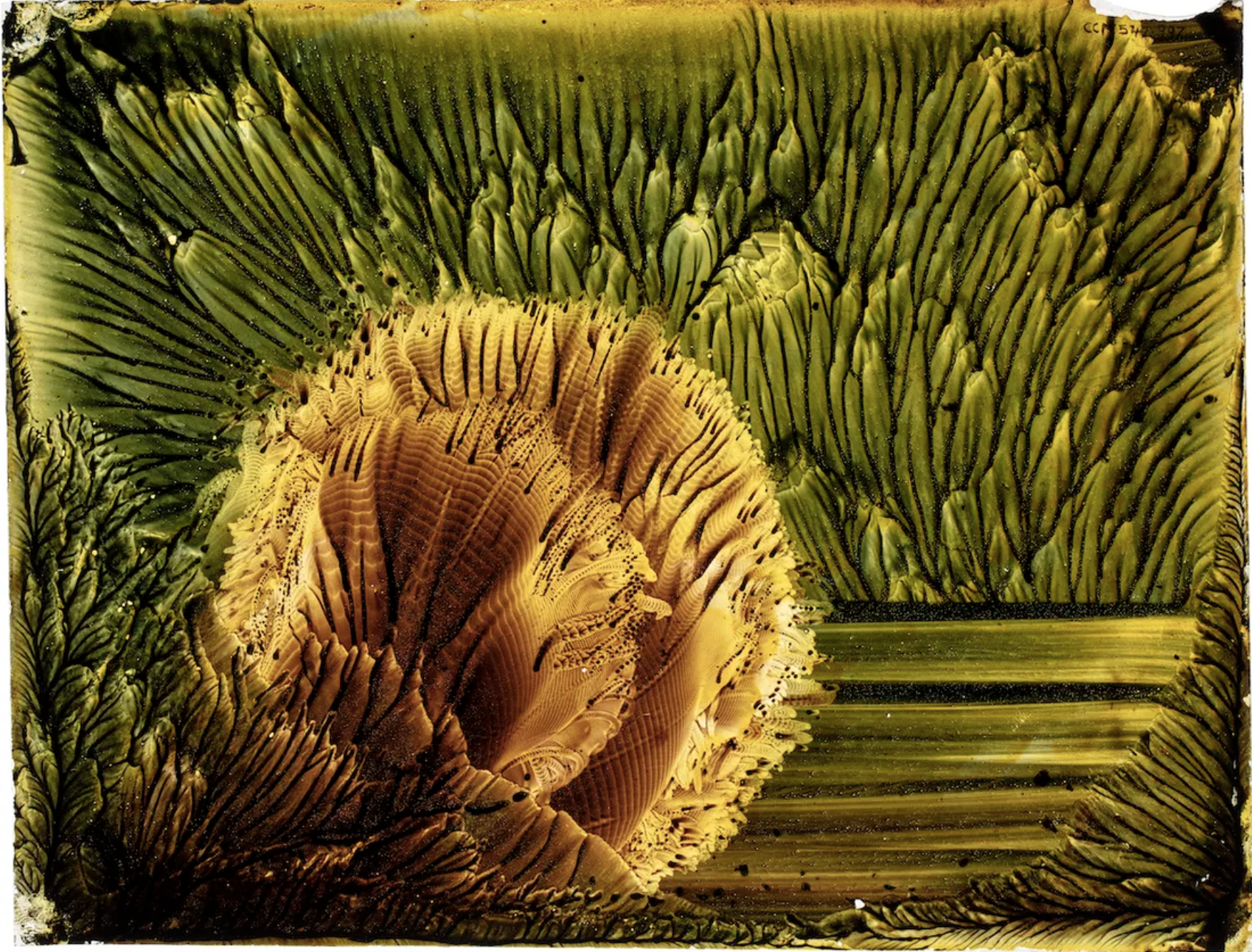
‘Impression Figure’ of recorded sound by Margaret Watts Hughes, Late 1800s.
Molly Hankins December 4, 2025
As more and more mainstream scientific breakthroughs sit at the intersection of quantum physics, human consciousness and mathematics, it’s unusual to find a layman at the forefront of revolutionary research. Enter Eric Rankin, the musician, author and channeler of a body of verified information connecting the major chords on a musical scale with the sum total angles of basic geometric shapes. First put forth in a YouTube video he called ‘Sonic Geometry: the Language of Frequency and Form’ in 2013, Rankin never imagined how sharing this knowledge would impact the trajectory of his life. Discovering this symmetry between geometric and harmonic aspects of the universe has led to his work being discussed alongside world-famous scientists and academics. All the while he’s been living in Laguna Beach, playing in two different bands and teaching a Sonic Geometry class at The Integratron in Joshua Tree.
Approximately 2500 years ago, Pythagoras claimed that “there is geometry in the humming of the strings.” Although sometimes embarrassed by the accolades of credentialed academics, Rankin is the person credited with revealing the correlation between geometry, frequency and major-chord harmonics. “Humans seem to have been ‘designed or programmed’ as major-chord resonators,” he says, speaking of the sense of well-being major chords give us. It’s a similar feeling to hearing music tuned to 432 Hz, which Rankin is also naturally interested in because of patterns that connect to physics, music theory, nature, growth algorithms and spiritual teachings.
The number of vibrational cycles per second determines a sound’s measurement in hertz. When asked about musical tuning, Rankin explained why some Hertz levels, like 432, feel better to many of us physically than others. “432 is kind of a core number, which people are starting to hear about now. If you octave that down to 216, half value, then octave that down again you get 108. A Hindu mala necklace has 108 beads, the meditating Buddha has 108 snails cooling his head while he meditates,” Rankin said. “Our moon is 108 moon-widths away from Earth, our sun is 108 sun-widths away from Earth. So you go, what is going on here that we’ve just been ignorant of? And we wouldn’t have known this until we could measure the moon and the sun and the Earth, that’s just in the last 100, maybe 150 years.” He believes this symmetry, revealed only by the imperial measurement system, is a divine communication meant to be unlocked at a certain phase of human evolution and acts as an invitation to pay attention to the underlying order of life.
At a cymatics lab, where sound is projected into matter to form geometric patterns, Rankin played a scale of major chords, one at a time in sequence and “something showed up that they’d never seen. Rather than a flat-looking beautiful geometric standing wave pattern, it looked like a living lotus that was flowering where petals were actually layered on top of other petals.” The lotus is a Buddhist symbol for awakening, reminding us that we all have the same potential to achieve enlightenment like the Buddha. The number of equally compelling examples Rankin is able to name of frequency measurements corresponding to sacred geometry, symbols and structures, is completely astounding, but he thinks we’ve barely scratched the surface of all there is to know. Sound projected into matter, with certain frequencies resulting in more beauty and dimensionality than others, might be an indicator of how life was created, and how we are co-creating it with the vibration of our thoughts, words and deeds.
Rankin’s work has attracted the likes of physicist Menas Kafatos and Sir Robert Edward Grant, who produced the follow-up video to Sonic Geometry which deals with the platonic solids. Kafatos appeared on Rankin’s weekly podcast and radio show in Orange County, Awakening Code Radio, and told us that “today’s science is much more mystical than people make it out to be, including scientists.” Perhaps the underlying truth of geometric correspondence to harmonics, which is inherently mystical, could only come through a non-scientist in a non-academic setting. Sonic Geometry points to natural intelligence that wants to reveal itself, so why wouldn’t that natural intelligence find an unbiased channel who understands the fundamental nature of harmonics and the emotional effect they have on other beings? That’s a perspective unique to musicians, and Rankin has no doubt that’s at least part of the reason this knowledge wanted to come through him.
“Suddenly, every geometric shape, the foundation of what we call reality, would actually be in literal harmony within Earth’s vibrational field. It’s just like engines having harmonic balancers to keep them running smoothly".”
“There’s been an internal guidance system in place my whole life. I could say it’s my interest in music, or my interest in dolphins and their amazing abilities,” he explained, referencing the years he spent as a boat captain that led him to study dolphins and write a book about them. Those interests gave him the requisite framework he needed to receive the knowledge of Sonic Geometry, which came in one fine flash in August of 2012. He heard a voice of higher intelligence he had previously only experienced during medical emergencies, so he attributed it to a guardian angel of sorts. The voice told him to go to the white board and draw a triangle, write down the sum total of its angles, then play the sum as a tone. “I had a musical background so I understood Hertz cycles to a degree, so I thought ok - how do I play the sum total? And the voice said, ‘You’re living in a moment in time where you can do that, pick up your phone.’ So I looked up an app and did it.”
Within a few moments, he was generating a 180 hz tone to match the sum total of a triangle, and continued going up the scale of the sum total of a square, pentagon and so on to discover the progression of major-chord harmonics “We seem to have been programmed as a resonators, that when we hear major chords we relax and go, ‘Ah, that’s right.’ Other chords might stir other feelings, all the way to minor chords, which feel like danger,” Rankin observes. “So if the universe is geometric in essence, then it is also major-chord harmonic in essence.” To illustrate this point in the Sonic Geometry class Rankin teaches at The Integratron, he uses a keyboard during his lecture so he can play each shape as sound. The relaxation we experienced when those major chords were played felt physically, mentally, spiritually and emotionally harmonizing.
The Integratron is an acoustically perfect chamber conceived as a frequency harmonizing machine by the man who built it, George Van Tassel. Van Tassel believed the world’s pyramids were actually huge “harmonic balancers,” and Rankin asks, “Harmonic to what?”. His answer was the Schumann Resonance, which measures the time it takes electromagnetic waves to bounce between the surface of the Earth and base of the ionosphere, and is typically resting at approximately 7.83 Hz. “What if, thousands of years ago, that resonance field was just 1 Hz higher, hovering at a perfect 9? Suddenly, every geometric shape, the foundation of what we call reality, would actually be in literal harmony within Earth’s vibrational field. It’s just like engines having harmonic balancers to keep them running smoothly,” he says. This sort of speculation has made him a darling on the American TV show Ancient Aliens - like what if the capstone that once topped The Great Pyramid was harmonizing the planet by boosting its frequency to 9 Hz?
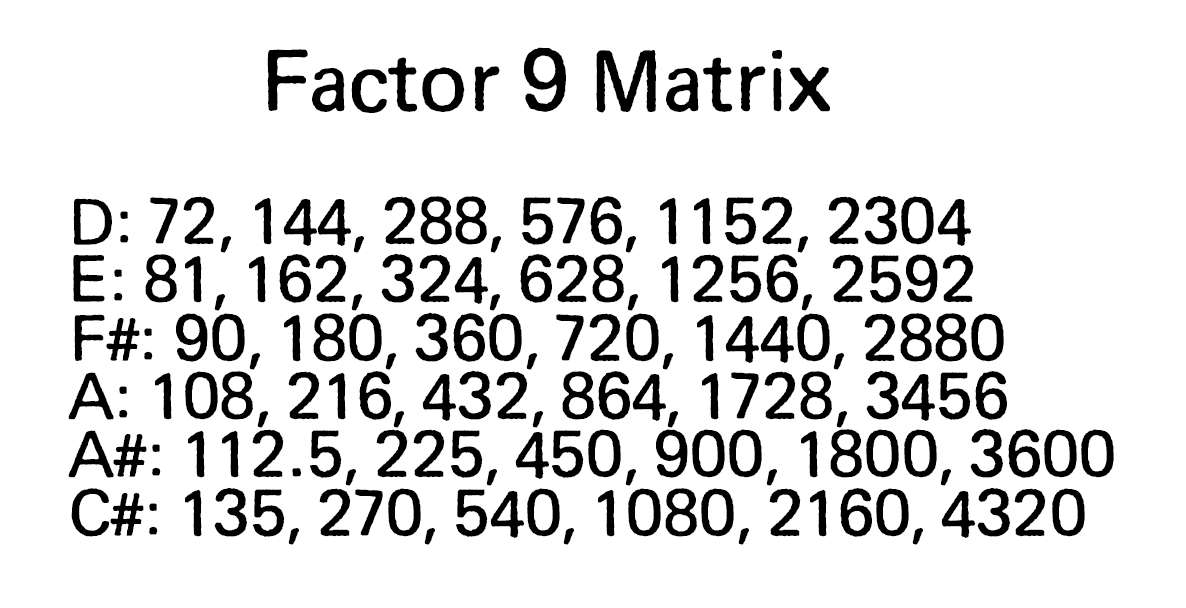
Rankin has not discovered how to use this information beyond the deployment of sound to create harmonic states of being. He has, however, mapped the information in what he calls a Factor 9 grid based on the frequencies of Hertz cycles that add up to 9, such as 432 Hz (4+3+2 = 9). “When we start with 432 Hz and move up and down by multiples of 9, an astonishing 14-tone matrix of synchronicity begins to appear. For instance, on this unique grid we find not just some, but all of the numbers representing every primary geometric shape,” he explains in Sonic Geometry 2. “Looking deeper, we see many other numbers that played into some of humanity’s most profound religious texts - the 72 names of God in the Kabbalah. There’s 108, the number of times Hindu mantras are repeated in ceremonies. We find 144, a number sequence represented in the Great Pyramid of Giza, the number of days in a Mayan baktun.” A baktun is the total length of the Mayan calendar, 144,000 days. 144,000 is also the number of souls that must awaken in order for the planet to move into a higher field of consciousness.
What is this information trying to tell us? “In a word, it’s harmony,” Rankin says. “When we play together as frequencies the numbers of all the primary geometric shapes, what presents itself is a three-tone, numerically perfect major chord. This phenomenon should not be taken lightly, for what we are seeing is a certain kind of proof that nature has revealed by mathematical patterns is a force existing in literal harmony with itself.” If harmony is built into the blueprint of our material lives, perhaps seeking harmony within ourselves, relationships, and communities is what being alive is all about. All of the “Great Work” that alchemists, magicians, meditators and religious practitioners are dedicated to involves some expression of harmonization. Rather than trying to practically apply the teachings of Sonic Geometry, when we apply it philosophically life becomes quite simple - creating harmony is all that matters.
Molly Hankins is an Initiate + Reality Hacker serving the Ministry of Quantum Existentialism and Builders of the Adytum.
Film
<div style="padding:71.71% 0 0 0;position:relative;"><iframe src="https://player.vimeo.com/video/1142228160?badge=0&autopause=0&player_id=0&app_id=58479" frameborder="0" allow="autoplay; fullscreen; picture-in-picture; clipboard-write; encrypted-media; web-share" referrerpolicy="strict-origin-when-cross-origin" style="position:absolute;top:0;left:0;width:100%;height:100%;" title="Lost Horizon clip 1"></iframe></div><script src="https://player.vimeo.com/api/player.js"></script>
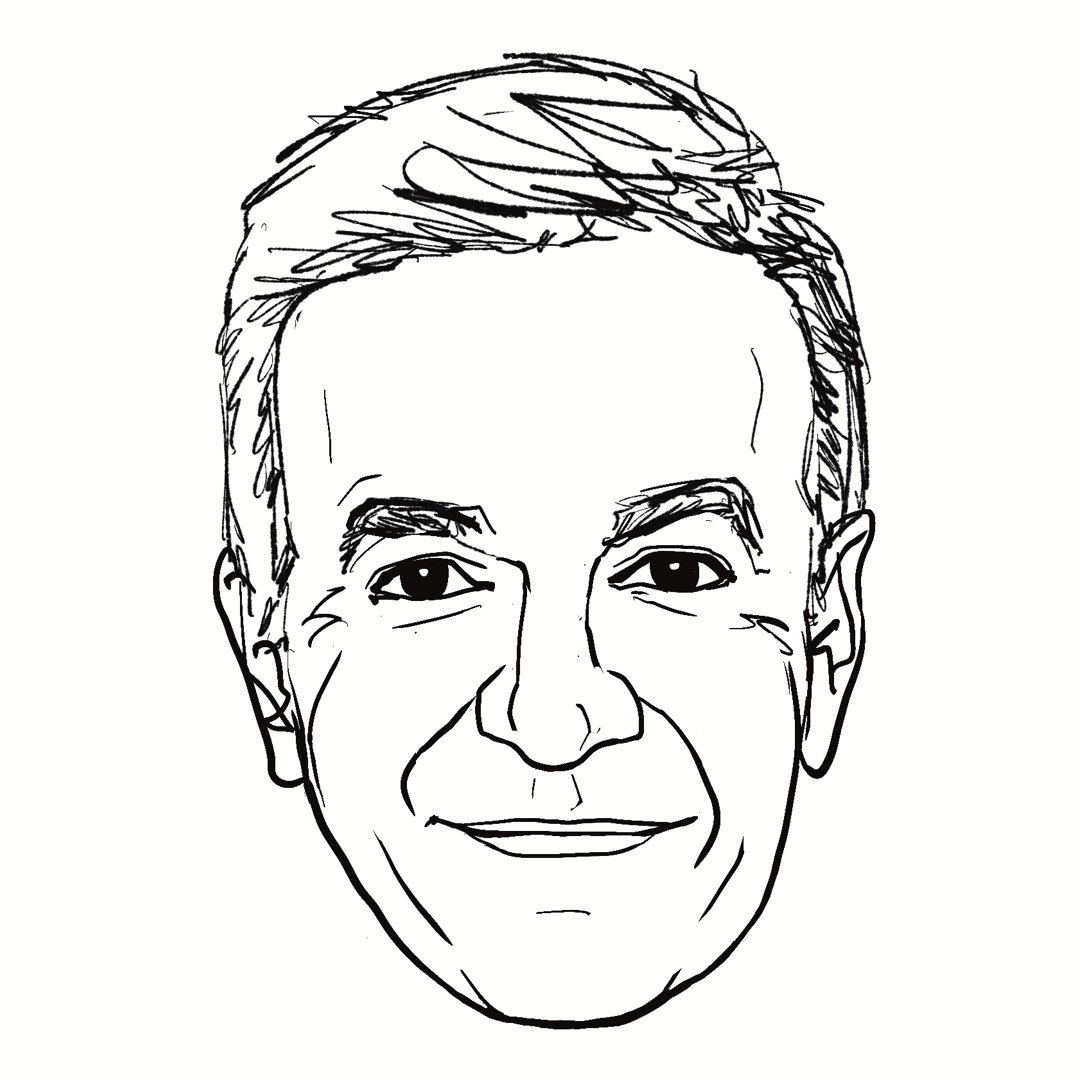
Nick Broomfield
1h 41m
12.3.25
In this clip, Rick speaks with Nick Broomfield about identity in Hollywood.
<iframe width="100%" height="265" src="https://clyp.it/ybp2rtmc/widget?token=241b0815e1baf92bf8fc298be84dd075" frameborder="0"></iframe>