
Liberty Leading the People
DELACROIX
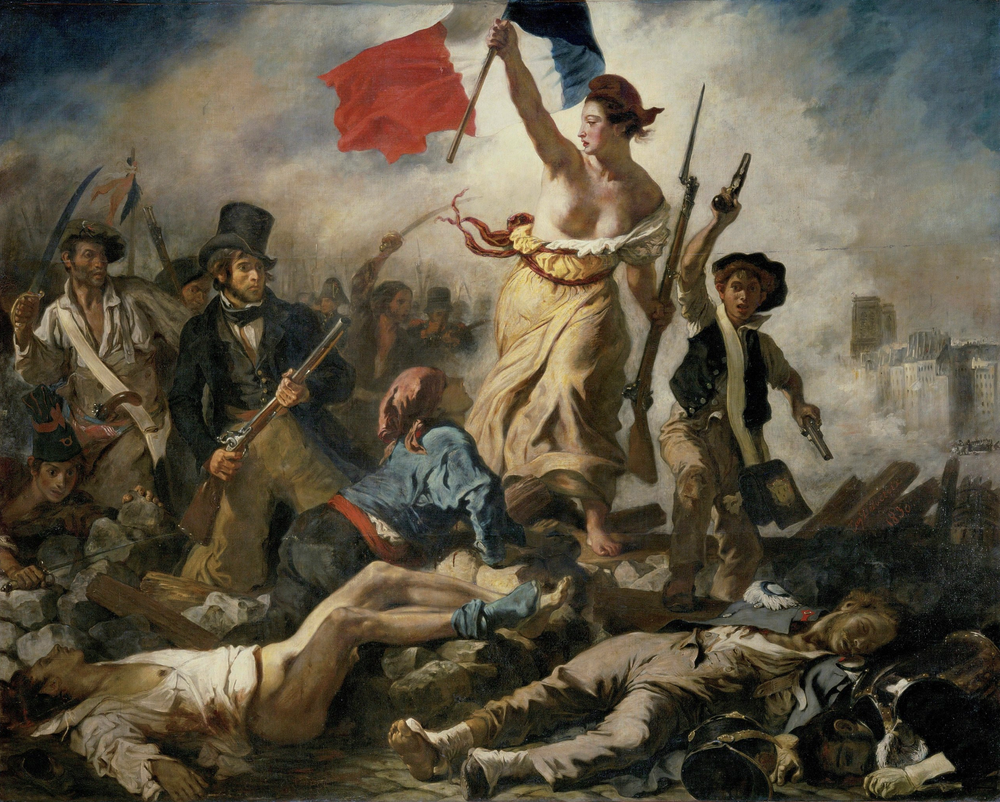
“If I haven't fought for my country, at least I'll paint for her.” And France should be grateful, for Eugène Delacroix’s magnum opus became one of the land’s greatest historical images. The anthropomorphised figure of Liberty strides forward, both rugged everywoman and godlike allegory. She leads a radically varied depiction of the July Revolution’s crowd; bicorned students, top-hatted bourgeoisie and pistol-toting revolutionary workers. Delacroix completed the painting before the year of revolution had ended. The father of French Romanticism rejected the emphasis on precision of the academic art of his time, instead concentrating upon colour brushed with abandon. The Phrygian-capped figure of Liberty was based upon a Dutch portrait of the pirate Anne Bonny; an apt manifestation of King Charles X’s bloody downfall.
Eugène Delacroix

EUGÈNE DELACROIX, 1830. OIL ON CANVAS
“If I haven't fought for my country, at least I'll paint for her.” And France should be grateful, for Eugène Delacroix’s magnum opus became one of the land’s greatest historical images. The anthropomorphised figure of Liberty strides forward, both rugged everywoman and godlike allegory. She leads a radically varied depiction of the July Revolution’s crowd; bicorned students, top-hatted bourgeoisie and pistol-toting revolutionary workers. Delacroix completed the painting before the year of revolution had ended. The father of French Romanticism rejected the emphasis on precision of the academic art of his time, instead concentrating upon colour brushed with abandon. The Phrygian-capped figure of Liberty was based upon a Dutch portrait of the pirate Anne Bonny; an apt manifestation of King Charles X’s bloody downfall.
The Disintegration of The Persistence of Memory
DALÍ
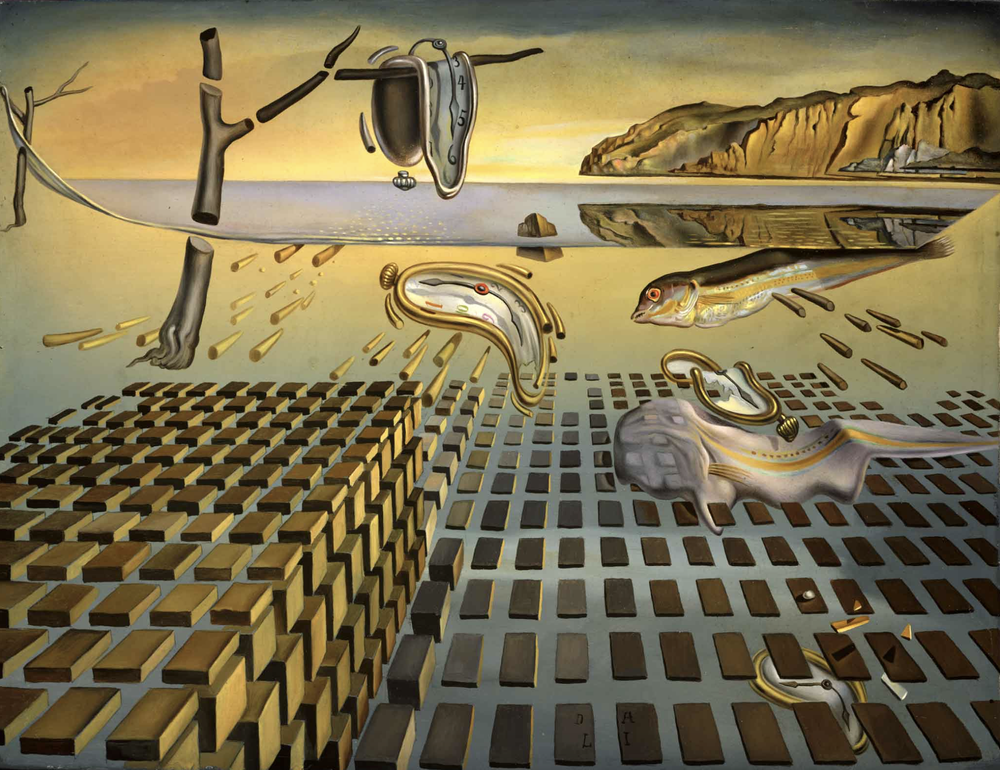
For Salvador Dalí, the nuclear bomb ended Surrealism as he had known it. 24 years earlier, the Spaniard had established himself as foremost of the Surrealists through The Persistence of Memory. His melting clocks, an introduction to his ideas of ‘softness and hardness’, relied upon the exactitude of realistic painting techniques to achieve. In the light of the mushroom cloud, Dalí’s beliefs changed; and thus, what had been the Surrealist magnum opus changed with it. The disintegration he sought takes the form of brick-like shapes floating in tandem to each other, notably unbound. Here, Dalí is depicting the breakdown of matter into atoms — the world he had helped define undoes itself and transforms into something as yet unknown.
Salvador Dalí

SALVADOR DALÍ, 1954. OIL ON CANVAS
For Salvador Dalí, the nuclear bomb ended Surrealism as he had known it. 24 years earlier, the Spaniard had established himself as foremost of the Surrealists through The Persistence of Memory. His melting clocks, an introduction to his ideas of ‘softness and hardness’, relied upon the exactitude of realistic painting techniques to achieve. In the light of the mushroom cloud, Dalí’s beliefs changed; and thus, what had been the Surrealist magnum opus changed with it. The disintegration he sought takes the form of brick-like shapes floating in tandem to each other, notably unbound. Here, Dalí is depicting the breakdown of matter into atoms — the world he had helped define undoes itself and transforms into something as yet unknown.
Concetto Spaziale, Attese
FONTANA
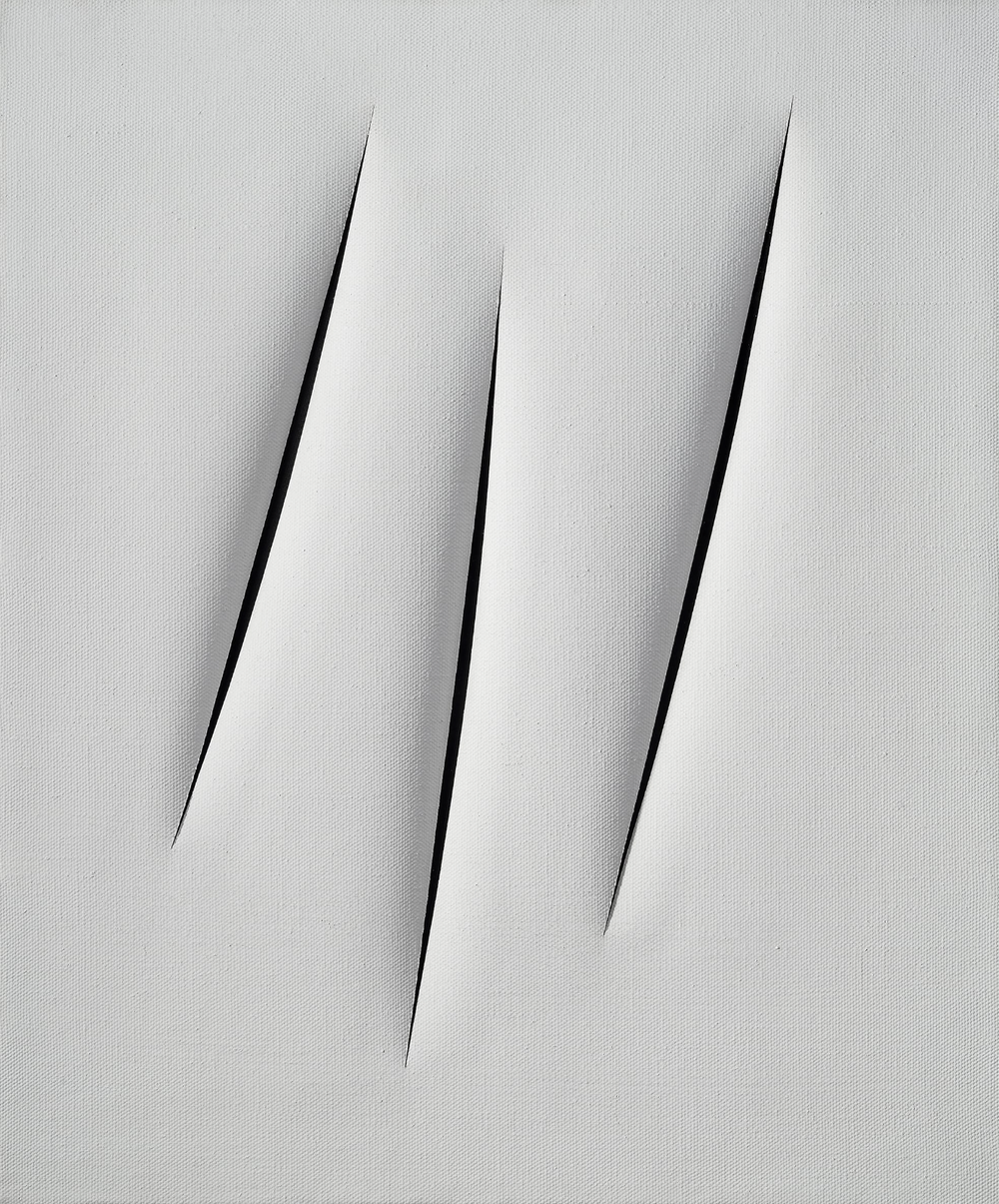
When Lucio Fontana took a razor blade to a canvas, he didn’t just slice a single canvas but instead cut open the entire Italian canon. The father of Spatialism, Fontana created a space for energy to infiltrate the two dimensional plane and achieve dynamic forms of expression. In doing so, his works approach infinity. The simple act of creating a hole or a slash, adds a mathematical dimension and turns painting into sculpture. He creates empty, weightless meaning, and then allows a metaphysical space to exist within them. For Fontana, his works approach cosmic unity – in the small emptiness of the canvas and the impossible expanse of space we can find the same infinity. ‘I make holes, the infinite goes through them, light passes through them, there is no need to paint…’ said Fontana.
Lucio Fontana
LUCIO FONTANA, 1968. WATERPAINT ON CANVAS.
When Lucio Fontana took a razor blade to a canvas, he didn’t just slice a single canvas but instead cut open the entire Italian canon. The father of Spatialism, Fontana created a space for energy to infiltrate the two dimensional plane and achieve dynamic forms of expression. In doing so, his works approach infinity. The simple act of creating a hole or a slash adds a mathematical dimension and turns painting into sculpture. He creates empty, weightless meaning, and then allows a metaphysical space to exist within it. For Fontana, his works approach cosmic unity – in the small emptiness of the canvas and the impossible expanse of space we can find the same infinity. ‘I make holes, the infinite goes through them, light passes through them, there is no need to paint…’ said Fontana.
Untitled #5
MARTIN
Agnes Martin waited for her paintings to come to her. Sat in a rocking chair, often for weeks on end, she patiently anticipated the visions that would bring structure to her canvases. Deceptively simple, Martin’s work paintings were acts of laborious love. Beginning each as a sketch the size of a postage stamp, she would use complicated mathematics, enormous rulers, tape and a pencil to scale them onto the 6 foot square canvases she worked with. Yet, for all the rigor and pain their construction brought, the paintings are about the simplest things in life. Love, beauty, happiness - Martin experienced these emotions are radically simple and wanted to translate this to a visual language. The resulting images are so soft, so gentle, that reproduction does them no justice. Spending time in front of her work is taking in a breath of air, weightless but satiating. In their subtlety they speak to the joys of being human, the quiet and profound pleasure of living.
Agnes Martin

AGNES MARTIN, 1998. ACRYLIC PAINT AND GRAPHITE ON CANVAS
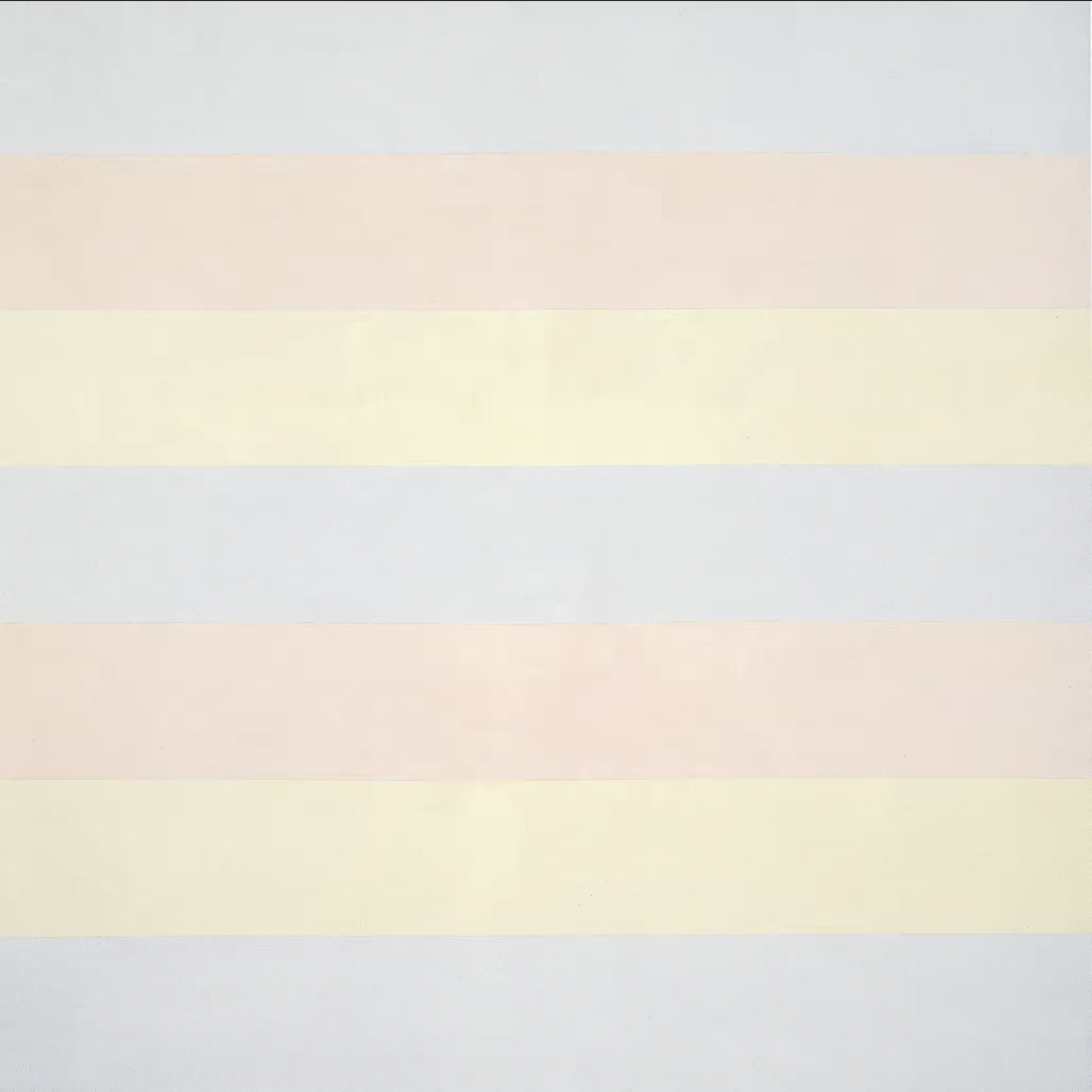
Agnes Martin waited for her paintings to come to her. Sat in a rocking chair, often for weeks on end, she patiently anticipated the visions that would bring structure to her canvases. Deceptively simple, Martin’s paintings were acts of laborious love. Each began as a sketch the size of a postage stamp. She would then use complicated mathematics, enormous rulers, tape and a pencil to scale them onto the six foot square canvases she worked with. Yet for all the rigor and pain their construction brought, the paintings are about the simplest things in life. Love, beauty, happiness – Martin’s experience of these emotions was radically simple and she wanted to translate this to a visual language. The resulting images are so soft, so gentle, that reproduction does them no justice. Spending time in front of her work is like taking in a breath of air, weightless but satiating. In their subtlety they speak to the joys of being human, the quiet and profound pleasure of living.
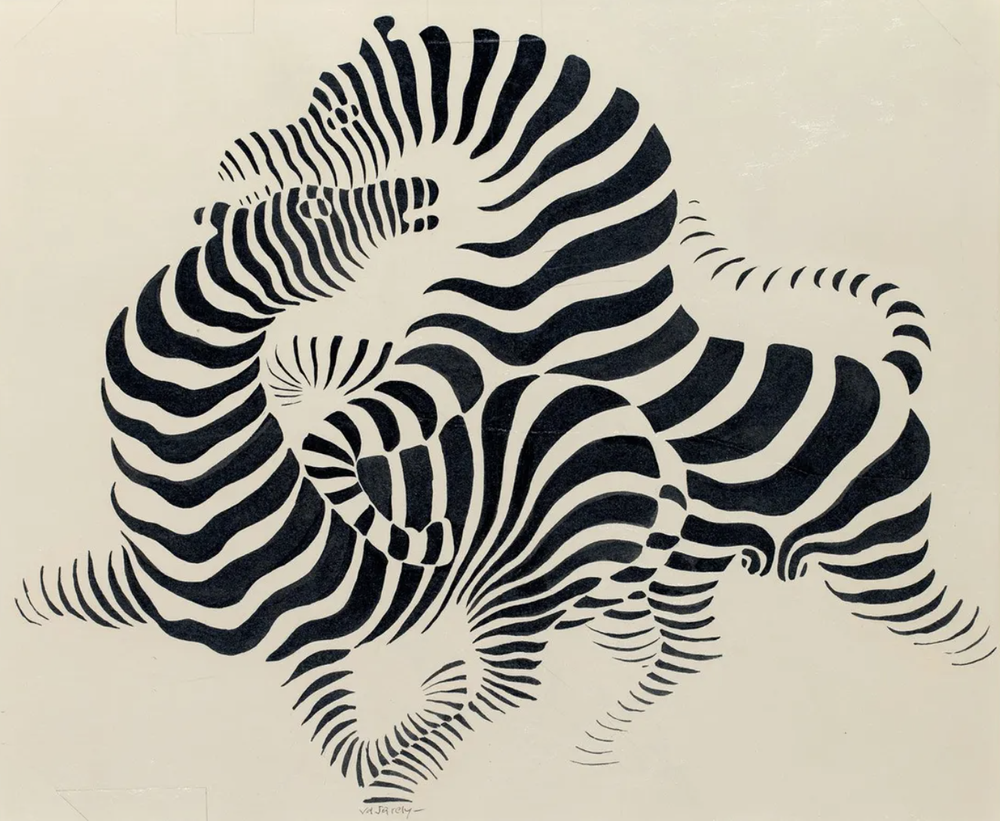
Zèbres-A
VASARELY
Vasarely is the undisputed father of Op art, responsible for transforming the two dimensional planes of art history into fluid, kinetic, mesmerizing works. By the 1970s, his style of optical trickery was everywhere, gracing the covers of David Bowie albums and the bonnets of Renault cars. But in 1938, Vasarely was still a young, unknown member of the Bauhaus school and it was the zebra that gave him his entry into a brave new world of art-making. The monochromatic markings spoke to Vasarely, the undulation of form that contorted perspective offered him a way of thinking about flat planes. His style quickly developed away from the zebras into increasingly complicated, geometric forms of illusion. But here, in the simple fight of equine figures, he laid the foundation of a new dimension.
Victor Vasarely

VICTOR VASARELY, 1938. INK ON PAPER
Vasarely is the undisputed father of Op art, responsible for transforming the two dimensional planes of art history into fluid, kinetic, mesmerizing works. By the 1970s, his style of optical trickery was everywhere, gracing the covers of David Bowie albums and the bonnets of Renault cars. But in 1938, Vasarely was still a young, unknown member of the Bauhaus school and it was the zebra that gave him his entry into a brave new world of art-making. The monochromatic markings spoke to Vasarely, the undulation of form that contorted perspective offered him a way of thinking about flat planes. His style quickly developed away from the zebras into increasingly complicated, geometric forms of illusion. But here, in the simple fight of equine figures, he laid the foundation of a new dimension.
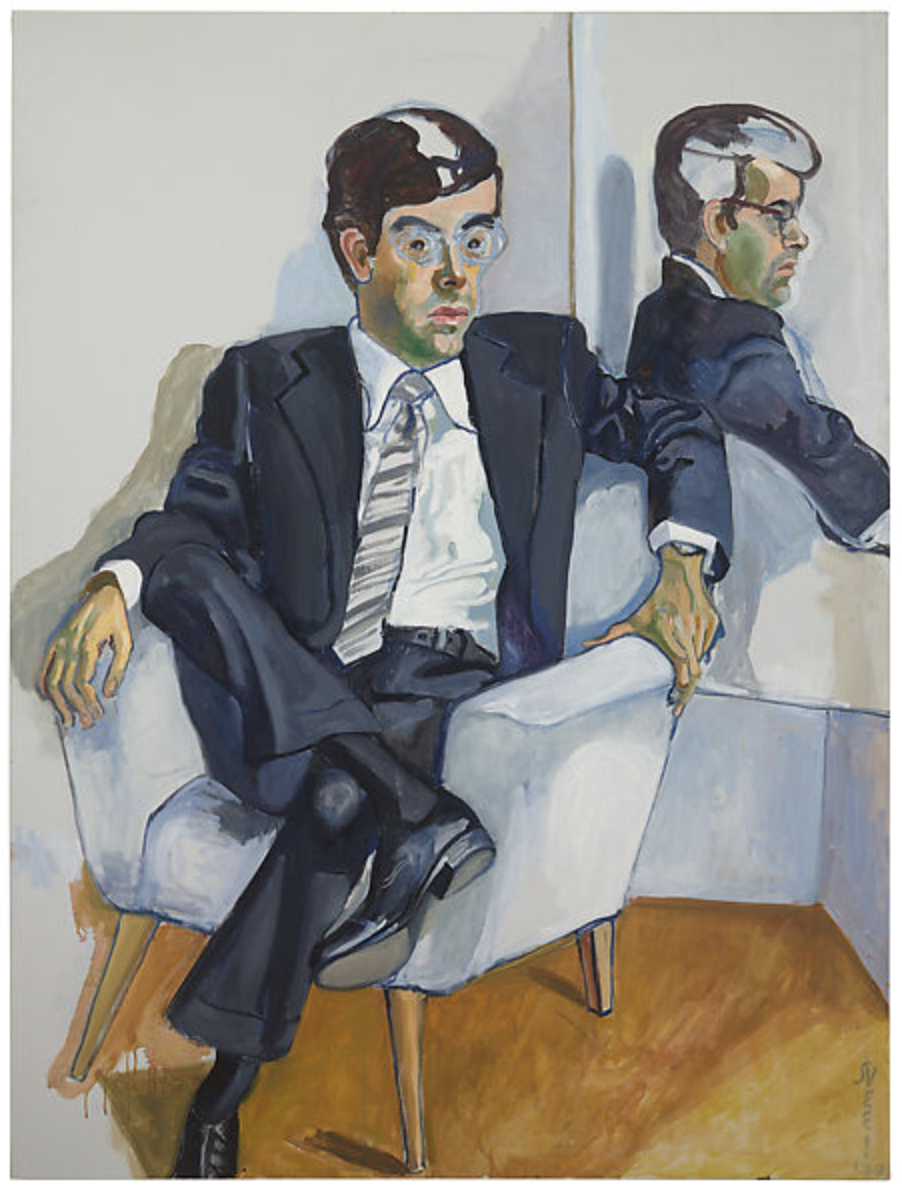
Richard in the Era of the Corporation
NEEL
In her East Harlem apartment, Alice Neel painted. Toiling away in relative obscurity for most of her career, she depicted ‘the human comedy’ as she saw it. A lifelong communist, she was the court painter of the common man. Her portraits are not of aristocrats and society figures so much as the friends, neighbors, delivery men and characters that populated her world. It is this belief in the everyman and disdain for corporate, capitalist America that makes this portrait of her son so intriguing. One of many she painted of Richard, her unflinching brush does not hide what she sees. Twisted around himself, the silver streak in his air left unpainted, his dark eyes staring emptily through the canvas – this is in many ways a portrait of a mother’s disappointment. Neel painted against the grain, not fazed with the vogues of the day or the art market; her work reflects her truth with total clarity.
Alice Neel

ALICE NEEL, 1979. OIL ON CANVAS
In her East Harlem apartment, Alice Neel painted. Toiling away in relative obscurity for most of her career, she depicted ‘the human comedy’ as she saw it. A lifelong communist, she was the court painter of the common man. Her portraits are not of aristocrats and society figures so much as the friends, neighbors, delivery men and characters that populated her world. It is this belief in the everyman and disdain for corporate, capitalist America that makes this portrait of her son so intriguing. One of many she painted of Richard, her unflinching brush does not hide what she sees. Twisted around himself, the silver streak in his air left unpainted, his dark eyes staring emptily through the canvas – this is in many ways a portrait of a mother’s disappointment. Neel painted against the grain, not fazed with the vogues of the day or the art market; her work reflects her truth with total clarity.
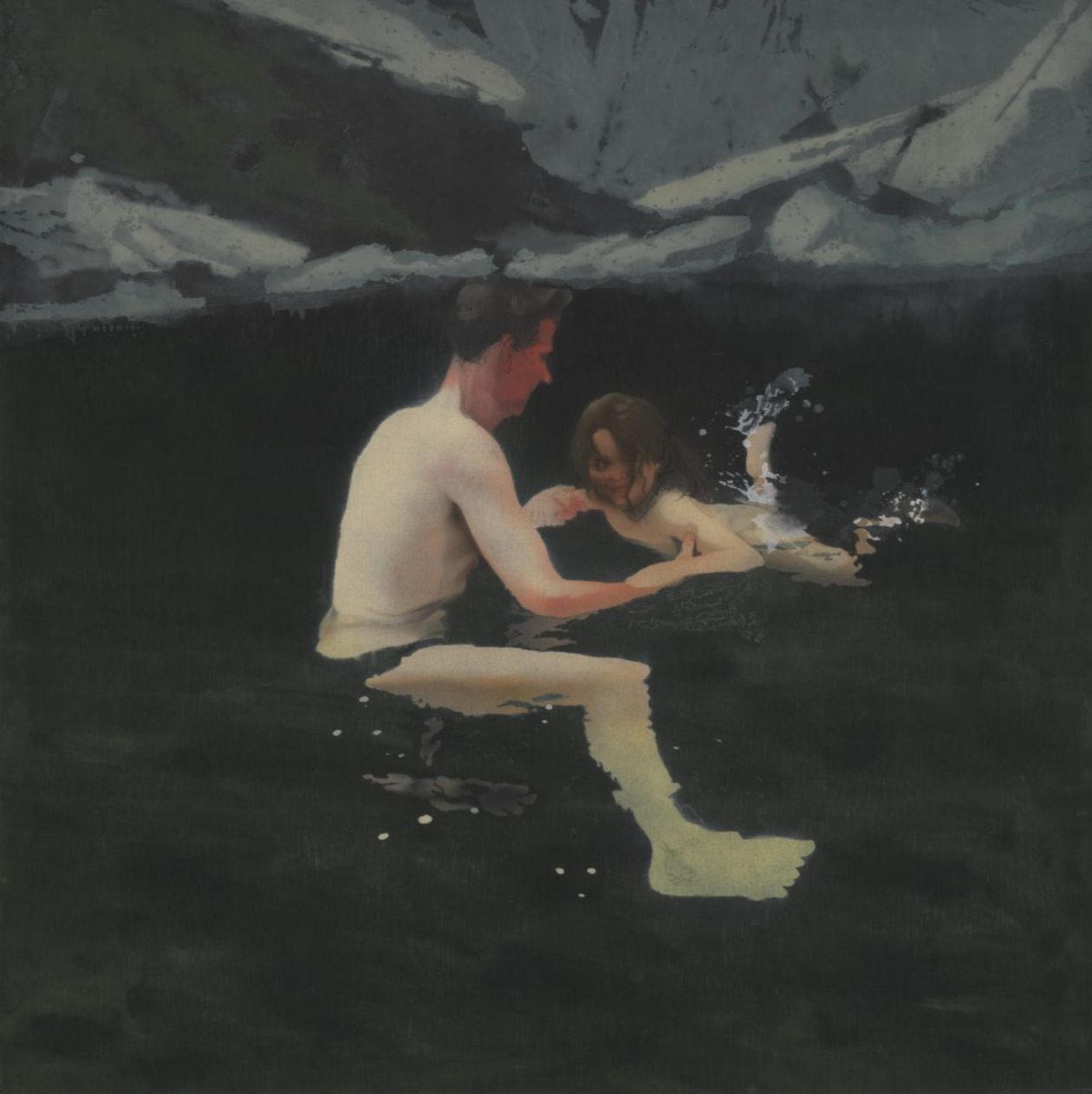
Melanie and Me Swimming
ANDREWS
The lesser known member of the School of London that included Francis Bacon, Lucian Freud and Frank Auerbach, Michael Andrews’ work is gentler than his contemporaries. The process of painting, as for all of them, was central to his work and he was notoriously fastidious, producing very few finished works in his lifetime. While the era was concerned with abstract representations, Andrews and his cohort were rebels for figurative work. Perhaps more than any other members of the School of London, Andrews was fascinated by the depiction of human relationships. Painted from a photograph, this self portrait sees Andrews holding his young daughter afloat in a rock pool. He is mostly obscured, his purpose purely functional as she beams through the canvas. It is a depiction of a transitional moment of parenthood. Soon his service will be obsolete when she no longer needs him to float. In its quiet, gentle beauty, Andrews is dealing with human concepts as difficult and painful as any of his contemporaries.
Michael Andrews

MICHAEL ANDREWS, 1979. ACRYLIC PAINT ON CANVAS
The lesser known member of the School of London that included Francis Bacon, Lucian Freud and Frank Auerbach, Michael Andrews’ work is gentler than his contemporaries. The process of painting, as for all of them, was central to his work and he was notoriously fastidious, producing very few finished works in his lifetime. While the era was concerned with abstract representations, Andrews and his cohort were rebels for figurative work. Perhaps more than any other members of the School of London, Andrews was fascinated by the depiction of human relationships. Painted from a photograph, this self portrait sees Andrews holding his young daughter afloat in a rock pool. He is mostly obscured, his purpose purely functional as she beams through the canvas. It is a depiction of a transitional moment of parenthood. Soon his service will be obsolete when she no longer needs him to float. In its quiet, gentle beauty, Andrews is dealing with human concepts as difficult and painful as any of his contemporaries.
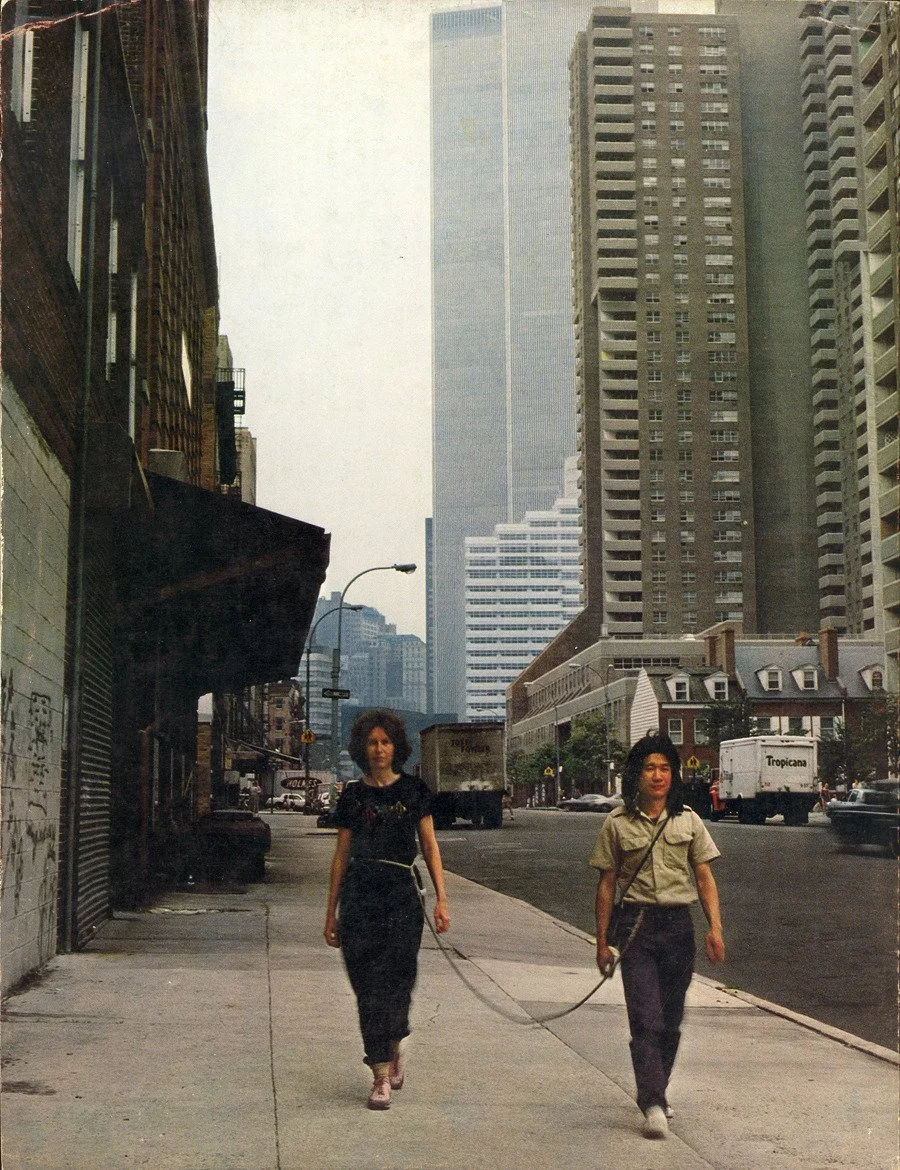
Art / Life: One Year Performance
MONTANA AND HSIEH
On July 4th 1983, Linda Montana and Tehching Hsieh fastened either end of an 8 foot rope around each other's waists and spent the following 365 days tied together. Two performance artists whose work pushed the boundaries of their bodies and questioned the meaning of art itself, Art/Life was the most ambitious and personally difficult work of their careers. Hsieh had done a number of time based works previously, most notably Time Clock Piece which saw him punch a timecard every hour for a year. Yet while Time Clock was an act of solitary punishment, Art/Life is a work about the limits of human connection. The rules of the artwork required them to be in the same room at all time, except when they showered and one would wait on the other side of the door, and, most importantly, that they never intentionally touch for the duration of the year. Hsieh wanted to confront his issues with human relationships, and bring himself out of the lonely fear he had built around him. “I wanted to do one piece about human beings and their struggle with each other. We cannot go into life alone, without people. But we are together so we become each other’s cage.”
Linda Montana and Tehching Hsieh
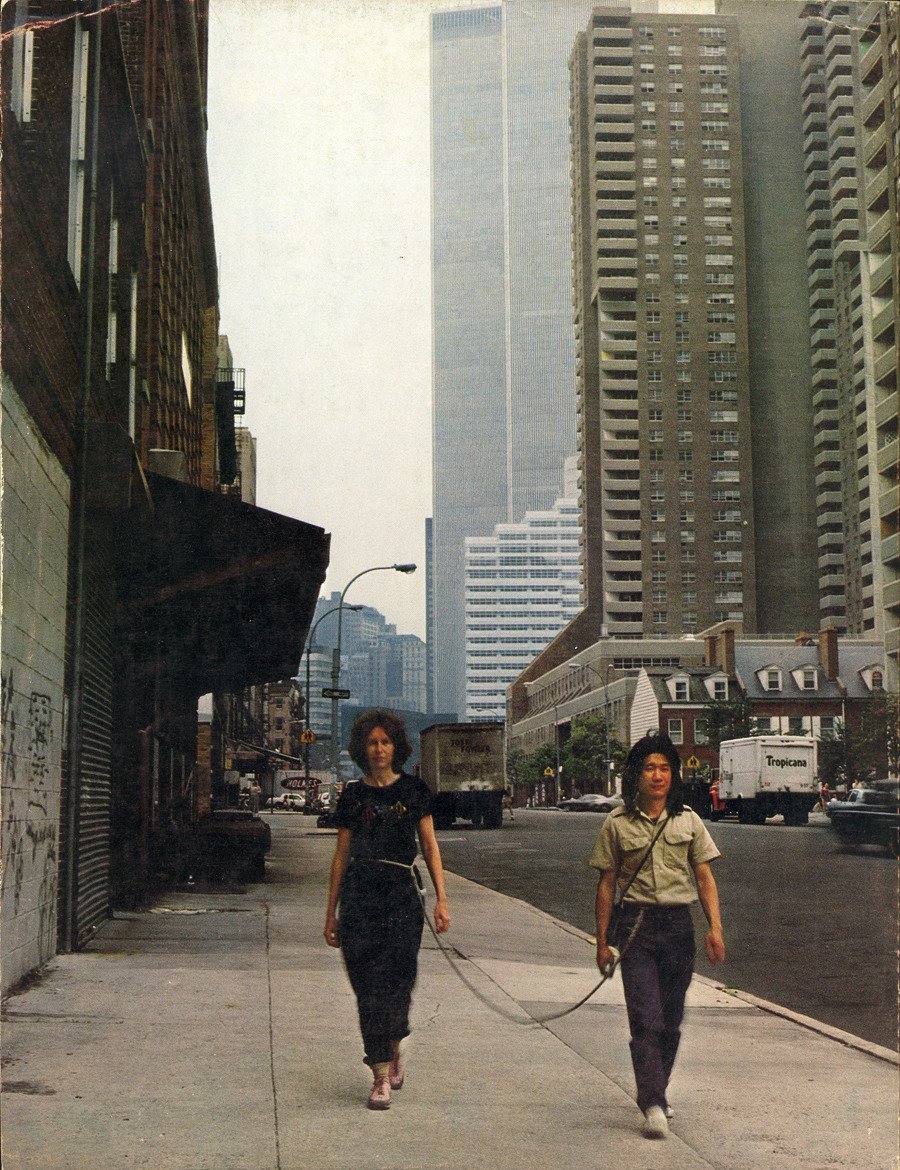
LINDA MONTANA AND TEHCHING HSIEH, 1983-1984.
On July 4th 1983, Linda Montana and Tehching Hsieh fastened either end of an 8 foot rope around each other's waists and spent the following 365 days tied together. Two performance artists whose work pushed the boundaries of their bodies and questioned the meaning of art itself, Art/Life was the most ambitious and personally difficult work of their careers. Hsieh had done a number of time based works previously, most notably Time Clock Piece which saw him punch a timecard every hour for a year. Yet while Time Clock was an act of solitary punishment, Art/Life is a work about the limits of human connection. The rules of the artwork required them to be in the same room at all time, except when they showered and one would wait on the other side of the door, and, most importantly, that they never intentionally touch for the duration of the year. Hsieh wanted to confront his issues with human relationships, and bring himself out of the lonely fear he had built around him. “I wanted to do one piece about human beings and their struggle with each other. We cannot go into life alone, without people. But we are together so we become each other’s cage.”
Untitled (Bacchus)
TWOMBLY
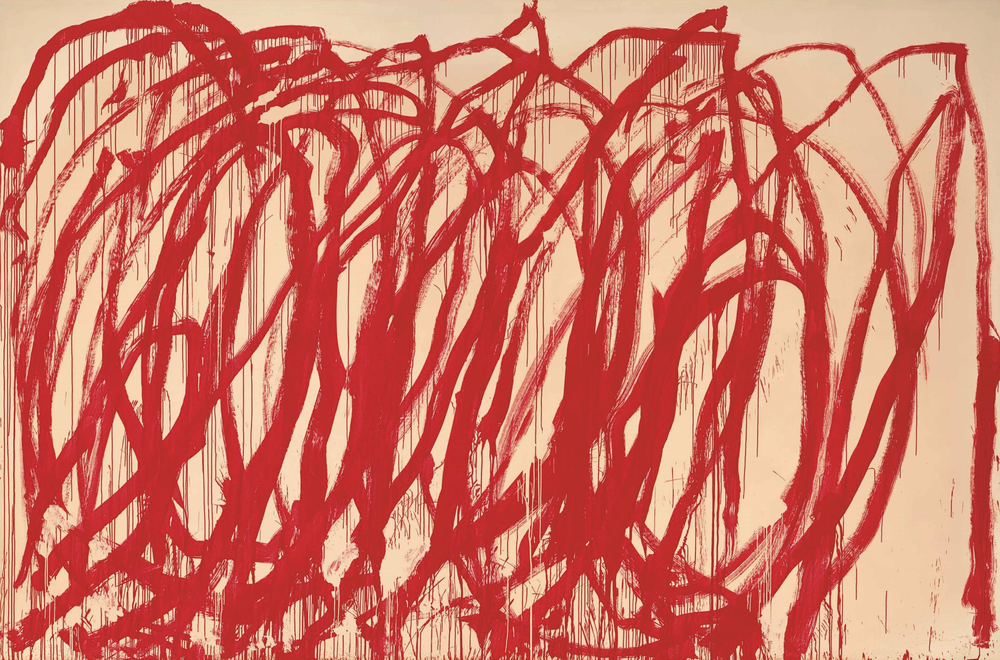
The ‘new mythology’ of 1950s America never appealed to Cy Twombly. Departing the US in 1957 for Rome, it was instead the ancient Roman and Greek pantheons that intrigued him. Unlike the great sculptors of those eras, Twombly’s vision of the divine was never set in stone - instead, he championed a more primeval approach. He painted this enormous 3-by-5 metre canvas using a pole-mounted decorator’s brush. Its bright red spirals seem to both climb and fall; running down the canvas like the dripping of wine. Bearing the Roman appellation of Bacchus, god of wine and celebration, Twombly spent years working on the series in direct response to the Iraq War. The paintings cannot contain the madness within them, it rises from the depths and engulfs the room.. ‘To paint,’ said Twombly, ‘involves a certain crisis, or at least a crucial moment of sensation or release.’
Cy Twombly

CY TWOMBLY, 2008. ACRYLIC PAINT ON CANVAS
The ‘new mythology’ of 1950s America never appealed to Cy Twombly. Departing the US in 1957 for Rome, it was instead the ancient Roman and Greek pantheons that intrigued him. Unlike the great sculptors of those eras, Twombly’s vision of the divine was never set in stone - instead, he championed a more primeval approach. He painted this enormous 3-by-5 metre canvas using a pole-mounted decorator’s brush. Its bright red spirals seem to both climb and fall; running down the canvas like the dripping of wine. Bearing the Roman appellation of Bacchus, god of wine and celebration, Twombly spent years working on the series in direct response to the Iraq War. The paintings cannot contain the madness within them, it rises from the depths and engulfs the room.. ‘To paint,’ said Twombly, ‘involves a certain crisis, or at least a crucial moment of sensation or release.’
Birthday
TANNING
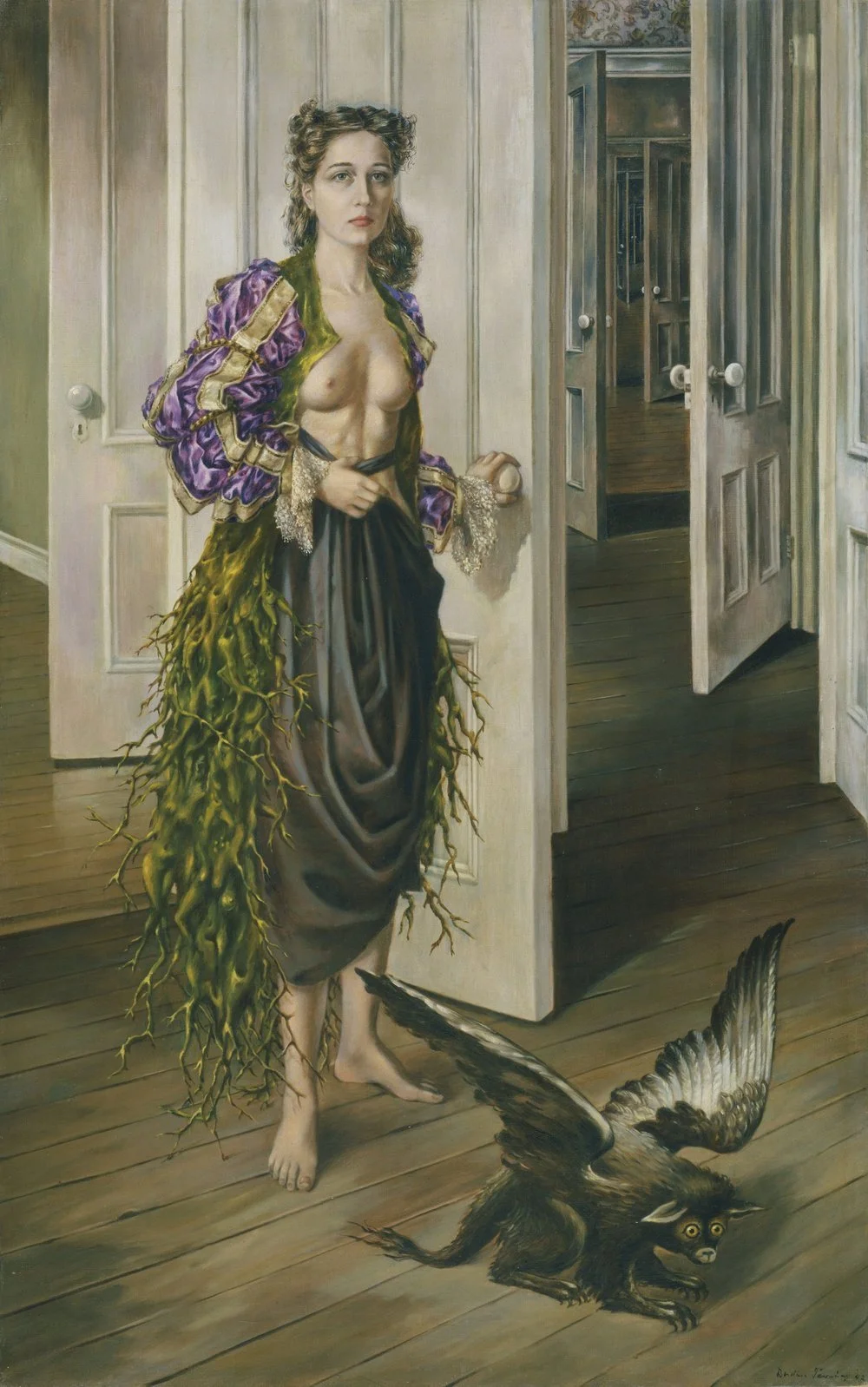
Dorothea Tanning escaped small-town Illinois to become one of the leading figures in American Surrealism. Yet, her humble origins remain subtly present in her work; her surrealist worlds are grounded in the quiet of the American Midwest. "Birthday" was a landmark painting in her career. Wearing a billowing, self-altered jacket she thrifted from a Shakespeare production, Tanning is playing a character. She reveals little about herself in her depiction of her form; it is the world she situated herself in that is the true self-portrait. She holds a door open for us, which in turn leads to a seemingly infinite expanse of open doors. Her dress turns into an entangled mess of greenery that sprouts fingers, while a small, impossible pet sits ominously at her feet. The house is not grand, but it suggests a world of possibilities. Tanning, across her career, wanted to keep 'the door open to the imagination.' 'You see,' she said, 'enigma is a very healthy thing, because it encourages the viewer to look beyond the obvious and commonplace.
Dorothea Tanning
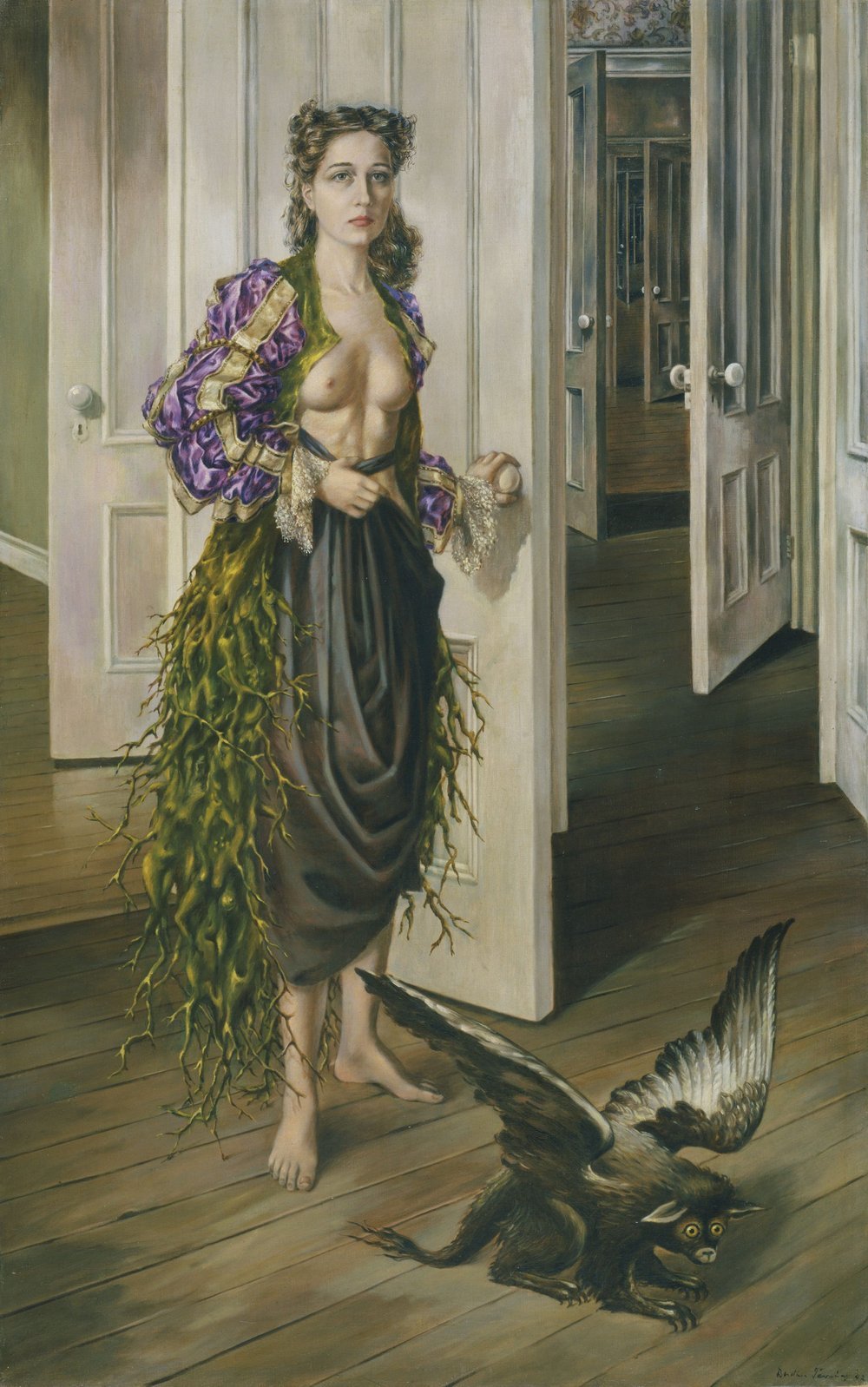
DOROTHEA TANNING, 1942. OIL ON CANVAS
Dorothea Tanning escaped small-town Illinois to become one of the leading figures in American Surrealism. Yet, her humble origins remain subtly present in her work; her surrealist worlds are grounded in the quiet of the American Midwest. "Birthday" was a landmark painting in her career. Wearing a billowing, self-altered jacket she thrifted from a Shakespeare production, Tanning is playing a character. She reveals little about herself in her depiction of her form; it is the world she situated herself in that is the true self-portrait. She holds a door open for us, which in turn leads to a seemingly infinite expanse of open doors. Her dress turns into an entangled mess of greenery that sprouts fingers, while a small, impossible pet sits ominously at her feet. The house is not grand, but it suggests a world of possibilities. Tanning, across her career, wanted to keep 'the door open to the imagination.' 'You see,' she said, 'enigma is a very healthy thing, because it encourages the viewer to look beyond the obvious and commonplace.
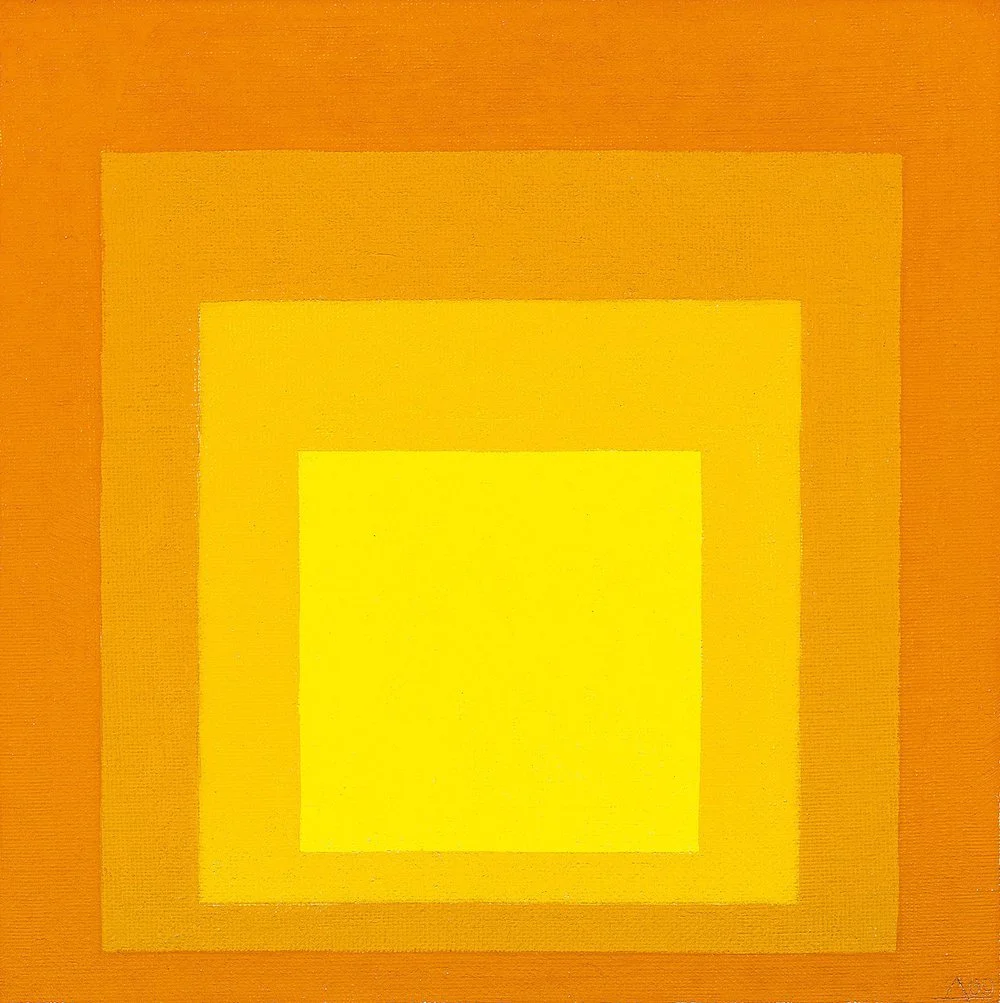
Study for Homage to the Square: Starting
ALBERS
Four squares of paint, directly from the tube. As he had done for the last 19 years, 81 year-old Josef Albers scraped his homages to the equilateral with a palette knife; idealising the shape. From the narrowest conceptual frameworks can the most extraordinary perceptual complexity arise - the ‘Homage to the Square’ went on to number more than 2,000 paintings, created sequentially until the artist's death in 1976. Singularly fascinated with the interaction of colour, each successive variation on Albers' basic compositional scheme brought new adjustments in hue, tone and intensity. His 1963 book ‘Interaction of Colour’ referred to such experiments as ‘a study of ourselves’. What at first glance would appear to be ‘just’ four squares belies Albers' true depth - that of chromatic harmony.
Josef Albers
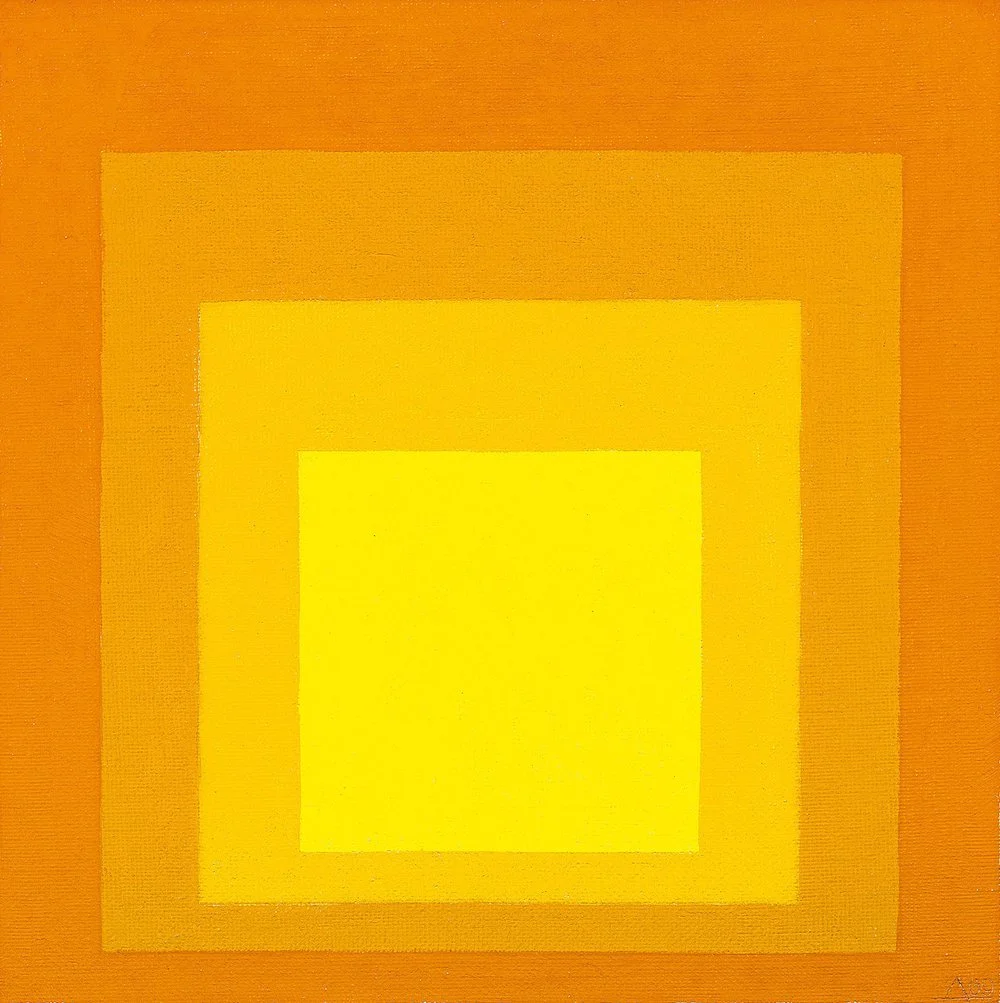
JOSEF ALBERS, 1969. CASEIN AND OIL ON MASONITE
Four squares of paint, directly from the tube. As he had done for the last 19 years, 81 year-old Josef Albers scraped his homages to the equilateral with a palette knife; idealising the shape. From the narrowest conceptual frameworks can the most extraordinary perceptual complexity arise. The ‘Homage to the Square’ went on to number more than 2,000 paintings, created sequentially until the artist's death in 1976. Singularly fascinated with the interaction of colour, each successive variation on Albers' basic compositional scheme brought new adjustments in hue, tone and intensity. His 1963 book ‘Interaction of Colour’ referred to such experiments as ‘a study of ourselves’. What at first glance would appear to be ‘just’ four squares belies Albers' true depth - that of chromatic harmony.

The Bride of the Wind
KOKOSCHKA
The fractures of heartbreak bleed into Oskar Kokoschka's paintings. The artist was only 26 years old when he began a passionate two-year relationship with the widowed Alma Mahler, but the anguish of their uncoupling would inspire the turbulent brushstrokes that became his signature. Kokoschka’s rigorous belief in the occurrence of omens guided him throughout his life, both artistic and physical. He had a faith in the universe, and listened to the signs it presented him. When Mahler left him due to a fear of being overcome by passion, it seemed to him a rejection of their earthly destiny. Painted midway through their tumultuous relationship, this painting is directly allegorical - the titular bride is Mahler, whose comfortable rest rings harsh against the open eyes and dissociative expression upon her lover’s face.
Oskar Kokoschka
OSKAR KOKOSCHKA, c.1913, OIL ON CANVAS
The fractures of heartbreak bleed into Oskar Kokoschka's paintings. The artist was only 26 years old when he began a passionate two-year relationship with the widowed Alma Mahler, but the anguish of their uncoupling would inspire the turbulent brushstrokes that became his signature. Kokoschka’s rigorous belief in the occurrence of omens guided him throughout his life, both artistic and physical. He had a faith in the universe, and listened to the signs it presented him. When Mahler left him due to a fear of being overcome by passion, it seemed to him a rejection of their earthly destiny. Painted midway through their tumultuous relationship, this painting is directly allegorical - the titular bride is Mahler, whose comfortable rest rings harsh against the open eyes and dissociative expression upon her lover’s face.
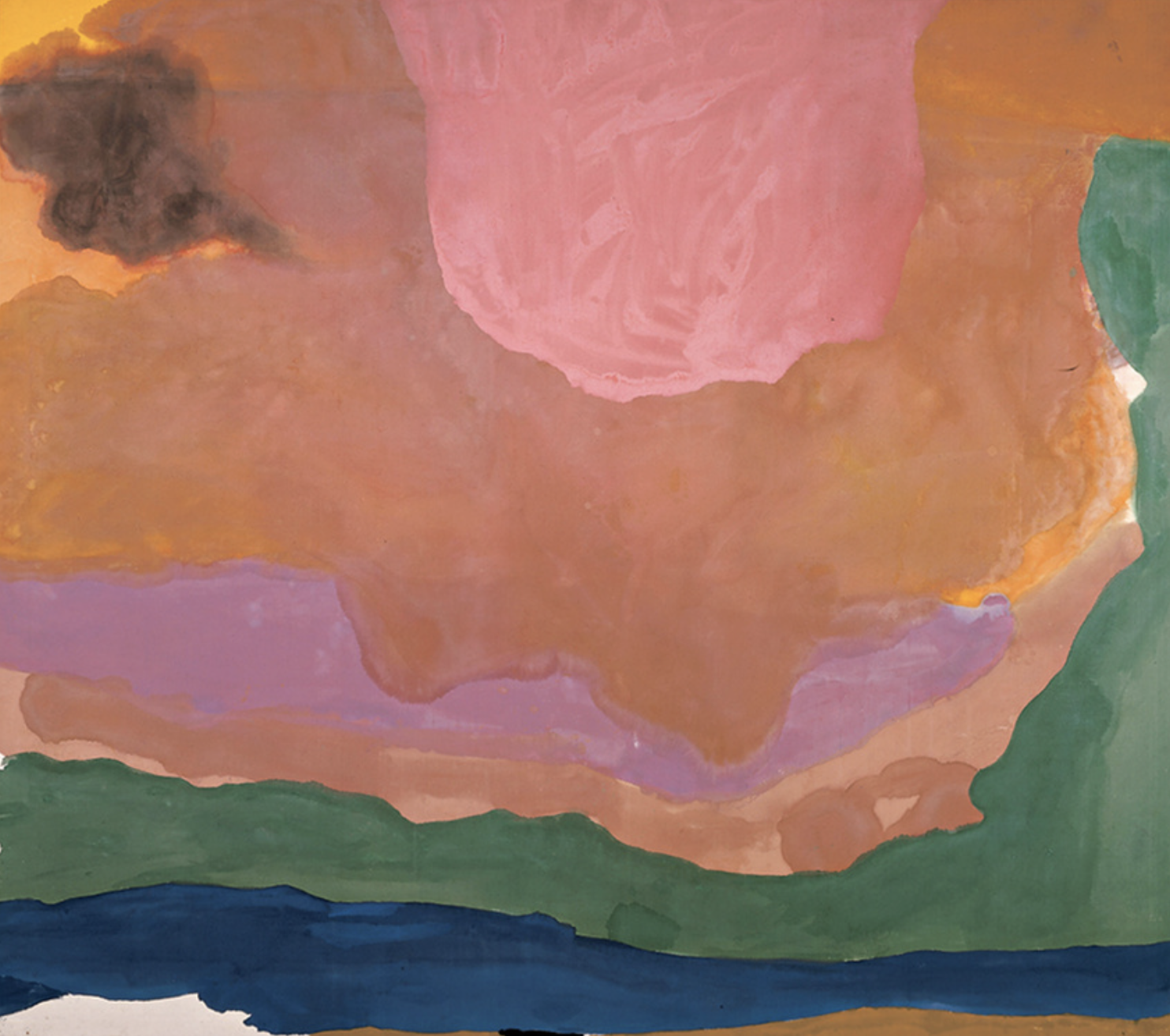
Flood
FRANKENTHALER
In Provincetown, America’s oldest continuous art colony, Helen Frankenthaler began to change. Pivoting from the broadness of her abstract, expressionist beginnings, she started to create softer, stranger works. The extraordinary community and the local landscape provided the time, space and emotion necessary to move her experimental painting practice in new directions. That new direction lay in her ‘soak-stain’ technique - a practice of diluting acrylic paint with turpentine until it had the consistency of watercolour. Flood is archetypal of Frankenthaler's Provincetown period. It is a 'Colour Field' painting - something the artist effectively invented - using liquid pigments and the canvases’ varying absorption effects to create in collaboration with her materials. Never before had figuration and landscape been referenced through such liquid abstraction.
Helen Frankenthaler
HELEN FRANKENTHALER, 1967, ACRYLIC ON CANVAS
In Provincetown, America’s oldest continuous art colony, Helen Frankenthaler began to change. Pivoting from the broadness of her abstract, expressionist beginnings, she started to create softer, stranger works. The extraordinary community and the local landscape provided the time, space and emotion necessary to move her experimental painting practice in new directions. That new direction lay in her ‘soak-stain’ technique - a practice of diluting acrylic paint with turpentine until it had the consistency of watercolour. Flood is archetypal of Frankenthaler's Provincetown period. It is a 'Colour Field' painting - something the artist effectively invented - using liquid pigments and the canvases’ varying absorption effects to create in collaboration with her materials. Never before had figuration and landscape been referenced through such liquid abstraction.
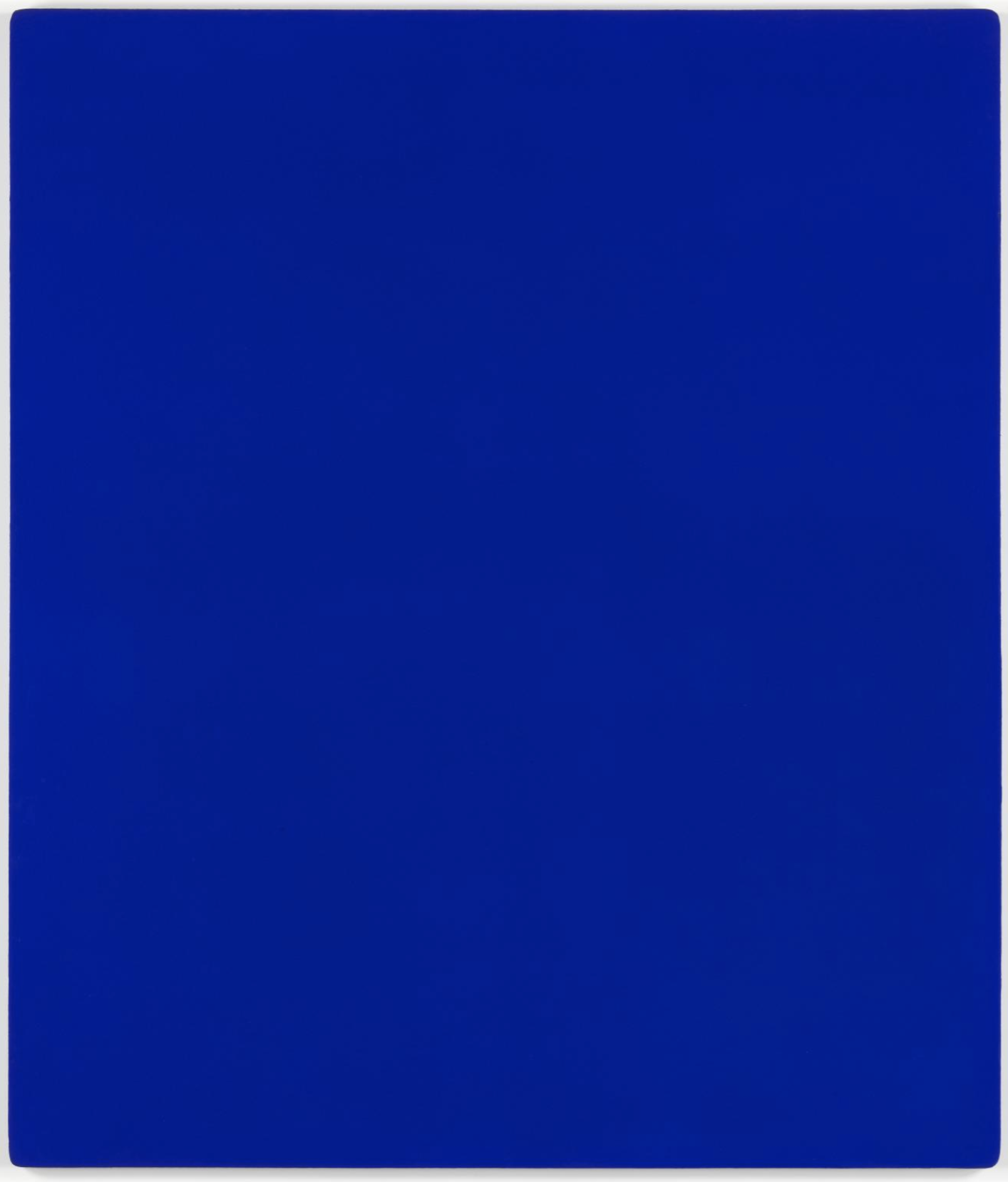
IKB 79
KLEIN
Eventually, Yves Klein would paint without pigment or brush but in 1959, Klein was still fascinated with his signature colour blue alone. #002FA7, better known as International Klein Blue, is a particularly vibrant ultramarine; a mixture of gouache-like industrial paint with a highly volatile fixative that, when correctly combined, produces an effect of uncommon depth upon canvas. Klein painted nearly 200 of these monochromes, rejecting any semblance of representation to attain pure creative freedom. A shaman and a marketeer, Klein’s work was deeply spiritual on a personal level, but he never lost sight of the commercial art world. In 1957, he presented a collection of 11 seemingly identical blue monochromes, each with a different price that reflected their unique spirit. “'Each blue world of each painting, although the same blue and treated in the same way, presented a completely different essence and atmosphere. None resembled any other - no more than pictoral moments resemble each other - although all were of the same superior and subtle nature (marked by the immaterial)”
Yves Klein
YVES KLEIN, c.1959, PAINT ON CANVAS ON PLYWOOD
Eventually, Yves Klein would paint without pigment or brush but in 1959, Klein was still fascinated with his signature colour blue alone. #002FA7, better known as International Klein Blue, is a particularly vibrant ultramarine; a mixture of gouache-like industrial paint with a highly volatile fixative that, when correctly combined, produces an effect of uncommon depth upon canvas. Klein painted nearly 200 of these monochromes, rejecting any semblance of representation to attain pure creative freedom. A shaman and a marketeer, Klein’s work was deeply spiritual on a personal level, but he never lost sight of the commercial art world. In 1957, he presented a collection of 11 seemingly identical blue monochromes, each with a different price that reflected their unique spirit. “'Each blue world of each painting, although the same blue and treated in the same way, presented a completely different essence and atmosphere. None resembled any other - no more than pictoral moments resemble each other - although all were of the same superior and subtle nature (marked by the immaterial)”
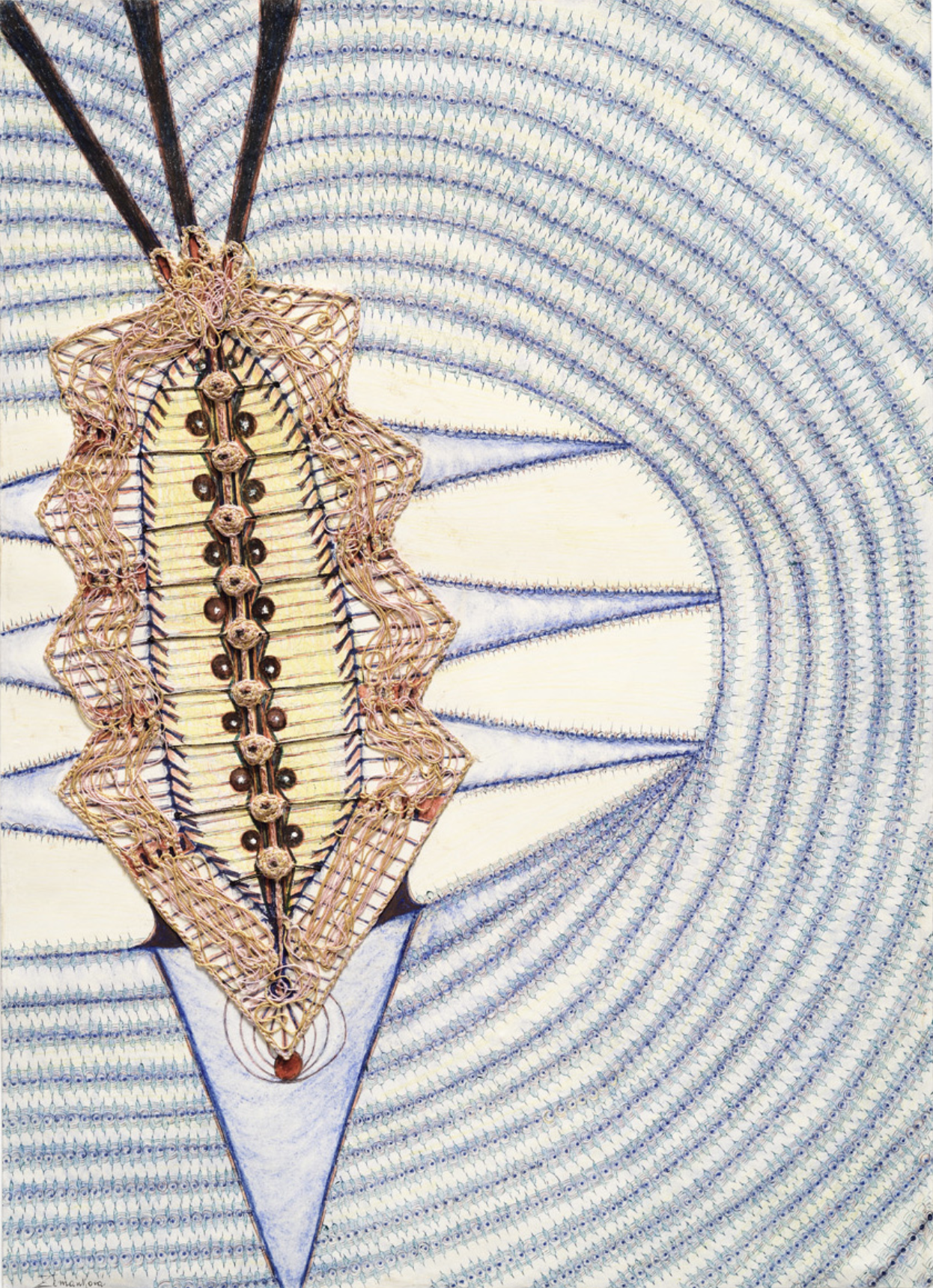
Untitled
ZEMÁNKOVÁ
To be the black sheep of art brut (raw art) is perhaps to be the most brut of them all. And yet, the only rawness within Anna Zemánková’s work is that of nature - the raw, naturally-engineered edge of plant-like beauty. Born from her growing mood swings and at the insistence of her sons, the Czech painter began to create again as an adult, decades after he gave her practice up. As her career progressed, she began to integrate the techniques with which she had previously used in motherhood, decorating her home and clothes into her artistic practice. Here, Zemánková combines pastel drawing and crochet appliqué with embroidery, conjuring herbariums of vaguely vegetable-like forms. Her fascination with the debauchery of floral shape and colour characterised her career, stating proudly “I grow flowers that grow nowhere else.”
Anna Zemánková
ANNA KEMÁNKOVÁ, c.1970, PASTEL ON PAPER WITH YARN
To be the black sheep of art brut (raw art) is perhaps to be the most brut of them all. And yet, the only rawness within Anna Zemánková’s work is that of nature - the raw, naturally-engineered edge of plant-like beauty. Born from her growing mood swings and at the insistence of her sons, the Czech painter began to create again as an adult, decades after he gave her practice up. As her career progressed, she began to integrate the techniques with which she had previously used in motherhood, decorating her home and clothes into her artistic practice. Here, Zemánková combines pastel drawing and crochet appliqué with embroidery, conjuring herbariums of vaguely vegetable-like forms. Her fascination with the debauchery of floral shape and colour characterised her career, stating proudly “I grow flowers that grow nowhere else.”
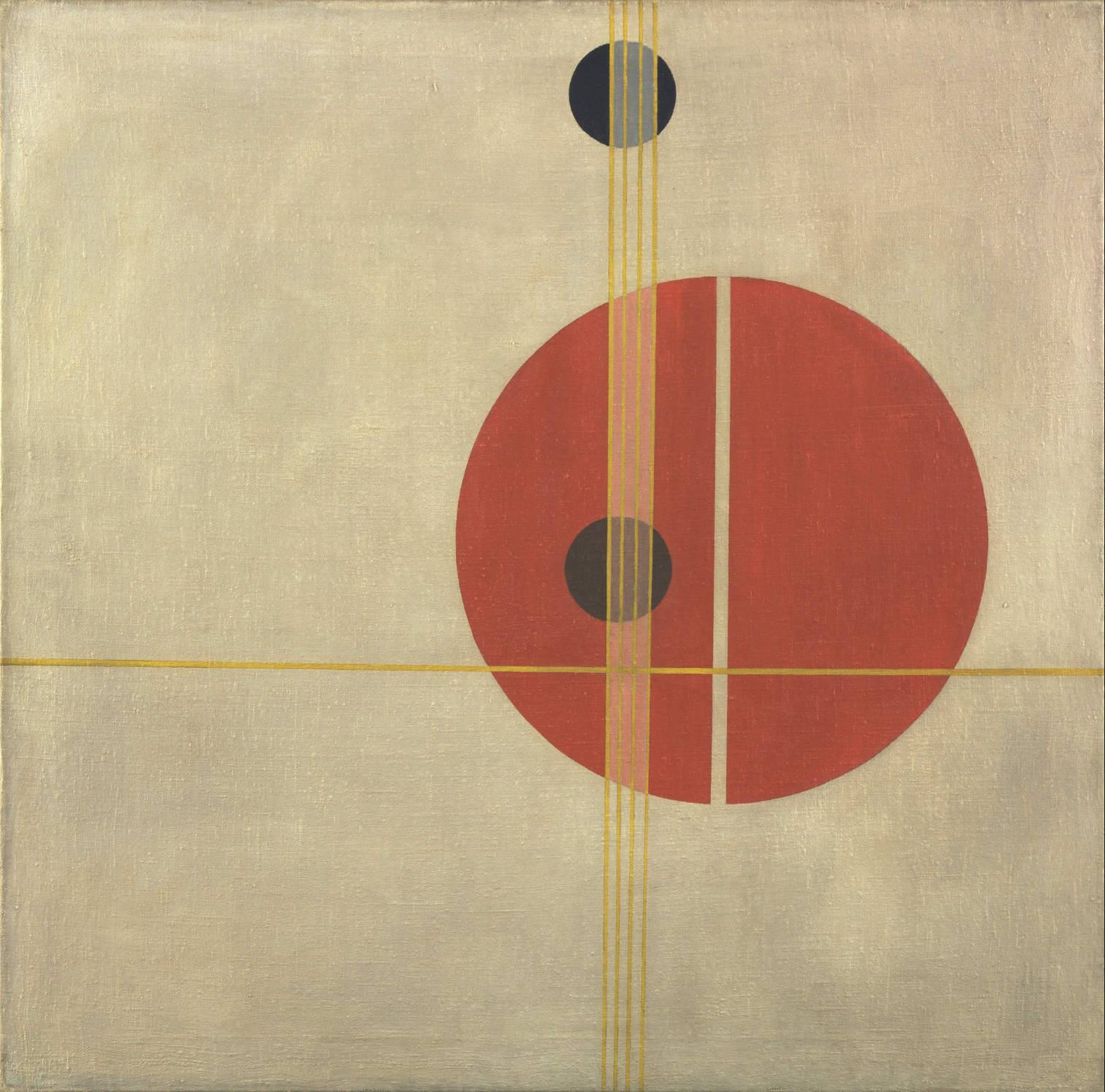
Q 1 Suprematistic
MOHOLY-NAGY
A perfect square, a circle and an equilateral triangle, this was László Moholy-Nagy's holy trinity. He was 27 years-old when he first discovered Suprematism - the avant-garde movement named for the ‘supremacy’ of 'pure, artistic feeling' which its Malevich believed to be the foundation of art as a concept. The Suprematists posited that only through ultimate abstraction could man - as both artist and witness - truly understand the act of creation. His elevation of the basic shapes was central to his understanding of the ‘feeling’ of the world, as opposed to objective reality. Q1 Suprematistic was painted the year Moholy-Nagy was invitated to join the Bauhaus art school faculty, and he combined the two aesthetic values into a work of radical, emotional simplicity. Painting, for Moholy-Nagy, was about "the primal human reaction to color, light and form.
László Moholy-Nagy
LÁSZLÓ MOHOLY-NAGY, 1923, OIL ON CANVAS
A perfect square, a circle and an equilateral triangle, this was László Moholy-Nagy's holy trinity. He was 27 years-old when he first discovered Suprematism - the avant-garde movement named for the ‘supremacy’ of 'pure, artistic feeling' which its Malevich believed to be the foundation of art as a concept. The Suprematists posited that only through ultimate abstraction could man - as both artist and witness - truly understand the act of creation. His elevation of the basic shapes was central to his understanding of the ‘feeling’ of the world, as opposed to objective reality. Q1 Suprematistic was painted the year Moholy-Nagy was invitated to join the Bauhaus art school faculty, and he combined the two aesthetic values into a work of radical, emotional simplicity. Painting, for Moholy-Nagy, was about "the primal human reaction to color, light and form.
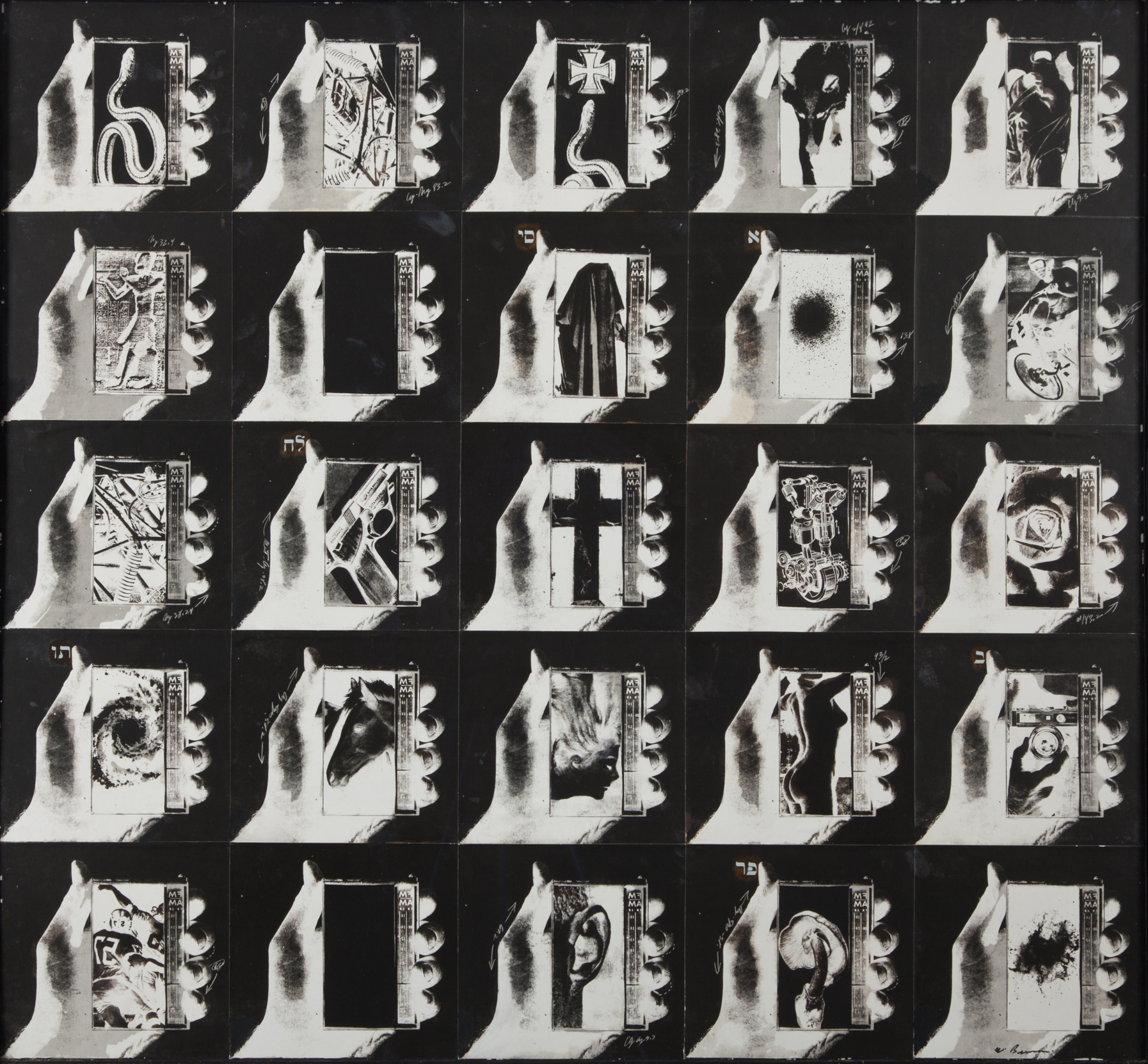
Untitled (Verifax Collage)
BERMAN
A crashing motorcycle, a bulldog revolver; sprouting lilies, Egyptian deities. Tying these disparate motifs together succinctly, Wallace Berman revolutionised the act of collage and laid the foundations for copy and digital art in the process. A Beat Artist who saw art not as a profession or a commercial enterprise but as an intrinsic and essential part of everyday life, Berman’s Verifax collages question the nature of originality. Taking the hand fragment from a 1963 advert for a cassette player and overlaying found imagery directly onto the Verifax machine, Berman scanned these loose compositions. There is no ‘original’, the copy of the ephemeral piece is the only artwork. With each assembly of motifs upon this 'screen', the ageing machine corralled seemingly random vignettes into “poems” of arranged imagery. Berman made hundreds of Verifax collages, leaving behind a constantly unfolding poem of repetition, deviation and chance.
Wallace Berman
WALLACE BERMAN, 1965, VERIFAX COLLAGE
A crashing motorcycle, a bulldog revolver; sprouting lilies, Egyptian deities. Tying these disparate motifs together succinctly, Wallace Berman revolutionised the act of collage and laid the foundations for copy and digital art in the process. A Beat Artist who saw art not as a profession or a commercial enterprise but as an intrinsic and essential part of everyday life, Berman’s Verifax collages question the nature of originality. Taking the hand fragment from a 1963 advert for a cassette player and overlaying found imagery directly onto the Verifax machine, Berman scanned these loose compositions. There is no ‘original’, the copy of the ephemeral piece is the only artwork. With each assembly of motifs upon this 'screen', the ageing machine corralled seemingly random vignettes into “poems” of arranged imagery. Berman made hundreds of Verifax collages, leaving behind a constantly unfolding poem of repetition, deviation and chance.

Self Portrait with the Yellow Christ
GAUGIN
Paul Gaugin is caught between two versions of his self. A yellow Christ hangs to his right, a figure he often used as an analogy for himself, and an abstract self-portrait to his left. He sits uncomfortably, almost confrontationally, in the middle. One of many self-portraits executed by Gauguin over his career, this painting is unique in that it is Gauguin’s only triplicate, an exploration of the multi-faceted life he experienced. The Yellow Christ, a work Gaugin painted just a few years earlier, is one of the key works of Symbolism. It looms over the painter, ignore the abstract rendition next it. It does not take the foreground but it dominates the composition from behind. Painted imminently before his first departure to Tahiti, this work captures a curious moment of an artist contemplating his art while existing inextricably within it.
Paul Gaugin
PAUL GAUGIN, 1889, OIL ON CANVAS
Paul Gaugin is caught between two versions of his self. A yellow Christ hangs to his right, a figure he often used as an analogy for himself, and an abstract self-portrait to his left. He sits uncomfortably, almost confrontationally, in the middle. One of many self-portraits executed by Gauguin over his career, this painting is unique in that it is Gauguin’s only triplicate, an exploration of the multi-faceted life he experienced. The Yellow Christ, a work Gaugin painted just a few years earlier, is one of the key works of Symbolism. It looms over the painter, ignore the abstract rendition next it. It does not take the foreground but it dominates the composition from behind. Painted imminently before his first departure to Tahiti, this work captures a curious moment of an artist contemplating his art while existing inextricably within it.
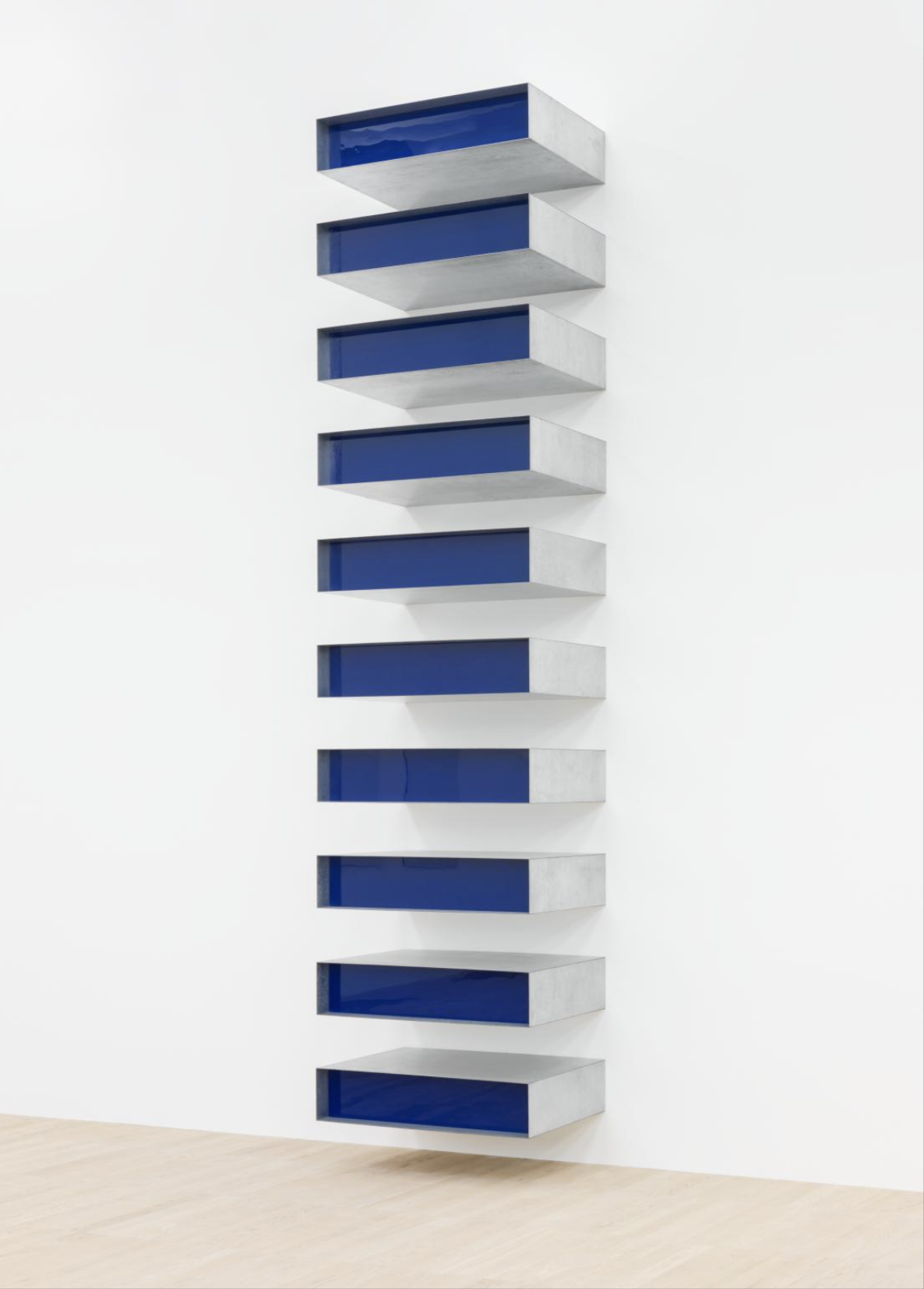
Untitled (1980)
JUDD
When minimalist designers were creating furniture that aspired to sculpture, Donald Judd went the other way. His sculptures speak the language of serial production and functionality, indebted to the history of industrial design as much as that of fine art. His Stack Sculptures, as seen here, were an attempt to remove symbolic meaning from art and focus on the relationship between space and colour. They are evenly hung, the distance between each unit identical to their height, and the number of units dependent on the length of the wall. He removed the possibility of spontaneity in his creation, using commercial fabricators and industrial material to make his work. “The main virtue of geometric shapes,” said Judd, “is that they aren’t organic, as all art otherwise is”.
Donald Judd
DONALD JUDD, 1980, STEEL, ALUMINIUM AND PERSPEX)
When minimalist designers were creating furniture that aspired to sculpture, Donald Judd went the other way. His sculptures speak the language of serial production and functionality, indebted to the history of industrial design as much as that of fine art. His Stack Sculptures, as seen here, were an attempt to remove symbolic meaning from art and focus on the relationship between space and colour. They are evenly hung, the distance between each unit identical to their height, and the number of units dependent on the length of the wall. He removed the possibility of spontaneity in his creation, using commercial fabricators and industrial material to make his work. “The main virtue of geometric shapes,” said Judd, “is that they aren’t organic, as all art otherwise is”.
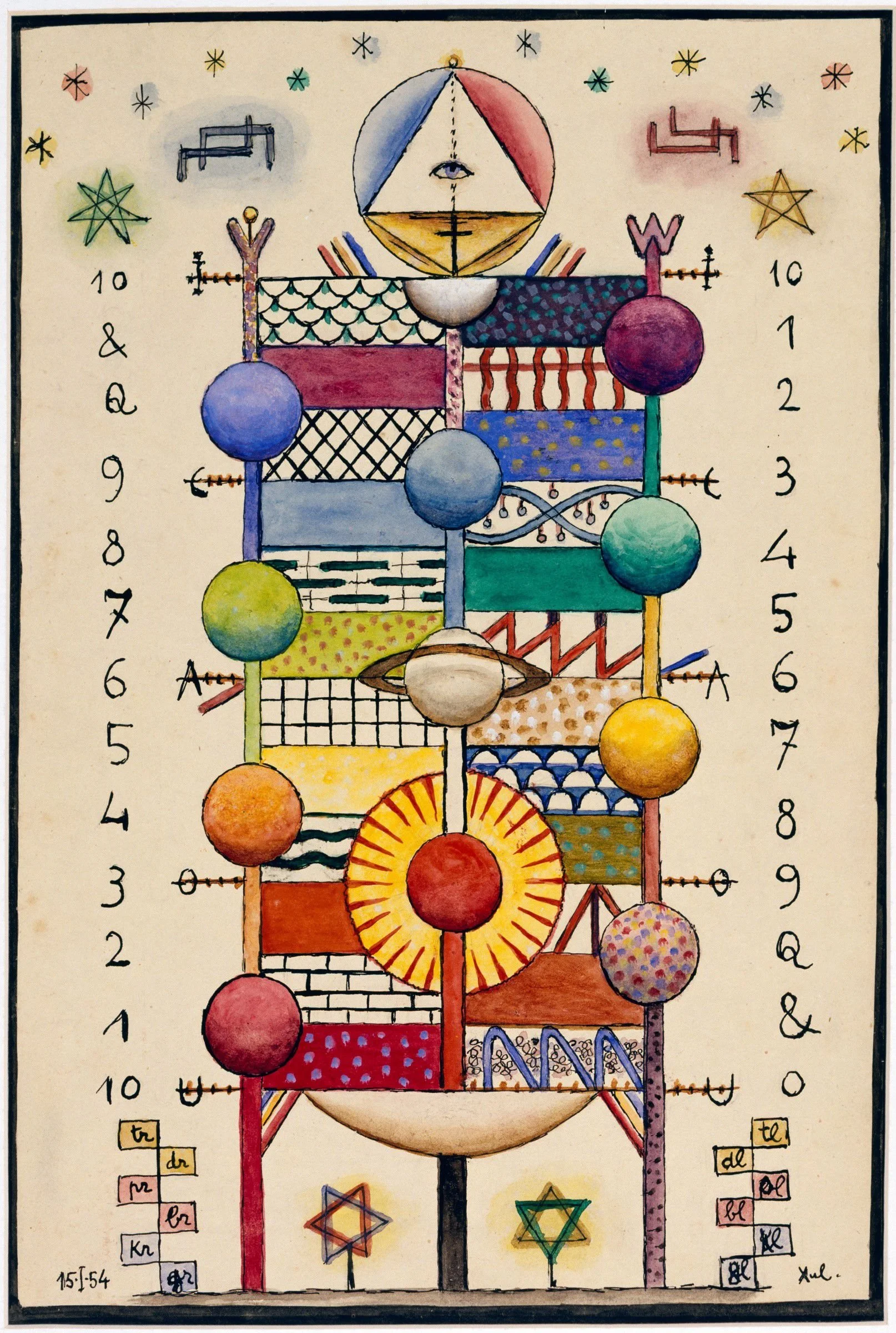
Pan-Trees
SOLAR
Xul Solar was relentless in his pursuit of knowledge, drawing inspiration from musicology, linguistics, astrology and innumerable religious and spiritual worldviews. Solar’s Pan-Tree draws connections between the 12 signs of the Zodiac and the 22 letters of the Hebrew Alphabet, exploring the relationship between astrology and Kabbalah. But it is also replete with symbolism from Christianity, Masonic Magic and Occultism. Solar wanted to create a unified language of mysticism in his work to comprehend the relationships between the human, the universe and the eternal. This goal took many forms, but the Pan-Trees served as a blueprint throughout.
XUL SOLAR
XUL SOLAR, 1954
Xul Solar was relentless in his pursuit of knowledge, drawing inspiration from musicology, linguistics, astrology and innumerable religious and spiritual worldviews. Solar’s Pan-Tree draws connections between the 12 signs of the Zodiac and the 22 letters of the Hebrew Alphabet, exploring the relationship between astrology and Kabbalah. But it is also replete with symbolism from Christianity, Masonic Magic and Occultism. Solar wanted to create a unified language of mysticism in his work to comprehend the relationships between the human, the universe and the eternal. This goal took many forms, but the Pan-Trees served as a blueprint throughout.