

Number 7, 1951
POLLOCK
Jackson Pollock was rediscovering his creativity after a long battle with alcoholism and an adjustment to his newfound fame. Recently moved in with his new wife Lee Krasner, he allowed himself to experiment and bring in forgotten elements of his work. He began to draw again, and exercise greater control and restraint over his work. The automatic works of the abstract subconscious merged with his draughtsman origins. He combined passion with rigour to create these sparse and lyrical paintings, no less affecting than his preceding works. He began also to reintroduce bodily figures, contorted and distressed, they bring Pollock out of representations of his mind and place him as a person in the canvas and the world. It is perhaps not surprising that these figures come into his oeuvre after he has got sober and settled, his internal fight has waned, and he can see himself as part of the wider world. On the right-hand side, the enamel paint is dispensed with a turkey baster and allows collaboration with his materials. No. 7 can be seen as a dialogue between a past Pollock and a present one, and an ability for the two to live in harmony.
Jackson Pollock
JACKSON POLLOCK, 1951. ENAMEL ON CANVAS.
Jackson Pollock was rediscovering his creativity after a long battle with alcoholism and an adjustment to his newfound fame. Recently moved in with his new wife Lee Krasner, he allowed himself to experiment and bring in forgotten elements of his work. He began to draw again, and exercise greater control and restraint over his work. The automatic works of the abstract subconscious merged with his draughtsman origins. He combined passion with rigour to create these sparse and lyrical paintings, no less affecting than his preceding works. He began also to reintroduce bodily figures, contorted and distressed, they bring Pollock out of representations of his mind and place him as a person in the canvas and the world. It is perhaps not surprising that these figures come into his oeuvre after he has got sober and settled, his internal fight has waned, and he can see himself as part of the wider world. On the right-hand side, the enamel paint is dispensed with a turkey baster and allows collaboration with his materials. No. 7 can be seen as a dialogue between a past Pollock and a present one, and an ability for the two to live in harmony.

The Martyrdom of Saint Lawrence
TITIAN
Under the cover of darkness, Saint Lawrence dies for his faith. Titian depicts the seen in frenetic chaos, illuminated only by the coals that heat the gridiron he is killed on, and the light that breaks through the clouds, as Lawrence reaches up for salvation. From above and below, we can see the scene due to violence, and due to hope. Titian was working off an painting of the same subject he made some nine years earlier, but this piece is more expressive, more tortured as he loosened his style as he aged. It was in this later period that Titain became pre-occupied with those who rebelled against authority, and the prices they paid for their rebellion. His work lost some of the vividness and luminosity of colour, but in their place came subtlety, this revolutionary painter painting revolutionaries with the freedom that comes with affinity. The Martyrdom of Saint Lawrence is hopeful and violent, torturous and divine and an allegory for the world Titian saw.
Titian
TITIAN, c.1567. OIL ON CANVAS.
Under the cover of darkness, Saint Lawrence dies for his faith. Titian depicts the seen in frenetic chaos, illuminated only by the coals that heat the gridiron he is killed on, and the light that breaks through the clouds, as Lawrence reaches up for salvation. From above and below, we can see the scene due to violence, and due to hope. Titian was working off an painting of the same subject he made some nine years earlier, but this piece is more expressive, more tortured as he loosened his style as he aged. It was in this later period that Titain became pre-occupied with those who rebelled against authority, and the prices they paid for their rebellion. His work lost some of the vividness and luminosity of colour, but in their place came subtlety, this revolutionary painter painting revolutionaries with the freedom that comes with affinity. The Martyrdom of Saint Lawrence is hopeful and violent, torturous and divine and an allegory for the world Titian saw.

Apartment Houses, Paris
DUBUFFET
In 1923, Jean Dubuffet read ‘Artistry of the Mentally Ill’ and developed a lifelong interest in work made by those with no formal training, suffering from mental illness. But Dubuffet was in no rush, he was a man of curiosity for the first half of his life; an occasional artist, winemaker and scholar, Dubuffet rejected anything that confined him as he strove for knowledge and travelled the world. He immersed himself in the study of noise music, of ancient languages, of lost wisdom and poetry, picking up and putting down the paintbrush every decade or so. But some twenty two years after reading Hans Prizhorn’s book, the eventual progenitor of the art brut (raw art) movement finally formalised those ideas of art made by the alienated and insane and began his life’s practice. He tried to emulate the work of someone expressing pure emotion, however muddled it might be, using only the tools at their disposal. Experimenting with non-traditional new materials, he incorporated mud, sand, gravel, and, notably, plant matter into his compositions. Here, the urban world of Paris reached into the very earth it was built upon, becoming a Frankenstein monster of man and nature.
Jean Dubuffet
JEAN DUBUFFET, 1946. OIL, SAND, AND CHARCOAL ON CANVAS.
In 1923, Jean Dubuffet read ‘Artistry of the Mentally Ill’ and developed a lifelong interest in work made by those with no formal training, suffering from mental illness. But Dubuffet was in no rush, he was a man of curiosity for the first half of his life; an occasional artist, winemaker and scholar, Dubuffet rejected anything that confined him as he strove for knowledge and travelled the world. He immersed himself in the study of noise music, of ancient languages, of lost wisdom and poetry, picking up and putting down the paintbrush every decade or so. But some twenty two years after reading Hans Prizhorn’s book, the eventual progenitor of the art brut (raw art) movement finally formalised those ideas of art made by the alienated and insane and began his life’s practice. He tried to emulate the work of someone expressing pure emotion, however muddled it might be, using only the tools at their disposal. Experimenting with non-traditional new materials, he incorporated mud, sand, gravel, and, notably, plant matter into his compositions. Here, the urban world of Paris reached into the very earth it was built upon, becoming a Frankenstein monster of man and nature.

Saint Peter
RUBENS
Saint Peter was the rock upon which Jesus built his church. A fisherman from humble origins, he gained a spiritual authority beyond any apostle and it was he, as depicted here, who held the keys to heaven. In Ruben’s portrait, the duality of Peter is clear; his upward gaze towards the spiritual realm is countered by his physical heft, the labourers body obvious beneath his thick cloak. Ruben’s painted many apostles, as collections of individual portraits were the vogue of the day, and this work of Peter most likely once had a companion piece of another Saint, possible Phillip, though we cannot know for sure. The work is simple and striking, it deals not with fancy nor flourish but is austere, holy and powerful. Rubens shows his mastery of light and detail, the dark ochre tones of his robe seem impossibly luminescent against the dark background and something of divinity is captured in but an expression, a grasped hand and hopeful eyes.
Peter Paul Rubens
PETER PAUL RUBENS, c.1617. OIL ON PANEL.
Saint Peter was the rock upon which Jesus built his church. A fisherman from humble origins, he gained a spiritual authority beyond any apostle and it was he, as depicted here, who held the keys to heaven. In Ruben’s portrait, the duality of Peter is clear; his upward gaze towards the spiritual realm is countered by his physical heft, the labourers body obvious beneath his thick cloak. Ruben’s painted many apostles, as collections of individual portraits were the vogue of the day, and this work of Peter most likely once had a companion piece of another Saint, possible Phillip, though we cannot know for sure. The work is simple and striking, it deals not with fancy nor flourish but is austere, holy and powerful. Rubens shows his mastery of light and detail, the dark ochre tones of his robe seem impossibly luminescent against the dark background and something of divinity is captured in but an expression, a grasped hand and hopeful eyes.
Small Burst
GOTTLIEB
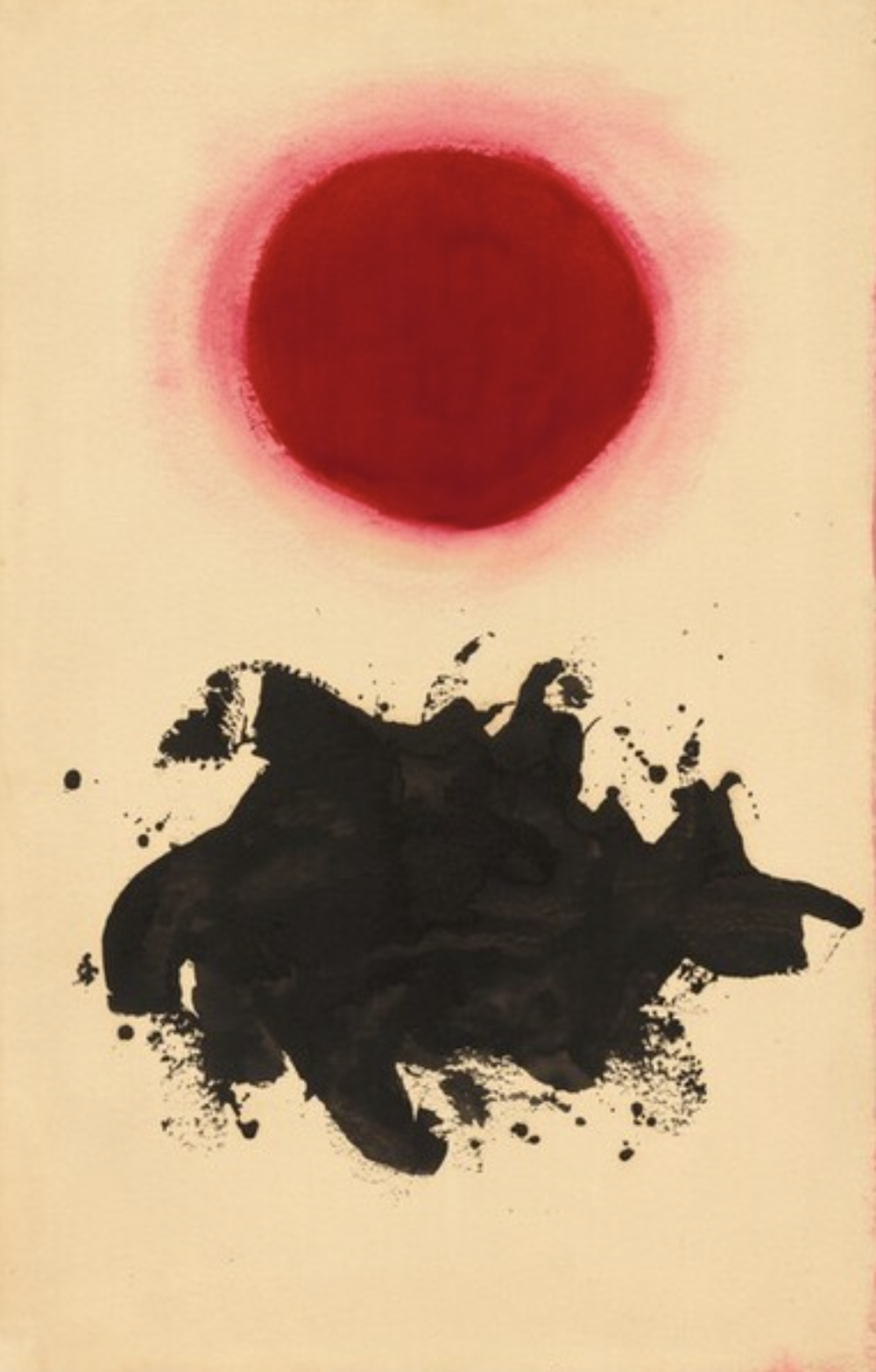
“The role of the artist has, of course, always been that of image maker”, said Adolph Gottlieb, “[But] different times require different images”. Gottlieb lived through many different times; born in 1903, he left school at 17 and set off for Europe to learn art on the streets of Paris. Through wars, artistic movements, upheavals and changes, Gottlieb adapted his images to reflect to times and then, in 1957, his oeuvre apexed with the start of the Blast Series, a series of works that would continue until his death in 1974. Each ‘Blast Work’ follows the same format, a circular, more ordered form on the top half of the canvas and the bottom half is inhabited by frenetic, chaotic, distressed markings of pure energy. Gottlieb saw these works as the conclusion to the central idea he had been working on throughout his life. Namely, that opposites necessarily exist together. Light exists only with dark, calm only chaos and order only with disorder – these oppositional concepts are neither exclusive nor complimentary, instead they are requisites for the others existence.
Adolph Gottlieb
ADOLPH GOTTLIEB, 1961. OIL ON PAPER.
“The role of the artist has, of course, always been that of image maker”, said Adolph Gottlieb, “[But] different times require different images”. Gottlieb lived through many different times; born in 1903, he left school at 17 and set off for Europe to learn art on the streets of Paris. Through wars, artistic movements, upheavals and changes, Gottlieb adapted his images to reflect to times and then, in 1957, his oeuvre apexed with the start of the Blast Series, a series of works that would continue until his death in 1974. Each ‘Blast Work’ follows the same format, a circular, more ordered form on the top half of the canvas and the bottom half is inhabited by frenetic, chaotic, distressed markings of pure energy. Gottlieb saw these works as the conclusion to the central idea he had been working on throughout his life. Namely, that opposites necessarily exist together. Light exists only with dark, calm only chaos and order only with disorder – these oppositional concepts are neither exclusive nor complimentary, instead they are requisites for the others existence.
Hartley
NEEL
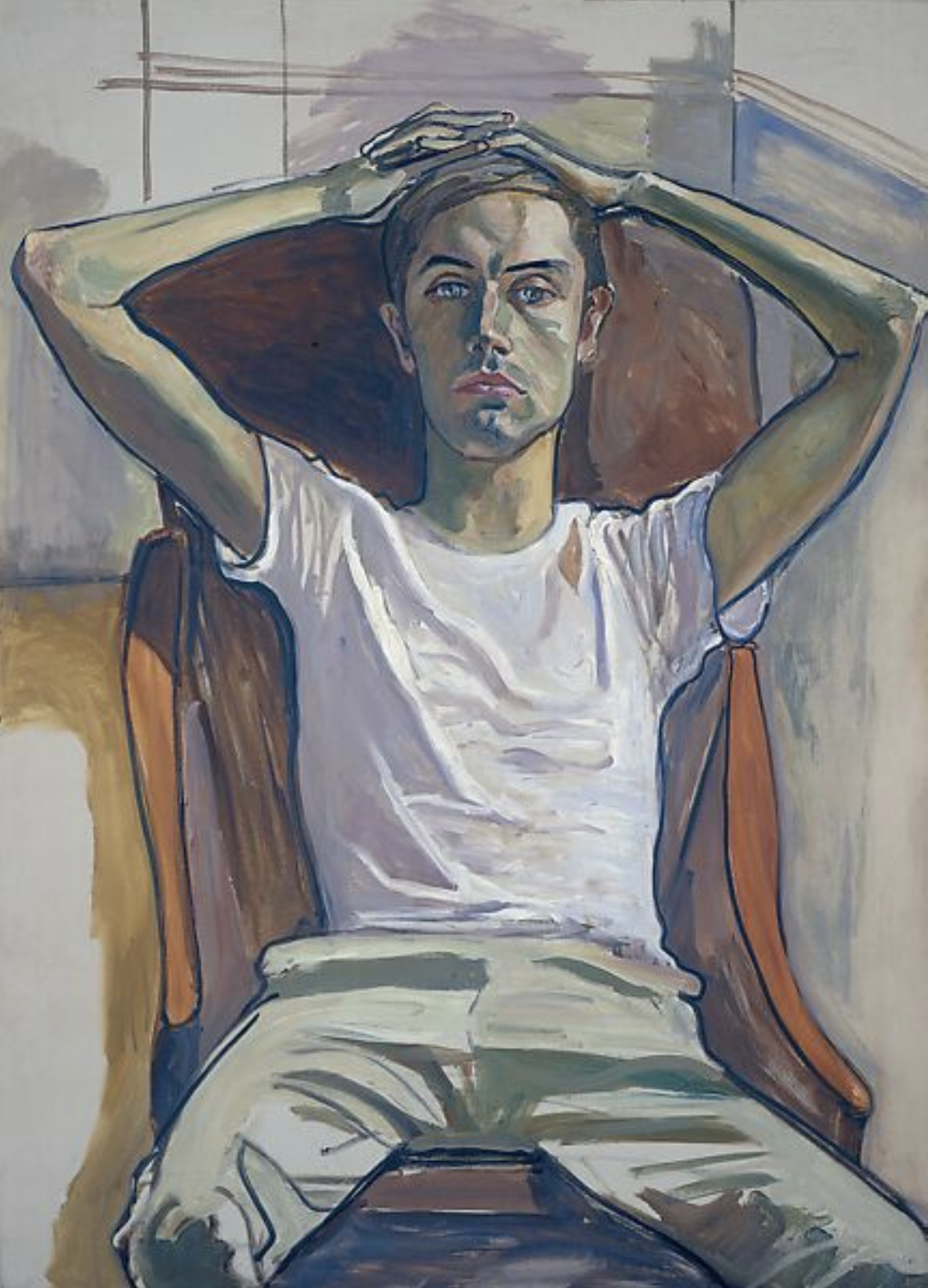
“For me, people come first.”, said Alice Neel, “I have tried to assert the dignity and eternal importance of the human being”. She stayed true to this maxim for her entire career, embodying principles of socialism in her work as she painted portraits of the everyman from her neighbours in Spanish Harlem to anti-fascist activists, queer artists and members of New York’s global community. Neel was ignored by the artistic mainstream for most of her career, partly due to her political leanings, and lived in destitution for large swathes of her life. Yet still she painted, consistently and vigorously, and returned to subjects close to her, such as her son Hartley. Here, she portrayed him after his first year of medical school, exhausted and depleted and filled with thoughts of an alternative life conscripted to fight in the Vietnam War. Neel was able to capture a genuine and powerful intimacy with all of her subjects, but her piercing gaze is amplified when depicting her son. It is one of hundreds of portraits she painted of him, each one filled with the complex feelings of motherhood, hope and love tinged with trepidation and worry. She collected souls throughout her life, but it is Hartley who owned hers.
Alice Neel
ALICE NEEL, 1966. OIL ON CANVAS.
“For me, people come first.”, said Alice Neel, “I have tried to assert the dignity and eternal importance of the human being”. She stayed true to this maxim for her entire career, embodying principles of socialism in her work as she painted portraits of the everyman from her neighbours in Spanish Harlem to anti-fascist activists, queer artists and members of New York’s global community. Neel was ignored by the artistic mainstream for most of her career, partly due to her political leanings, and lived in destitution for large swathes of her life. Yet still she painted, consistently and vigorously, and returned to subjects close to her, such as her son Hartley. Here, she portrayed him after his first year of medical school, exhausted and depleted and filled with thoughts of an alternative life conscripted to fight in the Vietnam War. Neel was able to capture a genuine and powerful intimacy with all of her subjects, but her piercing gaze is amplified when depicting her son. It is one of hundreds of portraits she painted of him, each one filled with the complex feelings of motherhood, hope and love tinged with trepidation and worry. She collected souls throughout her life, but it is Hartley who owned hers.

Ground Swell
HOPPER
A far-off storm felt under clear skies, ground swells are harbingers of things to come, messengers of danger. When Hopper painted this work in 1939, he could feel a change brewing in the air. The Second World War was looming and American isolationism was beginning to wane, it would not be long before they were a part of the conflict happening across the sea. To this uneasy world, Hopper responds with a depiction of freedom, of youth, and of the surging promise of youth, The boys on the boat look out to a buoy in the water, ringing with the motion of the waves. They are sun drenched and the sea water spits up gently, but they are off kilter. Small waves rock their boat ever so slightly, but the waves seem unrelenting. Hopper was most known for his depictions of urban loneliness and melancholy and this picture, with its vibrant blues and idyllic scene, seems anomalous. Yet the same themes pervade, on a grander, more cosmic scale. Hopper depiction of a happy American scene is perhaps his most ominous of all.
Edward Hopper
EDWARD HOPPER, 1939. OIL ON CANVAS.
A far-off storm felt under clear skies, ground swells are harbingers of things to come, messengers of danger. When Hopper painted this work in 1939, he could feel a change brewing in the air. The Second World War was looming and American isolationism was beginning to wane, it would not be long before they were a part of the conflict happening across the sea. To this uneasy world, Hopper responds with a depiction of freedom, of youth, and of the surging promise of youth, The boys on the boat look out to a buoy in the water, ringing with the motion of the waves. They are sun drenched and the sea water spits up gently, but they are off kilter. Small waves rock their boat ever so slightly, but the waves seem unrelenting. Hopper was most known for his depictions of urban loneliness and melancholy and this picture, with its vibrant blues and idyllic scene, seems anomalous. Yet the same themes pervade, on a grander, more cosmic scale. Hopper depiction of a happy American scene is perhaps his most ominous of all.

Saint Jerome and the Angel
VOUET
Simon Vouet was a Frenchman in Rome, at a time when the city was at the forefront of artistic expression across the world, beginning to move from the High Renaissance into the origins of Baroque. Paris and all of French art, on the other hand, was almost a quarter of a century behind the times by Italian standards and positively provincial to the Roman masters. Vouet spent more than 15 years in Italy; a natural academic he studied the work being made around him, looked back into the recent past and distilled elements from a disparate range of inspirations into his own work. Few informed his work quite as much as Caravaggio, from whom his intense chiaroscuro, meaning contrasted light and shadow, was inspired. Vouet returned to France in 1627, laden with artistic knowledge, and became court-painter for Louis XIII. He helped spread the prophecy of Baroque and usher in the new artistic movement across France, importing the ideas of Rome and single handedly updating his country’s entire artistic culture.
Simon Vouet
SIMON VOUET, c.1623. OIL ON CANVAS.
Simon Vouet was a Frenchman in Rome, at a time when the city was at the forefront of artistic expression across the world, beginning to move from the High Renaissance into the origins of Baroque. Paris and all of French art, on the other hand, was almost a quarter of a century behind the times by Italian standards and positively provincial to the Roman masters. Vouet spent more than 15 years in Italy; a natural academic he studied the work being made around him, looked back into the recent past and distilled elements from a disparate range of inspirations into his own work. Few informed his work quite as much as Caravaggio, from whom his intense chiaroscuro, meaning contrasted light and shadow, was inspired. Vouet returned to France in 1627, laden with artistic knowledge, and became court-painter for Louis XIII. He helped spread the prophecy of Baroque and usher in the new artistic movement across France, importing the ideas of Rome and single handedly updating his country’s entire artistic culture.

Jack-in-the-Pulpit No. IV
O’KEEFFE
“I realized that were I to paint flowers small, no one would look at them because I was unknown.” Said O’Keeffe, “So I thought I'll make them big, like the huge buildings going up. People will be startled; they'll have to look at them - and they did.” When she began her Jack-in-the-Pulpit series, which sees the flowers move across four canvases from reality to abstraction, Georgia O’Keeffe was all but u known. A female modernist painter in a male dominated world, attempting to carve a name for herself. By the time the series was completed, she had gained reputation and with it, speculation. Every viewer tried to create their own narrative of the artist from her paintings of flowers, casting her as an artist of repression, of longing, of lust, of feminism, of tradition. But O’Keeffe has long defied any easy narrative, she is an artist of America and as broad and complicated as the country she captured, through its abstraction and its reality.
Georgia O’Keeffe
GEORGIA O’KEEFFE, 1930. OIL ON CANVAS.
“I realized that were I to paint flowers small, no one would look at them because I was unknown.” Said O’Keeffe, “So I thought I'll make them big, like the huge buildings going up. People will be startled; they'll have to look at them - and they did.” When she began her Jack-in-the-Pulpit series, which sees the flowers move across four canvases from reality to abstraction, Georgia O’Keeffe was all but u known. A female modernist painter in a male dominated world, attempting to carve a name for herself. By the time the series was completed, she had gained reputation and with it, speculation. Every viewer tried to create their own narrative of the artist from her paintings of flowers, casting her as an artist of repression, of longing, of lust, of feminism, of tradition. But O’Keeffe has long defied any easy narrative, she is an artist of America and as broad and complicated as the country she captured, through its abstraction and its reality.

Untitled Composition
TORRES-GARCIA
There are no contradictions. Nothing is incompatible. These were the tenets that guided Torres-Garcia’s life, the life of a writer, painter, sculptor, teacher, theorist, muralist, novelist and architect; a renaissance man of the highest order. Born in Montevideo, Uruguay in 1874, he emigrated to Catalunya, Spain in 1891 and began a career as an artist. Over the next 50 years, he would go on to found numerous schools, groups and movements including the first European Abstract art group and push the art and culture of Europe and South America to its vanguard. It was the duality of his homeland and his adopted nations that drove Torres-Garcia, and his ability to hold this duality together in a single mind. He existed between places, carrying the identity of Uruguay with him everywhere, and in doing so he was able too to carry the new and the old, the classical and the avant-garde, reason and feeling, figuration and abstraction. There are no contradictions, he said, nothing is incompatible.
Joaquín Torres-Garcia
JOAQUÍN TORRES-GARCIA, 1929. OIL ON CANVAS.
There are no contradictions. Nothing is incompatible. These were the tenets that guided Torres-Garcia’s life, the life of a writer, painter, sculptor, teacher, theorist, muralist, novelist and architect; a renaissance man of the highest order. Born in Montevideo, Uruguay in 1874, he emigrated to Catalunya, Spain in 1891 and began a career as an artist. Over the next 50 years, he would go on to found numerous schools, groups and movements including the first European Abstract art group and push the art and culture of Europe and South America to its vanguard. It was the duality of his homeland and his adopted nations that drove Torres-Garcia, and his ability to hold this duality together in a single mind. He existed between places, carrying the identity of Uruguay with him everywhere, and in doing so he was able too to carry the new and the old, the classical and the avant-garde, reason and feeling, figuration and abstraction. There are no contradictions, he said, nothing is incompatible.

Open Window, Collioure
MATISSE
From the end of the Renaissance, there was a common consensus that a painting should be like a window. It should be a glimpse into another world that you can peer through the canvas and fall into. Yet for Matisse, a painting should be a painting, and he never illustrated this idea better than his painting of a window. It is not a work of trickery or illusion, he makes no attempts at realism and does not want you to fall into the world he depicts. Instead, he engulfs you in it, with each visible brushstroke and bold colour a stick of dynamite that explodes with vibrancy. It was this very painting that gave a name to Matisse and his contemporaries movement – Fauvism. Upon seeing the painting, hung in a room alongside a renaissance sculpture, the great poet, writer and art collector Getrude Stein remarked ‘Well, well, Donatello among the wild beasts (fauves)’. For all the beautiful domesticity of Matisse’s scene, it is primal, the work of a wild beast reproducing their visceral experiences as it emerges from their mind. Matisse painted a window to show the world how much more painting could be.
Henri Matisse
HENRI MATISSE, 1905. OIL ON CANVAS.
From the end of the Renaissance, there was a common consensus that a painting should be like a window. It should be a glimpse into another world that you can peer through the canvas and fall into. Yet for Matisse, a painting should be a painting, and he never illustrated this idea better than his painting of a window. It is not a work of trickery or illusion, he makes no attempts at realism and does not want you to fall into the world he depicts. Instead, he engulfs you in it, with each visible brushstroke and bold colour a stick of dynamite that explodes with vibrancy. It was this very painting that gave a name to Matisse and his contemporaries movement – Fauvism. Upon seeing the painting, hung in a room alongside a renaissance sculpture, the great poet, writer and art collector Getrude Stein remarked ‘Well, well, Donatello among the wild beasts (fauves)’. For all the beautiful domesticity of Matisse’s scene, it is primal, the work of a wild beast reproducing their visceral experiences as it emerges from their mind. Matisse painted a window to show the world how much more painting could be.

Head of A Woman
MODIGLIANI
Modigliani was a resentful sculptor. He found the process arduous, expensive in both labour and finance and yet he considered himself, correctly, to be masterful in the medium. Having learnt the art of stone sculpture from Brancusi, perhaps the great modern master of the genre, Modigliani created around two dozen sculptures between 1909 and 1915, and then never again. They sit alongside his painted work beautifully, both reject Western notions of beauty and art, and instead look to Egypt, to Cycladic culture in the Agaen Sea, and to Africa and the masks long produced across the continent. Modigliani held these works dear to him, and they lived alongside him as functional pieces. According to a close friend, he would place candles upon their heads and in embrace them in drug-influenced stupors as well-loved companions.
Amedeo Modigliani
AMEDEO MOGILIANI, 1912. LIMESTONE.
Modigliani was a resentful sculptor. He found the process arduous, expensive in both labour and finance and yet he considered himself, correctly, to be masterful in the medium. Having learnt the art of stone sculpture from Brancusi, perhaps the great modern master of the genre, Modigliani created around two dozen sculptures between 1909 and 1915, and then never again. They sit alongside his painted work beautifully, both reject Western notions of beauty and art, and instead look to Egypt, to Cycladic culture in the Agaen Sea, and to Africa and the masks long produced across the continent. Modigliani held these works dear to him, and they lived alongside him as functional pieces. According to a close friend, he would place candles upon their heads and in embrace them in drug-influenced stupors as well-loved companions.

Untitled
LOUISE
In a 12 by 14 foot apartment, Morris Louise lay down a canvas measuring 8 by 11.5 feet. Living in quiet isolation in New York, Louise had grown apart from the New York artists that together had pioneered the idea of Colour Field Painting. His work towards the end of the 1950s kept core philosophies from this movement, examining the idea of what a finished painting was meant to be, but a visit to Helen Frankenthaler’s studio had opened his eyes to a new world of techniques and he began combining the ideas of his past contemporaries, such as Pollock, with Frankenthaler’s medium driven ‘Stain Paintings’. So shuffling along the edges of the canvas, his back pressed against the wall, he poured a home-made mix of paint, thinned with acrylic resin and turpentine, and let it was over the unprimed canvas. The result is staggering, and exemplary of Louise’s mastery of form and colour theory. The soft hues mix into darkness, the streaks seem to explode out of their origin in a display of natural fireworks. Between the completion of this work and his death two years later, Louise created more than 150 canvases of this scale, finally feeling like he had found his artistic home.
Morris Louise
MORRIS LOUISE, 1960. MAGNA ON CANVAS.
In a 12 by 14 foot apartment, Morris Louise lay down a canvas measuring 8 by 11.5 feet. Living in quiet isolation in New York, Louise had grown apart from the New York artists that together had pioneered the idea of Colour Field Painting. His work towards the end of the 1950s kept core philosophies from this movement, examining the idea of what a finished painting was meant to be, but a visit to Helen Frankenthaler’s studio had opened his eyes to a new world of techniques and he began combining the ideas of his past contemporaries, such as Pollock, with Frankenthaler’s medium driven ‘Stain Paintings’. So shuffling along the edges of the canvas, his back pressed against the wall, he poured a home-made mix of paint, thinned with acrylic resin and turpentine, and let it was over the unprimed canvas. The result is staggering, and exemplary of Louise’s mastery of form and colour theory. The soft hues mix into darkness, the streaks seem to explode out of their origin in a display of natural fireworks. Between the completion of this work and his death two years later, Louise created more than 150 canvases of this scale, finally feeling like he had found his artistic home.

Enigmatic Combat
GORKY
Enigmatic is the right word for Arshile Gorky. After he fled his country in 1915 during the Armenian Genocide, he adopted his new name, claimed to be a Georgian Noble, a relative of Russian writer Maxim Gorky, and made a new life for himself in America. By 1924 he was an instructor at the Grand Central School of Art, despite being entirely self-taught, and was participating in the Works Progress Administration’s Federal Art Project, creating large scale public works and murals alongside Alice Neel, Frida Kahlo and Diego Riviera. Gorky was unknowable, in his work and his life. He was both the last Surrealist and the first Abstract Expressionist, and combined pain, nostalgia, nature and violence into a new visual language of colour and form, the influence of which cannot be overstated. He took his own life at the age of 44. Enigmatic Combat could very well be a byword for the life of a mysterious man from Armenia.
Arshile Gorky
ARSHILE GORKY, 1938. OIL ON CANVAS.
Enigmatic is the right word for Arshile Gorky. After he fled his country in 1915 during the Armenian Genocide, he adopted his new name, claimed to be a Georgian Noble, a relative of Russian writer Maxim Gorky, and made a new life for himself in America. By 1924 he was an instructor at the Grand Central School of Art, despite being entirely self-taught, and was participating in the Works Progress Administration’s Federal Art Project, creating large scale public works and murals alongside Alice Neel, Frida Kahlo and Diego Riviera. Gorky was unknowable, in his work and his life. He was both the last Surrealist and the first Abstract Expressionist, and combined pain, nostalgia, nature and violence into a new visual language of colour and form, the influence of which cannot be overstated. He took his own life at the age of 44. Enigmatic Combat could very well be a byword for the life of a mysterious man from Armenia.
Beach Portraits
DIJKSTRA
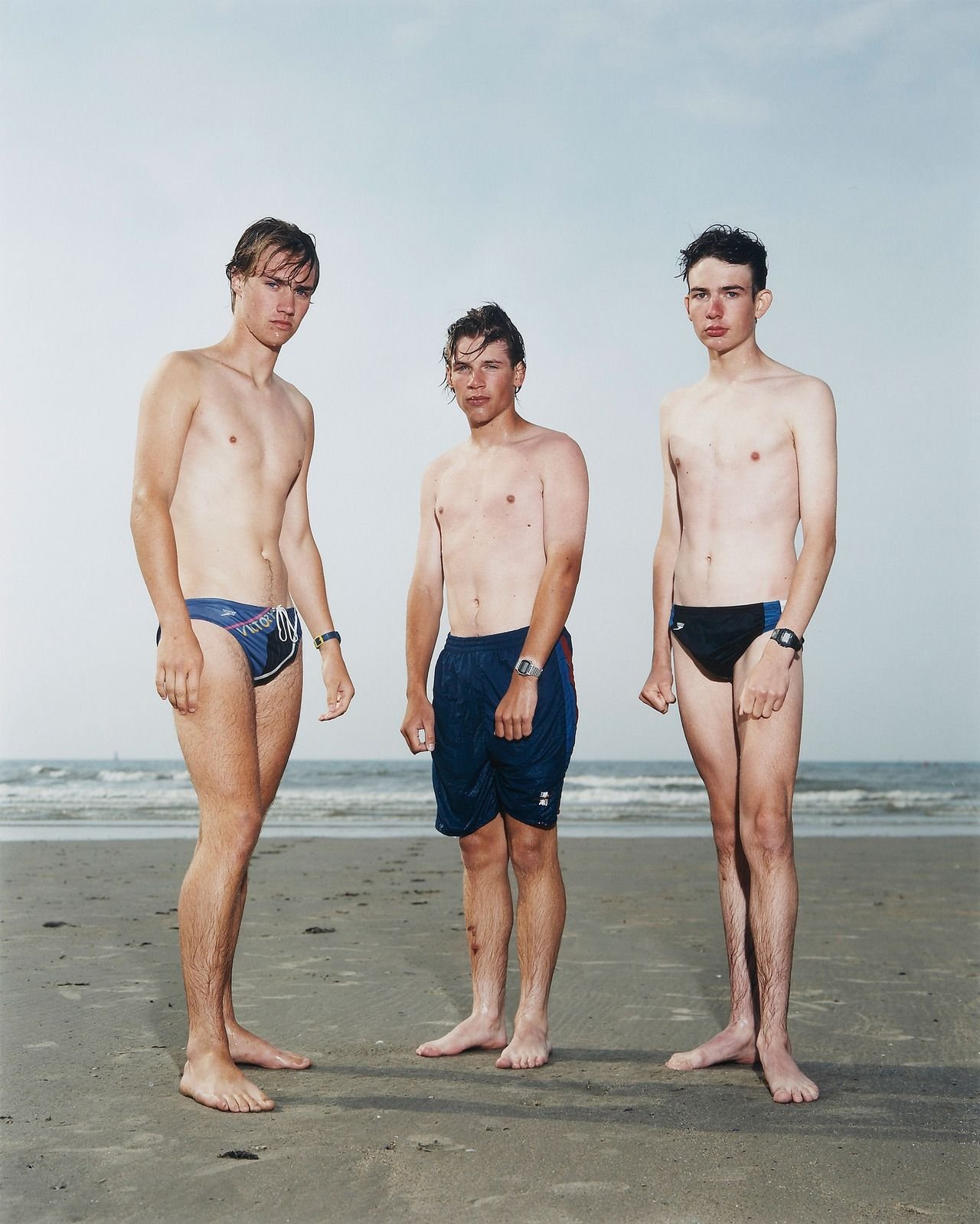
Oft copied, never bettered. Rineke Dijkstra's first photo series 'Beach Portraits' is a masterpiece of portraiture, the influence of which can be seen in the contemporary canon that has emerged since its release. Photographing beach-going adolescents from America, Croatia, Ukraine, Britain and Poland in a uniform style, yet each one resplendent with the trembling flicker of authentic life. Dijkstra's photography is a two way street, a dance between subject and artist and never more so than in these images where the anxieties, confidences, shame and joy of youth are on full display, in nothing more than a glance. The flatness of the lighting, of the horizon that bisects the changing bodies, knobbly knees and growth spurts of teenage-hood, forces a level of uncomfortable intimacy. The scenes are bare, nothing distracts from their subjects, whose long gazes intimidate, confront and welcome
Rineke Dijkstra
RINEKE DIJKSTRA, 1992.
Oft copied, never bettered. Rineke Dijkstra's first photo series 'Beach Portraits' is a masterpiece of portraiture, the influence of which can be seen in the contemporary canon that has emerged since its release. Photographing beach-going adolescents from America, Croatia, Ukraine, Britain and Poland in a uniform style, yet each one resplendent with the trembling flicker of authentic life. Dijkstra's photography is a two way street, a dance between subject and artist and never more so than in these images where the anxieties, confidences, shame and joy of youth are on full display, in nothing more than a glance. The flatness of the lighting, of the horizon that bisects the changing bodies, knobbly knees and growth spurts of teenage-hood, forces a level of uncomfortable intimacy. The scenes are bare, nothing distracts from their subjects, whose long gazes intimidate, confront and welcome

Adam and Eve
DÜRER
Albrecht Dürer would settle for nothing less than perfection. In fully prepare for ‘Adam and Eve’ he had to reinvent the field of representation - studying ancient sculpture, masterpieces of the early renaissance, measuring countless living models and writing four separate books on human proportion, all in service of this single engraving. On his travels to Italy to study the masters, Dürer saw the recently discovered Greek Hellenistic sculpture of Apollo, and the Medici Venus and in these marble forms, saw the way the man and women should be represented. They became his Adam and Eve, situated before the fall in the Garden of Eden, with humans and nature in perfect harmony. Every element of the garden is replete with symbolism; the Parrot on the branch represents paradise and the New World, the tree of life stands behind them, at their feet four separate animals represent the four humours of man and in the distance, a mountain goat stands in careful, innocent balance over the edge of destruction. Hanging from a branch of the tree of life is a plague, bearing Dürer’s name and the date of creation, a knowing nod to cement himself in eternity.
Albrecht Dürer
ALBRECHT DÜRER, 1504. ENGRAVING WITH BURIN ON COPPER.
Albrecht Dürer would settle for nothing less than perfection. In fully prepare for ‘Adam and Eve’ he had to reinvent the field of representation - studying ancient sculpture, masterpieces of the early renaissance, measuring countless living models and writing four separate books on human proportion, all in service of this single engraving. On his travels to Italy to study the masters, Dürer saw the recently discovered Greek Hellenistic sculpture of Apollo, and the Medici Venus and in these marble forms, saw the way the man and women should be represented. They became his Adam and Eve, situated before the fall in the Garden of Eden, with humans and nature in perfect harmony. Every element of the garden is replete with symbolism; the Parrot on the branch represents paradise and the New World, the tree of life stands behind them, at their feet four separate animals represent the four humours of man and in the distance, a mountain goat stands in careful, innocent balance over the edge of destruction. Hanging from a branch of the tree of life is a plague, bearing Dürer’s name and the date of creation, a knowing nod to cement himself in eternity.

I’ll Write Wherever I Can…
BEARD
Peter Beard was the last of his kind. A handsome playboy and heir to a railroad fortune, he could have stayed in New York and ridden on his charm, wealth and good looks for his whole life. Yet Beard had a yearning for adventure, and a photographic ability quite unrivalled in the 20th Century. At the age of 18 he visited Kenya for the first time, and five years later began working at Tsavo National Park, where he photographed the mass demise of 35,000 elephants across the great plains of the park. Inspired and enthralled, Beard purchased a ranch nearby which would become his life-long home base. Beard photographed the Kenyan world around him, the wild-life, the landscapes, his domestic existence and his guests from the high societies of the east coast. A keen diarist, each photograph became a unique work as Beard incorporated his drawings, collages from his journals and paintings in blood, both animal and his own. It is as if in each work he attempts to display the magnitude and variety of his life, a life in the wilderness and a life lived wildly.
Peter Beard
PETER BEARD, c.1960. SILVER GELATIN PRINT WITH OIL PAINT, BLOOD, NATURAL ELEMENTS, AND COLLAGE.
Peter Beard was the last of his kind. A handsome playboy and heir to a railroad fortune, he could have stayed in New York and ridden on his charm, wealth and good looks for his whole life. Yet Beard had a yearning for adventure, and a photographic ability quite unrivalled in the 20th Century. At the age of 18 he visited Kenya for the first time, and five years later began working at Tsavo National Park, where he photographed the mass demise of 35,000 elephants across the great plains of the park. Inspired and enthralled, Beard purchased a ranch nearby which would become his life-long home base. Beard photographed the Kenyan world around him, the wild-life, the landscapes, his domestic existence and his guests from the high societies of the east coast. A keen diarist, each photograph became a unique work as Beard incorporated his drawings, collages from his journals and paintings in blood, both animal and his own. It is as if in each work he attempts to display the magnitude and variety of his life, a life in the wilderness and a life lived wildly.

Night Sea
MARTIN
Agnes Martin was defined by the labour of her process. Her early large-scale canvases were mathematical and systematic in their approach, enormous grids sketched by hand, taking months to turn into works of balanced beauty. Yet even in their completed state, the evidence of her work was clear. Night Sea, then, marked a turning point, where the underly power of her works came not from the proof of process but by a marked lightness that absorbs and overwhelms. A dialogue between control and nature, the shimmering blue and luminous gold make the visible grid system almost redundant. Martin creates lightness, an abstraction of the power of nature and renders herself and her labour redundant in the process. Night Sea marks the triumph of her grid paintings, never repeated, where the abstraction and the labour join in perfect harmony.
Agnes Martin
AGNES MARTIN, 1963. CRAYON, GOLD LEAF AND OIL ON LINEN.
Agnes Martin was defined by the labour of her process. Her early large-scale canvases were mathematical and systematic in their approach, enormous grids sketched by hand, taking months to turn into works of balanced beauty. Yet even in their completed state, the evidence of her work was clear. Night Sea, then, marked a turning point, where the underly power of her works came not from the proof of process but by a marked lightness that absorbs and overwhelms. A dialogue between control and nature, the shimmering blue and luminous gold make the visible grid system almost redundant. Martin creates lightness, an abstraction of the power of nature and renders herself and her labour redundant in the process. Night Sea marks the triumph of her grid paintings, never repeated, where the abstraction and the labour join in perfect harmony.

Christ of Saint John of the Cross
DALÍ
For modern art critics, it was a mere stunt to depict such a traditional subject. For the traditional, it was sacrilegious to apply such modernity to tradition. For the unskilled eye it was kitsch, lurid nonsense. Only a work by Salvador Dalí could upset all camps equally, and over time cement itself as the most important modern depiction of the crucifixion in the process. Ultimately, every critic from every side was correct – the work is radical as a piece of religious art and overtly banal for a work of surrealist, ‘Dalí’ art. Yet it combines both practices and transcends them, offering a new perspective on an ancient, well told tale. Dali captures a new perspective on Christ, utterly different from any before, and the stroke of true genius is in what it doesn’t show. We are not spoon-fed emotion from reading his expression, we see no blood, no thorns and no nails to tell us of pain. Instead, are left with a suspended body, exquisitely rendered without distraction, and a moment of contemplation. The landscape below is pastoral and simple, a boat and fisherman in Dali’s local port, yet combined with Christ above, Dali said it was the 'nucleus of the atom.. the very unity of the universe, the Christ!’
Salador Dalí
FRANCISCO GOYA, 1788. OIL ON CANVAS.
For modern art critics, it was a mere stunt to depict such a traditional subject. For the traditional, it was sacrilegious to apply such modernity to tradition. For the unskilled eye it was kitsch, lurid nonsense. Only a work by Salvador Dalí could upset all camps equally, and over time cement itself as the most important modern depiction of the crucifixion in the process. Ultimately, every critic from every side was correct – the work is radical as a piece of religious art and overtly banal for a work of surrealist, ‘Dalí’ art. Yet it combines both practices and transcends them, offering a new perspective on an ancient, well told tale. Dali captures a new perspective on Christ, utterly different from any before, and the stroke of true genius is in what it doesn’t show. We are not spoon-fed emotion from reading his expression, we see no blood, no thorns and no nails to tell us of pain. Instead, are left with a suspended body, exquisitely rendered without distraction, and a moment of contemplation. The landscape below is pastoral and simple, a boat and fisherman in Dali’s local port, yet combined with Christ above, Dali said it was the 'nucleus of the atom.. the very unity of the universe, the Christ!’

Manuel Osorio Manrique de Zúñiga
GOYA
Caged birds, a leashed magpie, three watchful cats and a child just past the threshold of consciousness. Goya’s portrait of the son of Spanish nobility is amongst the greatest painting of a child ever produced, his mastery on full display as the boy’s porcelain skin glows against the bright red of his suit, the restrained brushwork of lace creating an ethereal quality that captures the dream-like state of childhood. But as is so often the case with Goya, the real portrait exists around the subject. The kept birds are a marker of innocence, while the cats, considering their pounce, a harbinger of loss for the very things the birds represent. Magpies, across culture, are creatures of superstition and can be substitutes for the soul. A young boy has his soul under control, but it is caught between two planes, one of innocence and one of experience, and all the necessary danger that will bring.
Francisco Goya
FRANCISCO GOYA, 1788. OIL ON CANVAS.
Caged birds, a leashed magpie, three watchful cats and a child just past the threshold of consciousness. Goya’s portrait of the son of Spanish nobility is amongst the greatest painting of a child ever produced, his mastery on full display as the boy’s porcelain skin glows against the bright red of his suit, the restrained brushwork of lace creating an ethereal quality that captures the dream-like state of childhood. But as is so often the case with Goya, the real portrait exists around the subject. The kept birds are a marker of innocence, while the cats, considering their pounce, a harbinger of loss for the very things the birds represent. Magpies, across culture, are creatures of superstition and can be substitutes for the soul. A young boy has his soul under control, but it is caught between two planes, one of innocence and one of experience, and all the necessary danger that will bring.