
The Uncontrollable Urge
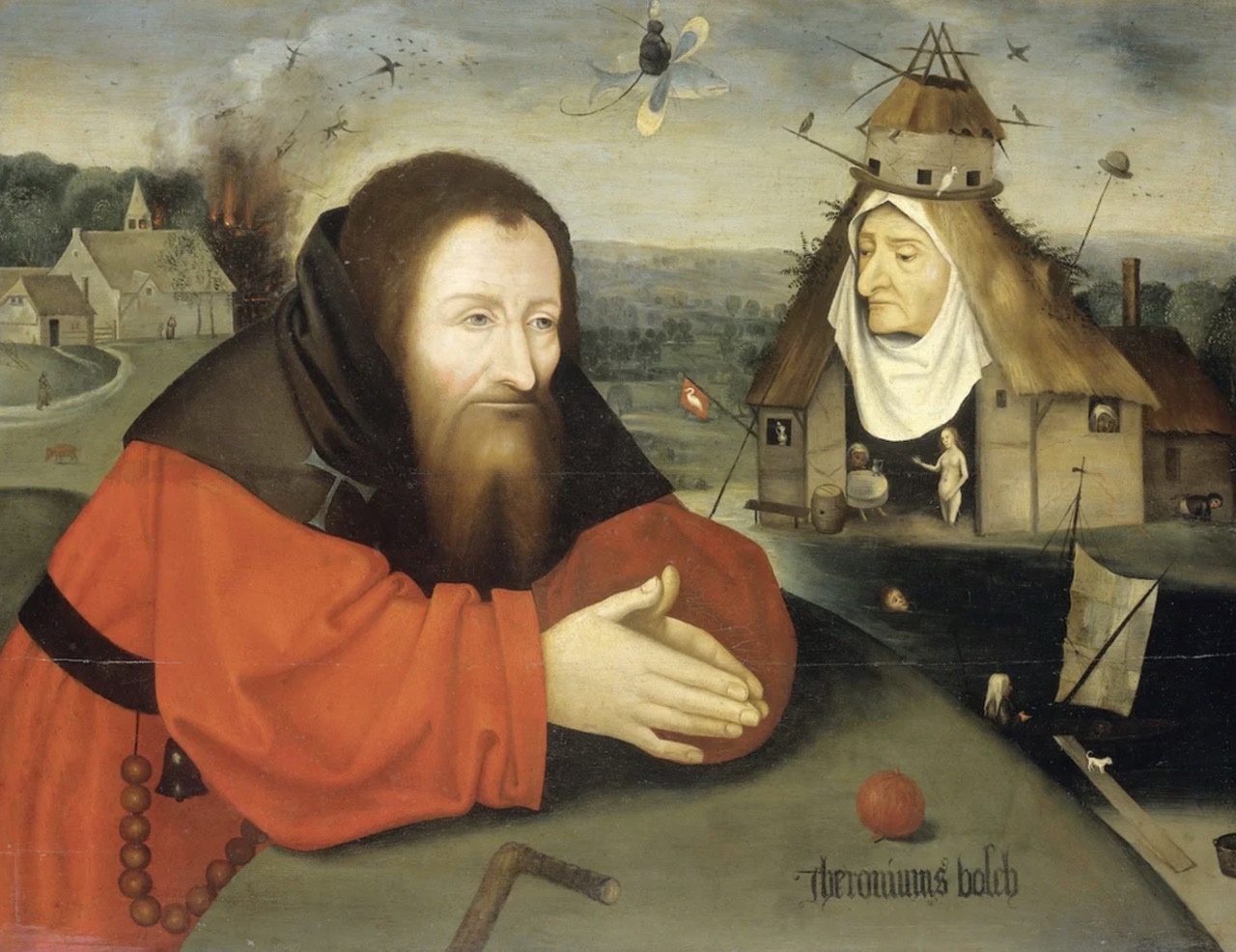
The Temptation of St. Anthony, Bosch.
The seers and prophets of Rock’n’Roll, commonly called ‘rockstars’, are mythologized as having a superhuman relationship with desire. They are believed to be both fueled by their indulgences and stabilized by habituating the same decadence. Some even believe that without pleasure-seeking, the rockstar would not be able to sustain a creative practice. Thus the sacred adage Sex, Drugs, and Rock ‘n’ Roll is interpreted as a list of supplies integral to the survival of all rockstars, as well as those aspiring toward legendary heights. This phrase is neither praising nor condemning Rock ‘n’ Roll, drugs, or sex, instead it is declaring them as threads which weave themselves through the fabric of modern life, spun from fibers of desire.
The Buddha told us long ago that suffering is a fact of living and it is the act of wanting something for ourselves that is the direct cause of our suffering.¹ So feeding a selfish desire is like feeding a snake its own tail. As these loops of thoughtless habit are established, they become increasingly hard to break, but demonizing our cravings out of frustration with these loops will only strengthen each craving’s potency. So too, trying to fight the state of desire will have the same effect, adding power to the flowing current. To untie this existential knot, the Buddha suggested the Eightfold Path, while Rock ‘n’ Roll advises us to listen intently to the incantations, dedicating our conscious attention to examining the state of desire.
Many traditional incantations of Rock embody desire’s immediacy. Using the verb Want, these incantations chronicle the state of desire from within the state itself, rather than after all urges have passed. ‘You know you make me want to shout’, ‘I want to hold your hand’, and ‘Now I want to be your dog’ are three classic examples. The respective viewpoints of The Isleys, The Beatles, and The Stooges inform three distinct incantations, but each are expressions of the same tight, nervous grip. The seer first recognizes Baby, the God principle within another’s human form, then processes that She is separate from him, and finally clings to his desire to be one with Her again. ‘So messed up, I want you here’. His experience of separation informs his suffering, and in turn his desire.
In another Want incantation, we are reminded that desire can obtain control over our bodily functions, manifesting as a kind of panic. ‘I can’t control my fingers, I can’t control my brain’ describes The Ramone’s internal chaos at the desire to obtain a fix. When there’s ‘nothing to do’ and ‘nowhere to go’, a fear of the stillness adds intensity to this craving. ‘Hurry, hurry, hurry before I go insane!’ is a desperate plea, thrusting us further into this relentless loop of suffering, until we long to ‘be sedated’ once again.
In one of the more heady expressions of urge, a man lying in bed longs to be with a different woman than the one presently lying next to him. ‘We sit here stranded,’ Dylan croons, ‘though we’re all doing our best to deny it’. This man feels all of humanity’s suffering as the abandonment, loneliness, and denial he is presently overwhelmed by. The oppression continues throughout the night, while the desire to get away from his suffering attaches itself to the visage of another woman. Visions of her ‘conquer his mind’ over and over until they are ‘all that remain’. His desire swallows its own tail.
Listening to Rock ‘n’ Roll through this lens, we build a stronger understanding of how suffering perpetuates itself through desire. We recognize the twists and turns on the pathways from hurting to yearning and back again, pathways previously unnoticed yet routinely traveled. An intricate map of the state of desire reveals itself to us the more we listen, one that is as unique to our personal experience as it is to the quality of our examinations. We soon find ourselves listening to our own moments of overwhelm, receiving suffering with our whole heart.
We may feel inclined to alter desire’s trajectory, guiding its energy toward the heart in meditation. We may feel like using desire’s inertia, aiming its electrical charge toward an important creative venture. Many of us may even let desire unfold organically, unencumbered, embracing the suffering to which it leads. This approach can be more painful in the long run, but as Jack Kornfield reminds us “Sometimes only the fire of suffering itself and the consequences of our actions can bring us to deeper understanding, to feel kindness for all beings, and to liberation.”²
It’s important to remember that as many people as there are in the world at any given time, there are also that many different ways to work with the state of desire. This perspective offers grace to those who may be struggling to find their way, and to ourselves as we intuit a path forward.
Here we discover a domain where passion gets transmuted into compassion. We take to heart the examples of those who have come before us—our familiars in the everlasting lineage of inspiration—and allow their frenzied discomfort to become seeds for our budding understanding. As Alejandro Jodorowsky says “All human wisdom is based on love.”³ And while we may embrace Rock ‘n’ Roll’s central philosophy of respecting passion as a spiritual tool, we must also attend to our passion again and again as it shapes itself into desire, aware that we can always be listening closer.
1. Eknath Easwaran. The Dhammapada. Nilgiri Press, 2010.
2. Jack Kornfield. A Path With Heart: A Guide Through The Perils And Promises Of Spiritual Life. (Bantam Books, 1993) 223.
3. Alejandro Jodorowsky and Marianne Costa; translated by Jon E. Graham. The Way of Tarot: The Spiritual Teacher in the Cards. (Destiny Books, 2009) 276.