
Physics, Biology and the Seven Hermetic Principles
Molly Hankins September 11, 2025
Originating with the ancient Egyptians, passed down through millenia, and preserved in the early 20th century by an authorless book called The Kybalion, the seven Hermetic principles are timeless axioms of occult wisdom…

Molly Hankins September 11, 2025
Originating with the ancient Egyptians, passed down through millenia, and preserved in the early 20th century by an authorless book called The Kybalion, the seven Hermetic principles are timeless axioms of occult wisdom. They are also, according to cellular biologist and author Dr. Bruce Lipton, increasingly relevant to the world of quantum physics. The Hermetic principles contain the basic rules by which reality operates, with perception at its heart. Max Planck, one of the fathers of quantum physics, believed that consciousness is creating our life experience and adjusting our consciousness affects our reality. Lipton uses the placebo effect as a prime example of how this phenomena manifests, stating that the positive thinking is the underlying cause of healing and that negative thinking has equal effects.
Named after Hermes Trismegistus, believed to be an incarnation of the Greek god Hermes known as Thoth in ancient Egypt, the Hermetic principles begin with Mentalism: “The all is mind,” says The Kybalion, “The universe is mental.”. Here ‘the all’ refers to the substantial reality underlying the laws of the material world, and the idea of the universe being mental refers to the impact our perspective has in creating our experience. The second principle is that of Correspondence, which is where the saying ‘as above, so below; as below, so above’ originates from. Lipton uses Euclidean geometry, defined as the math that provides for structure in space, to illustrate how Correspondence is universally expressed in the material world of form.
“Is there a geometry that makes a tree? Or a snail? Yes there is,” Lipton explains. “It’s called fractal geometry, and it’s a very simple equation. But here’s the nature of the equation - you solve the equation and you get an answer, but the neat part is now you take the answer and feed it back into the same equation and solve it again.” This process repeats, creating repeating patterns of geometry that allow us to solve for answers at higher and lower levels of organization. Patterns revealed at lower levels of organization with minimal variables mirror patterns playing out at higher levels of organization with many variables, illustrating the second principle of Correspondence and its contemporary relevance. He also points to human cellular behavior as another example, “All of the functions that you have in your body are already present in a cell. The cell has respiration, digestion, excretion - cells even have an immune system. It’s the same mechanism that’s used in the higher organization of the human body. In other words, there’s a repetition in the structure - as above so below.”
Lipton started his early scientific research career focusing on the material world, but caught up to the Hermeticists when he began to study the relationship between the material and spiritual worlds. Spirit influences matter through the third principle of Vibration, which states that everything is in motion, from the spirit realms down to the subatomic level of gross matter. “All atoms are energy vortices with ripples that radiate out,” Lipton says. “As far as we know the ancient people weren’t talking about quantum physics, but they obviously knew quantum physics because they understood the nature of vibration even though they lived in a world like we live in a world that appears to be physical. This ancient wisdom was built into the Hermetic principles.” It is a requirement for all Hermetic students to learn control of their mental vibrations in order to influence reality. Think of your thoughts and emotions as pebbles being tossed into a pool of water and imagine the interference patterns between those ripples - that’s akin to how our energy is radiating out to influence the material world.
The fourth principle of Polarity states that everything has poles in this Earthly realm, that everything we experience is part of an opposite pair - black and white, good and evil, male and female, night and day, etc. We can adjust our mental vibrations to shift the poles of any phenomenon because Polarity represents a continuum in which all opposites are actually just different degrees of the same thing, at different ends of the same spectrum. Lipton describes polarity as a cycle, informed by wave/particle duality, which is a fundamental quantum physics concept that describes light and matter as exhibiting qualities of both waves and particles. Waves behave in an opposite manner to particles, with particles bouncing off each other upon collision and waves passing through each other. The fifth principle of Rhythm dovetails right out of the fourth, stating in The Kybalion, “Everything flows out and in; everything has its tides. All things rise and fall; the pendulum swing manifests in everything; the measure of the swing to the right is the measure of the swing to the left. Rhythm compensates.”
“The support of structure and evolutionary growth are necessary for any organism to survive and thrive, and the left and right brain functions are an example of how this principle expresses itself in the human body.”
That rhythmic compensation is explained by Lipton as a natural byproduct of vibration. “A vibration has a rhythm - an up-phase and a down-phase, and an up-phase and a down-phase. Well this rhythm can also be present in our life. There are times when you’re in harmony with the going-up, and these are the good-feeling times when things are great. Then there’s times when we seem to be out of harmony, but that’s because the rhythm is going down in the opposite polarity. So the point of the rhythm is that you can choose how you engage and you can ride the rhythm and make your life smooth.” It is not that the difficult or painful down-phases of our lives get easier, but when we see those times as part of a natural, inevitable cycle we can begin to move with the rhythm of life without seeing ourselves as victims.
The sixth principle of Cause and Effect states, “Every cause has an effect and every effect has a cause. Chance is but a name for Law not recognized; there are many planes of causation, but nothing escapes the law.” This law, according to Lipton, is that cause and effect are cyclical with each effect creating new causes. He goes so far as to say that the very existence of creation must be the effect stemming from some cause, implying the existence of a creator. We become co-creators of reality when we broadcast our thoughts and they interact with the subatomic particles of the material world to influence how they organize. In his book The Biology of Belief, Lipton expresses his thesis that our beliefs drive biological organization and therefore determine whether we’re healthy or sick. Applying the principles of Polarity, Vibration and Mentalism, we can adjust our mental vibrations, and switch our polarity from a negative to positive perspective. Through this we become the cause of our health rather than experiencing ill-health as an effect of negative thinking.
The seventh and final principle of Gender is about the balance of masculine and feminine energy present in all of life.Lipton describes this as the balance of structure and movement on the masculine side with vegetation and growth on the feminine side. The support of structure and evolutionary growth are necessary for any organism to survive and thrive, and he points to the left and right brain functions as an example of how this principle expresses itself in the human body. The Kybalion illustrates this through describing atomic functionality of positive and negative particles where those positively charged exert energy upon the negatively charged resulting in the organization or formation of atoms. “Arising from their unions, or combinations, manifest the varied phenomena of light, heat, electricity, magnetism, attraction, repulsion, chemical affinity and the reverse, and similar phenomena. And all this arises from the operation of the principle of Gender on the plane of energy.” This seventh principle unites the other six because it unifies Polarity via Mentalism and Vibration to produce a Rhythm of Cause and Effect that can be predicted by Correspondence.
Lipton believes that the highest and best use of these principles lies in allowing them to guide our intentions, which boosts the signal of our mental, vibrational waves to become the cause affecting how particles organize to render our experience of reality. Rather than treating the information as passive knowledge, he echoes The Kybalion’s emphasis on application of knowledge, insisting we consciously incorporate these principles into our intention to propel us towards what we want in life. “You are the creator, and that’s exactly how you do it.”
Molly Hankins is an Initiate + Reality Hacker serving the Ministry of Quantum Existentialism and Builders of the Adytum.
Film
<div style="padding:60% 0 0 0;position:relative;"><iframe src="https://player.vimeo.com/video/1118033725?badge=0&autopause=0&player_id=0&app_id=58479" frameborder="0" allow="autoplay; fullscreen; picture-in-picture; clipboard-write; encrypted-media; web-share" referrerpolicy="strict-origin-when-cross-origin" style="position:absolute;top:0;left:0;width:100%;height:100%;" title="Mysterious Island clip 2"></iframe></div><script src="https://player.vimeo.com/api/player.js"></script>
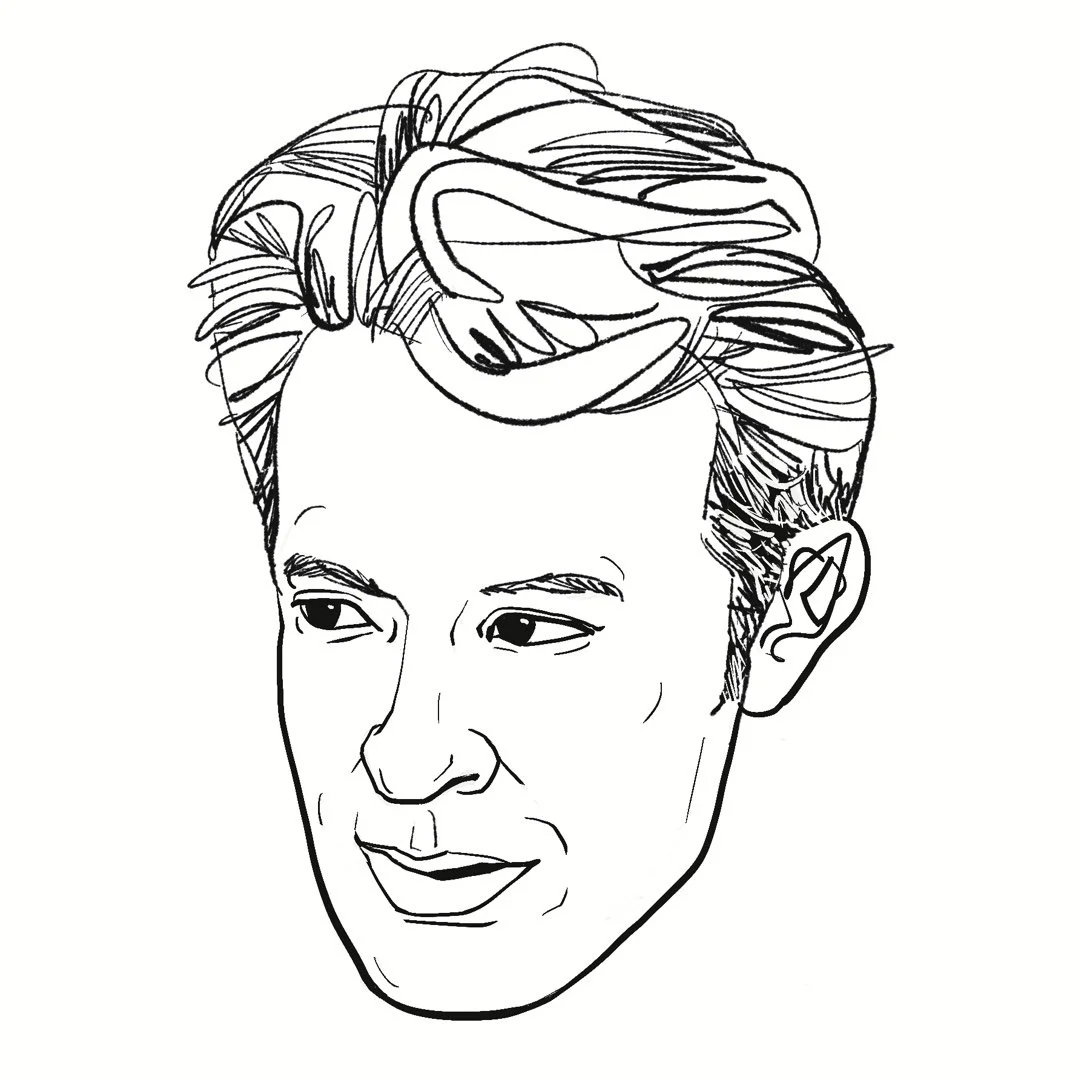
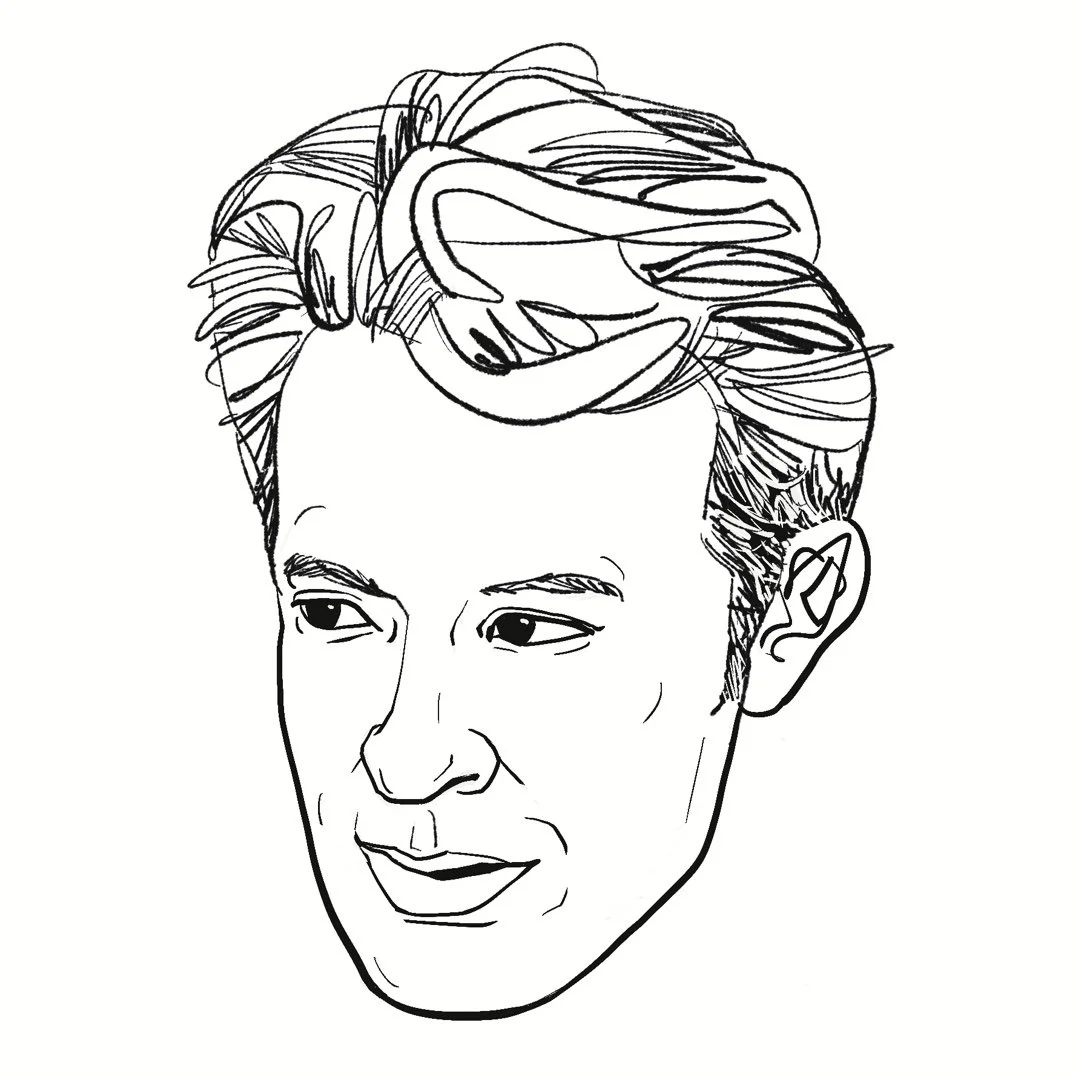
Mark Ronson
1h 31m
9.10.25
In this clip, Rick speaks with Mark Ronson about the value of influence and comparison to other artists.
<iframe width="100%" height="265" src="https://clyp.it/eyh3nk4d/widget?token=ff3ce26e7a0607d57beb62701ee0eb7c" frameborder="0"></iframe>
Film
<div style="padding:56.25% 0 0 0;position:relative;"><iframe src="https://player.vimeo.com/video/1117073694?badge=0&autopause=0&player_id=0&app_id=58479" frameborder="0" allow="autoplay; fullscreen; picture-in-picture; clipboard-write; encrypted-media; web-share" referrerpolicy="strict-origin-when-cross-origin" style="position:absolute;top:0;left:0;width:100%;height:100%;" title="Pauahi Crater Eruption clip 2"></iframe></div><script src="https://player.vimeo.com/api/player.js"></script>
View from the Bandstand (1966)
Lou Reed September 9, 2025
Of course it had to happen, it really had to happen, it was the natural end to Beethoven's Ninth..

Illustration from Aspen Magazine, Issue 3. 1966.
In 1966, Andy Warhol was asked by Phyllis Johnson to curate the third issue of Aspen Magazine, the conceptual ‘Magazine In A Box’ that was already on its way to becoming the most significant cultural publication of its time. Amongst artworks, flipbooks, flexi-disk vinyls, postcards of Pop Art and fragments from a conference on LSD was a four sheet essay from a then unknown Lou Reed. ‘The Velvet Underground’s’ first album was a year away, and the band was serving at the time as the house band for Warhol’s factory but Reed writes in this essay with such ferocious, artistic, maddening brilliance that his superstardom seems all but inevitable. A passionate, chaotic, and satirical manifesto that rejects traditional culture, academia, and literary institutions in favor of the raw, emotional, and revolutionary power of rock-and-roll music.
Lou Reed September 9, 2025
Of course it had to happen, it really had to happen, it was the natural end to Beethoven's Ninth. Everyone was getting sicker and looking like a wolverine while the people pushed colleges. Dirty buildings with lawns for people to lie on blankets. Well-groomed wasps or purposefully disheveled sensitives reading Spengler. But meanwhile everything was dead. Writing was dead, movies were dead. Everybody sat like an unpeeled orange. But the music was so beautiful.
All the bastards that you were supposed to feel sorry for and fight wars for were screaming, "Look at the freaks in Central Park with transistors up their heads. " Tom Wolfe drew clever cartoons and people admired his vocabulary, forgetting he was dead and sucking blood. William B. Williams, circa 1400, appeared on David Susskind, benevolent, genial ("Please don't hate me, I must play the devil's advocate") trying to put down Phil Spector, maker of the beautiful music with those beautiful drum tag endings, Phillie's drummers reaching at the end of each chorus for the moment. And William B. wanted to tell Phil about coloured music, with his slick parted hair and tie pins and Nat King Cole mumblings.
And through all those years were those beautiful rock groups, tweeting and chirping like mesmerized sparrows, and if you weren't dead, you psyched in now, because it was now and no one had made a good book, a good movie, just bullshit over and over. Only the music, and now Robert Lowell, up for a poetry prize without a decent word ever written. The only decent poetry of this century was that recorded on rock-and-roll records. Everybody knew that. Who you going to rap with. Little Bobby Lowell or Richard Penniman alias Little Richard, our thrice-retired preacher. The incomparable E. McDaniels, otherwise known as Bo Diddley.
Giving Robert Lowell any kind of poetry prize is obscene. Ditto worrying about Ezra Pound. And the Yale Poetry series. The colleges are meant to kill. Four years in which to kill you. And if you don't extend your stay, the draft, by and for old people, waits to kill you. Kill your instincts, your love, the music. The music is the only live, living thing. Draft only those over forty. It's their war, let them kill each other.

The music going on and on. When Johnny Ace died, everyone was sad. Black arm bands in school. The early fifties, the first race music to make it to N. Y. white station. Alan Freed, the great father, clipped, fast speech and table pounding. The Jesters, Diablos, Coney Island Kids, Elica and the Rockaways. Old people in Hollywood rock-and-roll movies arm bands in school. The early fifties, the first race music to make it to N. Y. white station. Alan Freed, the great father, clipped, fast speech and table pounding. The Jesters, Diablos, Coney Island Kids, Elica and the Rockaways. Old people in Hollywood rock-and-roll movies wearing their pants around their nipples.
The dead way of doing it, it, the word it, no talking, titillation, but no coming across. And William B. Williams knows coloured music. The only poetry of the last 20 years was and is in the music on the radio. The colleges have to be destroyed. They're dangerous. Music appreciation courses. Metaphysical poetry. Theology. Playboy jazz polls. Tests. Papers. Psychological tests. Doctors trying to "cure" the freaks while they gulp pills. Rushing with the music. It's the music that kept us all intact. It's the music that kept us from going crazy. Folk music. That's music on the radio. You should have two radios. In case one gets broken. Live music is bad these days because records are better. Life in a speaker.
Rock-and-roll gobbled up all influences. Better blues musicians than the folk blues people. Better electronic music than the electronic people (i.e. England's the Who; N.Y. 's Velvet Underground.) Classical music's so simple. Really, anyone can write it. Anyone. It's a phase like teething. If you tie a contact mike to a new-born baby and spin it by the umbilical cord, think of the sound. The freaks are winning, there's no doubt about it, everyone better empty their pockets.
In the fifties there was the four chord school, C, Am, F, G. If you knew these you could play 400 songs and the top 20 - "Blanche, " "Why Don't You Write Me, " "In the Still of the Night. " Elvis was three chords, E, A, B. 7 billion groups, the music was inescapable, it sank into everyone's blood and Fender was the guitar. Then for awhile bullshit music. Pat Boone. Pat Boone imitating, covering every Fats Domino and Little Richard Record, putting down the freaks. White bucks and Columbia Teachers College ("I'd rather see my children dead than live under communism"). Balding Pat.
woke up this morning with a feeling of despair
looking for my baby and she wasn't there
heard someone knockin and much to my surprise
there stood my baby lookin in my eyes
crazy little momma come knock knock knockin
just like she did before
ya ya ya ya ya
ya ya ya ya ya yae yi yayayayayaya
eeeeeeeeeeeeeeeeeeeeeeeeeiaeeeee
How can they give Robert Lowell a poetry prize. Richard Wilbur. It's a joke. What about the EXCELLENTS, Martha end the Vandellas (Holland, Dozier, Holland; Jeff Barry, Wile Greenwich; Bachrach and David; Carol King and Gerry Goffin, the best song-writing teams in America. ) Will none of the powers that be realize what Brian Wilson did with THE CHORDS. Phil Spector being made out to be some kind of aberration when he put out the best record ever made, "You've Lost that Lovin Feeling.”
We all made love to the music. And the word love was used and used and used in all the music. Over used, again and again, because that's where it was at. Still lingering idiots over Cole Porter, cheap cocktail sentiment and wit, Julie Styne, Irving Berlin, Rodgers and Hammerstein
"Shake it up baby."
Bo Diddley, unheralded genius of our time, who developed guitar techniques and sounds that just now are being appropriated.
Today you know music when you play. But there'd be nothing now without then. And there was a reaction against the Broadway music, middle of the road radio cretin music. How sad Richie Valens died. Give him a prize.
"ooohhhhhh Donna
ooohhhhhh Donna"
“The level of culture that mankind attained in classical antiquity can no longer be reached back to from man’s mind.”
Have you ever listened to "You've Lost That Lovin Feeling, " where the girls are saying oohhhh and suddenly, naturally, just right, come in with "Baby, " against Bill Medley's building vocal line. Repetition. Every head in America must know the last three drum choruses of "Dawn" by the Four Seasons. Paradiddles. Repetition.
Repetition is so fantastic, anti-glop. Listening to a dial tone in Bb, until American Tel & Tel messed and turned it into a mediocre whistle, was fine. Short waves minus an antenna give off various noises, band wave pops and drones, hums, that can be tuned at will and which are very beautiful. Eastern music is allowed to have repetition. That's ok for glops with strawhats and dulcimers between their blue legs... they don't listen to it, or see it, but they sanction it. Andy Warhol's movies are so repetitious sometimes, so so beautiful. Probably the only interesting films made in the U. S. Rock-and-roll films. Over and over and over. Reducing things to their final joke. Which is so pretty.
"Sally go 'round the roses
roses they won't hurt you”
The North American glop. The freaks are making it finally but they must unfortunately have glops around, it seems, to protect them. Lawyer glops, accountant glops, publicity glops, recording glops. But they will be done away with.
"One Monkey Don't Make No Show”
The N. Y. radio scene is so awful. A record won't be played unless it's already #.07 all over. All over has phenomenal records no one in N.Y. gets to hear. There's great music in the hills.
Hey, don't be afraid. The toy hippies generating excitement over THINGS. Junior Groupies. Future glops. But the music goes on and the ranks go, and they're converts, 47-year-old Madame Bouschelle, and the kids coming up are already three-year-old acid heads who need to be touched a long time to make it. Flaming Negroes in colorful African depression dresses bouncing to Otis Redding. Electricity. Why does a wall switch work. Work. Ohm. The power of the plastic people supplying their Dacron music. But this is good. Dacron is good, plastic is great and the music is all. People should die for it. People are dying for everything else so why not the music. It saves more lives. Glops invent polio vaccines and solve kidney problems. They collect urine in bottles and analyze it, test it out for glop diseases. Old wig women with varicose tongues plop from one foot to another DANCING but the real people are coming up fast. Real because they're here now alive, while the others are dead, and because they wouldn't give Robert Lowell a poetry prize either. That kind of beauty was wrong, fake, and didn't exist. It was manufactured so it could be taught. It was a myth perpetrated by pedants seeking tenure. But the tradition's finally broken. The children are stroking their knees and wearing World War I jackets. "You've Got to Hide Your Love Away. " You've got to watch. The music is sex and drugs and happy. And happy is the joke the music understands best. You'd better take drugs and learn to love PLASTIC. All different kinds of plastic, pliable, rigid, colored, colorful, nonattached plastic.
"Sittin here la la
waiting for my ya ya
ahuuummmmmmm “
If if if if when she had come ba ba back anyone could have seen the color of her walls. Ultra sonic sounds on records to cause frontal lobotomies. Have our own record on network radio across the country and have the sound blow up the APPARATUS. A take over. N.B.C. is mine. General Sarnoff demoted. Page boy glop to the Diablos. Sunrise Semester with the Harptones ("I need a Sunday kind of love, a love to last past Saturday night. ") Sally Passion in green flesh paint undulating, her earrings, arched hands, convalescing with my mind ("I'll be the rainbow when the sun is gone, wrap you in my colors to keep you warm”).
"Pa Pa Pa Pa Pa oooohhhh mow mow
Pa Pa ooohhhh mow mow”
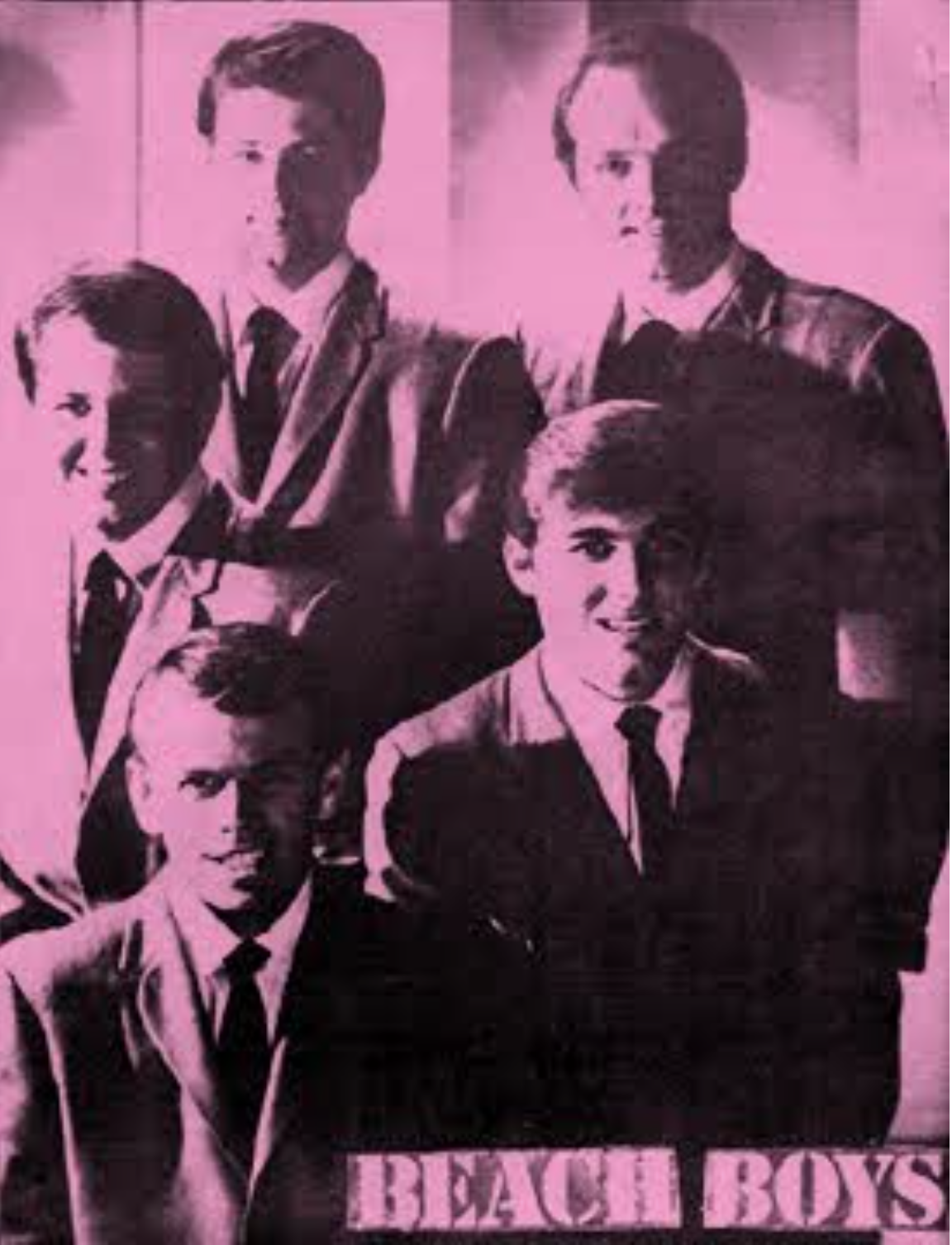
California plastic people came up with California plastic chord changes. Which meant sticking in a Bb before your G, and after your C. Jan and Dean, the Beachboys, as opposed to cooings in the East with shiny saxophones, California plastic concentrated on white twirps and falsetto chirps. (Sidewalk Surfin - the angel chorus- "shake your B. . .uns.") The cult of the celestial choir. There is no god and Brian Wilson is his son. Brian Wilson stirred up the chords. Deftly taking from all sources, old rock, Four Freshman, he got in his later records a beautiful hybrid sound, ("Let Him Run Wild," "Don't Worry Baby," "I Get Around," "Fun, Fun, Fun -- and she had fun, fun, fun till her daddy took her t-bird away"). Like demented unicorns the East went West, and, it, all, made, it. It wasn't really a long cry from such early classics as "Peppermint Stick" by the Elchords (in N.Y. there are stores which sell old rock records for as much as $500).
The old sound was alcoholic. Spirit high. In the early 50's and early 60's pot high music. We're already past the A head, acid tripper stage. But plastic. You can hear it in the music. You can get high on the music, straight. Music's never loud enough. Taxi drivers listen to the news and worry about muggings. You should stick your head in a speaker. Louder, louder, louder. Do it Frankie do it. Oh, how, how. Oh do it, do it. The glops are wearing your clothes now and listening. Someone should paint them in azure stripes and mail them somewhere. It's like holding your arm rigid in a furry black sweater, with your hand bent so it seems amputated. When you straighten it out you get a present on two counts.
Lou Reed (1942 – 2013) was an American musician and songwriter. He was the guitarist, singer, and principal songwriter for the rock band The Velvet Underground and had a storied solo career that spanned five decades. Despite minimal contemporary success, the Velvet Underground came to be regarded as one of the most influential bands in the history of modern music and Reed’s solo work was genre defying at each turn.
Film
<div style="padding:42.4% 0 0 0;position:relative;"><iframe src="https://player.vimeo.com/video/1117053092?badge=0&autopause=0&player_id=0&app_id=58479" frameborder="0" allow="autoplay; fullscreen; picture-in-picture; clipboard-write; encrypted-media; web-share" referrerpolicy="strict-origin-when-cross-origin" style="position:absolute;top:0;left:0;width:100%;height:100%;" title="A Rage to Live clip 3"></iframe></div><script src="https://player.vimeo.com/api/player.js"></script>

Iggy Pop Playlist
Iggy Confidential
Archival - February 2, 2025
Iggy Pop is an American singer, songwriter, musician, record producer, and actor. Since forming The Stooges in 1967, Iggy’s career has spanned decades and genres. Having paved the way for ‘70’s punk and ‘90’s grunge, he is often considered “The Godfather of Punk.”
Film
<div style="padding:54.17% 0 0 0;position:relative;"><iframe src="https://player.vimeo.com/video/1117050759?title=0&byline=0&portrait=0&badge=0&autopause=0&player_id=0&app_id=58479" frameborder="0" allow="autoplay; fullscreen; picture-in-picture; clipboard-write; encrypted-media; web-share" referrerpolicy="strict-origin-when-cross-origin" style="position:absolute;top:0;left:0;width:100%;height:100%;" title="Vertigo clip 2"></iframe></div><script src="https://player.vimeo.com/api/player.js"></script>

Hannah Peel Playlist
Archival - September 4, 2025
Mercury Prize, Ivor Novello and Emmy-nominated, RTS and Music Producers Guild winning composer, with a flow of solo albums and collaborative releases, Hannah Peel joins the dots between science, nature and the creative arts, through her explorative approach to electronic, classical and traditional music.
Ian Rogers Interviews Rick
43m
9.5.25
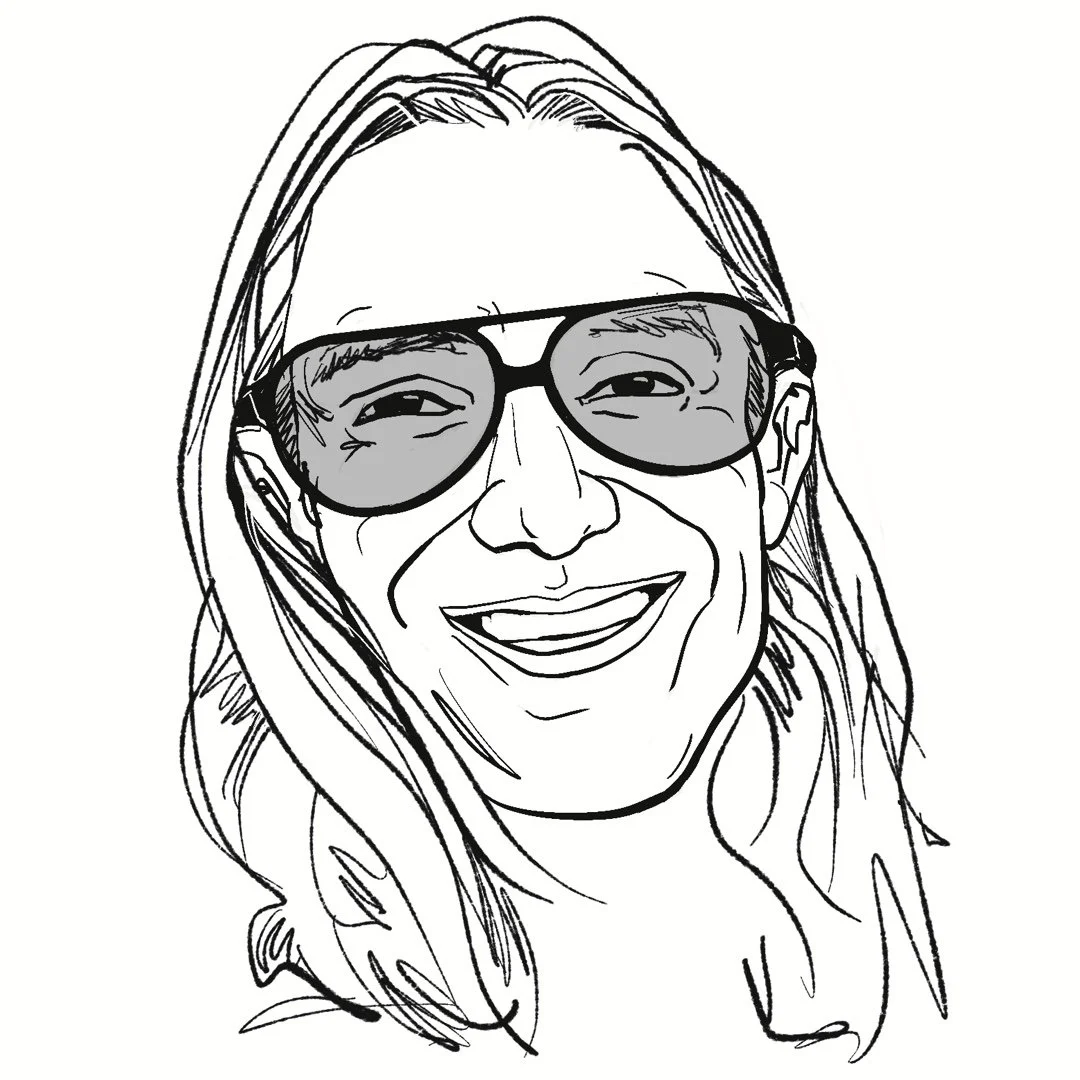
In this clip, Ian Rogers speak with Rick about the parallels between vibe coding and punk rock.
<iframe width="100%" height="265" src="https://clyp.it/g44l0evw/widget?token=bbcd6386d04174478d080e508d369e8e" frameborder="0"></iframe>
Film
<div style="padding:74.48% 0 0 0;position:relative;"><iframe src="https://player.vimeo.com/video/1116074244?badge=0&autopause=0&player_id=0&app_id=58479" frameborder="0" allow="autoplay; fullscreen; picture-in-picture; clipboard-write; encrypted-media; web-share" referrerpolicy="strict-origin-when-cross-origin" style="position:absolute;top:0;left:0;width:100%;height:100%;" title="The 39 Steps clip"></iframe></div><script src="https://player.vimeo.com/api/player.js"></script>
Building with Music: Sound is a Spatial Force
Robin Sparkes September 4, 2025
Architecture and music offer distinct but interconnected ways of shaping space…
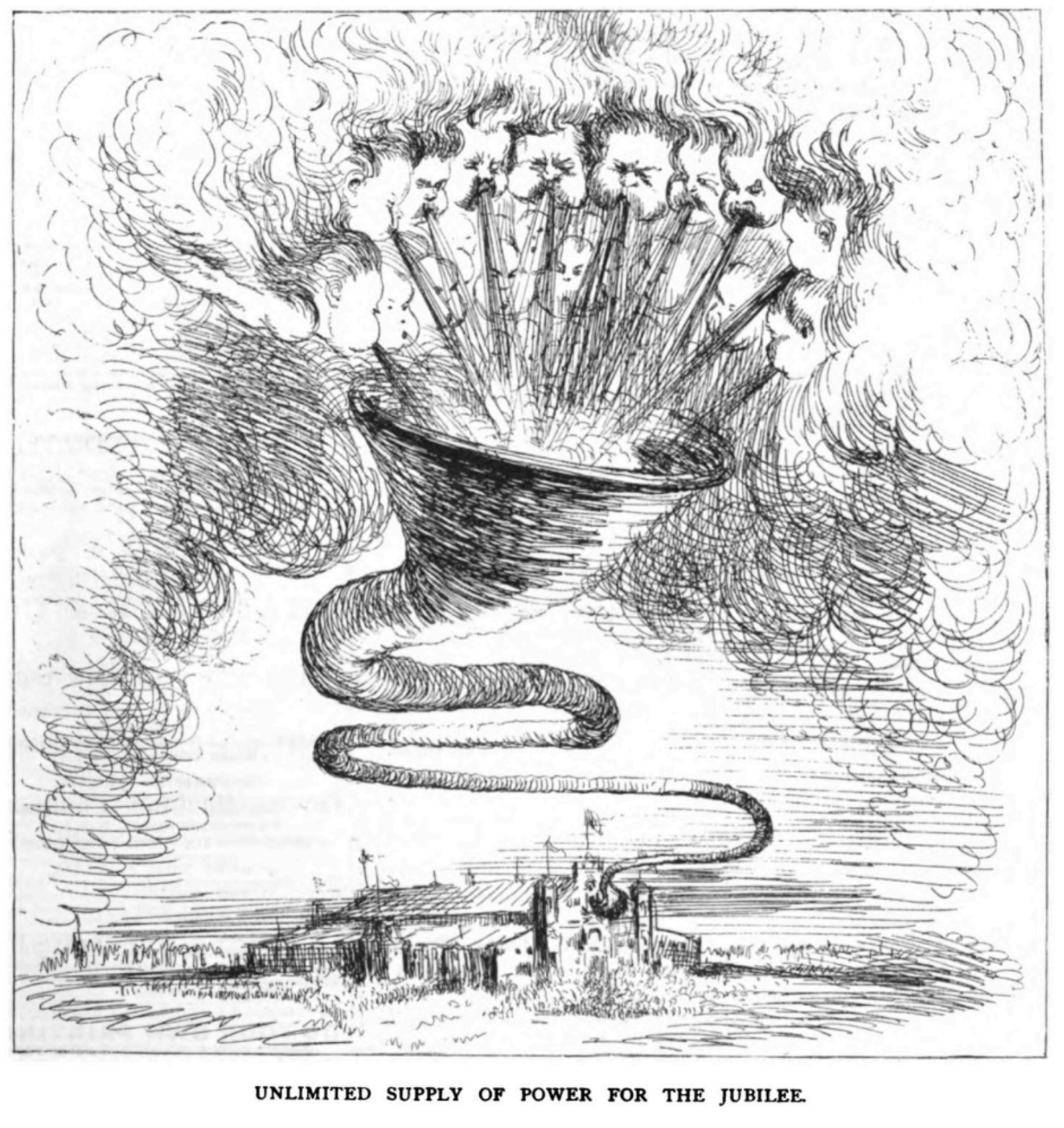
Promises for the 1872 Jubilee.
Robin Sparkes September 4, 2025
Architecture and music offer distinct but interconnected ways of shaping space. A building’s design directs how sound travels, influencing what people hear, how intensely they perceive it, and the atmosphere it creates. Music, on the other hand, constructs space from within, manipulating acoustic variables in real time. From recording in a bedroom, singing in a karaoke bar, performing in a warehouse or amphitheater, music has the power to transform how a space feels and how we move within it. Just as light waves can brighten a room, sound waves shape the emotional and atmospheric essence of a space.
We can shape the reverberation and resonance of a room by carefully positioning sound sources to guide how the sound unfolds. Subwoofer arrays and delay stacks allow us to synchronize sound across different areas and control how far the bass travels. Using EQ and level adjustments, we can direct the listener’s focus, concentrating frequency similarly to light waves, like a beam of sunlight cutting through a window to illuminate a single point in space. Bodies in a crowd act as moving absorbers and diffusers, continually reshaping the sound field. Through rhythm and spatialized playback, we can influence how these people move and connect, making circulation itself a medium in the psychoacoustic design of space. Sound design, then, acts as a form of spatial agency, granting us the power to reshape the architecture around us in real time.
Music changes how a space feels, the beat drives the room, making it feel entirely different than it would in silence. Sound waves bounce off surfaces, enter the body, and shift perception. A static building hosts sound, and when music activates its acoustics, the architecture responds in real time, becoming embodied and alive. Sound can be a tool for restructuring architecture and redefining our relationship to the environments around us.
Reclaiming Space: Underground Music
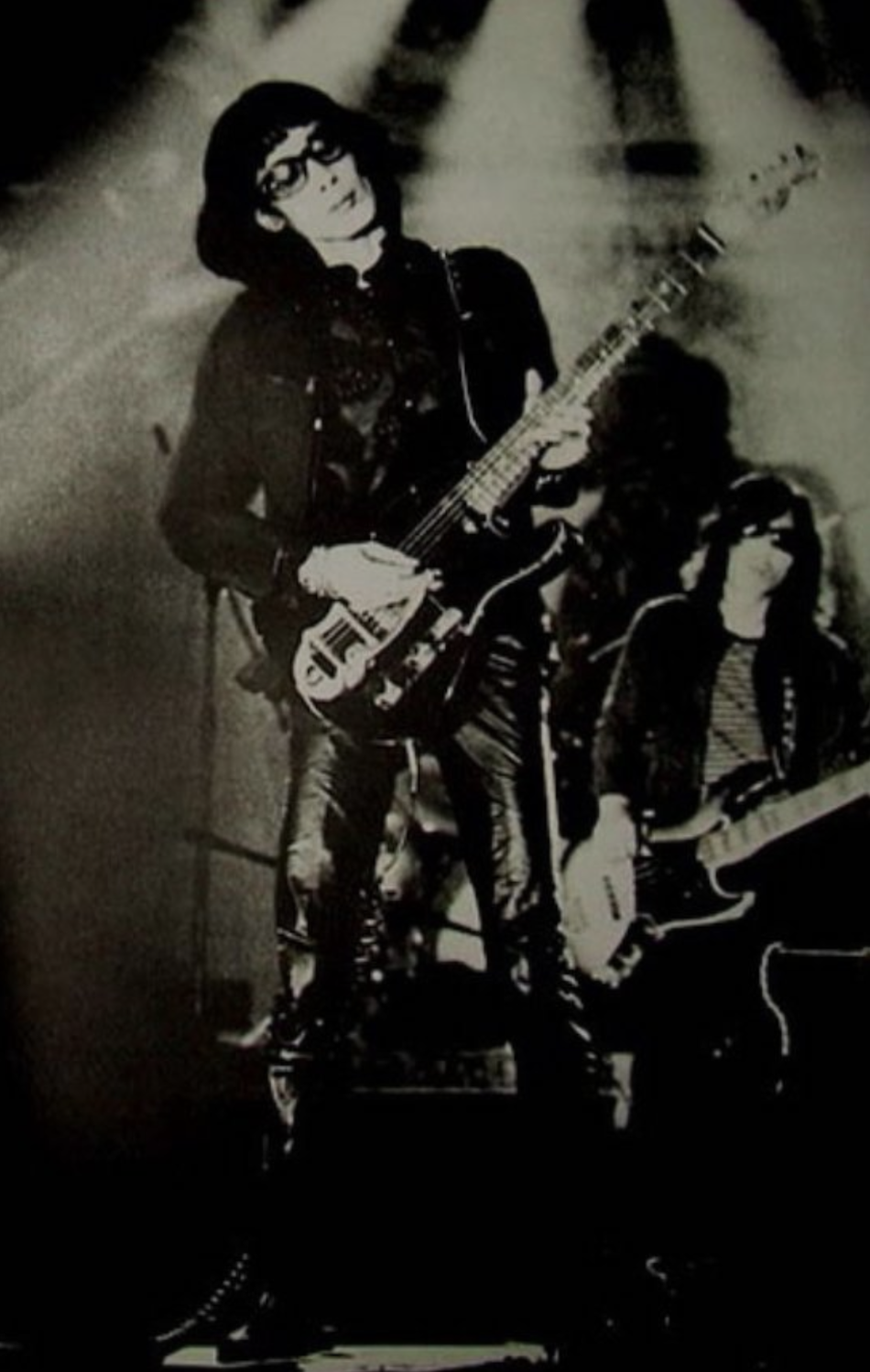
Les Rallizes Dénudés.
The acoustic elements of architecture often serve systems of bureaucracy and control. Underground music has the power to reclaim both historical and physical spatial narratives, turning architectural constraints into opportunities, transforming neutral or neglected spaces into sites of shared meaning and protest. By tuning into how music architects space through sound, we can engage in spatial activism to reaffirm presence, build community, and reimagine the built environment. Underground music reclaims space by asserting temporal agency, shaping how time is experienced and shared, and creating moments that resist permanence. A dance floor becomes a blueprint to reimagine the boundaries of time. The audience, moving as one, reshapes the space in real time.
Les Rallizes Dénudés, a psychedelic noise band that emerged in late 1960s Kyoto, were defined by their uncompromising use of volume and repetition in live performance. The only recordings they left behind came from these shows, where protest was enacted in real time and space. By rejecting mediated formats of releasing music, they made the audience’s presence inseparable from the music itself. Through this approach, Les Rallizes Dénudés transformed live performance into a spatial archive. Their music redefines agency by centering presence, activating space as part of the work itself, and imprinting sound directly into a collective experience.
In a similar way, through an evolving ensemble of musicians, performers, and visual artists, Parliament-Funkadelic activated space through collective rhythm. Working across Detroit, Washington D.C., and Philadelphia, they transformed venues into full sensory worlds. The Mothership was a structure of frequencies, basslines and layered harmonies constructing a space of communion.
George Clinton directed these experiences as both bandleader and maker of space. He expanded perception and invited participation into P-Funk's expansive sonic environments. In Good Thoughts, Bad Thoughts, Clinton offers a manifesto: “Every thought felt as true… blossoms sooner or later into an act and bears its own fruit.” In live performances Clinton points to a spatial principle of a “higher vibration”, where thought, sound, and growth are all forces that shape experience. His invocation of vibration echoes both acoustics and the metaphorical language of quantum theory, where energy and matter are understood as forms of oscillation.
Funkadelic used vibration to tune the room beyond the limits of sight. In Mothership Connection, Clinton’s chants and performances collapsed the boundary between artist and audience. As Gascia Ouzounian states, controlling sound is a way of controlling presence. P-Funk, however, designed presence as an open system—alive, communal, and bound together. This is the “higher vibration.
“Bowed fragments scrape into industrial resonance, while sustained tones blur into the hiss of air and the drone of engines. In this juxtaposition, nature and industry collide.”
In the early 1970s, Martin Rev and Alan Vega emerged from New York City's underground scene, pioneering a fusion of punk energy and electronic experimentation. Rev’s synthesizer, driven by an arpeggiator, generated a continuous cascade of notes, cycling through repeating patterns that created a hypnotic, trance-like effect, enveloping the audience. Rev’s drum machine pulsed with a heartbeat-like rhythm, imposing time on the audience while space seemed to collapse and expand around them. Vega’s presence on stage was commanding. His voice cut through the pulsating rhythm, turning individuals into subjects through the power of address, transforming the call into music itself and folding the audience into the performance. Through this hypnotic, repetitive beat, Rev and Vega cast spells over the spaces they performed in.
Reclaiming Space: Loud Sound

A Crowd Almost Dwarfed by Performers, National Peace Jubilee, Boston, June 1869.
Sound travels through the ear and floods the body with vibration. Depending on tone and frequency, it reflects, lingers, or presses against surfaces. Live performance can manipulate space through sound, creating environments where amplification and presence reorganize how bodies relate to one another. Tim Hecker expands this approach in his essay In the Era of Megaphonics (2007), tracing the rise of amplified sound from the 1880s onward. He examines how emerging technologies of the industrial revolution, such as megaphones, gramophones, and PA systems, transformed public address and performance. These tools shifted sound from embodied, proximate speech toward projected volume, redirecting attention from verbal meaning to sensory force. He situated this transformation within mass political rallies, religious revivals, and stadium-scale concert sites, in sound saturated space and intensified collective experience.
Amplification became a method for restructuring power relations, turning sound into an immersive field that conditioned behavior and expanded public presence. Distortion and amplification emerged as techniques for redrawing spatial experience. Hecker’s music practice and performances bring these principles to life, transforming venues into immersive soundscapes. His music employs deep drones, dissonant harmonies, and fluctuating frequencies to create a sense of vast, shifting space. Layered textures and industrial tones evoke tension and transcendence, while fog, darkness, and sustained sounds suspend time. In this way, Hecker sculpts space with sound, transforming the room into an instrument itself.
Reclaiming Space: Returning to Nature
Sound can trace the contours of the earth, bending industrial intensity toward the rhythms of wind, water, and foliage, shaping how we inhabit and feel the world around us. London-based artist Damsel Elysium’s music inhabits this intersection, weaving textures of industrial noise and the natural environment into sonic landscapes that reclaim both presence and place. Their work positions sound as a living medium, where body, space, and collective experience resonate together. Damsel reimagines the use of classical instruments, violin and cello, as tools for spatial experimentation. Beyond the traditional orchestral roles, these instruments become vehicles for evoking sounds of wind, machinery, and elemental textures. Bowed fragments scrape into industrial resonance, while sustained tones blur into the hiss of air and the drone of engines. In this juxtaposition, nature and industry collide.
Their performances extend beyond conventional venues into ritualistic encounters with natural environments. At Clandestino in Sweden, Damsel arranged flowers into a semicircle between themselves and the audience. The ritual culminated in the distribution of flowers to each participant, a gesture that carried the performance into the lives of the listeners. The ritual becomes a spatial act of reclamation, an invitation to experience the presence of nature together.
By blending the timbres of string instruments with industrial textures and natural soundscapes, Damsel activates a living dialogue between ecological memory and urban sound. Their work proposes new ways of feeling powerful in space through communion with the environment. Sonic environments, older than human architecture and music, remind us that sound has always been building the world around us.
Robin Sparkes, is a spatial designer, studying the kinesthetic experience of architecture. Her design, research, and writing practice traverses the relationship between the body, temporality, and the acoustics of space.
Film
<div style="padding:56.25% 0 0 0;position:relative;"><iframe src="https://player.vimeo.com/video/1116071211?badge=0&autopause=0&player_id=0&app_id=58479" frameborder="0" allow="autoplay; fullscreen; picture-in-picture; clipboard-write; encrypted-media; web-share" referrerpolicy="strict-origin-when-cross-origin" style="position:absolute;top:0;left:0;width:100%;height:100%;" title="Acting Shakespeare - The Two Traditions clip 8"></iframe></div><script src="https://player.vimeo.com/api/player.js"></script>
Ian Rogers
1h 33m
9.3.25
In this clip, Rick speaks with Ian Rogers about the tension and release of music and the brain’s response to it.
<iframe width="100%" height="265" src="https://clyp.it/wriixevf/widget?token=69c36f55bd0219060e373fe608f813ec" frameborder="0"></iframe>
Film
<div style="padding:75% 0 0 0;position:relative;"><iframe src="https://player.vimeo.com/video/1116064518?badge=0&autopause=0&player_id=0&app_id=58479" frameborder="0" allow="autoplay; fullscreen; picture-in-picture; clipboard-write; encrypted-media; web-share" referrerpolicy="strict-origin-when-cross-origin" style="position:absolute;top:0;left:0;width:100%;height:100%;" title="Mighty Joe Young clip 1"></iframe></div><script src="https://player.vimeo.com/api/player.js"></script>
Review of the Arts and Crafts (1898)
Adolf Loos September 2, 2025
We have a new decorative art. It cannot be denied…

Wandbehang mit Alpenveilchen, Hermann Obrist. 1896.
Ten years before Adolf Loos published the seminal essay ‘Ornament and Crime’ that came, in a way, to be the defining text of modernism, he wrote an early critique of the burgeoning arts and craft movement that laid the foundation of his theories. With sharp wit and cultural insight, he argues that true modernity lies not in ornate symbolism or medieval nostalgia, but in functional beauty rooted in classical ideals and material honesty. Modern design must, he says, reflect modern existence, and the Art Nouveau movement that was sweeping his native Austria seemed to him to look backwards. More than twenty years before the Bauhaus school implemented his ideas, here Loos makes a powerful case for a restrained, purposeful, utilitarian design that reflects the genuine spirit of the time.
Adolf Loos September 2, 2025
We have a new decorative art. It cannot be denied. Whoever has seen the rooms of Liberty’s furniture store in London, Bing’s L’Art Nouveau on Rue de Provence in Paris, last year’s exhibition in Dresden, and this year’s in Munich, will have to admit it: the old styles are dead, long live the new style!
And yet we cannot take pleasure in it. It is not our style. Our time did not give birth to it. We do possess objects that clearly display the stamp of our time. Our clothing, our gold and silver jewelry, our gems, our leather, tortoise shell, and mother-of-pearl goods, our carriages and railroad cars, our bicycles and locomotives all please us very well. Only we do not make so much of a fuss about them.
These things are modern; that is, they are in the style of the year 1898. But how do they relate to the objects that are currently being passed off as modern? With a heavy heart we must answer that these objects have nothing to do with our time. They are full of references to abstract things, full of symbols and memories. They are medieval.
But we are beyond this epoch. Since the decline of the Western Roman Empire there has been no era that has thought and felt more classically than ours. Think of Puvis de Chavannes and Max Klinger! Has anyone thought more Hellenistically since the days of Aeschylus? Look at the Thonet chair! While subtly embodying the sitting habits of a whole era, it is not born out of the same spirit as the Greek chair with its lavish levels and at its backrest? Look at Louis Seize! Had the spirit of Pericles’ Athens not waft through its forms? If the Greeks had wanted to build a bicycle, it would have been exactly the same as ours. And the Greek tripods of bronze—I am not talking about those given as Christmas presents, but rather those that were used—they do not look exactly like our iron products?
But it is not Greek to want to express one’s individuality in the objects with which one surrounds oneself and which are in daily use. In Germany one sees the greatest variety of clothing; thus of all the civilized peoples, the Germans are the ones least filled with the Greek spirit. The Englishman, however, has only one outfit for a particular occasion, one box, one piece. To him the best is the most beautiful. Thus, filled like Greek, he chooses the best chair, the best box, and the best bicycle. Modifications in form arise not from a desire for novelty, but rather from the wish to make the good more perfect. Yet it is the boldest of our age to produce not a new chair, but the best chair.
However, in the exhibitions referred to, one saw only new chairs. The best chair will not be able to make any great claims to newness. For even ten years ago we had quite comfortable chairs, and the technique of the bent-wood chair, which helps man, has not changed so very much since then that it could also already be expressed in a different form. The improvement will not be something that no expert will be able to recognize. They will be limited to the millimeters of the millimeters in the dimensions or the grade of the wood. How difficult it is to build a truly new chair! How easy it is to invent a new chair! There is a very simple formula: make a chair that is exactly the opposite of that which has been made.
“The level of culture that mankind attained in classical antiquity can no longer be reached back to from man’s mind.”
In Munich, an umbrella stand was displayed which can probably best demonstrate what I have said concerning the abundant references and the medieval aspect of utilitarian objects. If it had been the task of the Greek or the Englishman to fashion such a stand, the first thing he would have thought about was to provide a good place for umbrellas to stand in. He would have reflected that the umbrellas ought to be able to be put in easily and taken out easily. He would have reflected that the umbrellas should not suffer any damage and that the covering material of the umbrella should not permit one to get stuck anywhere. But the non-Greek, the German, the average German, would do otherwise. For him, non-considerations take a back seat. The main thing for him is to point out the relationship of this object to the urn by means of its decorative form. Water plants twine their way from bottom to top, and each plant sits a frog. It does not trouble the German that the umbrellas can be ripped quite easily on those sharp leaves. He allows himself perfectly contentedly to be abused by his surroundings—as long as he finds them beautiful.
The level of culture that mankind attained in classical antiquity can no longer be reached back to from man’s mind. Classical antiquity was and is the model of all subsequent periods of culture. But there was cross-fertilization from the Orient that formed the greatest reservoir out of which new harvests of development flowed into the West. It almost seems as if Asia has bequeathed to us forever the last remains of her emotional strength. For we have already had to reach back to the furthermost points of the East, to Japan and Polynesia, and now we have come to an end. How good the Middle Ages had it! The Orient lay there still unexploited, and a voyage to Spain or to the Holy Land was enough to open up new worlds of form for the West. Arab influences transformed the nascent spirit of the West into the Gothic. The masters of the Renaissance had to reach out still further. They conquered Persia and India for us. Think of the Persian carpets without which no portrait of the madonna from this period is complete, and of the German artists and damascene work. The Rococo had to go as far as China; for us, only Japan still remains.
Now what is Japanese about our view of art? “That is a charming dress you are wearing, Madam. But what do I see? The one sleeve has a bow and the other one doesn’t. It’s very Japanese. You have a charming bowl of flowers in your vase. Nothing but long-stemmed flowers: roses, lilies, chrysanthemums. That’s Japanese too. If one wanted to appear truly immersed in favored Japan, we would find this kind of arrangement unbearable. Just ask the peasant girl on the Summe-ringo: she has never heard of Japan. And the peasant girl in her home always in an un-Japanese way. One part big in the middle, and then the others such as in a circle all around it. She finds it pretty.
In the first place, then, “Japanese” means giving up symmetry. Next, it means giving up everything that is represented. The Japanese represent flowers, but they are pressed flowers. They represent people, but they are wax people. It is a kind of objectivity taken to its extreme that cannot become subjective. But at the same time a naturalism is maintained. This is above all the world of embroidery, and it has to be one readily to anyone who delights in naïve textiles. I think of the inexpressibly charming embroidery by Hermann Obrist, for example, whose enthusiasm for Japanese art also, achieves his results.
The September issue of the leading arts and crafts paper Art et Décoration gives an account of a conversation in Paris between a reporter and René Lalique. Lalique, who is one of the greatest goldsmiths in Paris, has the courage to view the excessive use of artistically wrought form and not through materials. He uses copper to look especially distinguished and he adorns it with glass, opals, and even carnelians. This is inspiring. And yet he is wrong. In spite of the brave form, the spirit his objects is not derived from our own spirit; instead they gravitate toward the fifteenth and sixteenth centuries. They remind us of rustling silks and heavy velvets, rich furs and stiff brocades. It is the world of Charles V and Maximilian, the last knights, which suddenly appears before our eyes. But Lalique’s jewelry looks quite strange in the age of the lightly fluttering silk dress, in the age of the starched shirtfront and black tails. Who would not like them? But who would want to wear them? The pleasure they excite is only platonic. Our age demands small jewelry—jewelry that represents the greatest possible value on the smallest possible area. Our age requires of jewelry that it have “distilled costliness,” an “essence of the magnificent.” For this reason the most valuable stones and materials will be used in our jewelry. The jewelry’s meaning lies for us in the material. Thus, artistic work must content itself with bringing out the material’s worth as much as possible. In jewelry that is to be worn, the work of the goldsmith takes only second place. Lalique’s jewelry is real display-case jewelry, made as if to fill the treasury of a patron of the arts, who then graciously invites the public to admire the magnificent things in his museum.
Adolf Loos (1870–1933) was an Austrian architect, writer, critic and theorist known for his staunch opposition to ornamentation in design and his role in shaping modernist architecture. His landmark essay Ornament and Crime argued that decorative excess was a sign of cultural degeneration, helping to define the functionalist ethos of the 20th century.
Film
<div style="padding:56.25% 0 0 0;position:relative;"><iframe src="https://player.vimeo.com/video/1114463823?badge=0&autopause=0&player_id=0&app_id=58479" frameborder="0" allow="autoplay; fullscreen; picture-in-picture; clipboard-write; encrypted-media; web-share" referrerpolicy="strict-origin-when-cross-origin" style="position:absolute;top:0;left:0;width:100%;height:100%;" title="Carlo Rovelli on The Order of Time clip 4"></iframe></div><script src="https://player.vimeo.com/api/player.js"></script>
Gain, the Nine of Disks (Tarot Triptych)
Chris Gabriel August 30, 2025
The Nine of Disks is where the fruits of our labors are made manifest in their glory…
Name: Gain, the Nine of Disks
Number: 9
Astrology: Venus in Virgo
Qabalah: Yesod of He
Chris Gabriel August 30, 2025
The Nine of Disks is where the fruits of our labors are made manifest in their glory. We are finally reaching the harvest -what was worked for throughout the suit, and invested properly in Prudence, now begins to reap rewards.

In Rider, we see a noblewoman in a long flowing yellow gown covered in red flowers. She wears a red bonnet and a falconer’s gauntlet, atop which is perched a small falcon with a red blinder. She stands in her full and fantastic vineyard, and by her feet there are nine disks.

In Thoth, we have three central disks, interlinking in red, blue, and green to form Crowley’s phallic and solar seal. Below there are three coins which bear the planetary Gods: Mercury, Venus, and the Moon. Above are Jupiter, Saturn, and Mars. The background is a deep emerald green. This card is given to Venus in Virgo, a careful approach to love and creation.

In Marseille, we have one central disk between two blocks of four disks. Two flowers with closed blossoms emerge from the center, ready to spread out. Qabalistically, this is the Foundation of the Princess.
The Nine of Disks is perhaps the most pleasing point in the suit;we’ve been working for a great deal of time, and now we see the great bounty in sight. This is the pleasure of a Friday, the final day of work before the freedom of the weekend.
As Venus in Virgo, the card relates to caution and criticality in love. Consider the scrutiny a farmer has when looking through the harvest; he must discard what is moldy, spoiled, or otherwise wrong. This is how a Virgo Venus approaches relationships, with an intelligent, seemingly uncaring eye. They will pick someone apart before they can give themselves over to love.
This careful, difficult process is what allows us to enjoy the fruits of the harvest - no one wants to eat bread filled with ergot or wine made of spoiled grapes. Gain represents both quantity and quality. It has done the work to increase the harvest, and has the taste to ensure its goodness.
Though we can expect some great benefits when this card appears, we must also keep our wits about us. Here a great deal of old phrases come to mind: a bad apple spoils the bunch, don’t put all your eggs in one basket, don’t count your chickens before they hatch. These phrases emerge from the rational, agricultural mindset which is embodied perfectly in this card.
When we pull this card, we will be entering a harvest period, whether this is beneficial or not depends entirely upon what we have sewn. Sow the wind and harvest the whirlwind, the wages of sin are death. If we have been diligent in our labor, we will be rewarded here.
Film
<div style="padding:56.25% 0 0 0;position:relative;"><iframe src="https://player.vimeo.com/video/1114461625?title=0&byline=0&portrait=0&badge=0&autopause=0&player_id=0&app_id=58479" frameborder="0" allow="autoplay; fullscreen; picture-in-picture; clipboard-write; encrypted-media; web-share" referrerpolicy="strict-origin-when-cross-origin" style="position:absolute;top:0;left:0;width:100%;height:100%;" title="Moonwalk One - Animation"></iframe></div><script src="https://player.vimeo.com/api/player.js"></script>
Timothy Leary's Model of Consciousness
Molly Hankins August 28, 2025
While Timothy Leary was in and out of prison during the early 1970s, his friend and collaborator Robert Anton Wilson began expanding on Leary’s Eight-Circuit Model of Consciousness, which he published in multiple books the following decade…

Graphic for a Psychedelic Session led by Leary, 1965.
Molly Hankins August 28, 2025
While Timothy Leary was in and out of prison during the early 1970s, his friend and collaborator Robert Anton Wilson began expanding on Leary’s Eight-Circuit Model of Consciousness, which he published in multiple books the following decade. Two of these, Prometheus Rising and the Cosmic Trigger series, use this model to describe the evolution of our species from mortals to higher dimensional selves. Humans move, Leary tells us, from a baseline Bio-Survival Intelligence that helps us stay alive into more refined states of being with a greater capacity for information sharing, creating and processing. According to Wilson, as information and understanding increases, humanity draws closer to a critical mass of self-awareness where we can begin to override our conditioning and experience true free will.
Wilson describes the Bio-Survival Circuit as part of our DNA programmed to, “seek a comfort-safety zone around a mothering organism.” This circuit of consciousness orients us to what is supportive and nourishing and keeps us away from what is predatory or toxic. Born from ancestral survival strategies, this circuit first expresses in infancy to encourage bonding with the adult humans around us who can keep us alive. When we mature into adulthood, we can easily be brought back into this circuit when our nervous system is stimulated to produce the same state of fear we experienced as helpless infants. The results are predictable, robotic responses that make us incredibly easy to manipulate. Wilson wrote in Prometheus Rising, “A man or woman entering a new situation with the anxiety chemicals of a frightened infant coursing through the brain stem is not going to be able to accurately, observe, judge or decide anything very accurately.” As long as we allow our nervous systems to be negatively influenced, we can’t access free will.
In modernity, we instead of looking to interpersonal relationships to soothe our nervous systems from survival anxiety, we instead look to money. This brings us into the second circuit of hierarchy determined by our perception of territory associated with the ‘ego’. Known as the Emotional Territorial Circuit, in this level of consciousness money is a form of territory and the scarcity of it can keep us locked in these lower circuits.This imprint often comes from and is triggered by a father figure, or the lack thereof. According to Wilson and Leary, intergenerational DNA mutations take place based on imprinting we get as children that affects our nervous system in a way that conditions behavior. If we get stuck on this circuit, we lock in a territorial mindset of protecting ourselves from scarcity.
The third circuit is the Semantic Intelligence Circuit, which maps our reality tunnel and informs what is possible or not. These include language, concepts, tools, art, theories, equations, music, or poetry and all wind up informing our internal monologue somehow. “The Semantic Circuit allows us to sub-divide things, and reconnect things, at pleasure. There is no end to its busy-busy-busy labeling and packaging of experience,” Wilson writes of the third circuit. At this level of consciousness, we’re still easily manipulated because our reality tunnel can be reoriented by activating the Bio-Survival Circuit using fear. We update our map based on information gleaned from a dysregulated nervous system operating on first circuit consciousness data. Our range of responses shrinks and we begin to see the world through the lens of our wounding, which we’re revisiting every time our nervous system is dysregulated.
We can begin to break out of this strange loop at the semantic level by consciously updating our reality tunnel map, which expands our perception and propels us forward. The first and second circuits run on negative feedback as a precursor to returning to stasis, whereas at the third, semantic level we’re enriched by tailoring our perception of reality to meet our needs. This creates a forward propulsion out into the world and brings us to the next circuit -Socio-Sexual Intelligence. This is imprinted in adolescence and creates connection with others from either a regulated or dysregulated state. At this level, dysregulation can express itself in more covert ways, like being overly rational or moralistic. As Wilson wrote in Cosmic Trigger II, “Socio-Sexual Intelligence allows us to manage our social and sexual relations in ways that keep us reasonably happy or at least out of jail.” We learn how to get what we want on this circuit, hopefully in healthy ways.
“Operating on all eight circuits is an integration of body, mind, spirit and emotions that gives us the regulated state Hermeticists agree is necessary for successfully influencing reality.”
As we update our reality tunnel map in ways that help us get what we want, we become more difficult to manipulate. The fifth, Holistic Neurosomatic Circuit processes mind-body feedback loops and is imprinted throughout our lives by heightened states of awareness, whether ecstatic or fearful. We can manipulate our state of being to our advantage, moving beyond negative Emotional Territorial reactivity to a level of consciousness where we can select our preferred state of being from the platform of a regulated nervous system. This necessary mutation activates a new era of humanity that appears supernatural, but learned nervous system regulation represents a leap in evolution at the neuro-social level.
At the sixth Collective Neurogenetic Circuit, we come in contact with the Akashic Records, which holds the ancestral data informing our genetic expression. Wilson writes, “The Neurogenetic Circuit is best considered, in terms of current science, as the genetic archives activated by excitement of anti-histone proteins - the DNA memory coiling back to the dawn of life and containing all the genetic blueprints for the future of evolution.” At this level we remember the Creator through ancestral knowing that connects us to higher consciousness. It can come in the form of a spontaneous spiritual experience or from knowing that all of life is connected, from a work of art, meditation, being in nature or a heartfelt message, and the knowledge will stick with us if we spend enough time in sixth circuit consciousness.
At the seventh circuit level of Meta-Programming Intelligence, we learn to re-imprint ourselves so we can choose our preferred reality tunnel. We tune into specific circuits from this level and utilize them to our advantage. Instead of being trapped in the reality tunnel our brain has manufactured, we can imagine how we want it to be and tell our brain that story to program it accordingly. “The Meta-Programming Circuit, known as the soul in Gnosticism… simply represents the mind becoming aware of itself,” Wilson states, distinguishing the soul from our human self. “Simply accept that the universe is so structured that it can see itself, and that this self-reflexive arc is built into our frontal lobes, so that consciousness contains an infinite regress, and all we can do is make models of ourselves making models. Well, at that point, the only thing to do is relax and enjoy the show.”
As our soul kicks back to enjoy the human show, we enter the eighth and final Non-Local Quantum Intelligence Circuit and learn to consciously affect life at the subatomic level. Call it magic, magick, manifestation, or mystical experience, but Wilson calls it being able to affect reality on a meta-physiological level. Non-Local Quantum Intelligence Circuit activation can be brought on by near death or out-of-body experiences, and sometimes can be activated by psychedelics. To really work with it is to have agency in affecting reality to conform to our will, which is the definition of magic. Operating on all eight circuits is an integration of body, mind, spirit and emotions that gives us the regulated state Hermeticists agree is necessary for successfully influencing reality. Paradoxically, by existing in this detached way, we create the right conditions to materially affect our lives.
Towards the end of Prometheus Rising Wilson reminds us, “It is more fun to be happy than sad, more enjoyable to choose your emotions than to have them inflicted upon you by mechanical glandular processes, more pleasurable to solve your problems than to be stuck with them forever… The future exists first in imagination, then in will, then in reality.” And as we take responsibility for curating our reality tunnel and map, we experience true free will.
Molly Hankins is an Initiate + Reality Hacker serving the Ministry of Quantum Existentialism and Builders of the Adytum.