

Hannah Peel Playlist
Archival - September 21, 2025
Mercury Prize, Ivor Novello and Emmy-nominated, RTS and Music Producers Guild winning composer, with a flow of solo albums and collaborative releases, Hannah Peel joins the dots between science, nature and the creative arts, through her explorative approach to electronic, classical and traditional music.

Andrew Huberman, Ph.D. (Part 2)
1h 41m
9.19.25
In this clip, Rick speaks with Andrew Huberman about Yoga Nidra and it’s benefits.
<iframe width="100%" height="265" src="https://clyp.it/uc0cvnti/widget?token=342fad46e69549b1391a5bbe28f13c4d" frameborder="0"></iframe>

New Forms of Music: Sound is a Spatial Force
Robin Sparkes September 18, 2025
If we listen to Antonio Lucio Vivaldi today, we may think of him as a classicist. In his time, however, he was at the very edge of the avant-garde; an innovator who unsettled musical tradition by setting harmony into motion…

Anonymous portrait of Vivaldi, c.1723.
Robin Sparkes September 18, 2025
If we listen to Antonio Lucio Vivaldi today, we may think of him as a classicist. In his time, however, he was at the very edge of the avant-garde; an innovator who unsettled musical tradition by setting harmony into motion. In the early 18th century, while many composers relied on static repetitions of familiar chords, Vivaldi began shaping progressions into sequences that pulled irresistibly forward, shifting the listener’s perception of space. He pioneered the now iconic chord progression, which became the foundation of almost every pop song today. He arranged harmonies as steps ascending a staircase, each leading into the next, a system Howard Goodall has described as a kind of musical gravity. Harmony was no longer a backdrop but an engine, driving both the music and the listener into acceleration.
To imagine this, think of a simple triad played on a keyboard C, E, and G. In isolation, the notes hang still in the air. When Vivaldi set chords into sequence, each one tilted toward a harmonic resolution, leading at the ear and propelling the listener through unfolding time. This momentum is felt in the body: a tightening, a quickening, a sensation of being carried forward. Audiences of his day described it as electrifying, an experience beyond sound, a psychoacoustic movement through time and space.
Vivaldi’s interventions transformed music into something spatial, even architectural. Listeners were no longer hearing notes in sequence, but inhabiting a sonic environment that expanded and contracted around them. His work opened a realm of possibility, allowing music to reconfigure the perception of time and space itself. This experience of acceleration, of being swept into motion by sound, foreshadows the ways new forms of music act as spatial interventions, reshaping how we move, and inhabit the world.

Wendy Carlos
Electronic Music
In the late 1950s, the German engineer Harald Bode developed the first modular musical system, and by the 1960s, commercially available modular synthesizers began to emerge, offering composers and performers expanded control over sound synthesis. Wendy Carlos’s Switched-On Bach (1968) exemplifies this approach, utilizing the Moog synthesizer to perform Johann Sebastian Bach's compositions. Unlike traditional acoustic instruments, the synth allowed Carlos to manipulate pitch, timbre, dynamics, and articulation with precise control. She translated each note and articulation into electronic signals, which were then processed through the synth’s oscillators, filters, and modulators, enabling a wide range of tonal colors and dynamic contrasts.
Because the Moog was monophonic, Carlos recorded each part separately and layered them to reconstruct the full texture of Bach’s works, a meticulous process that showed the capabilities of the synthesizer as a serious instrument for classical music interpretation. By reimagining Bach electronically, Carlos expanded the expressive possibilities of the compositions and demonstrated how sound could be sculpted and structured in ways impossible with acoustic instruments. Her work made listeners aware of the spatial and temporal dimensions of music, where the precise control of frequencies and modulation could shape perception, demonstrating a new form of musical experience.
Switched-On Bach is reverent, yet radically synthetic. Carlos’s synth echoes offer a new possibility of what music can be in an age shaped by dense industrial sound and electronic amplification. The work reclaims experiences that subvert hierarchy and introduce new dimensions of listening and making. In doing so, her electronic sound dissolves classicist boundaries between performer, instrument, and space, opening room for agency within and beyond inherited musical forms and sonic spatial practices.
“Studios functioned as infrastructures of autonomy, transmitting sonic agency to shape how we think, feel, and inhabit place and space.”
Sonic Memory
Within the broader idea that sound is spatial, sonic memory shows how music and noise are inscribed not only in recordings and compositions but in the very spaces where the music is made. It reveals how traditions and experiments endure across time, through tapes, instruments, studios, and architectures that carry the imprint of cultural histories. Paul Purgas unearthed one such archive, recordings made between 1969 and 1972 at South Asia’s first electronic music studio, housed at the National Institute of Design (NID) in Ahmedabad, India. Long neglected, these tapes document how local composers used oscillators, filters, and patch bays to experiment with electronic sound on their own terms. They blended raga, tala, and modernist technique into new sonic languages, transforming the studio into a site of cultural authorship. Through Purgas’ archival project We Found Our Own Reality, he reframes the NID studio as a living infrastructure of memory where electronic sound became a means of reclaiming identity and rethinking the history of music itself.
At NID, Purgas highlights the work of composers Jinraj Joshipura, Gita Sarabhai, and S.C. Sharma, noting compositions such as Space Liner 2001, Frequencies in Square, and Sine Wave of Chromatic Scale. These pieces wove Indian rhythmic and modal traditions into the experimental grammar of modular synthesis, turning the studio into a hybrid space where raga and tala interfaced with signal flow to generate new forms of expression. Joshipura’s Space Liner 2001, composed at age 19, charts an interstellar journey through layered drones and synthetic pulses. He approached the synthesizer architecturally, sketching color coded patches to map the logic of his signal paths. Drawing from science fiction and spatial design, his work sought to “stand outside history,” building auditory structures that imagined futures beyond inherited systems.
Through the archive, Purgas has reactivated these experimental spaces, positioning the NID studio within the post-independence ambition and design-led pedagogy of its time. As he writes, “the infrastructure of electronic sound in India was neither a clone nor an imitation, but an extension of local pedagogies and cosmologies into new technological territories.” The work challenges colonial narratives that marginalized South Asian approaches to sound and space. By revealing the voices of early South Asian electronic composers and highlighting the spatial dimension of their practice, Purgas shows how these studios functioned as infrastructures of autonomy, transmitting sonic agency to shape how we think, feel, and inhabit place and space.
In his own practice, Purgas treats architecture as an instrument by activating abandoned buildings to explore their acoustic character. In one project at Woodchester Mansion, an unfinished Gothic Revival house in the British Cotswolds, he set up speakers and microphones to amplify sub-bass rumble through walls and staircases, capturing the building’s natural resonances. He recorded creaks, echoes, and structural vibrations without editing, letting the house perform itself through sound. This approach mirrors, in more explicit detail, how underground punk bands in abandoned squats and warehouses reclaimed derelict spaces, using raw acoustics and collective energy to resist institutional norms. By recording with minimal interference, Purgas exposed the spatial memory embedded in the structure’s fabric. The resulting audio traces reveal architecture as a living partner in sound design, demonstrating how sonic agency is rooted in place, history, and material presence.

Cõvco performer Surrender
Sonic Agency in Motion
Stephelle, founder of Area Scatter, a platform dedicated to experimental sound and spatial programming recently curated a performance at OR space in London titled SURRENDER by Cõvco, demonstrating how contemporary approaches to sound actively reorganize space. Performing from within a mobile structure Cõvco designed herself, she navigated through the audience erratically, prompting the crowd to shift, follow, and respond to her motion. The sound moved with her, transforming the room into an instrument. As Cõvco describes it, the work is about “surrendering to low-frequency subwoofers,” and her mobile structure, inspired by soundsystem culture, resembled a large, black speaker frame on wheels. In her words, agency emerges as “demand and permission, invasive invitation for homecoming and stranger’s paradise.” Sonic agency in the performance operates through movement and attention, shifting how space is perceived and inviting the audience to listen with the body.
Thinking through new forms of music reveals how sound can rebuild the built environment from the inside out. It defines the space around us, physically, emotionally, and architecturally, moves as vibration, shaping and being shaped by every surface it touches: low frequencies wrap and press, high ones scatter and slice. Space is redrawn by sound moving through it.
From the smallest scale of a headphone chamber, which alters perception and navigation, to the macro of an entire cityscape, sonic energy maps volume, depth, and edge in real time. What we hear is a reading of space; what we feel is its design. Sound fills, transforms, and expands. From the key of the sonics to the beat per minute, vibration becomes a tool for exploring spatial design. From micro to macro, sound waves form invisible structures in a continuous act of spatial design.
In an age when access to space is increasingly monitored, privatized, and algorithmically managed, music offers blueprints for reimagining how we inhabit the world. To embody sonic and spatial agency is to reshape space from within.
Robin Sparkes, is a spatial designer, studying the kinesthetic experience of architecture. Her design, research, and writing practice traverses the relationship between the body, temporality, and the acoustics of space.
Film
<div style="padding:56.25% 0 0 0;position:relative;"><iframe src="https://player.vimeo.com/video/1119343778?badge=0&autopause=0&player_id=0&app_id=58479" frameborder="0" allow="autoplay; fullscreen; picture-in-picture; clipboard-write; encrypted-media; web-share" referrerpolicy="strict-origin-when-cross-origin" style="position:absolute;top:0;left:0;width:100%;height:100%;" title="Close Up of the Moon, A Look at Lunar Orbiter"></iframe></div><script src="https://player.vimeo.com/api/player.js"></script>
Andrew Huberman, Ph.D. (Part 1)
1h 32m
9.17.25
In this clip, Rick speaks with Andrew Huberman about cortisol and the circadian rhythm.
<iframe width="100%" height="265" src="https://clyp.it/s2iri5vr/widget?token=c573830ec03b40cd2cffc01d31674d31" frameborder="0"></iframe>
Film
<div style="padding:53.96% 0 0 0;position:relative;"><iframe src="https://player.vimeo.com/video/1119339249?badge=0&autopause=0&player_id=0&app_id=58479" frameborder="0" allow="autoplay; fullscreen; picture-in-picture; clipboard-write; encrypted-media; web-share" referrerpolicy="strict-origin-when-cross-origin" style="position:absolute;top:0;left:0;width:100%;height:100%;" title="Gideon of Scotland Yard clip"></iframe></div><script src="https://player.vimeo.com/api/player.js"></script>
‘Dont Look Back’ and the Self Made Myth (Copy)
Ana Roberts September 16, 2025
On the road to immortality, Dylan was learning from his mistakes and shaping the mythology of himself. One of those mistakes, it seemed, was inviting a young documentary filmmaker on tour with him. ‘Don’t Look Back’ captures Dylan in a way he never would be captured again, and for a good reason…
Ana Roberts, September 16th, 2025
In 1967, Bob Dylan was a prophet speaking truth to power with his guitar and voice, and informing the minds of a million young people searching for direction. He was settled in this role and comfortable enough to experiment within it. Yet just 2 years earlier, the foundations of this persona were a little less steady. On the road to immortality, Dylan was learning from his mistakes and shaping the mythology of himself. One of those mistakes, it seemed, was inviting a young documentary filmmaker on tour with him. ‘Don’t Look Back’ captures Dylan in a way he never would be captured again, and for a good reason.
D.A. Pennebaker followed Dylan in 1965, touring England, at the very start of his electric revolution, still playing live shows with his acoustic and harmonica. He is seen hanging with Joan Baez, Donovan, and a group of managers, journalists, and fans, with Allen Ginsberg appearing in the background of the now iconic opening sequence set to “Subterranean Homesick Blues,” a proto-music video before the term existed. It is a remarkably candid film and stands as a pinnacle of 1960s-era cinéma vérité. Pennebaker does not interact with him; he serves as a fly on the wall and tries to, through the powers of sheer observation, understand the truth of his subject. The Dylan that the public sees in this film largely aligns with his established persona—a mercurial, elusive genius—yet the consistency of this behavior reveals a soft inauthenticity. The more we watch him interact with journalists and play the role of the aloof prophet, the more his predictability begins to erode the myth. Instead of reinforcing his mystique, it undermines it. We see not a spontaneous artist but an actor fully conscious of his role. At once relentlessly confrontational and perpetually elusive, his time on tour is punctuated by petulant encounters with journalists, lazy days, and frustrated evenings spent in hotel rooms, trading songs with Baez while he sits at his typewriter, and the occasional flash of anger. Where the consistency of Dylan begins to undermine his façade, it is the latter of these, the moments of anger, which one can guess are to blame for Dylan’s refusal to ever be filmed by him. Even in these moments, as he tries to recover from the broken façade he inadvertently revealed, we can see shivers of regret in the young Dylan’s eyes—fear that his image of a “cool cat,” unfazed by the world around him, has slipped in front of an audience and, worse, a camera.
There is a single scene that stands out, and one that resides most strongly in the public consciousness of the film, where Dylan, while his hotel room is filled with various figures from the contemporary British music scene, including Donovan and Alan Price, having recently left the Animals, tries to get to the bottom of who threw a glass out the window. It is the antithesis of the Dylan he presents: he is not the elusive figure, the freewheelin’ Dylan, the mocking Dylan. Instead, he is a petty, angry figure concerned about his own perception. He tells a drunken Englishman who he suspects threw the glass that “I ain’t taking no fucking responsibility for cats I don’t know, man… I know a thousand cats that look just like you.” Later, when the dust has settled, Donovan plays a song and Dylan, immediately after, plays “It’s All Over Now, Baby Blue,” a pointed upstaging of the younger artist, clearly in the presence of his hero. These ten minutes of footage stand alone in Dylan’s career—a glimpse behind the glass onion. It is in these moments that we see such concern about the way he is presented, agonizingly self-aware and furious at the possibility that he might not be in full control of his image. Yet this does not weaken Dylan’s genius; it amplifies it. It is the reason for his success. He is a master at building the mythology around him, knowing, like Freud, that if he gives too much of himself, too inconsistent a version of himself, it won’t be a strong bedrock on which the fans can create the myths. ‘Don’t Look Back’ stands alone in documentaries because it pays attention to the man behind the curtain, and Dylan’s work remains more powerful when the curtain is not pulled back.
“‘Another Side of Bob Dylan’ is the Temptation of Christ, the 40 days and nights in the desert—it is the prophet going alone, leaving those who believe they need him, only to force them to dig deeper into his message.”

Bob Dylan in the hotel room in ‘Dont Look Back’. (1967).
It is not this film alone that reveals the personal construction of Dylan, though it gives a wondrous insight into it. Between 1963 and 1965, Dylan put out five albums, and to listen to each is to hear in stark detail the active construction of an icon. He refines his ability with each album, taking the elements that most readily captured his listeners and expanding them constantly, while refusing to be pigeonholed in style or content. We can see this perhaps most clearly in the three-album run of ‘The Times They Are a-Changin’’, ‘Another Side of Bob Dylan’, and ‘Bringing It All Back Home’. ‘The Times They Are a-Changin’’, his third record and the first to contain all original songs, builds off the previous album, leaning into revolutionary-minded, political anthems and civil-rights era ideas, blended with majesty into his brand of beat-inspired folk music. It is a logical continuation to ‘The Freewheelin’ Bob Dylan’, cementing his reputation as the voice of his generation, reporting on the issues in ways only the kids understand. Yet ‘Another Side of Bob Dylan’, released some eight months later, entirely rejects this image. The name itself is a refusal to be defined as anything, a rejection of the label of prophet, which only makes the role more powerful as listeners try to rectify the two. “My Back Pages” confronts any attempts to pinpoint political views: “Equality, I spoke the word / As if a wedding vow / Ah, but I was so much older then / I’m younger than that now,” a cry that he is changing, an offer to attempt an understanding of what he believes. ‘Another Side of Bob Dylan’ is the Temptation of Christ, the 40 days and nights in the desert—it is the prophet going alone, leaving those who believe they need him, only to force them to dig deeper into his message.
‘Bringing It All Back Home’ is the completion of this journey—it is when Dylan knew he had found greatness. He blends folk with rock music deftly, never allowing any song to fall simply into either category. Gone are the directly political songs; rather, he is able to embed the possibility of revolution into every line, turning songs of the personal into rambling prophecies of the last days of earth, as with “It’s Alright, Ma (I’m Only Bleeding).” Each line can be taken as its own maxim, its own prophecy, and Dylan throughout this album confirms his role as the oracle. “He not busy being born / Is busy dying / Temptation’s page flies out the door / You follow, find yourself at war” captures this ability to at once capture specificity and remain entirely open to interpretation. *Bringing It All Back Home* is the realization that the prophet is most powerful when they can never be understood. Each song makes you confident you are in the presence of, and listening to, something important, and if you don’t understand it in time you will—the prophecy will reveal itself. It is in these three albums we see Dylan embrace the inauthentic and use it to further his message; it is here we see him realize that authenticity leads to understanding, and when you are understood your message ends. Dylan embraces the inauthentic, and it lets him live forever.
Ana Roberts is a writer, musician, and cultural critic.
Film
<div style="padding:56.25% 0 0 0;position:relative;"><iframe src="https://player.vimeo.com/video/1119336450?badge=0&autopause=0&player_id=0&app_id=58479" frameborder="0" allow="autoplay; fullscreen; picture-in-picture; clipboard-write; encrypted-media; web-share" referrerpolicy="strict-origin-when-cross-origin" style="position:absolute;top:0;left:0;width:100%;height:100%;" title="Carlo Rovelli on The Order of Time clip 5"></iframe></div><script src="https://player.vimeo.com/api/player.js"></script>

Larry Levan Playlist
Archival 1967-1987
Larry Levan was an influential American DJ who defined what modern dance clubs are today. He is most widely renowned for his long-time residency at Paradise Garage, also known as “Gay-Rage”, a former nightclub at 84 King Street in Manhattan, NY.
Film
<div style="padding:75% 0 0 0;position:relative;"><iframe src="https://player.vimeo.com/video/1118317322?badge=0&autopause=0&player_id=0&app_id=58479" frameborder="0" allow="autoplay; fullscreen; picture-in-picture; clipboard-write; encrypted-media; web-share" referrerpolicy="strict-origin-when-cross-origin" style="position:absolute;top:0;left:0;width:100%;height:100%;" title="Personal Legacies- Materiality and Abstraction clip 11"></iframe></div><script src="https://player.vimeo.com/api/player.js"></script>
The Fool (Again)
Chris Gabriel September 13, 2025
As we have reached the end of our 78 week exploration of the Tarot, I thought it fitting to explore my own journey of discovery with this perfect tool. From Fool to learned Fool…
Name: The Fool
Number: 0
Astrology: Air
Qabalah: Aleph
Chris Gabriel September 13, 2025
As we have reached the end of our 78 week exploration of the Tarot, I thought it fitting to explore my own journey of discovery with this perfect tool. From Fool to learned Fool.
*
Rider
I remember buying my first pack of Tarot cards. I was in high school and I went to Earth Spirit after class and bought a Rider-Waite deck. We went back to my room, and immediately splayed them out face down on the floor, and shuffled the cards around. We pushed them back in place, and I set about reading.
We did not study the booklet, instead we intuited the meaning from the images before us. I brought it to school the next day and set up shop in the library, reading for friends and fellow students. I felt I had found the perfect niche. Understanding philosophy or occultism was never enough, I had to communicate what I learned in an effective way, tarot was the perfect bridge between the esoteric and the mundane.
*
Thoth
I was given the Thoth tarot deck, and the accompanying Book of Thoth as a birthday gift from my mother. It was in fact the last gift I would receive from her. At this point I had grown far more interested in the Occult tradition behind the tarot, and desperately hungered for the wisdom in that text, and so I devoured it.
I was able to grasp the basic symbols, having worked with them at length, but the astrological and Qabalistic elements were beyond my understanding at the time, so I read the book again and again, and I played with the cards constantly.
I had my first breakthrough as I taught my friend Jana, the astrological significance of the cards. It was sudden, the system had at last become a toy with which I could play, and play I did! My abilities in divination exponentially increased.
I joked often in the years that followed that the Qabalah played no part in my Occult work. Like astrology, I had rote memorization of the component sephiroth and alphabet, but it meant nothing to me.
It wasn’t until 2022, when I met my mentor Tessa DiPietro, that I began to grasp at the divine that existed within the tarot. She quizzed me regularly on the subject, and took time to show me how it functioned. Through her teaching, I was at last able to read the Book of Thoth and 777 fully, and apply this fantastic, expansive set of information to my readings.
*
Marseille
I am embarrassed to say I didn’t own a Marseille deck until I was given this project by Tetragrammaton. I had played with the deck at shops, and studied the imagery in books, but I desired the Jodorowsky version, and foolishly went without. I purchased the deck, just like my first, at Earth Spirit.
I played with them, read with them, and recalled my studies of these cards. I intentionally used the method utilized by Aleister Crowley, the creator of the Thoth deck, to teach a student, record the lecture, and write it out. As I moved city to city throughout the year, I would engage in these dialogs with my friends. In this way I was able to get through the deck in an entirely randomized, meaningful way.
*
Upon completing every piece, I would anxiously send the work to my girlfriend, await her response, and then send it to my editor, who would fix my sloppy punctuation, and occasionally remove my references to internet memes (which is of course what got me into this work to begin with! The Three of Cups is “Girls Night”) and then send it into the would by way of the wonderful Tetragrammaton.com.
I am forever grateful to all involved in my esoteric development, and for giving me the opportunity of a lifetime, to share what I have learned from a decade of Tarot reading and study with all of you. I hope my writing has helped you form a greater understanding of the cards, and that you’ll stick with me as I begin to explore the I Ching with you!
With love and light, Christian Gabriel
Film
<div style="padding:75% 0 0 0;position:relative;"><iframe src="https://player.vimeo.com/video/1118037878?badge=0&autopause=0&player_id=0&app_id=58479" frameborder="0" allow="autoplay; fullscreen; picture-in-picture; clipboard-write; encrypted-media; web-share" referrerpolicy="strict-origin-when-cross-origin" style="position:absolute;top:0;left:0;width:100%;height:100%;" title="Firing Line clip 5"></iframe></div><script src="https://player.vimeo.com/api/player.js"></script>
Physics, Biology and the Seven Hermetic Principles
Molly Hankins September 11, 2025
Originating with the ancient Egyptians, passed down through millenia, and preserved in the early 20th century by an authorless book called The Kybalion, the seven Hermetic principles are timeless axioms of occult wisdom…

Molly Hankins September 11, 2025
Originating with the ancient Egyptians, passed down through millenia, and preserved in the early 20th century by an authorless book called The Kybalion, the seven Hermetic principles are timeless axioms of occult wisdom. They are also, according to cellular biologist and author Dr. Bruce Lipton, increasingly relevant to the world of quantum physics. The Hermetic principles contain the basic rules by which reality operates, with perception at its heart. Max Planck, one of the fathers of quantum physics, believed that consciousness is creating our life experience and adjusting our consciousness affects our reality. Lipton uses the placebo effect as a prime example of how this phenomena manifests, stating that the positive thinking is the underlying cause of healing and that negative thinking has equal effects.
Named after Hermes Trismegistus, believed to be an incarnation of the Greek god Hermes known as Thoth in ancient Egypt, the Hermetic principles begin with Mentalism: “The all is mind,” says The Kybalion, “The universe is mental.”. Here ‘the all’ refers to the substantial reality underlying the laws of the material world, and the idea of the universe being mental refers to the impact our perspective has in creating our experience. The second principle is that of Correspondence, which is where the saying ‘as above, so below; as below, so above’ originates from. Lipton uses Euclidean geometry, defined as the math that provides for structure in space, to illustrate how Correspondence is universally expressed in the material world of form.
“Is there a geometry that makes a tree? Or a snail? Yes there is,” Lipton explains. “It’s called fractal geometry, and it’s a very simple equation. But here’s the nature of the equation - you solve the equation and you get an answer, but the neat part is now you take the answer and feed it back into the same equation and solve it again.” This process repeats, creating repeating patterns of geometry that allow us to solve for answers at higher and lower levels of organization. Patterns revealed at lower levels of organization with minimal variables mirror patterns playing out at higher levels of organization with many variables, illustrating the second principle of Correspondence and its contemporary relevance. He also points to human cellular behavior as another example, “All of the functions that you have in your body are already present in a cell. The cell has respiration, digestion, excretion - cells even have an immune system. It’s the same mechanism that’s used in the higher organization of the human body. In other words, there’s a repetition in the structure - as above so below.”
Lipton started his early scientific research career focusing on the material world, but caught up to the Hermeticists when he began to study the relationship between the material and spiritual worlds. Spirit influences matter through the third principle of Vibration, which states that everything is in motion, from the spirit realms down to the subatomic level of gross matter. “All atoms are energy vortices with ripples that radiate out,” Lipton says. “As far as we know the ancient people weren’t talking about quantum physics, but they obviously knew quantum physics because they understood the nature of vibration even though they lived in a world like we live in a world that appears to be physical. This ancient wisdom was built into the Hermetic principles.” It is a requirement for all Hermetic students to learn control of their mental vibrations in order to influence reality. Think of your thoughts and emotions as pebbles being tossed into a pool of water and imagine the interference patterns between those ripples - that’s akin to how our energy is radiating out to influence the material world.
The fourth principle of Polarity states that everything has poles in this Earthly realm, that everything we experience is part of an opposite pair - black and white, good and evil, male and female, night and day, etc. We can adjust our mental vibrations to shift the poles of any phenomenon because Polarity represents a continuum in which all opposites are actually just different degrees of the same thing, at different ends of the same spectrum. Lipton describes polarity as a cycle, informed by wave/particle duality, which is a fundamental quantum physics concept that describes light and matter as exhibiting qualities of both waves and particles. Waves behave in an opposite manner to particles, with particles bouncing off each other upon collision and waves passing through each other. The fifth principle of Rhythm dovetails right out of the fourth, stating in The Kybalion, “Everything flows out and in; everything has its tides. All things rise and fall; the pendulum swing manifests in everything; the measure of the swing to the right is the measure of the swing to the left. Rhythm compensates.”
“The support of structure and evolutionary growth are necessary for any organism to survive and thrive, and the left and right brain functions are an example of how this principle expresses itself in the human body.”
That rhythmic compensation is explained by Lipton as a natural byproduct of vibration. “A vibration has a rhythm - an up-phase and a down-phase, and an up-phase and a down-phase. Well this rhythm can also be present in our life. There are times when you’re in harmony with the going-up, and these are the good-feeling times when things are great. Then there’s times when we seem to be out of harmony, but that’s because the rhythm is going down in the opposite polarity. So the point of the rhythm is that you can choose how you engage and you can ride the rhythm and make your life smooth.” It is not that the difficult or painful down-phases of our lives get easier, but when we see those times as part of a natural, inevitable cycle we can begin to move with the rhythm of life without seeing ourselves as victims.
The sixth principle of Cause and Effect states, “Every cause has an effect and every effect has a cause. Chance is but a name for Law not recognized; there are many planes of causation, but nothing escapes the law.” This law, according to Lipton, is that cause and effect are cyclical with each effect creating new causes. He goes so far as to say that the very existence of creation must be the effect stemming from some cause, implying the existence of a creator. We become co-creators of reality when we broadcast our thoughts and they interact with the subatomic particles of the material world to influence how they organize. In his book The Biology of Belief, Lipton expresses his thesis that our beliefs drive biological organization and therefore determine whether we’re healthy or sick. Applying the principles of Polarity, Vibration and Mentalism, we can adjust our mental vibrations, and switch our polarity from a negative to positive perspective. Through this we become the cause of our health rather than experiencing ill-health as an effect of negative thinking.
The seventh and final principle of Gender is about the balance of masculine and feminine energy present in all of life.Lipton describes this as the balance of structure and movement on the masculine side with vegetation and growth on the feminine side. The support of structure and evolutionary growth are necessary for any organism to survive and thrive, and he points to the left and right brain functions as an example of how this principle expresses itself in the human body. The Kybalion illustrates this through describing atomic functionality of positive and negative particles where those positively charged exert energy upon the negatively charged resulting in the organization or formation of atoms. “Arising from their unions, or combinations, manifest the varied phenomena of light, heat, electricity, magnetism, attraction, repulsion, chemical affinity and the reverse, and similar phenomena. And all this arises from the operation of the principle of Gender on the plane of energy.” This seventh principle unites the other six because it unifies Polarity via Mentalism and Vibration to produce a Rhythm of Cause and Effect that can be predicted by Correspondence.
Lipton believes that the highest and best use of these principles lies in allowing them to guide our intentions, which boosts the signal of our mental, vibrational waves to become the cause affecting how particles organize to render our experience of reality. Rather than treating the information as passive knowledge, he echoes The Kybalion’s emphasis on application of knowledge, insisting we consciously incorporate these principles into our intention to propel us towards what we want in life. “You are the creator, and that’s exactly how you do it.”
Molly Hankins is an Initiate + Reality Hacker serving the Ministry of Quantum Existentialism and Builders of the Adytum.
Film
<div style="padding:60% 0 0 0;position:relative;"><iframe src="https://player.vimeo.com/video/1118033725?badge=0&autopause=0&player_id=0&app_id=58479" frameborder="0" allow="autoplay; fullscreen; picture-in-picture; clipboard-write; encrypted-media; web-share" referrerpolicy="strict-origin-when-cross-origin" style="position:absolute;top:0;left:0;width:100%;height:100%;" title="Mysterious Island clip 2"></iframe></div><script src="https://player.vimeo.com/api/player.js"></script>
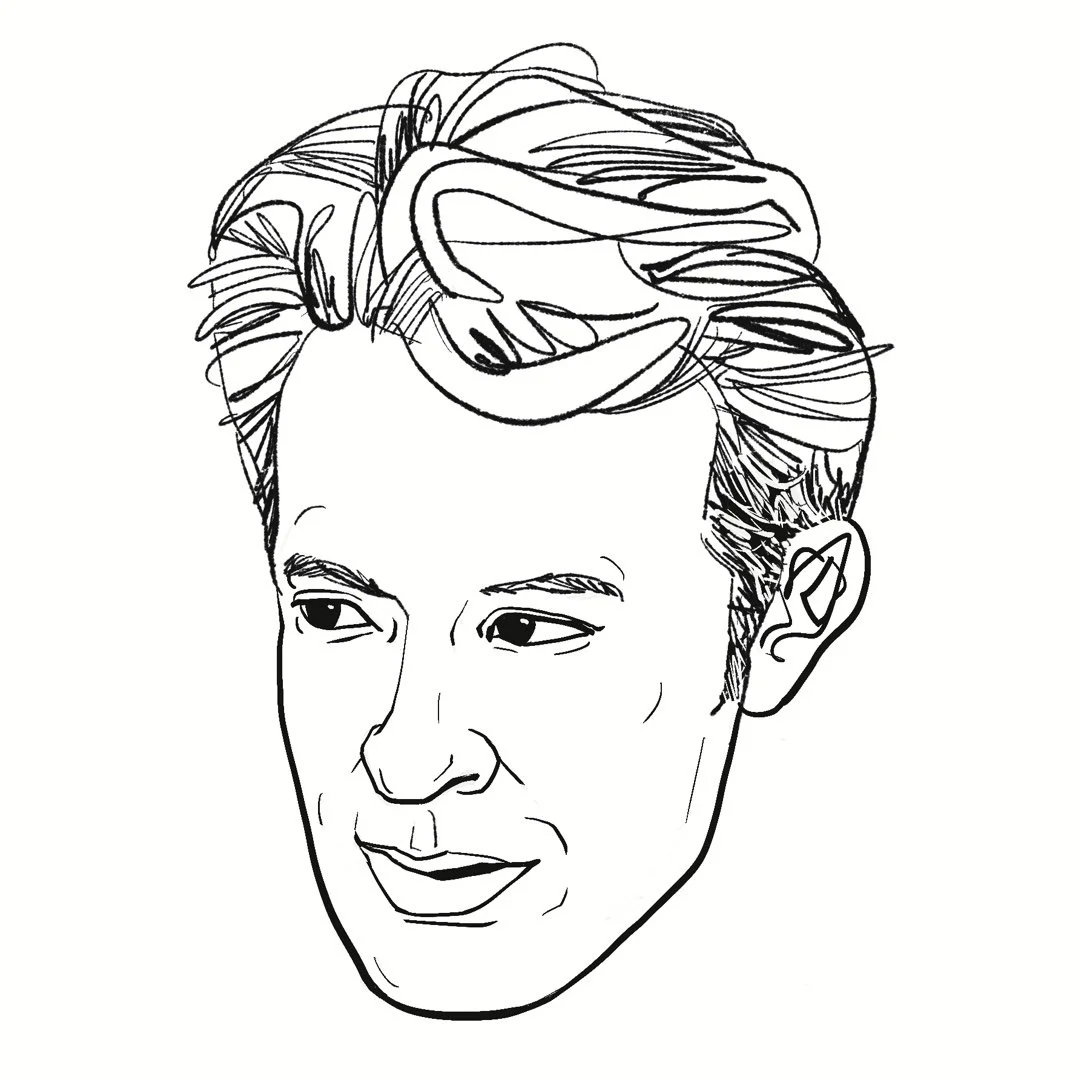
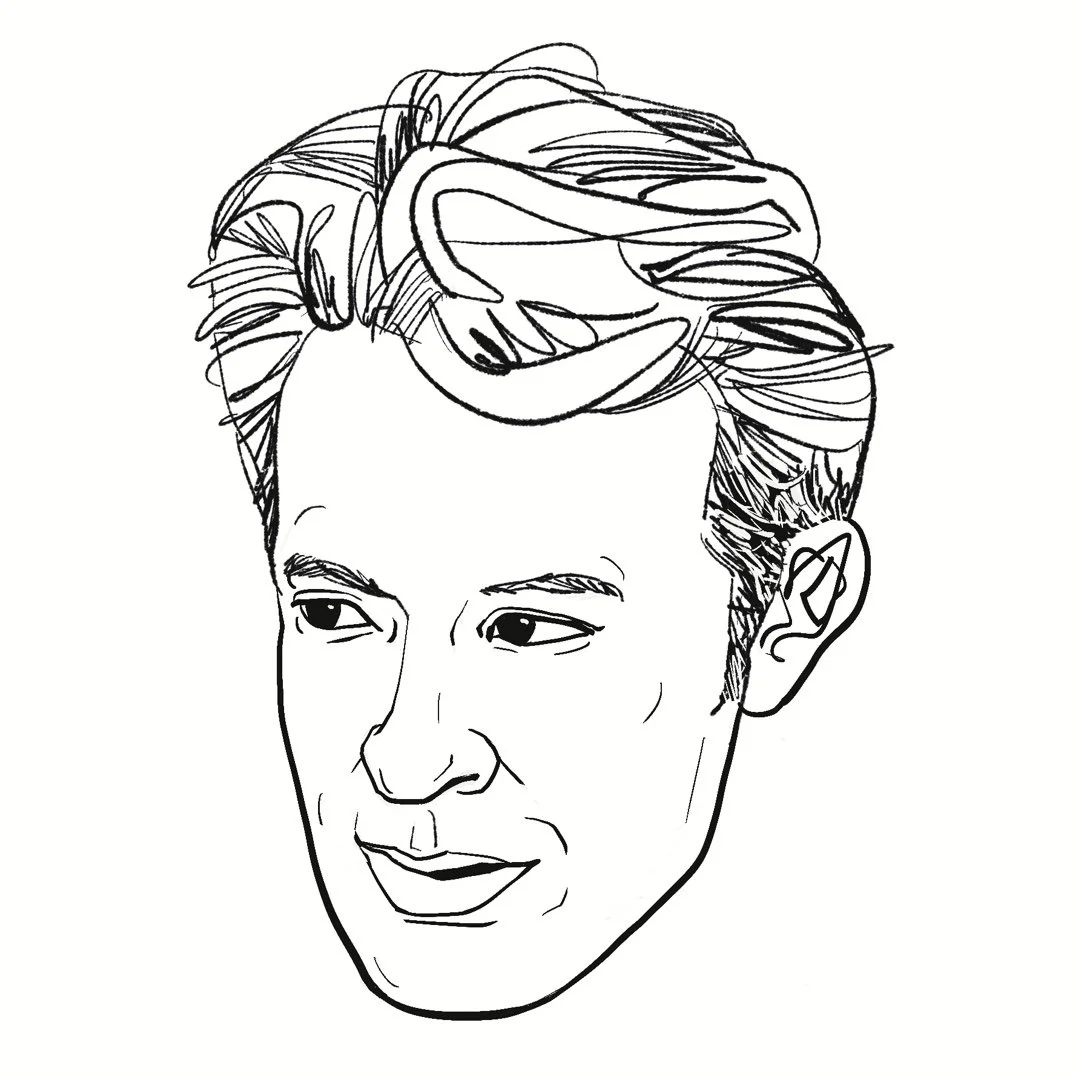
Mark Ronson
1h 31m
9.10.25
In this clip, Rick speaks with Mark Ronson about the value of influence and comparison to other artists.
<iframe width="100%" height="265" src="https://clyp.it/eyh3nk4d/widget?token=ff3ce26e7a0607d57beb62701ee0eb7c" frameborder="0"></iframe>
Film
<div style="padding:56.25% 0 0 0;position:relative;"><iframe src="https://player.vimeo.com/video/1117073694?badge=0&autopause=0&player_id=0&app_id=58479" frameborder="0" allow="autoplay; fullscreen; picture-in-picture; clipboard-write; encrypted-media; web-share" referrerpolicy="strict-origin-when-cross-origin" style="position:absolute;top:0;left:0;width:100%;height:100%;" title="Pauahi Crater Eruption clip 2"></iframe></div><script src="https://player.vimeo.com/api/player.js"></script>
View from the Bandstand (1966)
Lou Reed September 9, 2025
Of course it had to happen, it really had to happen, it was the natural end to Beethoven's Ninth..

Illustration from Aspen Magazine, Issue 3. 1966.
In 1966, Andy Warhol was asked by Phyllis Johnson to curate the third issue of Aspen Magazine, the conceptual ‘Magazine In A Box’ that was already on its way to becoming the most significant cultural publication of its time. Amongst artworks, flipbooks, flexi-disk vinyls, postcards of Pop Art and fragments from a conference on LSD was a four sheet essay from a then unknown Lou Reed. ‘The Velvet Underground’s’ first album was a year away, and the band was serving at the time as the house band for Warhol’s factory but Reed writes in this essay with such ferocious, artistic, maddening brilliance that his superstardom seems all but inevitable. A passionate, chaotic, and satirical manifesto that rejects traditional culture, academia, and literary institutions in favor of the raw, emotional, and revolutionary power of rock-and-roll music.
Lou Reed September 9, 2025
Of course it had to happen, it really had to happen, it was the natural end to Beethoven's Ninth. Everyone was getting sicker and looking like a wolverine while the people pushed colleges. Dirty buildings with lawns for people to lie on blankets. Well-groomed wasps or purposefully disheveled sensitives reading Spengler. But meanwhile everything was dead. Writing was dead, movies were dead. Everybody sat like an unpeeled orange. But the music was so beautiful.
All the bastards that you were supposed to feel sorry for and fight wars for were screaming, "Look at the freaks in Central Park with transistors up their heads. " Tom Wolfe drew clever cartoons and people admired his vocabulary, forgetting he was dead and sucking blood. William B. Williams, circa 1400, appeared on David Susskind, benevolent, genial ("Please don't hate me, I must play the devil's advocate") trying to put down Phil Spector, maker of the beautiful music with those beautiful drum tag endings, Phillie's drummers reaching at the end of each chorus for the moment. And William B. wanted to tell Phil about coloured music, with his slick parted hair and tie pins and Nat King Cole mumblings.
And through all those years were those beautiful rock groups, tweeting and chirping like mesmerized sparrows, and if you weren't dead, you psyched in now, because it was now and no one had made a good book, a good movie, just bullshit over and over. Only the music, and now Robert Lowell, up for a poetry prize without a decent word ever written. The only decent poetry of this century was that recorded on rock-and-roll records. Everybody knew that. Who you going to rap with. Little Bobby Lowell or Richard Penniman alias Little Richard, our thrice-retired preacher. The incomparable E. McDaniels, otherwise known as Bo Diddley.
Giving Robert Lowell any kind of poetry prize is obscene. Ditto worrying about Ezra Pound. And the Yale Poetry series. The colleges are meant to kill. Four years in which to kill you. And if you don't extend your stay, the draft, by and for old people, waits to kill you. Kill your instincts, your love, the music. The music is the only live, living thing. Draft only those over forty. It's their war, let them kill each other.

The music going on and on. When Johnny Ace died, everyone was sad. Black arm bands in school. The early fifties, the first race music to make it to N. Y. white station. Alan Freed, the great father, clipped, fast speech and table pounding. The Jesters, Diablos, Coney Island Kids, Elica and the Rockaways. Old people in Hollywood rock-and-roll movies arm bands in school. The early fifties, the first race music to make it to N. Y. white station. Alan Freed, the great father, clipped, fast speech and table pounding. The Jesters, Diablos, Coney Island Kids, Elica and the Rockaways. Old people in Hollywood rock-and-roll movies wearing their pants around their nipples.
The dead way of doing it, it, the word it, no talking, titillation, but no coming across. And William B. Williams knows coloured music. The only poetry of the last 20 years was and is in the music on the radio. The colleges have to be destroyed. They're dangerous. Music appreciation courses. Metaphysical poetry. Theology. Playboy jazz polls. Tests. Papers. Psychological tests. Doctors trying to "cure" the freaks while they gulp pills. Rushing with the music. It's the music that kept us all intact. It's the music that kept us from going crazy. Folk music. That's music on the radio. You should have two radios. In case one gets broken. Live music is bad these days because records are better. Life in a speaker.
Rock-and-roll gobbled up all influences. Better blues musicians than the folk blues people. Better electronic music than the electronic people (i.e. England's the Who; N.Y. 's Velvet Underground.) Classical music's so simple. Really, anyone can write it. Anyone. It's a phase like teething. If you tie a contact mike to a new-born baby and spin it by the umbilical cord, think of the sound. The freaks are winning, there's no doubt about it, everyone better empty their pockets.
In the fifties there was the four chord school, C, Am, F, G. If you knew these you could play 400 songs and the top 20 - "Blanche, " "Why Don't You Write Me, " "In the Still of the Night. " Elvis was three chords, E, A, B. 7 billion groups, the music was inescapable, it sank into everyone's blood and Fender was the guitar. Then for awhile bullshit music. Pat Boone. Pat Boone imitating, covering every Fats Domino and Little Richard Record, putting down the freaks. White bucks and Columbia Teachers College ("I'd rather see my children dead than live under communism"). Balding Pat.
woke up this morning with a feeling of despair
looking for my baby and she wasn't there
heard someone knockin and much to my surprise
there stood my baby lookin in my eyes
crazy little momma come knock knock knockin
just like she did before
ya ya ya ya ya
ya ya ya ya ya yae yi yayayayayaya
eeeeeeeeeeeeeeeeeeeeeeeeeiaeeeee
How can they give Robert Lowell a poetry prize. Richard Wilbur. It's a joke. What about the EXCELLENTS, Martha end the Vandellas (Holland, Dozier, Holland; Jeff Barry, Wile Greenwich; Bachrach and David; Carol King and Gerry Goffin, the best song-writing teams in America. ) Will none of the powers that be realize what Brian Wilson did with THE CHORDS. Phil Spector being made out to be some kind of aberration when he put out the best record ever made, "You've Lost that Lovin Feeling.”
We all made love to the music. And the word love was used and used and used in all the music. Over used, again and again, because that's where it was at. Still lingering idiots over Cole Porter, cheap cocktail sentiment and wit, Julie Styne, Irving Berlin, Rodgers and Hammerstein
"Shake it up baby."
Bo Diddley, unheralded genius of our time, who developed guitar techniques and sounds that just now are being appropriated.
Today you know music when you play. But there'd be nothing now without then. And there was a reaction against the Broadway music, middle of the road radio cretin music. How sad Richie Valens died. Give him a prize.
"ooohhhhhh Donna
ooohhhhhh Donna"
“The level of culture that mankind attained in classical antiquity can no longer be reached back to from man’s mind.”
Have you ever listened to "You've Lost That Lovin Feeling, " where the girls are saying oohhhh and suddenly, naturally, just right, come in with "Baby, " against Bill Medley's building vocal line. Repetition. Every head in America must know the last three drum choruses of "Dawn" by the Four Seasons. Paradiddles. Repetition.
Repetition is so fantastic, anti-glop. Listening to a dial tone in Bb, until American Tel & Tel messed and turned it into a mediocre whistle, was fine. Short waves minus an antenna give off various noises, band wave pops and drones, hums, that can be tuned at will and which are very beautiful. Eastern music is allowed to have repetition. That's ok for glops with strawhats and dulcimers between their blue legs... they don't listen to it, or see it, but they sanction it. Andy Warhol's movies are so repetitious sometimes, so so beautiful. Probably the only interesting films made in the U. S. Rock-and-roll films. Over and over and over. Reducing things to their final joke. Which is so pretty.
"Sally go 'round the roses
roses they won't hurt you”
The North American glop. The freaks are making it finally but they must unfortunately have glops around, it seems, to protect them. Lawyer glops, accountant glops, publicity glops, recording glops. But they will be done away with.
"One Monkey Don't Make No Show”
The N. Y. radio scene is so awful. A record won't be played unless it's already #.07 all over. All over has phenomenal records no one in N.Y. gets to hear. There's great music in the hills.
Hey, don't be afraid. The toy hippies generating excitement over THINGS. Junior Groupies. Future glops. But the music goes on and the ranks go, and they're converts, 47-year-old Madame Bouschelle, and the kids coming up are already three-year-old acid heads who need to be touched a long time to make it. Flaming Negroes in colorful African depression dresses bouncing to Otis Redding. Electricity. Why does a wall switch work. Work. Ohm. The power of the plastic people supplying their Dacron music. But this is good. Dacron is good, plastic is great and the music is all. People should die for it. People are dying for everything else so why not the music. It saves more lives. Glops invent polio vaccines and solve kidney problems. They collect urine in bottles and analyze it, test it out for glop diseases. Old wig women with varicose tongues plop from one foot to another DANCING but the real people are coming up fast. Real because they're here now alive, while the others are dead, and because they wouldn't give Robert Lowell a poetry prize either. That kind of beauty was wrong, fake, and didn't exist. It was manufactured so it could be taught. It was a myth perpetrated by pedants seeking tenure. But the tradition's finally broken. The children are stroking their knees and wearing World War I jackets. "You've Got to Hide Your Love Away. " You've got to watch. The music is sex and drugs and happy. And happy is the joke the music understands best. You'd better take drugs and learn to love PLASTIC. All different kinds of plastic, pliable, rigid, colored, colorful, nonattached plastic.
"Sittin here la la
waiting for my ya ya
ahuuummmmmmm “
If if if if when she had come ba ba back anyone could have seen the color of her walls. Ultra sonic sounds on records to cause frontal lobotomies. Have our own record on network radio across the country and have the sound blow up the APPARATUS. A take over. N.B.C. is mine. General Sarnoff demoted. Page boy glop to the Diablos. Sunrise Semester with the Harptones ("I need a Sunday kind of love, a love to last past Saturday night. ") Sally Passion in green flesh paint undulating, her earrings, arched hands, convalescing with my mind ("I'll be the rainbow when the sun is gone, wrap you in my colors to keep you warm”).
"Pa Pa Pa Pa Pa oooohhhh mow mow
Pa Pa ooohhhh mow mow”
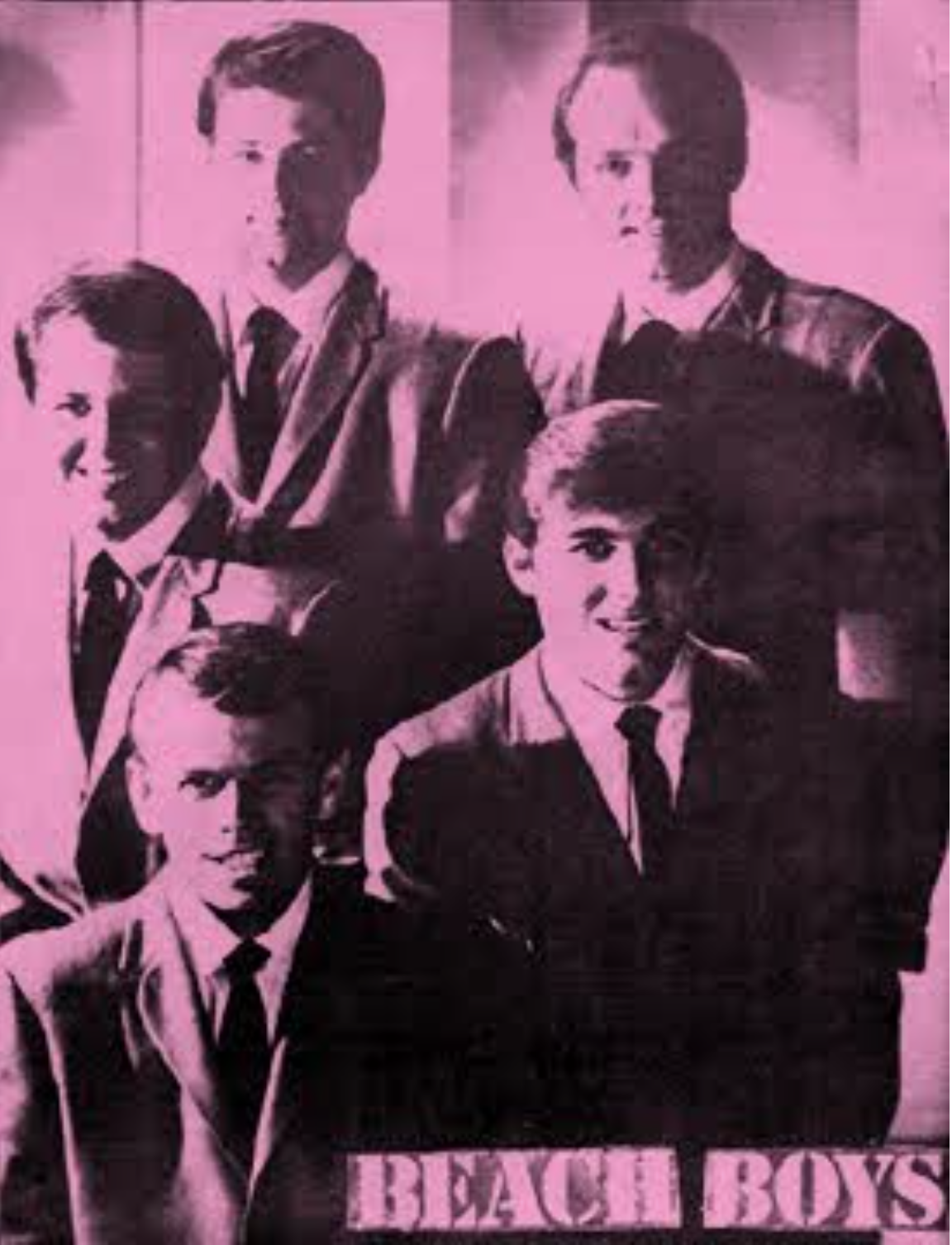
California plastic people came up with California plastic chord changes. Which meant sticking in a Bb before your G, and after your C. Jan and Dean, the Beachboys, as opposed to cooings in the East with shiny saxophones, California plastic concentrated on white twirps and falsetto chirps. (Sidewalk Surfin - the angel chorus- "shake your B. . .uns.") The cult of the celestial choir. There is no god and Brian Wilson is his son. Brian Wilson stirred up the chords. Deftly taking from all sources, old rock, Four Freshman, he got in his later records a beautiful hybrid sound, ("Let Him Run Wild," "Don't Worry Baby," "I Get Around," "Fun, Fun, Fun -- and she had fun, fun, fun till her daddy took her t-bird away"). Like demented unicorns the East went West, and, it, all, made, it. It wasn't really a long cry from such early classics as "Peppermint Stick" by the Elchords (in N.Y. there are stores which sell old rock records for as much as $500).
The old sound was alcoholic. Spirit high. In the early 50's and early 60's pot high music. We're already past the A head, acid tripper stage. But plastic. You can hear it in the music. You can get high on the music, straight. Music's never loud enough. Taxi drivers listen to the news and worry about muggings. You should stick your head in a speaker. Louder, louder, louder. Do it Frankie do it. Oh, how, how. Oh do it, do it. The glops are wearing your clothes now and listening. Someone should paint them in azure stripes and mail them somewhere. It's like holding your arm rigid in a furry black sweater, with your hand bent so it seems amputated. When you straighten it out you get a present on two counts.
Lou Reed (1942 – 2013) was an American musician and songwriter. He was the guitarist, singer, and principal songwriter for the rock band The Velvet Underground and had a storied solo career that spanned five decades. Despite minimal contemporary success, the Velvet Underground came to be regarded as one of the most influential bands in the history of modern music and Reed’s solo work was genre defying at each turn.
Film
<div style="padding:42.4% 0 0 0;position:relative;"><iframe src="https://player.vimeo.com/video/1117053092?badge=0&autopause=0&player_id=0&app_id=58479" frameborder="0" allow="autoplay; fullscreen; picture-in-picture; clipboard-write; encrypted-media; web-share" referrerpolicy="strict-origin-when-cross-origin" style="position:absolute;top:0;left:0;width:100%;height:100%;" title="A Rage to Live clip 3"></iframe></div><script src="https://player.vimeo.com/api/player.js"></script>

Iggy Pop Playlist
Iggy Confidential
Archival - February 2, 2025
Iggy Pop is an American singer, songwriter, musician, record producer, and actor. Since forming The Stooges in 1967, Iggy’s career has spanned decades and genres. Having paved the way for ‘70’s punk and ‘90’s grunge, he is often considered “The Godfather of Punk.”
Film
<div style="padding:54.17% 0 0 0;position:relative;"><iframe src="https://player.vimeo.com/video/1117050759?title=0&byline=0&portrait=0&badge=0&autopause=0&player_id=0&app_id=58479" frameborder="0" allow="autoplay; fullscreen; picture-in-picture; clipboard-write; encrypted-media; web-share" referrerpolicy="strict-origin-when-cross-origin" style="position:absolute;top:0;left:0;width:100%;height:100%;" title="Vertigo clip 2"></iframe></div><script src="https://player.vimeo.com/api/player.js"></script>