

Hannah Peel Playlist
Archival - September 4, 2025
Mercury Prize, Ivor Novello and Emmy-nominated, RTS and Music Producers Guild winning composer, with a flow of solo albums and collaborative releases, Hannah Peel joins the dots between science, nature and the creative arts, through her explorative approach to electronic, classical and traditional music.
Ian Rogers Interviews Rick
43m
9.5.25
In this clip, Ian Rogers speak with Rick about the parallels between vibe coding and punk rock.
<iframe width="100%" height="265" src="https://clyp.it/g44l0evw/widget?token=bbcd6386d04174478d080e508d369e8e" frameborder="0"></iframe>
Film
<div style="padding:74.48% 0 0 0;position:relative;"><iframe src="https://player.vimeo.com/video/1116074244?badge=0&autopause=0&player_id=0&app_id=58479" frameborder="0" allow="autoplay; fullscreen; picture-in-picture; clipboard-write; encrypted-media; web-share" referrerpolicy="strict-origin-when-cross-origin" style="position:absolute;top:0;left:0;width:100%;height:100%;" title="The 39 Steps clip"></iframe></div><script src="https://player.vimeo.com/api/player.js"></script>
Building with Music: Sound is a Spatial Force
Robin Sparkes September 4, 2025
Architecture and music offer distinct but interconnected ways of shaping space…
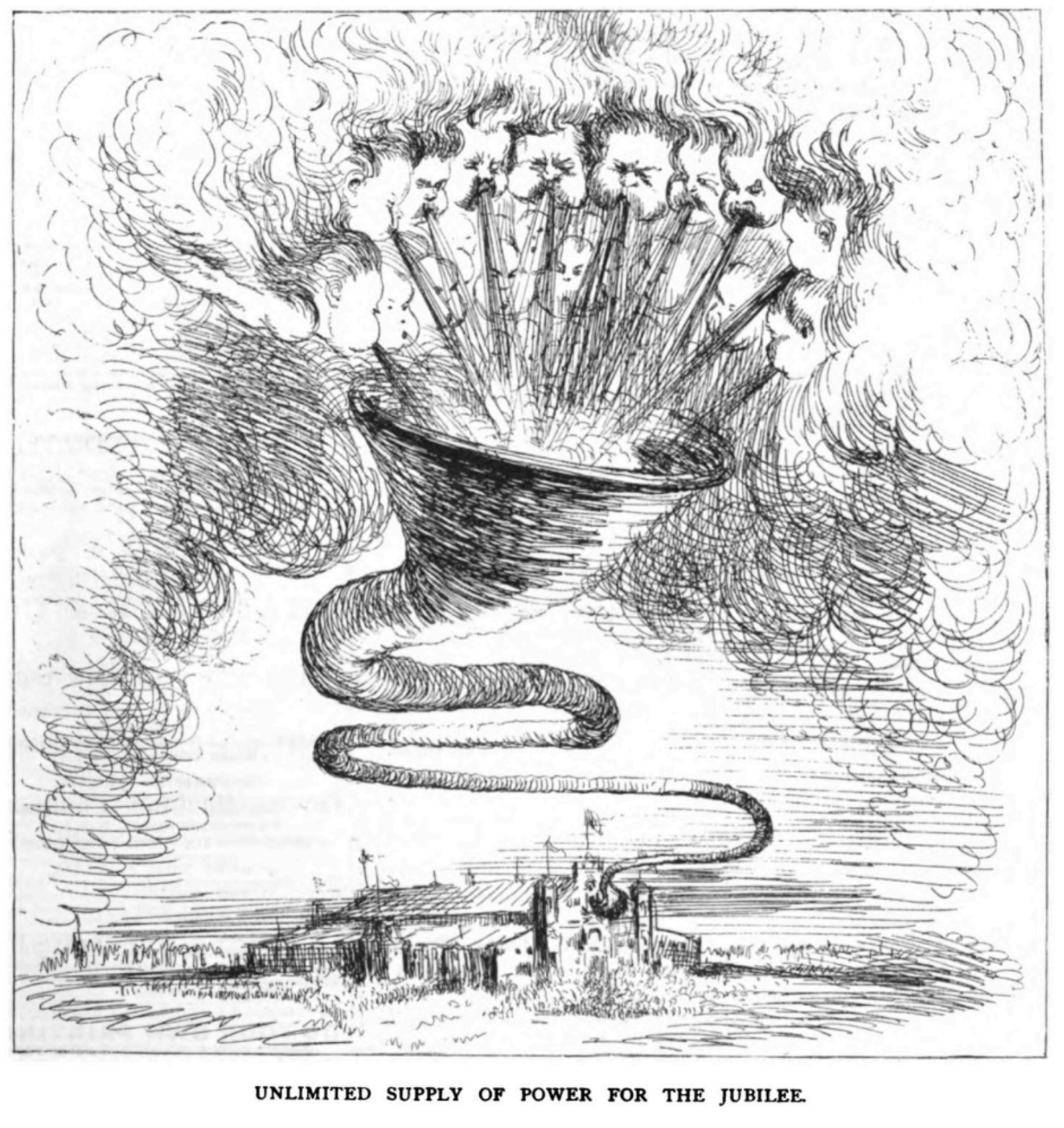
Promises for the 1872 Jubilee.
Robin Sparkes September 4, 2025
Architecture and music offer distinct but interconnected ways of shaping space. A building’s design directs how sound travels, influencing what people hear, how intensely they perceive it, and the atmosphere it creates. Music, on the other hand, constructs space from within, manipulating acoustic variables in real time. From recording in a bedroom, singing in a karaoke bar, performing in a warehouse or amphitheater, music has the power to transform how a space feels and how we move within it. Just as light waves can brighten a room, sound waves shape the emotional and atmospheric essence of a space.
We can shape the reverberation and resonance of a room by carefully positioning sound sources to guide how the sound unfolds. Subwoofer arrays and delay stacks allow us to synchronize sound across different areas and control how far the bass travels. Using EQ and level adjustments, we can direct the listener’s focus, concentrating frequency similarly to light waves, like a beam of sunlight cutting through a window to illuminate a single point in space. Bodies in a crowd act as moving absorbers and diffusers, continually reshaping the sound field. Through rhythm and spatialized playback, we can influence how these people move and connect, making circulation itself a medium in the psychoacoustic design of space. Sound design, then, acts as a form of spatial agency, granting us the power to reshape the architecture around us in real time.
Music changes how a space feels, the beat drives the room, making it feel entirely different than it would in silence. Sound waves bounce off surfaces, enter the body, and shift perception. A static building hosts sound, and when music activates its acoustics, the architecture responds in real time, becoming embodied and alive. Sound can be a tool for restructuring architecture and redefining our relationship to the environments around us.
Reclaiming Space: Underground Music
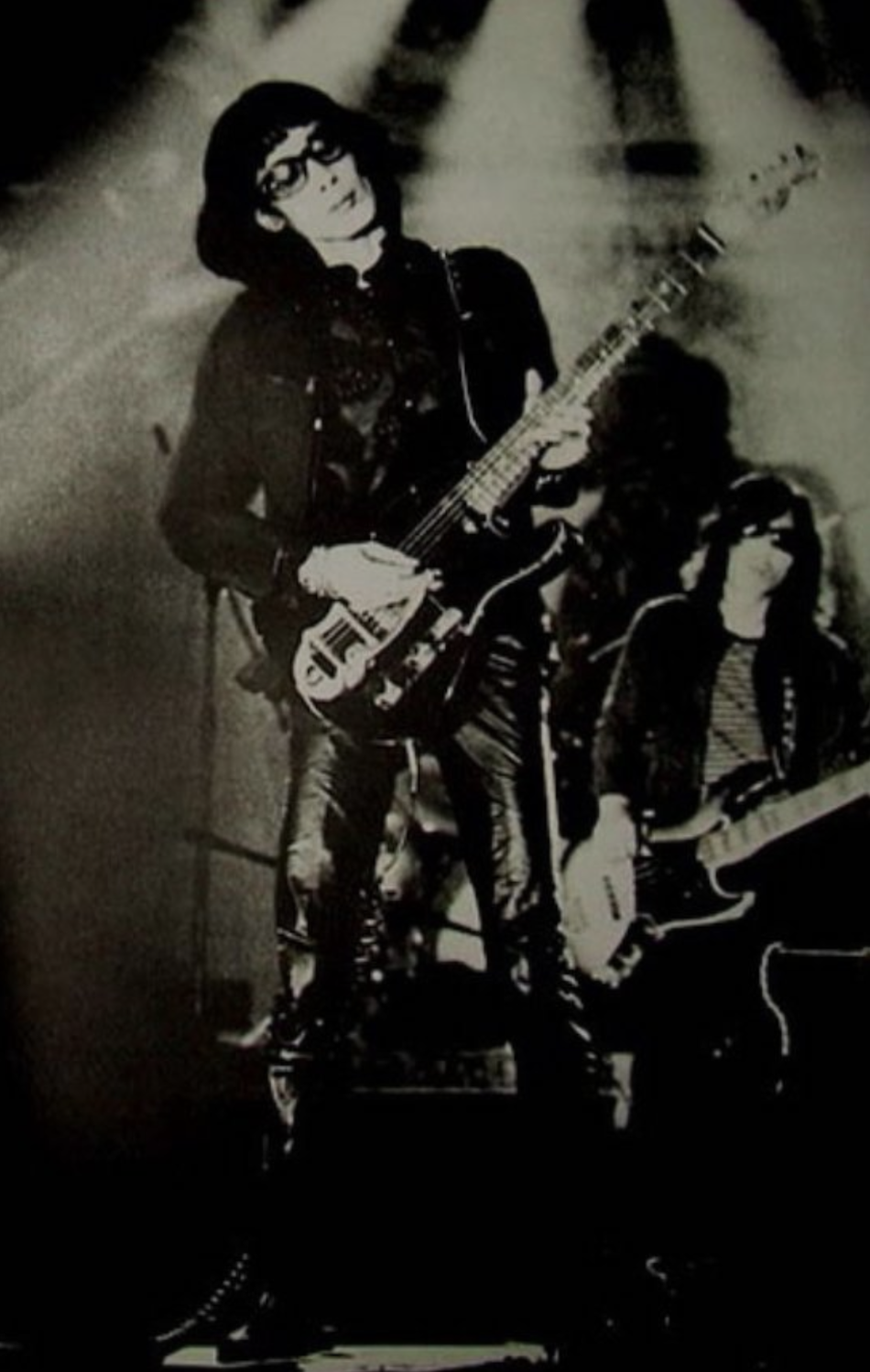
Les Rallizes Dénudés.
The acoustic elements of architecture often serve systems of bureaucracy and control. Underground music has the power to reclaim both historical and physical spatial narratives, turning architectural constraints into opportunities, transforming neutral or neglected spaces into sites of shared meaning and protest. By tuning into how music architects space through sound, we can engage in spatial activism to reaffirm presence, build community, and reimagine the built environment. Underground music reclaims space by asserting temporal agency, shaping how time is experienced and shared, and creating moments that resist permanence. A dance floor becomes a blueprint to reimagine the boundaries of time. The audience, moving as one, reshapes the space in real time.
Les Rallizes Dénudés, a psychedelic noise band that emerged in late 1960s Kyoto, were defined by their uncompromising use of volume and repetition in live performance. The only recordings they left behind came from these shows, where protest was enacted in real time and space. By rejecting mediated formats of releasing music, they made the audience’s presence inseparable from the music itself. Through this approach, Les Rallizes Dénudés transformed live performance into a spatial archive. Their music redefines agency by centering presence, activating space as part of the work itself, and imprinting sound directly into a collective experience.
In a similar way, through an evolving ensemble of musicians, performers, and visual artists, Parliament-Funkadelic activated space through collective rhythm. Working across Detroit, Washington D.C., and Philadelphia, they transformed venues into full sensory worlds. The Mothership was a structure of frequencies, basslines and layered harmonies constructing a space of communion.
George Clinton directed these experiences as both bandleader and maker of space. He expanded perception and invited participation into P-Funk's expansive sonic environments. In Good Thoughts, Bad Thoughts, Clinton offers a manifesto: “Every thought felt as true… blossoms sooner or later into an act and bears its own fruit.” In live performances Clinton points to a spatial principle of a “higher vibration”, where thought, sound, and growth are all forces that shape experience. His invocation of vibration echoes both acoustics and the metaphorical language of quantum theory, where energy and matter are understood as forms of oscillation.
Funkadelic used vibration to tune the room beyond the limits of sight. In Mothership Connection, Clinton’s chants and performances collapsed the boundary between artist and audience. As Gascia Ouzounian states, controlling sound is a way of controlling presence. P-Funk, however, designed presence as an open system—alive, communal, and bound together. This is the “higher vibration.
“Bowed fragments scrape into industrial resonance, while sustained tones blur into the hiss of air and the drone of engines. In this juxtaposition, nature and industry collide.”
In the early 1970s, Martin Rev and Alan Vega emerged from New York City's underground scene, pioneering a fusion of punk energy and electronic experimentation. Rev’s synthesizer, driven by an arpeggiator, generated a continuous cascade of notes, cycling through repeating patterns that created a hypnotic, trance-like effect, enveloping the audience. Rev’s drum machine pulsed with a heartbeat-like rhythm, imposing time on the audience while space seemed to collapse and expand around them. Vega’s presence on stage was commanding. His voice cut through the pulsating rhythm, turning individuals into subjects through the power of address, transforming the call into music itself and folding the audience into the performance. Through this hypnotic, repetitive beat, Rev and Vega cast spells over the spaces they performed in.
Reclaiming Space: Loud Sound

A Crowd Almost Dwarfed by Performers, National Peace Jubilee, Boston, June 1869.
Sound travels through the ear and floods the body with vibration. Depending on tone and frequency, it reflects, lingers, or presses against surfaces. Live performance can manipulate space through sound, creating environments where amplification and presence reorganize how bodies relate to one another. Tim Hecker expands this approach in his essay In the Era of Megaphonics (2007), tracing the rise of amplified sound from the 1880s onward. He examines how emerging technologies of the industrial revolution, such as megaphones, gramophones, and PA systems, transformed public address and performance. These tools shifted sound from embodied, proximate speech toward projected volume, redirecting attention from verbal meaning to sensory force. He situated this transformation within mass political rallies, religious revivals, and stadium-scale concert sites, in sound saturated space and intensified collective experience.
Amplification became a method for restructuring power relations, turning sound into an immersive field that conditioned behavior and expanded public presence. Distortion and amplification emerged as techniques for redrawing spatial experience. Hecker’s music practice and performances bring these principles to life, transforming venues into immersive soundscapes. His music employs deep drones, dissonant harmonies, and fluctuating frequencies to create a sense of vast, shifting space. Layered textures and industrial tones evoke tension and transcendence, while fog, darkness, and sustained sounds suspend time. In this way, Hecker sculpts space with sound, transforming the room into an instrument itself.
Reclaiming Space: Returning to Nature
Sound can trace the contours of the earth, bending industrial intensity toward the rhythms of wind, water, and foliage, shaping how we inhabit and feel the world around us. London-based artist Damsel Elysium’s music inhabits this intersection, weaving textures of industrial noise and the natural environment into sonic landscapes that reclaim both presence and place. Their work positions sound as a living medium, where body, space, and collective experience resonate together. Damsel reimagines the use of classical instruments, violin and cello, as tools for spatial experimentation. Beyond the traditional orchestral roles, these instruments become vehicles for evoking sounds of wind, machinery, and elemental textures. Bowed fragments scrape into industrial resonance, while sustained tones blur into the hiss of air and the drone of engines. In this juxtaposition, nature and industry collide.
Their performances extend beyond conventional venues into ritualistic encounters with natural environments. At Clandestino in Sweden, Damsel arranged flowers into a semicircle between themselves and the audience. The ritual culminated in the distribution of flowers to each participant, a gesture that carried the performance into the lives of the listeners. The ritual becomes a spatial act of reclamation, an invitation to experience the presence of nature together.
By blending the timbres of string instruments with industrial textures and natural soundscapes, Damsel activates a living dialogue between ecological memory and urban sound. Their work proposes new ways of feeling powerful in space through communion with the environment. Sonic environments, older than human architecture and music, remind us that sound has always been building the world around us.
Robin Sparkes, is a spatial designer, studying the kinesthetic experience of architecture. Her design, research, and writing practice traverses the relationship between the body, temporality, and the acoustics of space.
Film
<div style="padding:56.25% 0 0 0;position:relative;"><iframe src="https://player.vimeo.com/video/1116071211?badge=0&autopause=0&player_id=0&app_id=58479" frameborder="0" allow="autoplay; fullscreen; picture-in-picture; clipboard-write; encrypted-media; web-share" referrerpolicy="strict-origin-when-cross-origin" style="position:absolute;top:0;left:0;width:100%;height:100%;" title="Acting Shakespeare - The Two Traditions clip 8"></iframe></div><script src="https://player.vimeo.com/api/player.js"></script>
Ian Rogers
1h 33m
9.3.25
In this clip, Rick speaks with Ian Rogers about the tension and release of music and the brain’s response to it.
<iframe width="100%" height="265" src="https://clyp.it/wriixevf/widget?token=69c36f55bd0219060e373fe608f813ec" frameborder="0"></iframe>
Film
<div style="padding:75% 0 0 0;position:relative;"><iframe src="https://player.vimeo.com/video/1116064518?badge=0&autopause=0&player_id=0&app_id=58479" frameborder="0" allow="autoplay; fullscreen; picture-in-picture; clipboard-write; encrypted-media; web-share" referrerpolicy="strict-origin-when-cross-origin" style="position:absolute;top:0;left:0;width:100%;height:100%;" title="Mighty Joe Young clip 1"></iframe></div><script src="https://player.vimeo.com/api/player.js"></script>
Review of the Arts and Crafts (1898)
Adolf Loos September 2, 2025
We have a new decorative art. It cannot be denied…

Wandbehang mit Alpenveilchen, Hermann Obrist. 1896.
Ten years before Adolf Loos published the seminal essay ‘Ornament and Crime’ that came, in a way, to be the defining text of modernism, he wrote an early critique of the burgeoning arts and craft movement that laid the foundation of his theories. With sharp wit and cultural insight, he argues that true modernity lies not in ornate symbolism or medieval nostalgia, but in functional beauty rooted in classical ideals and material honesty. Modern design must, he says, reflect modern existence, and the Art Nouveau movement that was sweeping his native Austria seemed to him to look backwards. More than twenty years before the Bauhaus school implemented his ideas, here Loos makes a powerful case for a restrained, purposeful, utilitarian design that reflects the genuine spirit of the time.
Adolf Loos September 2, 2025
We have a new decorative art. It cannot be denied. Whoever has seen the rooms of Liberty’s furniture store in London, Bing’s L’Art Nouveau on Rue de Provence in Paris, last year’s exhibition in Dresden, and this year’s in Munich, will have to admit it: the old styles are dead, long live the new style!
And yet we cannot take pleasure in it. It is not our style. Our time did not give birth to it. We do possess objects that clearly display the stamp of our time. Our clothing, our gold and silver jewelry, our gems, our leather, tortoise shell, and mother-of-pearl goods, our carriages and railroad cars, our bicycles and locomotives all please us very well. Only we do not make so much of a fuss about them.
These things are modern; that is, they are in the style of the year 1898. But how do they relate to the objects that are currently being passed off as modern? With a heavy heart we must answer that these objects have nothing to do with our time. They are full of references to abstract things, full of symbols and memories. They are medieval.
But we are beyond this epoch. Since the decline of the Western Roman Empire there has been no era that has thought and felt more classically than ours. Think of Puvis de Chavannes and Max Klinger! Has anyone thought more Hellenistically since the days of Aeschylus? Look at the Thonet chair! While subtly embodying the sitting habits of a whole era, it is not born out of the same spirit as the Greek chair with its lavish levels and at its backrest? Look at Louis Seize! Had the spirit of Pericles’ Athens not waft through its forms? If the Greeks had wanted to build a bicycle, it would have been exactly the same as ours. And the Greek tripods of bronze—I am not talking about those given as Christmas presents, but rather those that were used—they do not look exactly like our iron products?
But it is not Greek to want to express one’s individuality in the objects with which one surrounds oneself and which are in daily use. In Germany one sees the greatest variety of clothing; thus of all the civilized peoples, the Germans are the ones least filled with the Greek spirit. The Englishman, however, has only one outfit for a particular occasion, one box, one piece. To him the best is the most beautiful. Thus, filled like Greek, he chooses the best chair, the best box, and the best bicycle. Modifications in form arise not from a desire for novelty, but rather from the wish to make the good more perfect. Yet it is the boldest of our age to produce not a new chair, but the best chair.
However, in the exhibitions referred to, one saw only new chairs. The best chair will not be able to make any great claims to newness. For even ten years ago we had quite comfortable chairs, and the technique of the bent-wood chair, which helps man, has not changed so very much since then that it could also already be expressed in a different form. The improvement will not be something that no expert will be able to recognize. They will be limited to the millimeters of the millimeters in the dimensions or the grade of the wood. How difficult it is to build a truly new chair! How easy it is to invent a new chair! There is a very simple formula: make a chair that is exactly the opposite of that which has been made.
“The level of culture that mankind attained in classical antiquity can no longer be reached back to from man’s mind.”
In Munich, an umbrella stand was displayed which can probably best demonstrate what I have said concerning the abundant references and the medieval aspect of utilitarian objects. If it had been the task of the Greek or the Englishman to fashion such a stand, the first thing he would have thought about was to provide a good place for umbrellas to stand in. He would have reflected that the umbrellas ought to be able to be put in easily and taken out easily. He would have reflected that the umbrellas should not suffer any damage and that the covering material of the umbrella should not permit one to get stuck anywhere. But the non-Greek, the German, the average German, would do otherwise. For him, non-considerations take a back seat. The main thing for him is to point out the relationship of this object to the urn by means of its decorative form. Water plants twine their way from bottom to top, and each plant sits a frog. It does not trouble the German that the umbrellas can be ripped quite easily on those sharp leaves. He allows himself perfectly contentedly to be abused by his surroundings—as long as he finds them beautiful.
The level of culture that mankind attained in classical antiquity can no longer be reached back to from man’s mind. Classical antiquity was and is the model of all subsequent periods of culture. But there was cross-fertilization from the Orient that formed the greatest reservoir out of which new harvests of development flowed into the West. It almost seems as if Asia has bequeathed to us forever the last remains of her emotional strength. For we have already had to reach back to the furthermost points of the East, to Japan and Polynesia, and now we have come to an end. How good the Middle Ages had it! The Orient lay there still unexploited, and a voyage to Spain or to the Holy Land was enough to open up new worlds of form for the West. Arab influences transformed the nascent spirit of the West into the Gothic. The masters of the Renaissance had to reach out still further. They conquered Persia and India for us. Think of the Persian carpets without which no portrait of the madonna from this period is complete, and of the German artists and damascene work. The Rococo had to go as far as China; for us, only Japan still remains.
Now what is Japanese about our view of art? “That is a charming dress you are wearing, Madam. But what do I see? The one sleeve has a bow and the other one doesn’t. It’s very Japanese. You have a charming bowl of flowers in your vase. Nothing but long-stemmed flowers: roses, lilies, chrysanthemums. That’s Japanese too. If one wanted to appear truly immersed in favored Japan, we would find this kind of arrangement unbearable. Just ask the peasant girl on the Summe-ringo: she has never heard of Japan. And the peasant girl in her home always in an un-Japanese way. One part big in the middle, and then the others such as in a circle all around it. She finds it pretty.
In the first place, then, “Japanese” means giving up symmetry. Next, it means giving up everything that is represented. The Japanese represent flowers, but they are pressed flowers. They represent people, but they are wax people. It is a kind of objectivity taken to its extreme that cannot become subjective. But at the same time a naturalism is maintained. This is above all the world of embroidery, and it has to be one readily to anyone who delights in naïve textiles. I think of the inexpressibly charming embroidery by Hermann Obrist, for example, whose enthusiasm for Japanese art also, achieves his results.
The September issue of the leading arts and crafts paper Art et Décoration gives an account of a conversation in Paris between a reporter and René Lalique. Lalique, who is one of the greatest goldsmiths in Paris, has the courage to view the excessive use of artistically wrought form and not through materials. He uses copper to look especially distinguished and he adorns it with glass, opals, and even carnelians. This is inspiring. And yet he is wrong. In spite of the brave form, the spirit his objects is not derived from our own spirit; instead they gravitate toward the fifteenth and sixteenth centuries. They remind us of rustling silks and heavy velvets, rich furs and stiff brocades. It is the world of Charles V and Maximilian, the last knights, which suddenly appears before our eyes. But Lalique’s jewelry looks quite strange in the age of the lightly fluttering silk dress, in the age of the starched shirtfront and black tails. Who would not like them? But who would want to wear them? The pleasure they excite is only platonic. Our age demands small jewelry—jewelry that represents the greatest possible value on the smallest possible area. Our age requires of jewelry that it have “distilled costliness,” an “essence of the magnificent.” For this reason the most valuable stones and materials will be used in our jewelry. The jewelry’s meaning lies for us in the material. Thus, artistic work must content itself with bringing out the material’s worth as much as possible. In jewelry that is to be worn, the work of the goldsmith takes only second place. Lalique’s jewelry is real display-case jewelry, made as if to fill the treasury of a patron of the arts, who then graciously invites the public to admire the magnificent things in his museum.
Adolf Loos (1870–1933) was an Austrian architect, writer, critic and theorist known for his staunch opposition to ornamentation in design and his role in shaping modernist architecture. His landmark essay Ornament and Crime argued that decorative excess was a sign of cultural degeneration, helping to define the functionalist ethos of the 20th century.
Film
<div style="padding:56.25% 0 0 0;position:relative;"><iframe src="https://player.vimeo.com/video/1114463823?badge=0&autopause=0&player_id=0&app_id=58479" frameborder="0" allow="autoplay; fullscreen; picture-in-picture; clipboard-write; encrypted-media; web-share" referrerpolicy="strict-origin-when-cross-origin" style="position:absolute;top:0;left:0;width:100%;height:100%;" title="Carlo Rovelli on The Order of Time clip 4"></iframe></div><script src="https://player.vimeo.com/api/player.js"></script>
Gain, the Nine of Disks (Tarot Triptych)
Chris Gabriel August 30, 2025
The Nine of Disks is where the fruits of our labors are made manifest in their glory…
Name: Gain, the Nine of Disks
Number: 9
Astrology: Venus in Virgo
Qabalah: Yesod of He
Chris Gabriel August 30, 2025
The Nine of Disks is where the fruits of our labors are made manifest in their glory. We are finally reaching the harvest -what was worked for throughout the suit, and invested properly in Prudence, now begins to reap rewards.

In Rider, we see a noblewoman in a long flowing yellow gown covered in red flowers. She wears a red bonnet and a falconer’s gauntlet, atop which is perched a small falcon with a red blinder. She stands in her full and fantastic vineyard, and by her feet there are nine disks.

In Thoth, we have three central disks, interlinking in red, blue, and green to form Crowley’s phallic and solar seal. Below there are three coins which bear the planetary Gods: Mercury, Venus, and the Moon. Above are Jupiter, Saturn, and Mars. The background is a deep emerald green. This card is given to Venus in Virgo, a careful approach to love and creation.

In Marseille, we have one central disk between two blocks of four disks. Two flowers with closed blossoms emerge from the center, ready to spread out. Qabalistically, this is the Foundation of the Princess.
The Nine of Disks is perhaps the most pleasing point in the suit;we’ve been working for a great deal of time, and now we see the great bounty in sight. This is the pleasure of a Friday, the final day of work before the freedom of the weekend.
As Venus in Virgo, the card relates to caution and criticality in love. Consider the scrutiny a farmer has when looking through the harvest; he must discard what is moldy, spoiled, or otherwise wrong. This is how a Virgo Venus approaches relationships, with an intelligent, seemingly uncaring eye. They will pick someone apart before they can give themselves over to love.
This careful, difficult process is what allows us to enjoy the fruits of the harvest - no one wants to eat bread filled with ergot or wine made of spoiled grapes. Gain represents both quantity and quality. It has done the work to increase the harvest, and has the taste to ensure its goodness.
Though we can expect some great benefits when this card appears, we must also keep our wits about us. Here a great deal of old phrases come to mind: a bad apple spoils the bunch, don’t put all your eggs in one basket, don’t count your chickens before they hatch. These phrases emerge from the rational, agricultural mindset which is embodied perfectly in this card.
When we pull this card, we will be entering a harvest period, whether this is beneficial or not depends entirely upon what we have sewn. Sow the wind and harvest the whirlwind, the wages of sin are death. If we have been diligent in our labor, we will be rewarded here.
Film
<div style="padding:56.25% 0 0 0;position:relative;"><iframe src="https://player.vimeo.com/video/1114461625?title=0&byline=0&portrait=0&badge=0&autopause=0&player_id=0&app_id=58479" frameborder="0" allow="autoplay; fullscreen; picture-in-picture; clipboard-write; encrypted-media; web-share" referrerpolicy="strict-origin-when-cross-origin" style="position:absolute;top:0;left:0;width:100%;height:100%;" title="Moonwalk One - Animation"></iframe></div><script src="https://player.vimeo.com/api/player.js"></script>
Timothy Leary's Model of Consciousness
Molly Hankins August 28, 2025
While Timothy Leary was in and out of prison during the early 1970s, his friend and collaborator Robert Anton Wilson began expanding on Leary’s Eight-Circuit Model of Consciousness, which he published in multiple books the following decade…

Graphic for a Psychedelic Session led by Leary, 1965.
Molly Hankins August 28, 2025
While Timothy Leary was in and out of prison during the early 1970s, his friend and collaborator Robert Anton Wilson began expanding on Leary’s Eight-Circuit Model of Consciousness, which he published in multiple books the following decade. Two of these, Prometheus Rising and the Cosmic Trigger series, use this model to describe the evolution of our species from mortals to higher dimensional selves. Humans move, Leary tells us, from a baseline Bio-Survival Intelligence that helps us stay alive into more refined states of being with a greater capacity for information sharing, creating and processing. According to Wilson, as information and understanding increases, humanity draws closer to a critical mass of self-awareness where we can begin to override our conditioning and experience true free will.
Wilson describes the Bio-Survival Circuit as part of our DNA programmed to, “seek a comfort-safety zone around a mothering organism.” This circuit of consciousness orients us to what is supportive and nourishing and keeps us away from what is predatory or toxic. Born from ancestral survival strategies, this circuit first expresses in infancy to encourage bonding with the adult humans around us who can keep us alive. When we mature into adulthood, we can easily be brought back into this circuit when our nervous system is stimulated to produce the same state of fear we experienced as helpless infants. The results are predictable, robotic responses that make us incredibly easy to manipulate. Wilson wrote in Prometheus Rising, “A man or woman entering a new situation with the anxiety chemicals of a frightened infant coursing through the brain stem is not going to be able to accurately, observe, judge or decide anything very accurately.” As long as we allow our nervous systems to be negatively influenced, we can’t access free will.
In modernity, we instead of looking to interpersonal relationships to soothe our nervous systems from survival anxiety, we instead look to money. This brings us into the second circuit of hierarchy determined by our perception of territory associated with the ‘ego’. Known as the Emotional Territorial Circuit, in this level of consciousness money is a form of territory and the scarcity of it can keep us locked in these lower circuits.This imprint often comes from and is triggered by a father figure, or the lack thereof. According to Wilson and Leary, intergenerational DNA mutations take place based on imprinting we get as children that affects our nervous system in a way that conditions behavior. If we get stuck on this circuit, we lock in a territorial mindset of protecting ourselves from scarcity.
The third circuit is the Semantic Intelligence Circuit, which maps our reality tunnel and informs what is possible or not. These include language, concepts, tools, art, theories, equations, music, or poetry and all wind up informing our internal monologue somehow. “The Semantic Circuit allows us to sub-divide things, and reconnect things, at pleasure. There is no end to its busy-busy-busy labeling and packaging of experience,” Wilson writes of the third circuit. At this level of consciousness, we’re still easily manipulated because our reality tunnel can be reoriented by activating the Bio-Survival Circuit using fear. We update our map based on information gleaned from a dysregulated nervous system operating on first circuit consciousness data. Our range of responses shrinks and we begin to see the world through the lens of our wounding, which we’re revisiting every time our nervous system is dysregulated.
We can begin to break out of this strange loop at the semantic level by consciously updating our reality tunnel map, which expands our perception and propels us forward. The first and second circuits run on negative feedback as a precursor to returning to stasis, whereas at the third, semantic level we’re enriched by tailoring our perception of reality to meet our needs. This creates a forward propulsion out into the world and brings us to the next circuit -Socio-Sexual Intelligence. This is imprinted in adolescence and creates connection with others from either a regulated or dysregulated state. At this level, dysregulation can express itself in more covert ways, like being overly rational or moralistic. As Wilson wrote in Cosmic Trigger II, “Socio-Sexual Intelligence allows us to manage our social and sexual relations in ways that keep us reasonably happy or at least out of jail.” We learn how to get what we want on this circuit, hopefully in healthy ways.
“Operating on all eight circuits is an integration of body, mind, spirit and emotions that gives us the regulated state Hermeticists agree is necessary for successfully influencing reality.”
As we update our reality tunnel map in ways that help us get what we want, we become more difficult to manipulate. The fifth, Holistic Neurosomatic Circuit processes mind-body feedback loops and is imprinted throughout our lives by heightened states of awareness, whether ecstatic or fearful. We can manipulate our state of being to our advantage, moving beyond negative Emotional Territorial reactivity to a level of consciousness where we can select our preferred state of being from the platform of a regulated nervous system. This necessary mutation activates a new era of humanity that appears supernatural, but learned nervous system regulation represents a leap in evolution at the neuro-social level.
At the sixth Collective Neurogenetic Circuit, we come in contact with the Akashic Records, which holds the ancestral data informing our genetic expression. Wilson writes, “The Neurogenetic Circuit is best considered, in terms of current science, as the genetic archives activated by excitement of anti-histone proteins - the DNA memory coiling back to the dawn of life and containing all the genetic blueprints for the future of evolution.” At this level we remember the Creator through ancestral knowing that connects us to higher consciousness. It can come in the form of a spontaneous spiritual experience or from knowing that all of life is connected, from a work of art, meditation, being in nature or a heartfelt message, and the knowledge will stick with us if we spend enough time in sixth circuit consciousness.
At the seventh circuit level of Meta-Programming Intelligence, we learn to re-imprint ourselves so we can choose our preferred reality tunnel. We tune into specific circuits from this level and utilize them to our advantage. Instead of being trapped in the reality tunnel our brain has manufactured, we can imagine how we want it to be and tell our brain that story to program it accordingly. “The Meta-Programming Circuit, known as the soul in Gnosticism… simply represents the mind becoming aware of itself,” Wilson states, distinguishing the soul from our human self. “Simply accept that the universe is so structured that it can see itself, and that this self-reflexive arc is built into our frontal lobes, so that consciousness contains an infinite regress, and all we can do is make models of ourselves making models. Well, at that point, the only thing to do is relax and enjoy the show.”
As our soul kicks back to enjoy the human show, we enter the eighth and final Non-Local Quantum Intelligence Circuit and learn to consciously affect life at the subatomic level. Call it magic, magick, manifestation, or mystical experience, but Wilson calls it being able to affect reality on a meta-physiological level. Non-Local Quantum Intelligence Circuit activation can be brought on by near death or out-of-body experiences, and sometimes can be activated by psychedelics. To really work with it is to have agency in affecting reality to conform to our will, which is the definition of magic. Operating on all eight circuits is an integration of body, mind, spirit and emotions that gives us the regulated state Hermeticists agree is necessary for successfully influencing reality. Paradoxically, by existing in this detached way, we create the right conditions to materially affect our lives.
Towards the end of Prometheus Rising Wilson reminds us, “It is more fun to be happy than sad, more enjoyable to choose your emotions than to have them inflicted upon you by mechanical glandular processes, more pleasurable to solve your problems than to be stuck with them forever… The future exists first in imagination, then in will, then in reality.” And as we take responsibility for curating our reality tunnel and map, we experience true free will.
Molly Hankins is an Initiate + Reality Hacker serving the Ministry of Quantum Existentialism and Builders of the Adytum.
Film
<div style="padding:42.4% 0 0 0;position:relative;"><iframe src="https://player.vimeo.com/video/1114460104?badge=0&autopause=0&player_id=0&app_id=58479" frameborder="0" allow="autoplay; fullscreen; picture-in-picture; clipboard-write; encrypted-media; web-share" referrerpolicy="strict-origin-when-cross-origin" style="position:absolute;top:0;left:0;width:100%;height:100%;" title="A Rage to Live clip 2"></iframe></div><script src="https://player.vimeo.com/api/player.js"></script>
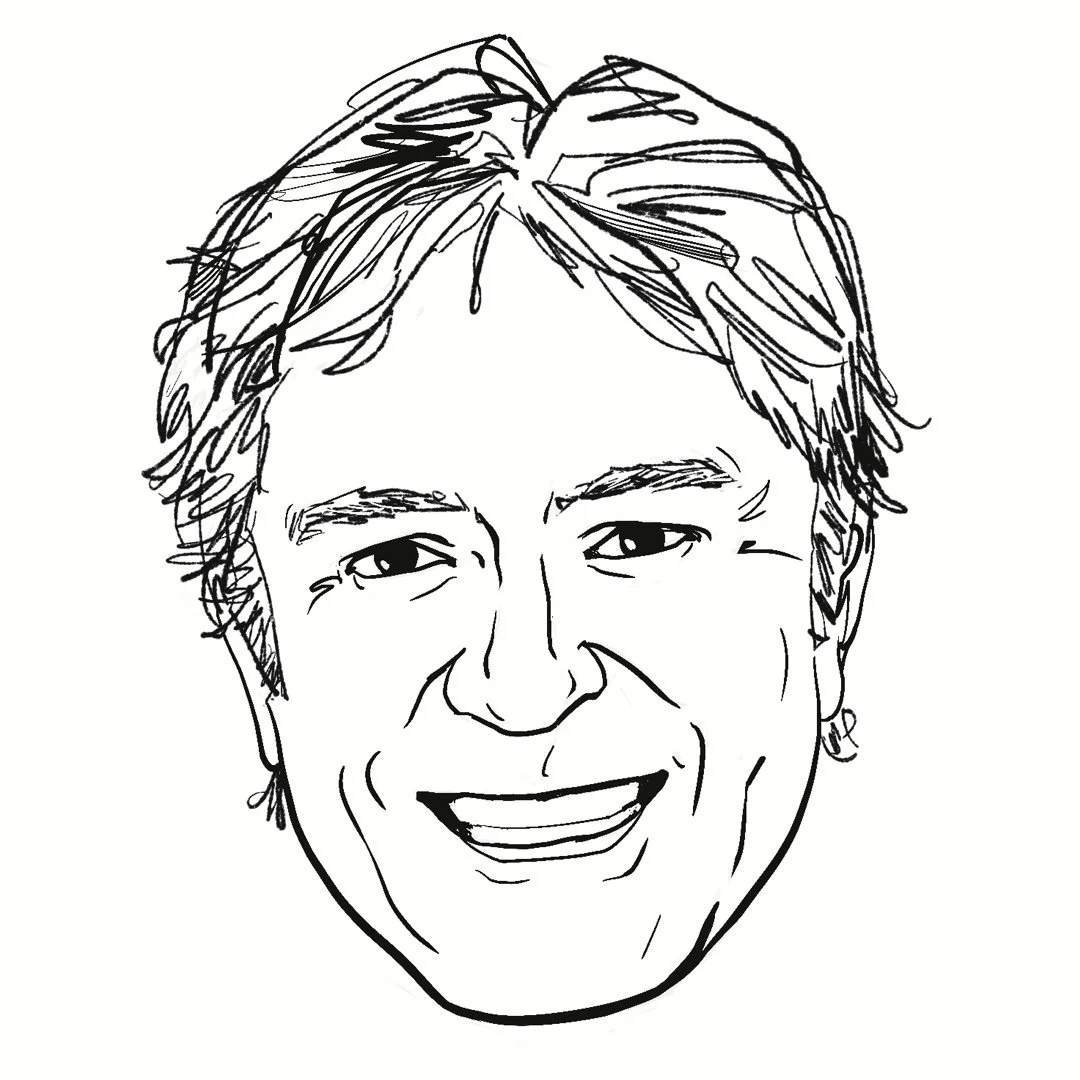
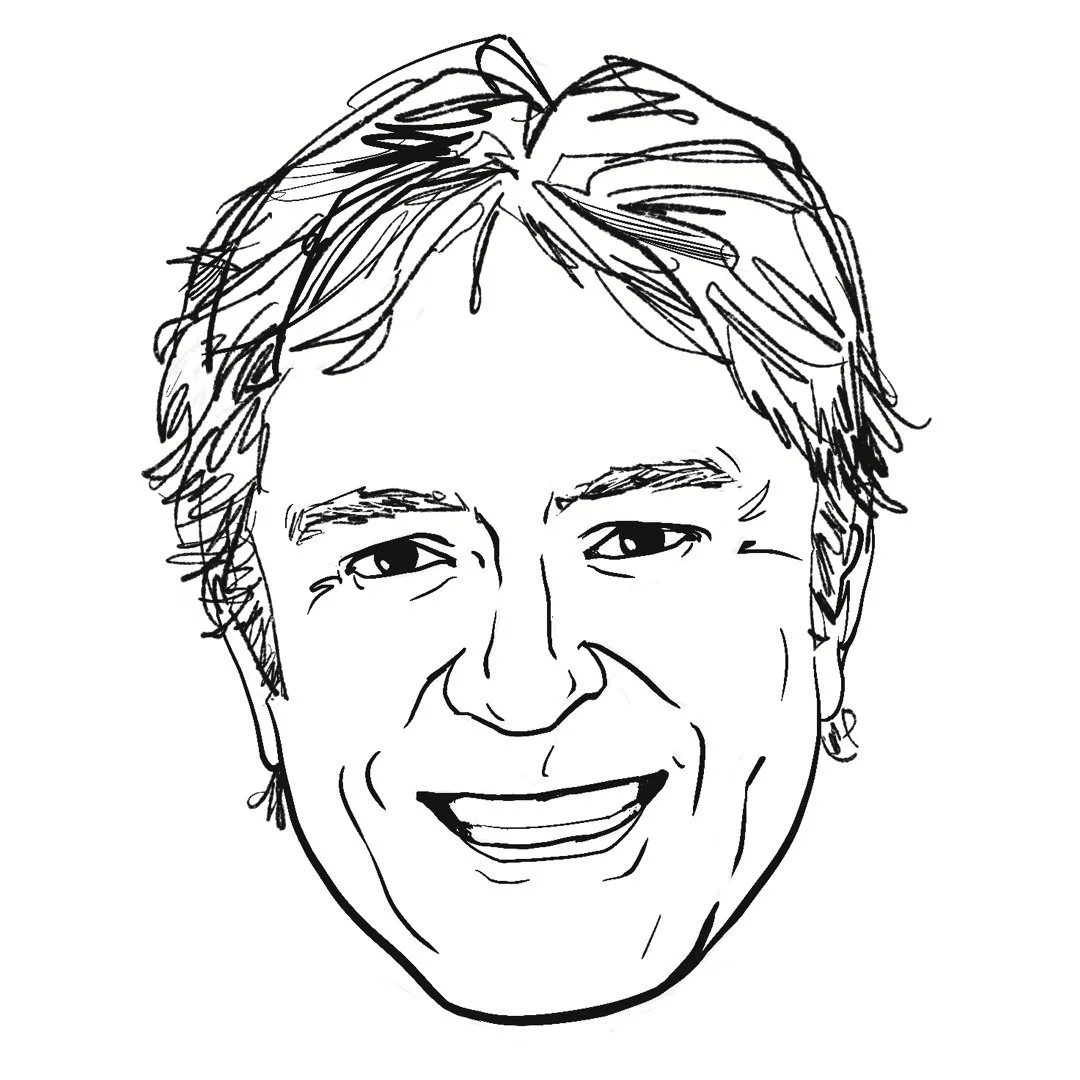
Randall Wallace
1h 52m
8.27.25
In this clip, Rick speaks with Randall Wallace about an example of balancing humbleness with confidence.
<iframe width="100%" height="265" src="https://clyp.it/f1mgxmat/widget?token=4a203a5c29da570895db9d6fd161ac59" frameborder="0"></iframe>
Film
<div style="padding:75% 0 0 0;position:relative;"><iframe src="https://player.vimeo.com/video/1113198072?badge=0&autopause=0&player_id=0&app_id=58479" frameborder="0" allow="autoplay; fullscreen; picture-in-picture; clipboard-write; encrypted-media; web-share" referrerpolicy="strict-origin-when-cross-origin" style="position:absolute;top:0;left:0;width:100%;height:100%;" title="Firing Line clip 4"></iframe></div><script src="https://player.vimeo.com/api/player.js"></script>
A Forager’s Take on Fairytales Pt. 1
Izzy Johns August 26, 2025
Long ago in Drumline, County Clare, in the late 19th Century, an old farmer and his wife huddled for warmth in a mud hut…
Izzy Johns August 26, 2025
Long ago in Drumline, County Clare, in the late 19th Century, an old farmer and his wife huddled for warmth in a mud hut. Many a cold winter passed, and finally, the man agreed to build his wife a house of bricks and mortar.
He set to work the following Spring. Not a day had passed when the old man received a visit from a traveler, who spoke these words:
“I wouldn’t build there if I was you. That’s the wrong place. If you build there you won’t be short of company, whatever else.”
The old man paid him no mind, but sure enough, the moment he and his wife lay down to rest in their new home, they were plagued by noise and disruption. Furniture was knocked over, cutlery strewn across the floor, crockery smashed. They couldn’t get a wink of sleep. But, as sure as day, whenever they went to investigate, they found nothing and no one. The old couple sought the help of the local preacher, who recognised this as the work of the Sidhe, the Little Folk of this land. He tried to exorcize the house, but to no avail.
After five sleepless nights, the man wearily set off to the market to sell their cows. It was the Gale day, the day that their rent was due, and money was sparse. English colonisers had seized land from the Irish farmers some years before. Now they were renting it back to them, and the rent was high.
The old man got a fair price for the cows, and he stopped at a roadside pub on the way home. It was there that he encountered the traveler once again. In desperation, the man begged the traveler for advice. He would do anything so that the Little Folk would let him rest. The traveler walked him home, and took him to stand in the yard, on the far side of the house.
He said:
“Now, look out there and tell me what you see.”
[…] “The yard?”
“No,” he says, “look again.”
“The road?”
“No. Look carefully.”
“Oh, that old Whitethorn bush? Sure, that’s there forever. That could be there since the start o’ the world.”
“D’you tell me that now?”
The old man walked out to the gable o’ the house, called [him], then says, “come over here.”
He did.
“Look out there, and tell me what do you see?”
He looked out from that gable end, and there, no farther away than the end o’ the garden, was another Whitethorn bush, standing alone.
“Now,” says the old man, “I told you. I warned you. The fairies’ path is between them bushes and beyond. And you’re after building your house on it.”
Upon the instruction of the traveler, the man built two doors in either side of the house, in line with the Whitethorns. From then on, the Little Folk had a clear passage, and the man and his wife were not bothered again.¹
“The higher you climb, the further you travel, the greater the view”

British Goblins, 1880. Wirt Sikes.
I was very struck by this account. It feels different to the rich, meandering folk-tale jewels I love so much, that are wrapped in mythos and allegory. Instead, this tale falls into the realm of family and community stories, that are still “lived in”, in this case, by the old couple’s grandson, who told this story to Eddie Lenihan in the living room of the very same house. He said that he still leaves the two doors ajar each night so as to let the fairies pass. There’s no use in locking them, he says, for they’ll only be open again by the morning.
Make no mistake, this story is not hearsay. A book of fairy tales might read like a book of fiction, but it isn’t. What we see in this tale, and so many others like it, is a relic of a complex faith system from times gone by, and it’s important that we storytellers hold it in that way. This story comes from Ireland, where the fairies are called Sídhe, or Sí, though often called by euphemisms to avoid catching their attention. The Sidhe are the descendants of the people of Danu, the Tuatha Dé Danann, a race of fallen Gods and Goddesses that dwell in the liminality between our world and the otherworld, the An Saol Eile. It’s only fair to acknowledge their providence, not least is it a crucial act of cultural preservation.
Fairies have a range of habitats depending on where you are live. In Ireland, they are particularly fond of two places: a lone Whitethorn (Hawthorn) tree, and the forts - those grand, grassy mounds of earth, often covered in a greater diversity of wild plants than their surroundings. In this tale, the old couple has disturbed not a habitat, but a passage between habitats. More savvy builders would have driven four hazel rods into the ground, marking out the proposed foundations of the house. If by the next day any rod had moved, the house should be built elsewhere.
The fairies in this story star in a role that I’ve seen in countless tales; defending their habitat from ecological destruction. Here, they were able to communicate with the intruders and resolve the problem quickly. It’s a good thing that the old couple were forthcoming. Fairies will always give warnings, but it’s perfectly within their power to cause grave suffering if those warnings aren’t heeded. They can be at best didactic and at worst violent, but they have no interest in troubling a person who isn’t troubling them. I can’t condone the violence, but I marvel at how proficient they are at protecting and stewarding the land. Plus, they greatly enrich the ecosystem. Various tales see fairies fertilizing soil for generous farmers, and producing abundances of wildflowers and fungi. It’s said that the rings of mushrooms we see in woodlands and meadows are where they’ve danced.

The Intruder, c.1860. John Anster Fitzgerald.
Thinking about this with an Ecologist’s gaze, fairies are a fascinating species. They might well be a larger genus with loads of regionally-specific variants like small people, spriggans, buccas, elves, bockles and knockers, browneys, goblins, dryads, gnomes and piskies. There’s a wealth of anecdotal evidence of their existence, thousands and thousands of stories, stretching back millenia, yet we’ve never successfully captured and studied them. Perhaps what makes this species most unique is their ability to outwit ours. Their cunning gently prods at our human arrogance, contesting our claim to be the most “developed” of species.
Far less frequently in the UK do we hear tales of the Little Folk interfering with larger property developments. In London, for example, you’ll scarcely come across a piece of land that hasn’t been leveled ten times over, and most Whitethorns are confined to cultivated hedges. I wonder how many forts have been destroyed in my neighborhood. Our lack of understanding of the fairies’ life cycles and physiology makes it pointless to speculate on why larger builds don’t experience ramifications from the little folk. It’s hard not to wonder if heavy machinery, giant crews of contractors and big blocks of hundreds of dwellings haven’t been too much for the fairies to contend with. I hate to think that, unbeknownst to us, urbanization might have wiped them out. If fairies are still around, it’s clear that they’re gravely endangered.
If this is the case, then it makes fairies one of over two million species under threat of extinction. It’d be such a shame if these creatures, these stories, and the feelings that they represent, disappeared altogether. I love this tale for giving us such a tangible example of humans making space for fairies and subsequently managing to co-exist peacefully. The fairies in this story are model land guardians, and from that we humans have a lot to learn.
Izzy Johns is a forager and storyteller. She teaches foraging under the monicker Rights For Weeds and manages the Phytology medicine garden in East London. You can find her work on Substack [rightsforweeds.substack.com] and Instagram [instagram.com/ rightsforweeds] .
¹As recounted to Eddie Lenihan in 2001 by the couple’s grandson, recorded in ‘Meeting the Other Folk…”
Film
<div style="padding:42.5% 0 0 0;position:relative;"><iframe src="https://player.vimeo.com/video/1113177686?badge=0&autopause=0&player_id=0&app_id=58479" frameborder="0" allow="autoplay; fullscreen; picture-in-picture; clipboard-write; encrypted-media; web-share" referrerpolicy="strict-origin-when-cross-origin" style="position:absolute;top:0;left:0;width:100%;height:100%;" title="Thunderbird 6 clip"></iframe></div><script src="https://player.vimeo.com/api/player.js"></script>

Iggy Pop Playlist
Iggy Confidential
Archival - January 26, 2025
Iggy Pop is an American singer, songwriter, musician, record producer, and actor. Since forming The Stooges in 1967, Iggy’s career has spanned decades and genres. Having paved the way for ‘70’s punk and ‘90’s grunge, he is often considered “The Godfather of Punk.”
Film
<div style="padding:54.17% 0 0 0;position:relative;"><iframe src="https://player.vimeo.com/video/1113176151?badge=0&autopause=0&player_id=0&app_id=58479" frameborder="0" allow="autoplay; fullscreen; picture-in-picture; clipboard-write; encrypted-media; web-share" referrerpolicy="strict-origin-when-cross-origin" style="position:absolute;top:0;left:0;width:100%;height:100%;" title="Vertigo clip 1"></iframe></div><script src="https://player.vimeo.com/api/player.js"></script>
Knight of Swords (Tarot Triptych)
Chris Gabriel August 23, 2025
The Knight of Swords is the most active form of air. He is the hot and sharp wind that cuts through the sky. In each iteration, we see the Knight galloping ahead with his sword ready…
Name: Knight of Swords
Number: 1
Astrology: Gemini, Fire of Air
Qabalah: Vau of Vau
Chris Gabriel August 23, 2025
The Knight of Swords is the most active form of air. He is the hot and sharp wind that cuts through the sky. In each iteration, we see the Knight galloping ahead with his sword ready.
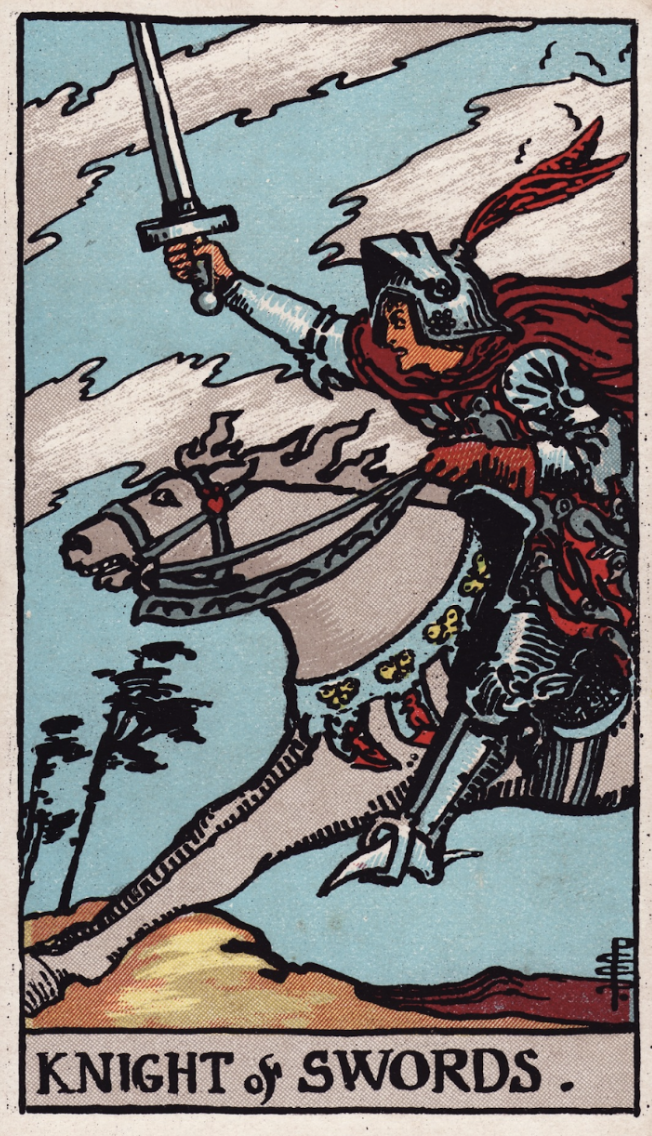
In Rider, we have an impassioned knight in reflective armor. His lifted visor reveals a face of great anger. He has a red cape, feathered helmet, and holds his sword high. His grey horse is galloping at a great speed and the trees in the background bend with the wind.
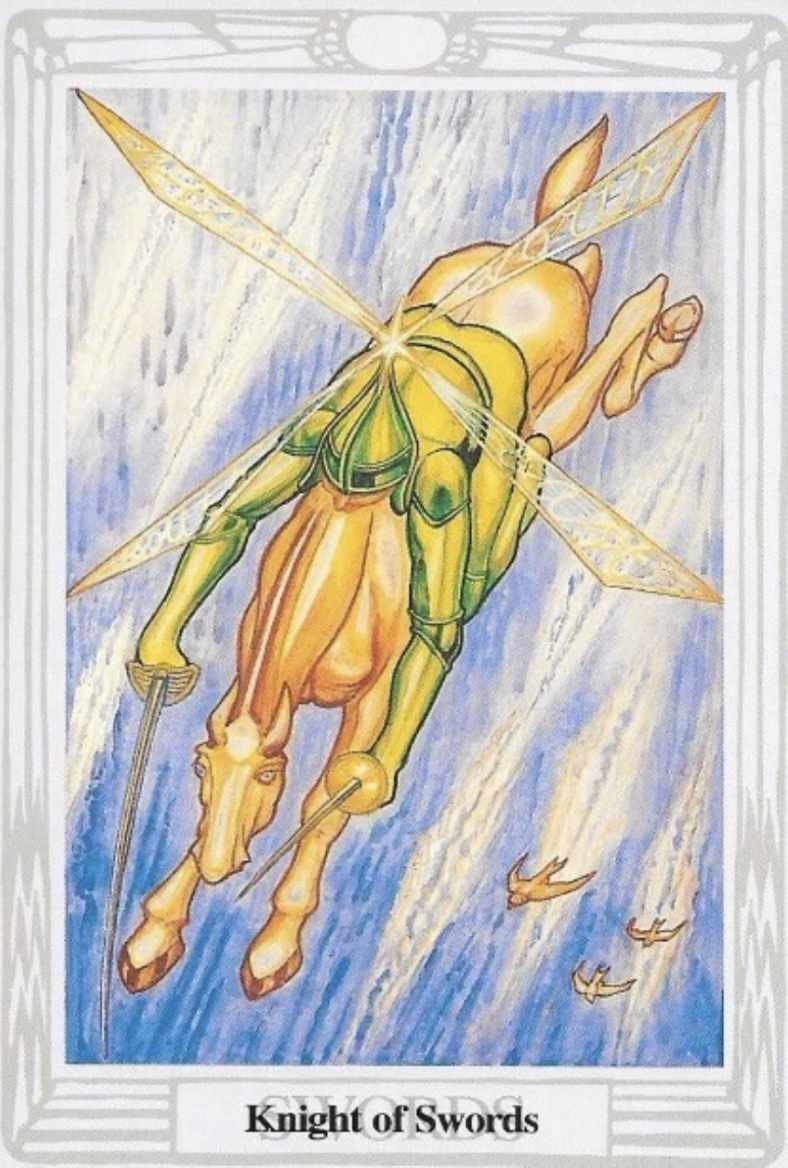
In Thoth, we see a knight in green armor from above. His pointed helmet has four bladed propellers, and his face is obscure. He carries two swords pointed at one target. His horse is long and orange tan. They are riding in the sky, below them three birds soar.

In Marseille, the knight is armored and expressionless. His pauldron has a face upon it. His long sword points up and ahead, and his blue horse is rearing up, as if preparing to make a great leap.
The Knight of Swords is a missile, a flying war machine. One can think of fighter planes, attack helicopters, drones, and projectiles. The Knight in Thoth shows a visual sympathy with the modern single rotor helicopter, which had not yet been invented when this card was drawn. The card strongly calls up the Flight of the Valkyries scene from Apocalypse Now.
From the start of aerial warfare, there was a sense of “nobility” in pilots. They were, quite literally above the war. When they were not fighting with one another, they dropped bombs, and early on, barbaric spikes and nails onto the enemy soldiers below. Pilots had the privilege, for perhaps the first time in history, of not seeing the product of their violence.
In modern times, we have brought this detachment to a profound extreme with drone warfare. Remote pilots sit in offices and use televisions and video game controllers to kill real people. This is the nature of the Knight of Swords, extreme violence without emotion. A pure intellect bent on achieving its will, without concern for others. Where the Page of Swords is the fog of war, and the confusion and hesitation of violence, the Knight cuts through the fog indifferently and lands his blow.
On a personal scale, this is expertise and effortless action, movement perfectly aligned with the intellect. The card is given to Gemini, so one can think of someone with a playful intelligence, someone with a very sharp tongue.
When we pull this card, rapid movement will be necessary to achieve what one seeks, one may need to literally speed off somewhere, or to direct their thoughts and words very intentionally, a bit of cruelty may be in order.