FEDERICO CASTELLÓN
A self-taught artist and young prodigy, Castellón moved from his native Spain to Brooklyn, New York with his family at the age of seven. He was, even at this age, a gifted draughtsman and sketched relentlessly, and he spent his childhood taking advantage of the new city he lived in by visiting museums and exhibitions constantly. By the time he was a teenager, Castellón’s inspirations ranged from the Old Masters at the Metropolitan Museum of Art to the burgeoning, contemporary Surrealist scene he had witnessed at small galleries. Before he had even graduated high school, he had caught the attention of Diego Rivera, who by this point was internationally acclaimed with public murals across the country. It was with Rivera’s help that Castellón travelled across Europe in his early twenties, taking in the emerging avant-garde and, on his return to New York, laid his claim as the very first American Surrealist. His etchings and sketches circulated the country and contributed to the rise of one of the most consequential movements of the century.
CLAUDE MONET
In the suburb of Le Havre, a wealthy suburb of Northern France, Claude Monet saw the world changing. He had grown up by the seaside, on beaches just like the one depicted here, and knew well the rural life of the areas, small towns serving locals and dominated by a thriving fishing industry. Yet as industrialism took over the nation, train services connected these once self-sustaining communities to the major cities and brought with them an influx of tourists escaping metropolis for weekends by the sea. In his depiction of Saint-Andresse, Monet captures this duality. The foreground is dominated by fishermen, their boats resting on the sand as they mill around and smoke their pipes, wearing hardy and utilitarian garb. Yet behind them, sitting on the beach, a couple look out to sea, the woman in a flowing white dress with an accent of red below here. These are the city folk, representing modernity itself that is slowly encroaching on traditional, rural life. Monet makes no moral judgement, but the work is one of quiet conflict between two types of life, learning to exist together.
DIEGO VELÁZQUEZ
At the age of twelve, Diego Velázquez joined the workshop of Francisco Pacheco, a painter, sculptor, and art theorist. He saw in the young man an irrepressible talent, and spent the next six years teaching him his craft, and his theories. Velázquez spent much of his time in Pacheco’s studio painting the wooden sculptures that were commissioned by various churches and collectors across Spain, and when he left Pacheco’s tutelage at the age of 18, it is unsurprising that his paintings had remarkably sculptural qualities to them. This work, ‘The Immaculate Conception’, is one of the earliest known works by the great Spanish master, and it’s rendering of the Virgin Mary seems to place her across three dimensions. The folds of her drapery seem to be deeply carved, the clasped, praying hands emerging towards us, and her form perfectly balanced atop the moon. Velázquez is able to make her feel at once totally alive, and entirely sculptural, a fitting dialogue for the sinless mother of Christ who balances divinity and humanity upon her shoulders.
Paul Zweig
A poet, critic and memoirist, Zweig was admired by his friends and the literary circles around him, but remains in wider obscurity to this day. Zweig was an obsessive study of culture, peoples and moods. Cross pollination is clear in Zweig’s work, his techniques as a memoirist clear across his poetry. A careful and astute eye, self-possessed and self-aware, he wrote as if with a magnifying glass, looking at the offhand nature of the world and reading the truth from it. While he looked outwards, he found himself everywhere. He journeyed deeper into the self with each evocative work.
Jack Spicer
Spicer saw the poet as a radio, intercepting transmissions from outer space. Language was furniture, through which information navigated. He was a radical, both in his literary style and in his life, defying every convention at every turn. Refusing to allow his work to be copyrighted, Spicer ran a workshop called ‘Poetry as Magic’, and for him the statement was true. Poetry was a means to experience and translate the unexplainable, and had to be freely available for those who searched for truth. Spicer died penniless and with only small acclaim, like so many poets before and after him, but the ideas he laid out in his work have gone on to influence thousands of poets after him.
Amiri Baraka
Amiri Baraka was many things, and many things to many people. The most significant black poet of his generation, Baraka also is considered the founder of the Black Arts Movement and the Second Harlem Renaissance. Baraka wanted poetry, literature and art to be a legitimate product of experience. In doing so, he could hold a mirror up to a world in desperate need of self reflection. He was as fearless in his writing as he was in his activism, and he had a clear vision. The BAM became an aesthetic and spiritual sister of Black Power and Baraka’s voice was the most poignant, cutting and profound.
Flora Knight April 16, 2026
Sacred geometry is rooted in the idea that God is the ultimate mathematician and that the mathematical patterns observed in nature are signs of divinity…
1h 29m
4.15.26
In this clip, Rick speaks with GT Dave about kombucha’s similarity to a nurtured plant.
<iframe width="100%" height="265" src="https://clyp.it/qphe40bx/widget?token=131f3ba46ee751e5ad207b46453dba3c" frameborder="0"></iframe>
Derek Simpson April 14, 2026
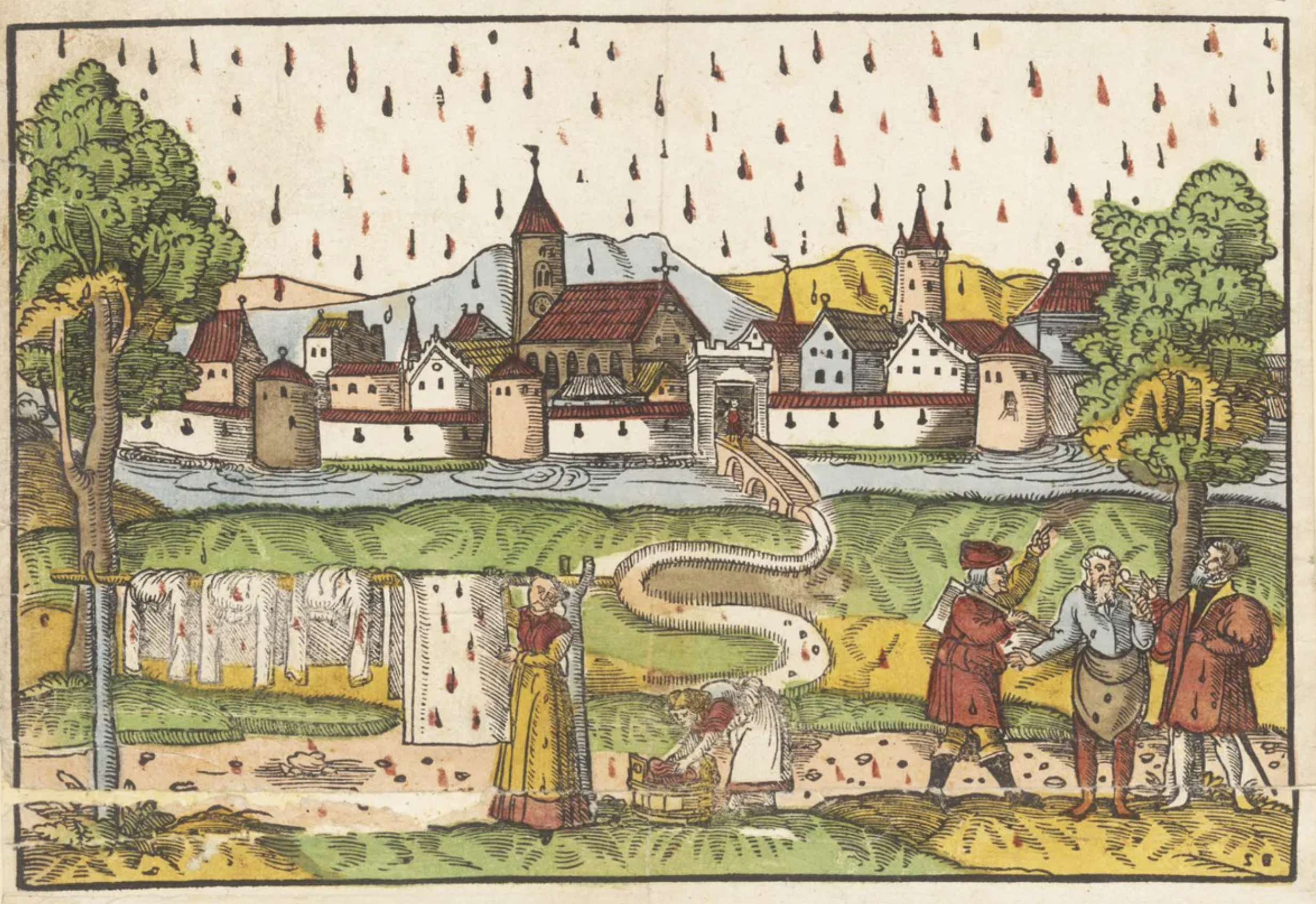
By the time Steve Reich released It’s Gonna Rain, splicing and looping strips of audio tape was a technique well known to the champions of the avant garde…





Friday 17th April
The Moon begins the day in Pisces, where a New Moon deepens a quiet, watery mood of renewal, as the garden gathers strength beneath the surface. This gentle influence invites us to move with care, tending leafy plants, watering and weeding, supporting their soft growth. As the day unfolds, the Moon crosses into Aries, bringing a clear shift from inward stillness to warmth and direction. The mood lifts, encouraging more purposeful engagement. In the garden, we can follow this rhythm, turning from leaf to fruit, tending or sowing tomatoes, chillies, and beans, working with the subtle shift in forces carried by the Moon.
<style>
audio::-webkit-media-controls-timeline {display: yes;}
audio::-webkit-media-controls-current-time-display{display: yes;}
</style>
<audio id='a2' style="height: 5vh; width:100%;" controls="" name="media"><source src="https://clyp.it/wkrtnhig.mp3?token=ebf8b796aafd994d3e6cbf14360d76ce" type="audio/mpeg"></audio>