
The Seven of Cups (Tarot Triptych)
Chris Gabriel June 28, 2025
The cups of pleasure which we have been filling throughout the suit overflow here. If five was not enough, and six was just right, then seven is too much. This is an overindulgence in sensory pleasure…
Name: Debauch, the Seven of Cups
Number: 7
Astrology: Venus in Scorpio
Qabalah: Netzach of He
Chris Gabriel June 28, 2025
The cups of pleasure which we have been filling throughout the suit overflow here. If five was not enough, and six was just right, then seven is too much. This is an overindulgence in sensory pleasure.

In Rider, we have a backlit figure in awe of the phantasmagoria before him. Seven fantastic cups emerge from a cloud, within them are various images: a head, a veiled person, a snake, a castle on a hill, jewels, a skull cup where a laurel sits, and a dragon. This is visual overstimulation, relatively uncommon in 1909 when this deck was first published, but a daily occurrence today. This is the algorithmic feed and a walk through the city, bright colors, temptations, and madness.

In Thoth, we have seven cups arranged in the form of the lower half of the tree of life. They overflow with sickly green viscous water. The lotus system which moves this water is drooping down. The card is given to the badly placed Venus in Scorpio. The Six of Cups, Pleasure, was a perfect match for our desires, this Debauch is too much. The green fluid of this card is the vomit that comes from too much drink, and the discharge of a Venereal disease. (Venereal literally means of Venus).

In Marseille, we have the least negative form of the card. A column of three cups stands between four cups in the corners. Qabalistically it is the Beauty of the Queen, and represents Love in and for the World. The vast sensory inputs of the world are treated with kindness and care here.
In the Tao Te Ching, Lao Tzu writes:
Five colors blind the eye
Five notes deafen the ear
Five flavors dull the mouth
The Great Hunt drives men's hearts wild
What’s difficult to get brings harm
The Wise trust their guts, not their senses
This card embodies this wisdom, the overstimulation of the senses leaves us burnt out, depressed, and numb. In dieting, there is a concept called “Intuitive Eating”, the idea that one can eat when they feel hungry, and stop when they are full. This ability is akin to telepathy in terms of how easily it can be achieved! In reality, many tend to eat like animals. Dogs, cats, horses, goats, and many others, when given an endless supply of food will eat themselves to death.
The sensory pleasures cannot be truly satisfied until one learns what fullness is, just as a great deal of war goes on because the powerful cannot themselves bear the boredom of peace. As this card is Venus in Scorpio, this is especially relevant to romance. This is a “toxic” love, one that we can’t get enough of. Even when one knows they are in a bad romance, it is far too enticing to see it to the bitter end.
When we pull this card, we may indeed be given a feast for our senses, and have it! Take your fill and will of Love. Just be ready for the hangover of the morning after.
Film
<div style="padding:59.82% 0 0 0;position:relative;"><iframe src="https://player.vimeo.com/video/1096988796?badge=0&autopause=0&player_id=0&app_id=58479" frameborder="0" allow="autoplay; fullscreen; picture-in-picture; clipboard-write; encrypted-media; web-share" style="position:absolute;top:0;left:0;width:100%;height:100%;" title="Purple Noon clip"></iframe></div><script src="https://player.vimeo.com/api/player.js"></script>
Patterns of Authority: Sound is Spatial (I)
Robin Sparkes June 26, 2025
Architecture provides a framework to understand how spatial design shapes and expresses socio-political power. Physical structures carry ideologies. The built environment directs movement, frames perception, and conditions behavior. Sound plays a central role in this dynamic…

Athanasius Kircher, Musurgia Universalis. 1650.
Robin Sparkes June 26, 2025
Architecture provides a framework to understand how spatial design shapes and expresses socio-political power. Physical structures carry ideologies. The built environment directs movement, frames perception, and conditions behavior. Sound plays a central role in this dynamic. The way sound travels through space organizes social interaction and reinforces authority. Architectural acoustics become instruments of control, structuring who is heard, how voices carry, and where silence falls.
Space shapes perception. It provides the conditions through which experience unfolds. Before meaning is formed, spatial relationships already guide how bodies move, how attention is focused, and how presence is felt. Architecture organizes these conditions. It defines proximity, enclosure, elevation, and direction. These spatial arrangements establish the grammar of interaction.
When sound emerges, it activates the logic of space. The shape and material of a building influence how a voice carries, how it lingers, and how it reaches others. Sound travels according to the forms it encounters—reflecting, absorbing, amplifying. In this way, acoustics shape social access. They determine who commands attention, who listens, and who remains outside the field of awareness. Power operates through arrangement, constructing systems of order, repetition, and hierarchy. Architecture gives form to these systems. Raised thresholds, central positions, enclosed chambers—all delineate roles and distribute authority. Sound follows these lines, reinforcing their influence.
By tracing the interaction between spatial design and sound, we can understand how architecture conditions us. This interplay generates authority, amplifies its presence, and sustains its influence. Acoustics, as an integral part of architecture, are closely tied to the geometric forms that govern how sound moves through space. Material and geometry influence both the physical and sensory experience of architecture. Here, sound becomes a tool of authority.
By examining how architectural acoustics mediate the intersection of spatial design and ideology, we can begin to see how the manipulation of sound in the built environment reflects and reinforces political power dynamics. “Acoustic space is where sound and space converge, creating a dynamic relationship between what is heard, how it is heard, and the environment in which it is heard”, says Oliveros. We hear through architecture—a medium that frames social hierarchies and directs human behavior.
From Eyes to Ears
Understanding the influence of architectural acoustics is essential for revealing how power dynamics are constructed and reinforced through the ‘unseen’ forces of sound, shaping human interaction and perception. Juhani Pallasmaa, in The Eyes of the Skin, critiques the dominance of vision—Plato’s ocularcentrism. Pallasmaa argues that prioritizing sight over other senses diminishes the full experiential depth of architecture, especially the auditory. He writes, “Architecture is the art of reconciliation between ourselves and the world, and this mediation takes place through the senses”.
The acoustic dimensions of space contribute to the embodied power of resonance. Acoustics frame space, as sound is inherently relational and immersive, shaping how individuals and communities engage within built environments.
Architecture as a Means of Understanding the Superstructure
The relationship between sensory experience and societal structures helps us understand architecture’s role in shaping power. Karl Marx’s concept of the superstructure offers a framework for seeing how architecture mediates sensory experiences and supports ideological authority. Marx identified the superstructure as comprising cultural, political, and ideological systems that arise from—and reinforce—the economic base.
Architecture, as a cultural artifact, reflects the ideologies of the ruling class, shaping and legitimizing authority in physical space. In this context, buildings become instruments of power, with design choices aligned with dominant state ideologies. Marx’s framework highlights how architectural spaces, through both function and form, reinforce social hierarchies and facilitate control. Repeating typologies reveal how architecture is embedded within the superstructure, reinforcing values through spatial design.
Marx noted that “the ruling ideas of each age have ever been the ideas of its ruling class”. We see these values in the spaces we move through and speak within.
“Architecture was more than functional or aesthetic—it revealed divine truths through geometry and sound.”
Power, Space, and Surveillance
Michel Foucault’s analysis of power and spatial control in Discipline and Punish: The Birth of the Prison offers a critical lens for examining the socio-political implications of centralized acoustic design. Foucault introduces the panopticon as a model of disciplinary power, where spatial arrangement enforces constant surveillance and internalized authority. He writes, “The Panopticon is a [surveilling] machine which, whatever use one may wish to put it to, produces homogenous effects of power” (Foucault). This spatial configuration becomes both a literal and symbolic expression of how power operates.

Foucault’s Panopticon.
When applied to acoustics, the panopticon’s principles reveal how sound systems—like public address speakers or soundproofed hierarchies—reinforce authority by shaping auditory experience. Centrally planned spaces often elevate an authoritative figure, amplifying their presence and power through spatial arrangement and sound projection.
Louis Althusser’s concept of interpellation describes how individuals are “hailed” into ideological systems that shape their behavior and perceptions. In Ideology and Ideological State Apparatuses, Althusser writes, “Ideology has the function (which defines it) of ‘constituting’ concrete individuals as subjects” (Althusser). The acoustics of a courtroom or temple draw attention to the singular voice of the judge or priest. These spaces acoustically and spatially “hail” individuals, embedding them into systems of authority and control.
Together, Foucault’s and Althusser's theories reveal how architectural acoustics serve as mechanisms of social and ideological conditioning. This conditioning is both theoretical and embodied—through doors we enter, windows we open, and corridors that guide our behavior. These are choreographed interactions. Simply by existing in space, we are interpelled into expected patterns of conduct.
Architecture, Power, and Resistance
Architecture, through its spatial and acoustic properties, serves as both a tool of control and a potential medium for resistance. Rafael Moneo, in On Typology, argues that architectural forms embody cultural and historical continuities. He writes, “Typology is not a neutral concept; it is a reflection of the ways societies organize their space and their values” (Moneo). By studying recurring forms—typologies—we can see how social ideologies are embedded in design.
Moneo shows how typological structures can also help us understand, critique, and reform power. The superstructure, through typological morphology, becomes a system of spatial ideology. Typological discourse, then, becomes a framework not just for reinforcing systems but for transforming them.
Renaissance Theories of Harmonic Proportion and Acoustic Design
Renaissance architects’ use of harmonic proportions—drawn from musical theory—offers another lens for exploring the relationship between space and sound. Rudolf Wittkower explains how architects like Andrea Palladio used musical ratios to govern building proportions and acoustics. “The application of harmonic ratios derived from music lent buildings a rhythm that could be perceived visually and aurally, creating a multisensory experience of order” (Wittkower).
Palladio believed that well-proportioned spaces could foster moral and spiritual well-being. Geometry affected how sound resonated—how frequencies lingered or faded. Wittkower notes that Palladio’s adherence to harmony was not just aesthetic but moral. “He believed that a well-proportioned building could inspire the virtues of order and balance in its inhabitants” (Wittkower).
Research in psychoacoustics supports this, showing that specific frequencies influence mood, cognition, and even physical health. “Different frequencies stimulate different neural circuits, influencing mood, cognition, and even physical health” (Levitin). Yet access to resonant, harmonious spaces is often determined by wealth—proximity to nature, for instance, or insulation from urban noise. Architecture and environment together create acoustic ecologies that shape how bodies and minds feel space.
Leon Battista Alberti also tied proportion and design to moral and spiritual ideals. His centrally planned churches aimed to align spatial design with divine principles. Wittkower writes, “Alberti regarded beauty as an inherent quality of proportion, believing that mathematical harmony in design could elevate the human spirit” (Wittkower). His designs optimized acoustics, making space both sacred and socially organized.
Catholic churches especially demonstrate this. Their central layouts amplify voice and song, reinforcing the church’s authority both spiritually and socially. “Typology acts as a dialogue between tradition and innovation, enabling architects to adapt historical forms to contemporary needs without losing their symbolic resonance” (Moneo). Moneo’s view shows how Renaissance principles—especially in acoustics—continue to shape architectural practice today.
In Ars Magna Lucis et Umbrae (1646), Athanasius Kircher argued that architecture was more than functional or aesthetic—it revealed divine truths through geometry and sound. He described buildings as “microcosms” that align earthly structures with celestial harmony. Cathedrals, rooted in sacred geometry, were instruments to channel divine grace.
Kircher’s work explored how acoustics could be engineered—through ideas like the “acoustic wall,” a reflective surface that amplified sound. His organ designs also show how architecture could be integrated with musical instruments to shape auditory experience. For Kircher, buildings didn’t just shelter—they resonated, actively producing harmonious soundscapes.
His vision aligns with Renaissance ideals, as Wittkower describes in Architectural Principles in the Age of Humanism. Renaissance architects believed their job was not to invent new forms, but to discover and express eternal harmonies. Wittkower writes, “The Renaissance architect did not see his task in creating something new, but in discovering the eternal validity”.
Robin Sparkes, is a spatial designer, studying the kinesthetic experience of architecture. Her design, research, and writing practice traverses the relationship between the body, temporality, and the acoustics of space.
Film
<div style="padding:56.25% 0 0 0;position:relative;"><iframe src="https://player.vimeo.com/video/1096419971?badge=0&autopause=0&player_id=0&app_id=58479" frameborder="0" allow="autoplay; fullscreen; picture-in-picture; clipboard-write; encrypted-media; web-share" style="position:absolute;top:0;left:0;width:100%;height:100%;" title="Glacier National Park Lassen National Park Sequoia National Park (Tinted)"></iframe></div><script src="https://player.vimeo.com/api/player.js"></script>
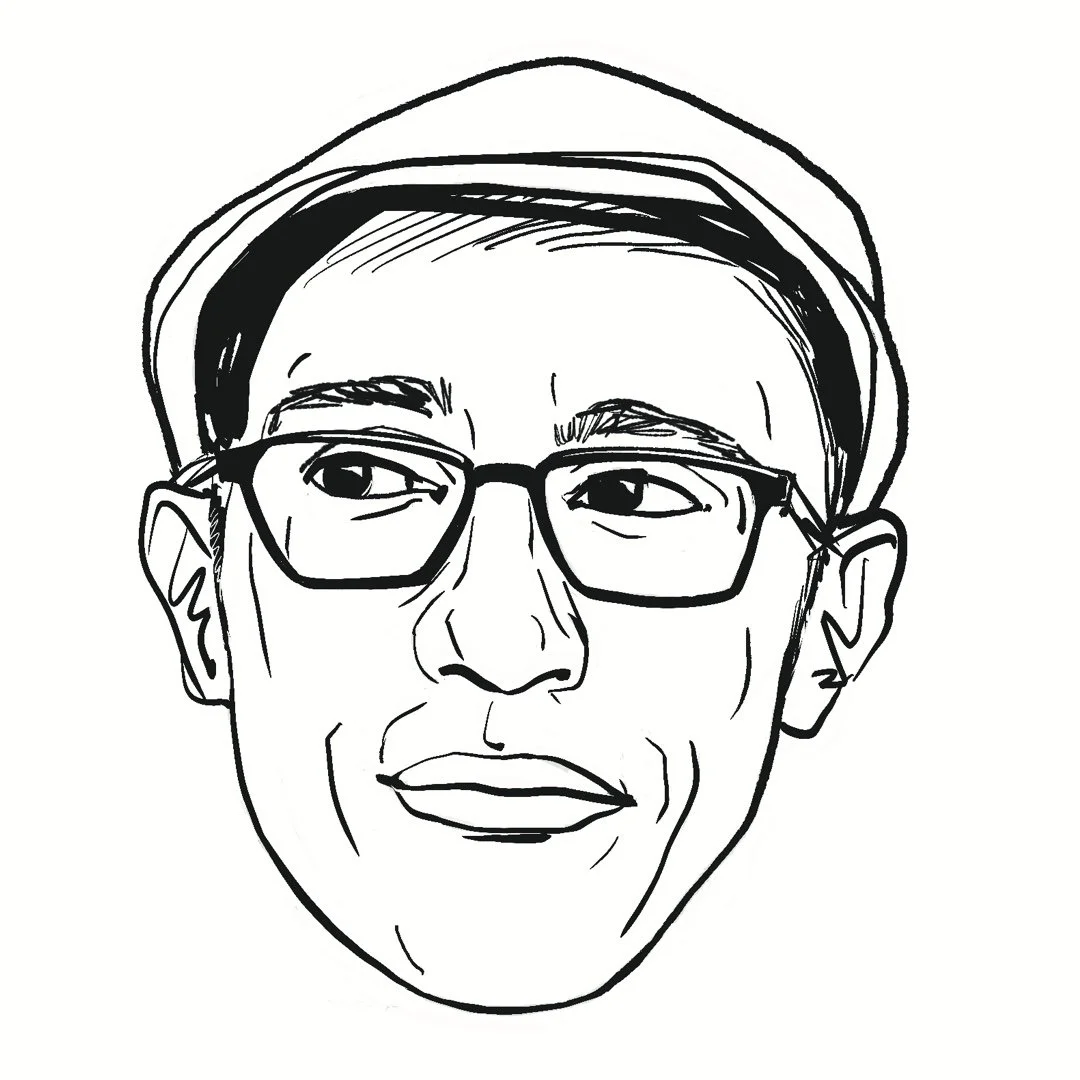
Tobias Lütke
1h 49m
6.25.25
In this clip, Rick speaks with Tobias Lütke about humble beginnings.
<iframe width="100%" height="265" src="https://clyp.it/k0vihytx/widget?token=a8f9ca8d34c30ec1bf2bc1aa65044700" frameborder="0"></iframe>

Film
<div style="padding:73.32% 0 0 0;position:relative;"><iframe src="https://player.vimeo.com/video/1095509551?badge=0&autopause=0&player_id=0&app_id=58479" frameborder="0" allow="autoplay; fullscreen; picture-in-picture; clipboard-write; encrypted-media; web-share" style="position:absolute;top:0;left:0;width:100%;height:100%;" title="Strangers on a Train clip"></iframe></div><script src="https://player.vimeo.com/api/player.js"></script>
Some Thoughts on Relationships (Enneagram V)
Suzanne Stabile June 24, 2025
For several months, I’ve been perusing my old journals and thinking about how these experiences affected my life in what I now understand to be both positive and negative ways. It seems important to note that the events of the 1960’s were, in many ways, unexpected and unprecedented. And yet, what we experienced, and the way we responded to our new reality, never included the kind of polarization we are experiencing now…

Le Lit, Henri de Toulouse-Lautrec. 1893.
“In my experience there are two things we have in common:
we all want to belong, and we all want our lives to have meaning.
But finding belonging and meaning are dependent on our ability
to build and maintain relationships ___ with people who are like us,
and often with those who are not.”
The Path Between Us
Suzanne Stabile June 24, 2025
It is my hope in writing this article that readers will find time to reflect on at least some of the ideas I’m sharing from my life experience to date. I want to spark conversations with this contribution to Tetragrammaton for there are some things we just need to talk about. It doesn’t matter where, how, or who with, but I’m pretty sure we all need to start talking in earnest about relationships.
At seventy-four, I’m old enough to begin looking back and evaluating the many seasons of my life. Because I “came of age” in the 1960’s, my life has been partially defined by:
The Viet Nam War
The Civil Rights Movement
The Women’s Movement
Hippies, Mini Skirts, Love Beads and Woodstock
The Assassinations of John F. Kennedy, Robert Kennedy, and Martin Luther King, Jr.
For several months, I’ve been perusing my old journals and thinking about how these experiences affected my life in what I now understand to be both positive and negative ways. It seems important to note that the events of the 1960’s were, in many ways, unexpected and unprecedented. And yet, what we experienced, and the way we responded to our new reality, never included the kind of polarization we are experiencing now.
Despite the suggestion that in our modern age we are constantly “communicating” and “connecting”, I’m convinced that we find ourselves in a Relationship Crisis. We are polarized in too many parts of our lives and more tribal than we’ve been in my lifetime. Our standard response to most issues is increasingly dualistic: “I’m right and you’re wrong.” Simply stated, dualistic thinking is by its nature, a question of “either/or”, which choice is the right one and which is not?
Another way of assessing our choices is possible, if only we embrace a nondualistic approach. At its most basic level, non-duality is represented by “both/and” thinking. “My choice is good and so is yours.” We could go with either one, knowing we made a good decision.” Of course, there are choices that involve each person’s life experience and perhaps their belief systems. and sacrificing integrity is never necessary. The key, however, is found in respecting the life experience and integrity of every other person, while allowing room for difference without distance.
I’ve had the privilege of teaching the Enneagram for most of the past four decades. Serious study of this ancient wisdom has offered me the opportunity to understand why I do what I do, and to a limited degree, why others do what they do. It has afforded me the time, space, and place to explore the basic differences in how we, as individuals, see the world.
I’ve heard so many times, “We’re all pretty much the same when you get right down to it.” That is just not true. Enneagram wisdom teaches us that we all belong to one of nine groups of people, each one defined by how we interpret, make sense of, and respond to information from the universe. Of course there are unending examples of nuance, and millions of possible choices to be made but at the same time, predictable, habitual, and ultimately mechanical patterns of behavior have served us well since we were children.
It’s a challenge to change those patterns of behavior. When talking about personality, willpower is a myth that is fueled by emotion, and it will not help us in addressing our methods for dealing with the world. We cannot clench our fists and grit our teeth in order to make meaningful changes in our personalities.
Two of the best things you can do to make changes that would enhance your relationships are the practices of self-observation and allowing.
Practice observing yourself nonjudgmentally. It won’t be easy. But when we judge ourselves, we defend ourselves and then we are deeper in personality than when we started. Just observe your behavior, gently acknowledge it, and move on.
Practice allowing parts of your personality that don’t serve you well to simply fall away. Try to avoid feeling frustrated or angry, and after you acknowledge the behavior that you are trying to change just let it go. The result won’t be immediate, but after time you will find that a new way of responding to similar situations will emerge.
“Every expectation is resentment waiting to happen”
For deeper thought and conversation:
Choose one of the statements below that you think describes you. Think about it, maybe even journal about it a little and then consider discussing your insights with someone else. Each of these ways of being in the world can be problematic in relationships.
Do you take responsibility for making situations better for others?
Do you believe you can affect the world without being affected by it?
Are you accustomed to being focused inward, depending on your own strength to get you through.
There is nothing easy about relationships. There are no short cuts. They require lots of awareness, energy and hard work. My best advice on the subject is this:
Do your personal work and be the healthiest person you can be.
Then find someone else who is doing the same.
I happen to be relational by nature. I always have been. But there are two sides to everything, and this “gift” is no exception because relationships are messy and unpredictable. If I’m not discerning about the people I choose to be in relationships, with I can easily end up committing too much time to too many people, often resulting in taking for granted the people I love the most.
I’ve confessed this many times to my husband, my children, my therapist, my spiritual director, and my pastor. So I’m sharing it not in search of grace, though that would be nice, but because it is part of a bigger teaching about relationships.
One of the most valuable things I’ve learned from people who are in the Recovery Community is this: “Every expectation is resentment waiting to happen.” Expectations are at the core of most of our relationships, whether they have been agreed upon or assumed. Our failure to talk about them clearly and openly causes harm that could potentially be avoided with honest conversation.
For deeper thought, journaling or perhaps conversation, consider this quote:
“Inability or unwillingness to appropriately deal with feelings
Is problematic. When others can’t be honest about what they feel and
what they need, the delayed emotional responses are usually expressed
as anger, shame, fear, or perhaps resentment, all of which are
damaging to a relationship.”¹
What we do is seldom more important than how or why we do it. I find myself more challenged by the “why” but for others, it can be the “how.” Both are, perhaps, determined by personal motivation. Maybe, like me, you are motivated by a deep desire to be wanted. My husband Joe’s motivation most of the time is to believe his presence matters. Our children, in discussion with their spouses, have discovered that within their community of eight, their motivations include: believing their presence matters, avoiding betrayal, knowing they will be taken care of, wanting to be understood, a deep desire to hear that they are good, and being able to trust that they are safe.
For deeper thought, journaling or perhaps conversation:
If you were asked to name one motivation that you believe is most consistent in your sharing life with others what would it be?
Would you say that your motivation in relationships is more about connection and belonging, or about being right?
These ideas are clearly not exhaustive. In fact, they are a mere beginning of all that I believe we need to talk about concerning relationships. Our responses to life are determined in part by how we make sense of what we see, and how we decide to respond. It’s different for all of us.
What we consider to be strengths in our relationships in our twenties can easily become weaknesses in our thirties and forties and beyond, if we aren’t willing to engage in deep, self-reflective inner work.
I sincerely believe a relationship crisis is at hand. We can either decide to work toward healthier and more respectful relationships, or we can continue to contribute to the dualistic and polarizing nature of who we are becoming both individually and collectively.
We will always fall short in relationships, challenged to name and work through disappointment. Even though this is more difficult for some of us than for others, I hope we will all find a way to begin offering and receiving forgiveness. It’s just part of the deal.
¹The Path Between Us
Suzanne Stabile is a speaker, teacher, and internationally recognized Enneagram master teacher who has taught thousands of people over the last thirty years. She is the author of ‘The Path Between Us’, and coauthor, with Ian Morgan Cron, of ‘The Road Back to You’. She is also the creator and host of The Enneagram Journey podcast. Along with her husband, Rev. Joseph Stabile, she is cofounder of Life in the Trinity Ministry, a nonprofit, nondenominational ministry committed to the spiritual growth and formation of adults.
Film
<div style="padding:56.25% 0 0 0;position:relative;"><iframe src="https://player.vimeo.com/video/1095510734?badge=0&autopause=0&player_id=0&app_id=58479" frameborder="0" allow="autoplay; fullscreen; picture-in-picture; clipboard-write; encrypted-media; web-share" style="position:absolute;top:0;left:0;width:100%;height:100%;" title="Acting Shakespeare- The Two Traditions clip 4"></iframe></div><script src="https://player.vimeo.com/api/player.js"></script>

Iggy Pop Playlist
Iggy Confidential
Archival - March 25, 2016
Iggy Pop is an American singer, songwriter, musician, record producer, and actor. Since forming The Stooges in 1967, Iggy’s career has spanned decades and genres. Having paved the way for ‘70’s punk and ‘90’s grunge, he is often considered “The Godfather of Punk.”

Hannah Peel Playlist
Archival - June 9, 2025
Mercury Prize, Ivor Novello and Emmy-nominated, RTS and Music Producers Guild winning composer, with a flow of solo albums and collaborative releases, Hannah Peel joins the dots between science, nature and the creative arts, through her explorative approach to electronic, classical and traditional music.
Film
<div style="padding:75% 0 0 0;position:relative;"><iframe src="https://player.vimeo.com/video/1095507573?badge=0&autopause=0&player_id=0&app_id=58479" frameborder="0" allow="autoplay; fullscreen; picture-in-picture; clipboard-write; encrypted-media; web-share" style="position:absolute;top:0;left:0;width:100%;height:100%;" title="Personal Legacies- Materiality and Abstraction clip 7"></iframe></div><script src="https://player.vimeo.com/api/player.js"></script>
The Seven of Disks (Tarot Triptych)
Chris Gabriel June 21, 2025
The Seven of Disks is a card of waiting, of boredom, tedious labour, and perseverance. If the Six of Disks has given us a great gift of say a field or a house, this is the time where we “watch the grass grow” and the “paint dry”…
Name: Failure, Seven of Disks
Number: 7
Astrology: Saturn in Taurus
Qabalah: Netzach of He
Chris Gabriel June 21, 2025
The Seven of Disks is a card of waiting, of boredom, tedious labour, and perseverance. If the Six of Disks has given us a great gift of say a field or a house, this is the time where we “watch the grass grow” and the “paint dry”.

In Rider, we see a farmer leaning on his staff, looking sadly upon his growing crop. The sky is grey. He yearns for brilliant flourishing flowers, but must wait.

In Thoth, we have a more depressing image: dead plants covered in seven leaden coins. Four bear the face of Saturn, and three the Bull of Taurus. Saturn in Taurus is a long suffering placement, the efforts it undertakes can take years and years to come to fruition. This position requires constant effort without seeing results.

In Marseille, we have four coins about the corners of the card, with a central three forming an upright triangle. A flower grows from within the three. Qabalisitically, this is Netzach in He, the Beauty of the Princess.
“Rome was not built in a day” is an obvious, but painful truth. The materialization of our dreams and desires is not always a simple task. We wait in a dark night, knowing not when or if the Sun will rise, but we must keep going and have faith that it will pay off.
I am reminded of Churchill’s famous speech:
“We shall prove ourselves once more able to defend our island home, to ride out the storm of war, and to outlive the menace of tyranny, if necessary for years, if necessary alone. At any rate, that is what we are going to try to do.”
This willingness to go on indefinitely is the dignified character of the Seven of Disks, the negative element is that of dejection and failure in the face of time.
Up to this point in the suit, each card has been focused on growing and developing the seeds of the future. This is perhaps the darkest point in the suit, when all of that hard work seems to be for nothing. This is not only the waiting for full growth, but the blight and pestilence which can affect what we have grown. Perhaps we have raised a large crop of wheat, only to find it blighted, overgrown with fungus. This is the sort of failure we face here.
When pulling this card, we must strengthen our resolve through any given setback, delay or difficulty. We must continue to have faith in a seemingly fruitless effort. The suit goes on to profit a great deal, this is just one difficult step toward a brilliant goal.
Film
<div style="padding:56.25% 0 0 0;position:relative;"><iframe src="https://player.vimeo.com/video/1095130138?badge=0&autopause=0&player_id=0&app_id=58479" frameborder="0" allow="autoplay; fullscreen; picture-in-picture; clipboard-write; encrypted-media; web-share" style="position:absolute;top:0;left:0;width:100%;height:100%;" title="Kurt Vonnegut Shape of Stories"></iframe></div><script src="https://player.vimeo.com/api/player.js"></script>
'Stalking The Wild Pendulum' Of Vibratory Attunement
Molly Hankins June 19, 2025
For many spiritual leaders, raising our vibration is synonymous with accessing higher levels of consciousness, but scientist and author Itzhak Bentov explains how this actually works in his book Stalking The Wild Pendulum…

Molly Hankins June 19, 2025
For many spiritual leaders, raising our vibration is synonymous with accessing higher levels of consciousness, but scientist and author Itzhak Bentov explains how this actually works in his book Stalking The Wild Pendulum. Bentov is a fascinating character - a Czech-born national named Tobias with no academic background who immigrated to British-controlled Palestine in the mid-1940s and became a mechanical engineer and inventor, changing his name after joining what would soon become the IDF Science Corp. His inventions range from rocket science components and medical devices to low-carb spaghetti, but his research into the mechanics of consciousness became his most memorable legacy.
Bentov believed that every living being has one material and one nonmaterial organizing system, and that no organized energy is ever lost. Just as our physical body is reabsorbed by the Earthly elements at the time of death, so too is our “organized energy body of information” reabsorbed by the organized information body of the cosmos. According to Bentov, these two systems produce a measurable frequency signal called the electro-static field, a vibration that can be measured by static meters. The strength of this signal depends on the vitality of the subject being measured; a person, plant or animal in poor physical health or depressed spirits will have a weaker signal than a healthy, happy subject. He claims stronger signals entrain vibrating bodies in their proximity. Entrainment occurs when two oscillating systems synchronize their rhythms, meaning a high-frequency electro-static field will raise the vibration of other beings in its field.
Meditative states entrain our physical bodies with the Earth’s vibration, strengthening and stabilizing the signal. As Maharishi Mahesh Yogi said, “If world peace is to be established, peace in the individual must be established first. Transcendental Meditation directly brings peace in the individual life.” Maharishi, who trained as a physicist, began teaching Transcendental Meditation in the 1950s and popularized it at a global scale after teaching The Beatles in the late 1960s. Stalking The Wild Pendulum provides a scientific basis for the idea that in order to bring peace to the world, we have to establish peace within ourselves first. Bentov’s work claims that when we become entrained with the Earth’s vibration, all of our vital functions become attuned to each other, synchronizing at seven cycles per second.
He gives another example of this phenomena using two grandfather clocks, each wound slightly differently so that the two swinging pendulums are out of sync. The faster moving pendulum, meaning the one with the higher frequency, will entrain the slower one, thereby increasing its speed and bringing the two resonance. In the first sentence of the book’s introduction, Bentov tells us that Stalking The Wild Pendulum is a product of late-night conversations with friends and colleagues calling future scientists to action. Instead of conclusively proving anything to the reader, his work invites us to apply the famous axiom of “as above so below” to draw our own conclusions from the parallels he points to between what he calls micro-realities, such as the behavior of two grandfather clock pendulums, and macro-realities, such as collective human behavior.
“We change reality as we change our level of consciousness”
Most of us have our own subjective experiences of interpersonal vibratory attunement. If we’re in a room with someone who is joyful, the mirror neurons in our brains make us feel joyful. The same applies to negative emotions. However, the logical conclusion from Bentov’s findings is that whoevers electrostatic signal is stronger and higher vibrating will ultimately raise the frequency of the other by being in their presence. Dr. David R. Hawkins created an emotional scale diagram showing specific electrostatic frequencies corresponding with different emotional states. Studies building on his work have since shown that shame has the lowest frequency and authenticity has the highest.
Our emotional states also correspond with what Bentov refers to as higher or lower consciousness. Higher consciousness, such as authenticity, has a wider range of possible responses to any given stimulus than lower consciousness, such as shame. He writes, “The higher we move along the scale of evolution, the higher the degree of free will, and the higher our ability to control or create our own environment.” It is not until our consciousness has expanded over different lives that we begin to build up our ability to exercise free will. As shared in the beginning of this essay, Bentov believed in both material and non-material organized systems of information energy, both of which evolve over time by way of experience.
By cultivating a stable, high-vibrating frequency via meditation, expanding our repertoire of personal experience, managing our emotional state and living authentically, we’re able to entrain others in our powerfully positive signal. This is the most important work that can be done on our planet now. Bentov said the terms “levels of consciousness” and “realities” were interchangeable - we change reality as we change our level of consciousness, and there is a critical mass element to this as Maharishi also claimed. The magic number, according to many yogic and spiritual traditions, is 144,000 people meditating enough to entrain their own signal with that of Earth, thereby entraining the signals of the rest of the global population.
Bentov goes a step further. He claims that when beings of higher consciousness focus their attention on beings of lower consciousness, the capabilities of lower consciousness-beings expand. Again, the level of consciousness refers only to how broad the range of possible responses are to any given stimulus - it’s not a value judgment. He writes, “As long as we are just sitting and producing idle thoughts, the thought energy is diffuse, and it eventually spreads out, weakens and disappears. However, when we consciously concentrate and send coherent thoughts, that thought energy or thought form will impinge on the person for whom the thought was meant.” Balancing our work between optimizing the health of our physical and non-physical organized information bodies will give us the energy to stabilize our signal and empower our thought forms to positively impact other beings.
Molly Hankins is an Initiate + Reality Hacker serving the Ministry of Quantum Existentialism and Builders of the Adytum.
Film
<div style="padding:56.34% 0 0 0;position:relative;"><iframe src="https://player.vimeo.com/video/1095506418?badge=0&autopause=0&player_id=0&app_id=58479" frameborder="0" allow="autoplay; fullscreen; picture-in-picture; clipboard-write; encrypted-media; web-share" style="position:absolute;top:0;left:0;width:100%;height:100%;" title="The Searchers clip 1"></iframe></div><script src="https://player.vimeo.com/api/player.js"></script>

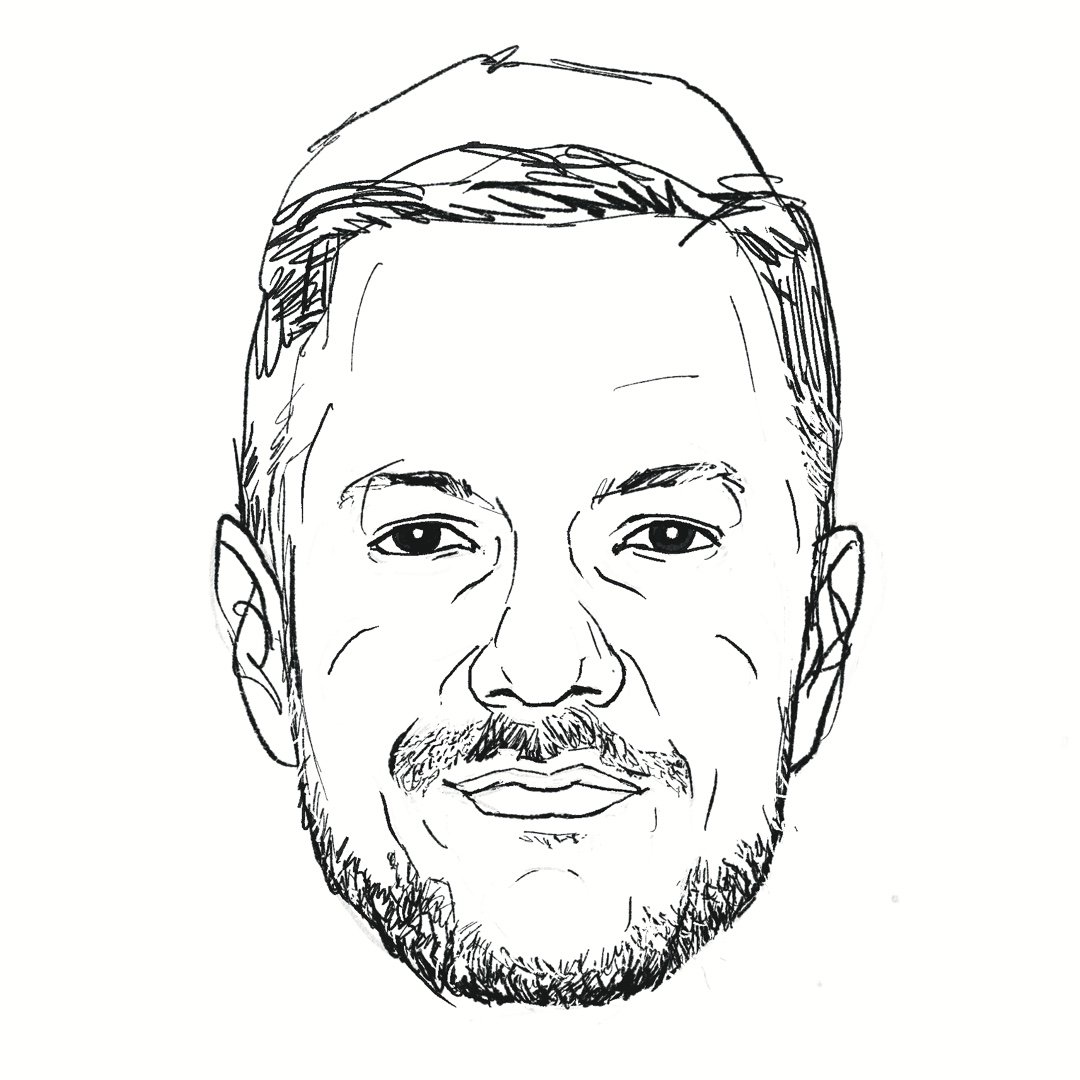
Dan Reynolds
2h 7m
6.18.25
In this clip, Rick speaks with Dan Reynolds about the juxtaposition of Las Vegas.
<iframe width="100%" height="265" src="https://clyp.it/1t0k33nc/widget?token=b132201ffcd874ce187ba2f29de79ff7" frameborder="0"></iframe>
Film
<div style="padding:75% 0 0 0;position:relative;"><iframe src="https://player.vimeo.com/video/1094137561?badge=0&autopause=0&player_id=0&app_id=58479" frameborder="0" allow="autoplay; fullscreen; picture-in-picture; clipboard-write; encrypted-media; web-share" style="position:absolute;top:0;left:0;width:100%;height:100%;" title="Greenwich Village Sunday clip 3"></iframe></div><script src="https://player.vimeo.com/api/player.js"></script>
Maeshowe, Sound, and Viking Runes (Artefact II)
Ben Timberlake June 17, 2025
Maeshowe is a Neolithic chambered burial complex on the Orkney Islands, an archipelago to the north of Scotland that is a floating world of midnight suns and brutal, dark winters. The tomb overlooks the Lochs of Harry and Stenness. On the narrow spit of land that separates the two lochs is The Ring of Brodgar, an ancient stone circle. It is nothing to look at from the outside - bored sheep munching salty grass on a small mound — but inside is one of the finest prehistoric monuments in the world…
WUNDERKAMMER #2
Artefact No: 2
Location: Maeshow, Orkney Islands, Scotland
Age: 5,000 years
Ben Timberlake June 17, 2025
Maeshowe is a Neolithic chambered burial complex on the Orkney Islands, an archipelago to the north of Scotland that is a floating world of midnight suns and brutal, dark winters. The tomb overlooks the Lochs of Harry and Stenness. On the narrow spit of land that separates the two lochs is The Ring of Brodgar, an ancient stone circle. It is nothing to look at from the outside - bored sheep munching salty grass on a small mound — but inside is one of the finest prehistoric monuments in the world.
The tomb’s structure is cruciform: a long passageway some 15m long, a central chamber, with three side-chambers. The main passageway is orientated to the southwest. Building began on the site around 2800BC. It is a work of monumental perfection: each wall of the long passageway is formed of single slabs up to three tons in weight; each corner of the main chamber has four vast standing stones; and the floors, walls and ceilings of the side-chambers are made from single stones. Smaller, long, thin slabs make up the rest of the masonry. They are fitted with unfussy but masterful precision in the local sandstone. It is even more impressive when you realize that these stones were cut and shaped thousands of years before the invention of metal tools. It is estimated to have taken 100,000 hours of labor to construct.
The interior chamber of Maeshowe, illuminated by the sun of the Winter Solstice.
Maeshowe sits within one of the richest prehistoric landscapes in Europe. The four principal sites are two stone circles - the Ring of Brodgar and the Stones of Stenness - Maeshowe and the perfectly preserved Neolithic village of Skara Brae. These sites are within a further constellation of a dozen Neolithic and Bronze Age mounds, and other solitary standing stones.
Aligned within this landscape like a vast sundial, Maeshowe is sighted so as to tell the time just once a year, at midwinter. For a couple of weeks at either side of the winter solstice the sun sets to the southwest and the rays of the run enter down the long passage and illuminate the wall at the back of the end chamber. And this midwinter sun, at the zenith of its year, sets perfectly above the Barnhouse Stone some 700m away. The spectacle can be viewed live online every year.
Maeshowe and its sister sites are open to the public and well worth a visit. Because of their remote location they get a fraction of the visitor numbers similar sites receive. There is something deeply penitential about a visit there. The long passage is only a meter and a half tall and archaeologists believe it was designed this way to force people to bow and submit as they walked towards the center of the complex.
The Barnhouse Stone, on the left, aligns perfectly with the entrance to Maeshow, the mound on the right, so that on the day of midwinter, the sun sets above the stone and into the entrance to Maestowe.
“The frequency for Maeshowe was a drum being beaten at 2hz creating an infrasonic frequency that, although inaudible to us, could be felt as a physical or psychological sensations such as dizziness, raised heartbeat, and flying sensations. And that’s before we factor in the drugs.”
As much as Maeshowe is a place of the dead, it is also a temple to sound. Dr Aaron Watson, an honorary fellow from Exeter University, spent a number of years researching the effects of sound at different prehistoric sites. He found that specific pitches of vocal chants and different types of drumming could produce strange, amplified sound effects known as ‘standing waves’. These are very distinct areas of high and low intensity which seem to bear no relation to the source of the sound. In the case of Maeshowe, a drummer in the central chamber could be muted to those standing nearby but the sound would be vastly magnified in the side chambers. The acoustics are so powerful that the Neolithic builders must have known what they were doing when they built the structure. A recessed niche in one of the tunnel walls allowed a large stone to be dragged into the passageway blocking the passage and amplifying the sound.
Even more impressively was the possibility that Maeshowe displayed elements of the Helmholtz Effect - a phenomenon of air resonance in a cavity - but on a much larger scale. The frequency for Maeshowe was a drum being beaten at 2hz creating an infrasonic frequency that, although inaudible to us, could be felt as a physical or psychological sensations such as dizziness, raised heartbeat, and flying sensations. And that’s before we factor in the drugs. These European prehistoric societies made ample use of regular magic mushrooms and the red-and-white spotted Fly Agaric. To the Neolithic visitors the acoustics effects of Maeshowe alone must have been powerful but to combined with hallucinations it must have been one of the most profound and life changing experiences of their lives.
The tomb was rediscovered in 1861. I write ‘rediscovered’ because when the Victorian antiquarians began to clear soil and debris from the inner chambers, they came across evidence that they were not the first ones there since prehistoric times: the walls were adorned with Viking runes.
We have a very good idea who these Vikings were thanks to the Orkneyinga Saga, a medieval narrative history document woven through and embellished with myths. There appear to be two sets of culprits. Firstly, in 1151, a group of Viking Crusaders led by Earl Rognvald on their way to the Holy Land. Then, a couple years later - Christmas 1153 to be precise - a band of Viking looters on a raid led by Earl Harald.
The Norse traditionally held such ancient places with dread and it is not known what drove them to risk their mortal souls and enter the mound: a terrible storm is mentioned, but it may have been the legends of treasure too. The saga records that two of the Earl Rognvald’s men went mad with fear of the mythical Hogboon, from Old Norse hiagbui, or mound-dweller.
There are some 30 runes in Maeshowe, the largest collection outside Scandinavia. Here is a sample:
Crusaders broke into Maeshowe. Lif the earl's cook carved these runes. To the north-west is a great treasure hidden. It was long ago that a great treasure was hidden here. Happy is he that might find that great treasure.
Ofram, the son of Sigurd carved these runes.
Haermund Hardaxe carved these runes.
Thatir the weary Viking came here.
Ingigerth is the most beautiful of all women (carved beside a picture of a slavering dog).
Thorni fucked. Helgi carved.
All too often historians and archaeologists concern themselves with official inscriptions left by kings and emperors and other fevered egos but I don’t think that anything quite says ‘Look on my works ye mighty and despair’ than a Viking warrior getting laid and then recording it on the rock of ages with his axe.
Ben Timberlake is an archaeologist who works in Iraq and Syria. His writing has appeared in Esquire, the Financial Times and the Economist. He is the author of 'High Risk: A True Story of the SAS, Drugs and other Bad Behaviour'.
Film
<div style="padding:56.25% 0 0 0;position:relative;"><iframe src="https://player.vimeo.com/video/1094145452?badge=0&autopause=0&player_id=0&app_id=58479" frameborder="0" allow="autoplay; fullscreen; picture-in-picture; clipboard-write; encrypted-media; web-share" style="position:absolute;top:0;left:0;width:100%;height:100%;" title="Soy Cuba clip 2"></iframe></div><script src="https://player.vimeo.com/api/player.js"></script>

Larry Levan Playlist
Archival 1987
Larry Levan was an influential American DJ who defined what modern dance clubs are today. He is most widely renowned for his long-time residency at Paradise Garage, also known as “Gay-Rage”, a former nightclub at 84 King Street in Manhattan, NY.