
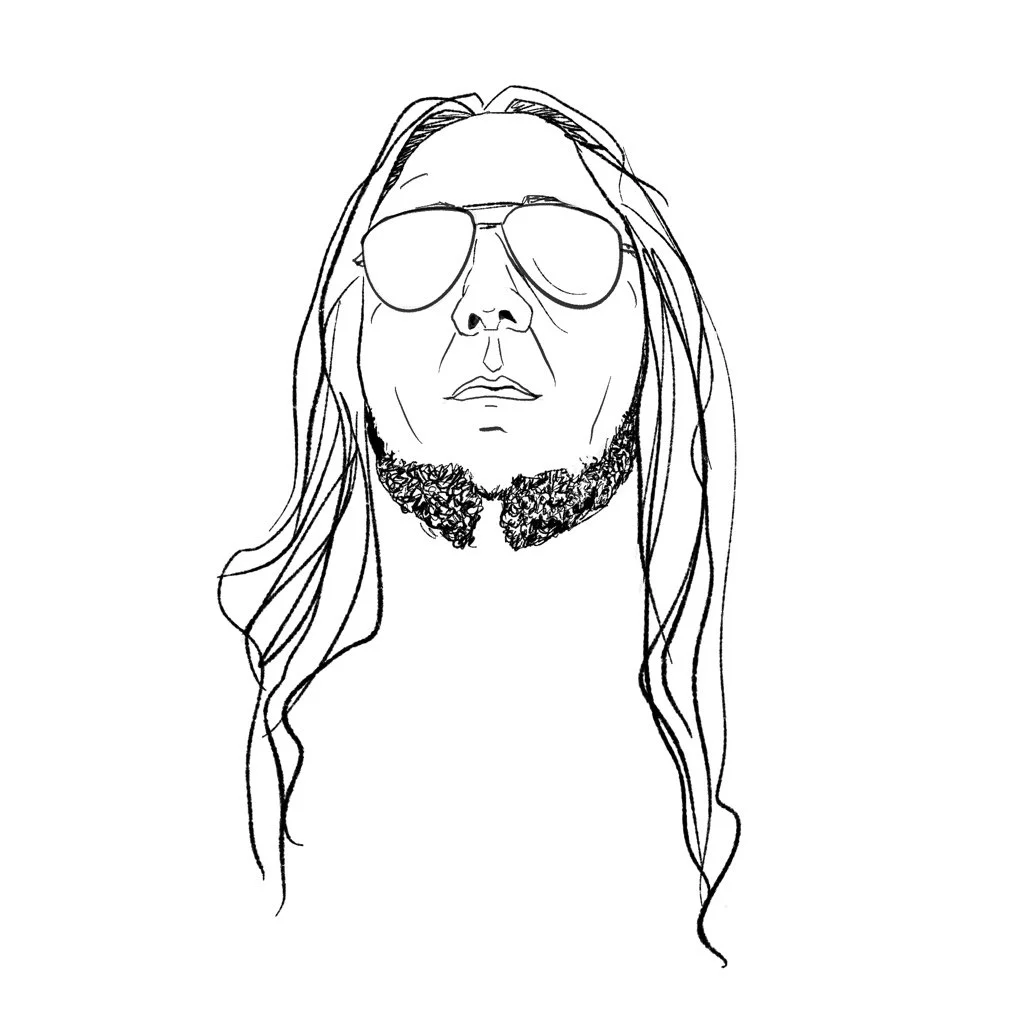
Daron Malakian - ON METAL (Part 2)
2h 4m
1.2.26
In this clip, Rick speaks with Daron Malakian about Nu Metal’s quick rise in popularity.
<iframe width="100%" height="265" src="https://clyp.it/1srewuxv/widget?token=6ff7c4737ebbdf56032a8c1db82b5ca2" frameborder="0"></iframe>
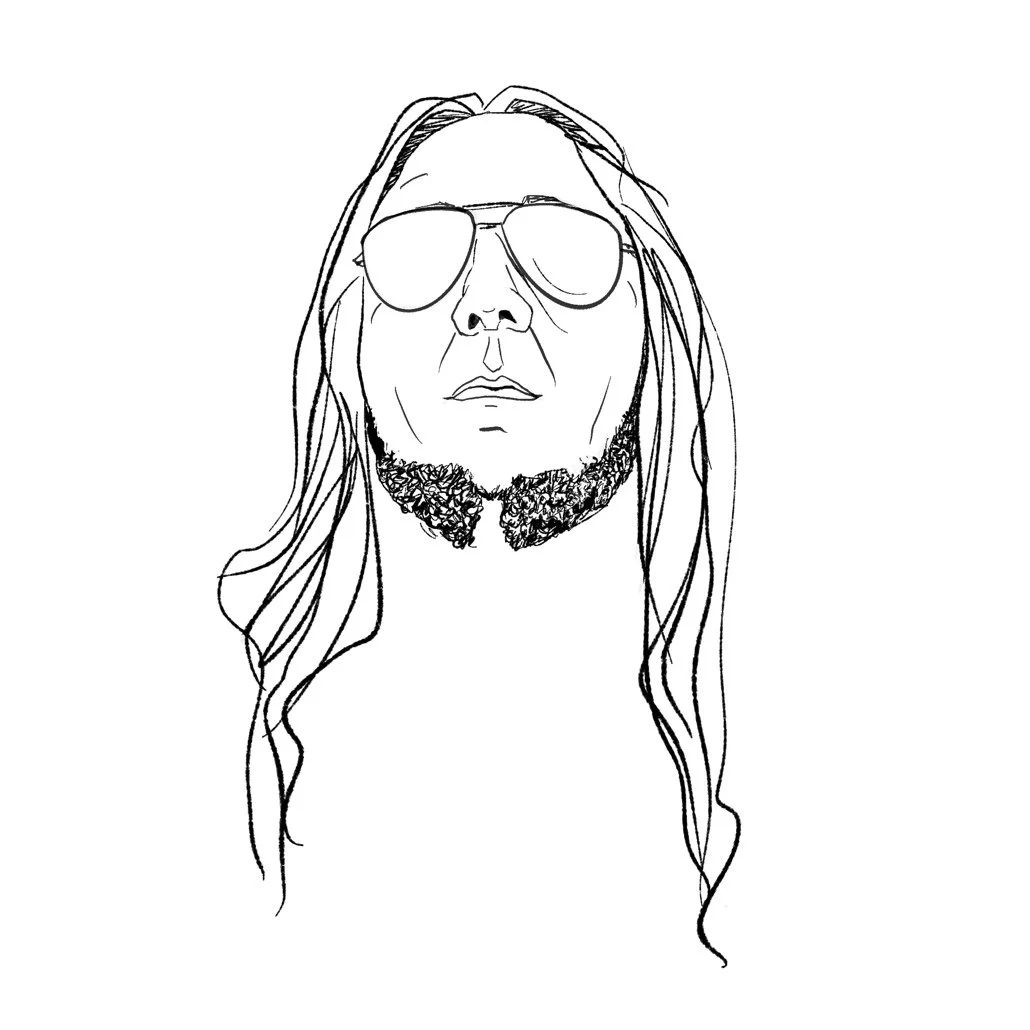
Welcome, 2026: Year 1 of the Fire Horse
Molly Hankins January 1, 2026
As we cross the threshold from a numerological year 9 of the wood snake in 2025 into a year 1 of the fire horse, beginning February 17th in the Chinese zodiac, we are shedding the last of our old identity-skins…
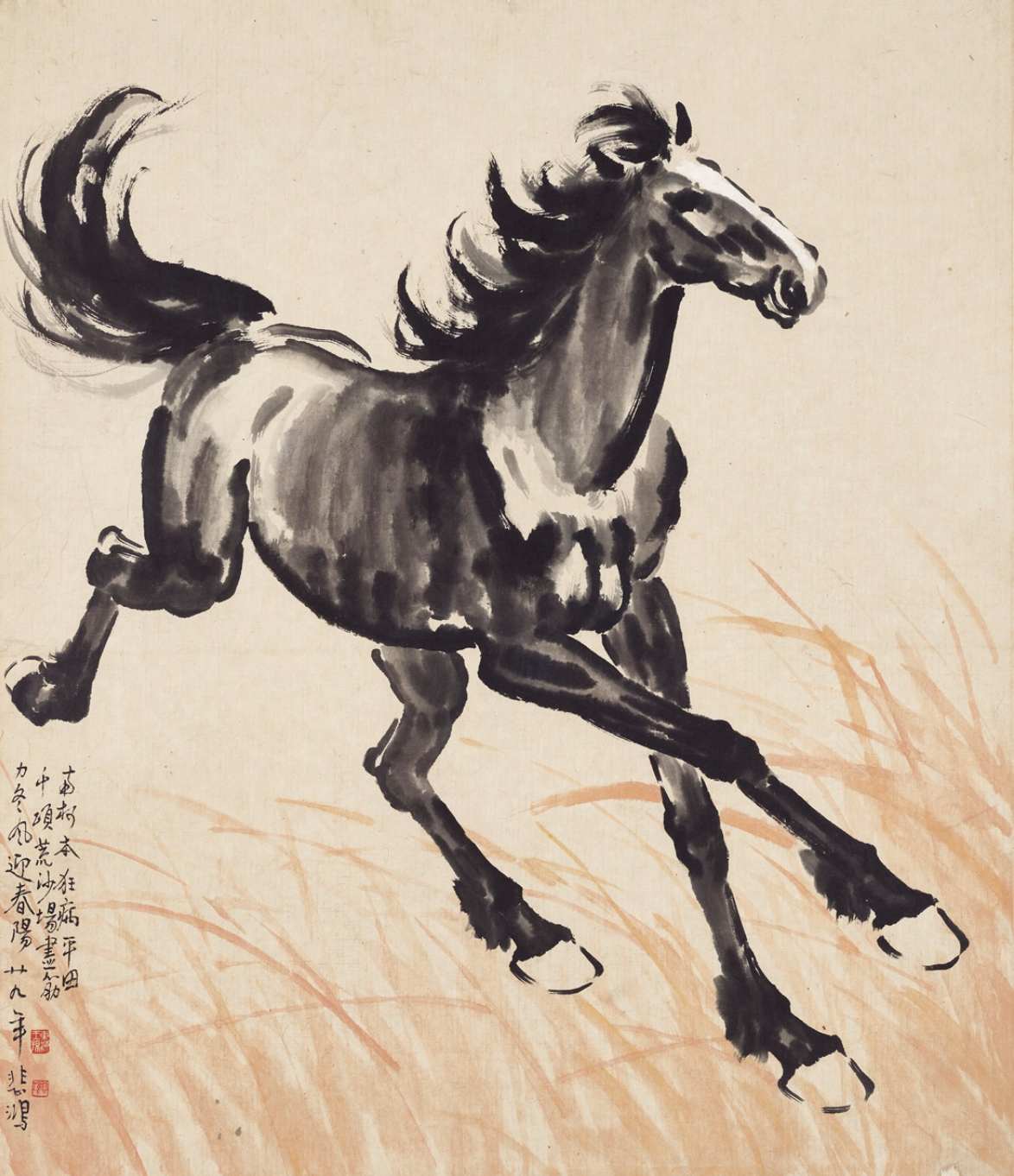
Galloping Horse, Xu Beihong. 1941.
Molly Hankins January 1, 2026
As we cross the threshold from a numerological year 9 of the wood snake in 2025 into a year 1 of the fire horse, beginning February 17th in the Chinese zodiac, we are shedding the last of our old identity-skins. What wasn’t working in our lives on the material plane is being closed out over the next six weeks, as the year 1 energy of 2026 refreshes our consciousness and charts our new course in life. The fire horse energy gives us the supercharged creativity to begin and sustain the momentum of following our highest excitement. A year 1 also promises surprises, unexpected opportunities, new relationships, and a significant expansion of our perspectives. Think back to the last year 1 which was in 2017- that was fire rooster year and there will likely be parallels across the macro themes in our lives.
In numerology, annual cycles are calculated by adding the numerals of a given year together, so 2026 is a year 1 because 2+2+0+6 = 10, and 1+0 = 1. The 1 represents a fresh start, so this is a year that asks us to embrace change and become more ourselves. The fire horse energy will fuel the urge to express our authenticity and share it with the people we love. Having shed so much over this previous year, we are ready to make new connections that form a circuit of conscious beings stable enough to run the powerful fire horse energy. In 2026, our life force is activated at a new level, and this will magnetize resonant souls who will be great company on our life’s journey. They also reflect back to us what we need to recognize within ourselves.
Numerologist and best-selling author Kaitlyn Kaerhart, who was interviewed for Tetragrammaton in 2025, believes that “when we know the nature of the cycle we’re in, we have a greater awareness of the energy that’s most supported at any given time, and how to make that energy work for us.” The year of the fire horse brings action and change, but beware that the energy can also be so quick-moving that it can lead to distraction or hot-headedness. “This year will feel dramatically different from 2025,” Kaerhart says. “Year 9 is the most intense and demanding year in numerology because it’s focused on endings, closure, grief and release. Collectively, 2025 was a dismantling, like a caterpillar dissolving inside the cocoon. In 2026, we emerge. This is the year we grow wings and begin again from a new level of awareness.”
“This isn’t a year to rush blindly. It’s a year to choose wisely.”
As for how to work with the new year energy, Kaerhart points out that not only are we in year 1, replete with fresh-start energy, but there’s a ton of horsepower behind that creative urge. We must be conscious of what we’re creating, why we’re doing it and who we’re working with. “Because year 1 is foundational, the most important way to work with this energy is through conscious initiation. Be intentional about what you start,” she reminds us. “Relationships, businesses, creative projects, relocations and commitments made this year have staying power. They carry momentum that can last the full nine-year cycle.”
Horses have co-evolved with mankind to help us get where we’re going and build lasting structures, so think of this energy as the fuel powering the next phase of our individual and collective evolution. In order to tame a horse, trust must be built and limits must be put in place otherwise the horse will run wild and we lose its power. The horse must also be tended to and taken care of, the same is true for this year. We can use this cycle to our advantage by slowing down our thinking and acting, making sure that what we’re doing aligns with who we are and how we want our lives to be. Conversely, we can create chaos with this energy if we’re impatient or misaligned in our relationships and activities.
“This isn’t a year to rush blindly,” Kaerhart says. “It’s a year to choose wisely. The consequences of our choices matter more now than they have in years.” As we work with this new energy, it can also be helpful to compare the year 1 we’re collectively experiencing to the one we are personalling travelling, which requires another simple calculation. To figure out what personal year you’re in, add up the digits of your birthday to the current year. For example, a July 10th birthday would add up to a personal year 9, because 7+1+0+2+0+2+6 = 9. This means endings and new beginnings will be happening right next to each other. The image of the ouroboros comes to mind, where the snake eats its own tail in a representation of eternal self-creation. For more specifics on how our personal year cycles interact with that of the collective, Kaerhart publishes annual planners detailing how to use this information to work with the astrological energy of the year.
Since what we create this year sets the tone for the next 9 years, the hope is that we can tame the fiery horse energy and harness it for our highest good. “Year 1 is the year where new timelines are initiated, identities are reshaped and long-term paths are chosen,” she explains. “It’s the spark year — the moment where ideas move from possibility into form.”
Molly Hankins is an Initiate + Reality Hacker serving the Ministry of Quantum Existentialism and Builders of the Adytum.
Film
<div style="padding:42.22% 0 0 0;position:relative;"><iframe src="https://player.vimeo.com/video/1120730199?title=0&byline=0&portrait=0&badge=0&autopause=0&player_id=0&app_id=58479" frameborder="0" allow="autoplay; fullscreen; picture-in-picture; clipboard-write; encrypted-media; web-share" referrerpolicy="strict-origin-when-cross-origin" style="position:absolute;top:0;left:0;width:100%;height:100%;" title="The Poseidon Adventure clip 1"></iframe></div><script src="https://player.vimeo.com/api/player.js"></script>
Daron Malakian - ON METAL (Part 1)
1h 41m
12.31.25
In this clip, Rick speaks with Daron Malakian about the theatrics involved with metal music.
<iframe width="100%" height="265" src="https://clyp.it/qhq0tvwb/widget?token=6e608bd528fc4cd94a2a470c5ed9ed2d" frameborder="0"></iframe>
Film
<div style="padding:56.25% 0 0 0;position:relative;"><iframe src="https://player.vimeo.com/video/1151235387?badge=0&autopause=0&player_id=0&app_id=58479" frameborder="0" allow="autoplay; fullscreen; picture-in-picture; clipboard-write; encrypted-media; web-share" referrerpolicy="strict-origin-when-cross-origin" style="position:absolute;top:0;left:0;width:100%;height:100%;" title="Moonwalk One - Moonwalk"></iframe></div><script src="https://player.vimeo.com/api/player.js"></script>
The Curriculum of the Bauhaus (1919)
Walter Gropius December 30, 2025
Intellectual education runs parallel to manual training…

The Bauhaus School Building in Weimar, Germany.
Four years after the formation of the Bauhaus, its founder Walter Gropius wrote a text entitled ‘The Theory and Organization of the Bauhaus’ as a manifesto, declaration and explanation of the radical new world they were trying to form. The Bauhaus was a new type of art school, founded in 1919 in Weimar, Germany that attempted to unify individual expression and the process of mass manufacturing and modernity. It was inherently inter-disciplinary, and its output ranges from furniture and buildings, to paintings and craft work, each of which was valued individually and as a cohesive part of the greater whole. Perhaps no single movement has had quite as much impact in the 20th century, and the very visual language of the modern world owes its debt to this small school in Germany. Here, Gropius explains the curriculum of the school, and in doing so espouses some of the core philosophical ideas of the movement - that of intersectionality between mediums, rigorous focus on craft and technicality and an emphasis on the freedom that can be found within constraints of production.
Walter Gropius December 30, 2025
The course of instruction at the Bauhaus is divided into:
The Preliminary Course (Vorlehre)
Practical and theoretical studies are carried on simultaneously in order to release the creative powers of the student, to help him grasp the physical nature of materials and the basic laws of design. Concentration on any particular stylistic movement is studiously avoided. Observation and representation - with the intention of showing the desired identity of Form and Content - define the limits of the preliminary course. Its chief function is to liberate the individual by breaking down conventional patterns of thought in order to make way for personal experiences and discoveries which will enable him to see his own potentialities and limitations. For this reason collective work is not essential in the preliminary course. Both subjective and objective observation will be cultivated: both the system of abstract laws and the interpretation of objective matter.
Above all else, the discovery and proper valuation of the individual's means of expression shall be sought out. The creative possibilities of individuals vary. One finds his elementary expressions in rhythm, another in light and shade, a third in color, a fourth in materials, a fifth in sound, a sixth in proportion, a seventh in volumes or abstract space, an eighth in the relations between one and another, or between the two to a third or fourth.
All the work produced in the preliminary course is done under the influence of instructors. It possesses artistic quality only in so far as any direct and logically developed expression of an individual which serves to lay the foundations of creative discipline can be called art.
*
Instruction in form problems
Intellectual education runs parallel to manual training. The apprentice is acquainted with his future stock-in-trade - the elements of form and color and the laws to which they are subject. Instead of studying the arbitrary individualistic and stylized formulae current at the academies, he is given the mental equipment with which to shape his own ideas of form. This training opens the way for the creative powers of the individual, establishing a basis on which different individuals can cooperate without losing their artistic independence. Collective architectural work becomes possible only when every individual, prepared by proper schooling, is capable of understanding the idea of the whole, and thus has the means harmoniously to coordinate his independent, even if limited, activity with the collective work. Instruction in the theory of form is carried on in close contact with manual training. Drawing and planning, thus losing their purely academic character, gain new significance as auxiliary means of expression. We must know both vocabulary and grammar in order to speak a language; only then can we communicate our thoughts. Man, who creates and constructs, must learn the specific language of construction in order to make others understand his idea. Its vocabulary consists of the elements of form and color and their structural laws. The mind must know them and control the hand if a creative idea is to be made visible. The musician who wants to make audible a musical idea needs for its rendering not only a musical instrument but also a knowledge of theory. Without this knowledge, his idea will never emerge from chaos.
A corresponding knowledge of theory - which existed in a more vigorous era - must again be established as a basis for practice in the visual arts. The academies, whose task it might have been to cultivate and develop such a theory, completely failed to do so, having lost contact with reality. Theory is not a recipe for the manufacturing of works of art, but the most essential element of collective construction; it provides the common basis on which many individuals are able to create together a superior unit of work; theory is not the achievement of individuals but of generations. The Bauhaus is consciously formulating a new coordination of the means of construction and expression. Without this, its ultimate aim would be impossible. For collaboration in a group is not to be obtained solely by correlating the abilities and talents of various individuals. Only an apparent unity can be achieved if many helpers carry out the designs of a single person. In fact, the individual's labor within the group should exist as his own independent accomplishment. Real unity can be achieved only by coherent restatement of the formal theme, by repetition of its integral proportions in all parts of the work. Thus everyone engaged in the work must understand the meaning and origin of the principal theme.
Forms and colors gain meaning only as they are related to our inner selves. Used separately or in relation to one another they are the means of expressing different emotions and movements: they have no importance of their own. Red, for instance, evokes in us other emotions than does blue or yellow; round forms speak differently to us than do pointed or jagged forms. The elements which constitute the 'grammar' of creation are its rules of rhythm, of proportion, of light values and full or empty space. Vocabulary and grammar can be learned, but the most important factor of all, the organic life of the created work, originates in the creative powers of the individual. The practical training which accompanies the studies in form is founded as much on observation, on the exact representation or reproduction of nature, as it is on the creation of individual compositions. These two activities are profoundly different. The academies ceased to discriminate between them, confusing nature and art - though by their very origin they are antithetical. Art wants to triumph over Nature and to resolve the opposition in a new unity, and this process is consummated in the fight of the spirit against the material world. The spirit creates for itself a new life other than the life of nature.
Each of these departments in the course on the theory of form functions in close association with the workshops, an association which prevents their wandering off into academicism.
*
The goal of the Bauhaus curriculum
The culminating point of the Bauhaus teaching is a demand for a new and powerful working correlation of all the processes of creation. The gifted student must regain a feeling for the interwoven strands of practical and formal work. The joy of building, in the broadest meaning of that word, must replace the paper work of design. Architecture unites in a collective task all creative workers, from the simple artisan to the supreme artist.
For this reason, the basis of collective education must be sufficiently broad to permit the development of every kind of talent. Since a universally applicable method for the discovery of talent does not exist, the individual in the course of his development must find for himself the field of activity best suited to him within the circle of the community. The majority become interested in production; the few extraordinarily gifted ones will suffer no limits to their activity. After they have completed the course of practical and formal instruction, they undertake independent research and experiment.
Modern painting, breaking through old conventions, has released countless suggestions which are still waiting to be used by the practical world. But when, in the future, artists who sense new creative values have had practical training in the industrial world, they will themselves possess the means for realizing those values immediately. They will compel industry to serve their idea and industry will seek out and utilize their comprehensive training.
Walter Adolph Georg Gropius (1883 – 1969) was a German architect and founder of the Bauhaus School. He is widely regarded as one of the pioneering masters of modernist architecture, and one of the most influential art theorists of the modern age.
8 Union - The I Ching
Chris Gabriel December 27, 2025
Unity. There is luck when the source of divination is pure. Restless ones come too late, they are ill fated…
Chris Gabriel December 27, 2025
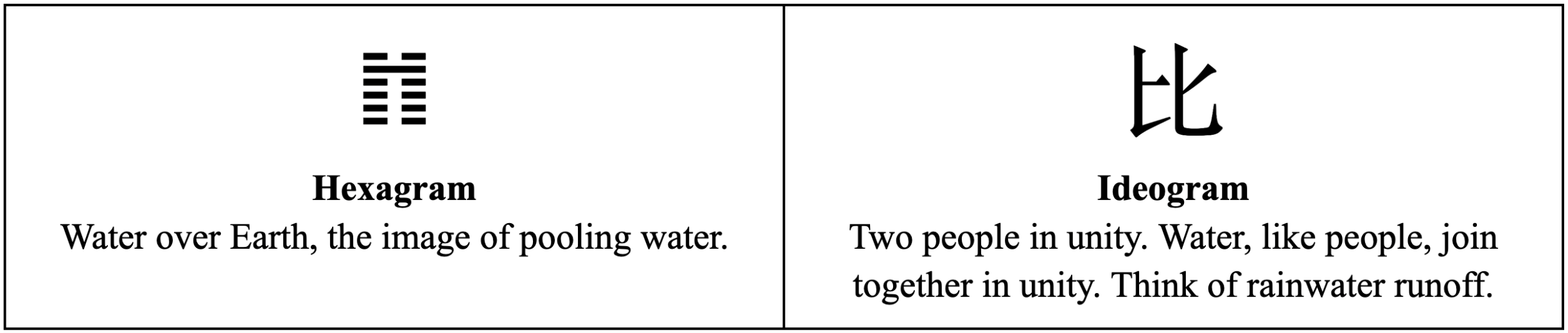
Judgment
Unity. There is luck when the source of divination is pure. Restless ones come too late, they are ill fated.
Lines
1
Unity with faith. Faith fills pots.
2
Unity within.
3
Unity with the wrong people.
4
Unity without.
5
Unity with appearance. The King has three ways, losing the bird in front of him. His people don’t warn him.
6
Unity without a leader.
Qabalah
Yesod to Malkuth: The Path of Tau. The Universe.
Yesod’s energy flows over Malkuth.
The Moon to the Earth.
In this hexagram we have the image of water pooling on the face of the Earth, as a puddle is formed. People are drawn together in the same way the water gathers together. This is Unity, or likeness: people who are alike will unify. When I was a child I loved watching raindrops race down a window pane, gathering others as it went and this is the essence of the hexagram. Unlike water, who we unify with determines a great deal.
1
A Union requires faith, an ideal, a goal which is greater than the sum of its parts. Mere selfishness or utility is not enough to keep people unified. A great group of friends will feed one another, and help each other when they’re down. As Ringo sings: “I get by with a little help from my friends”.
2
The unity we seek without must come from within, an internal resonation with others. Through internal resonance we can attract friends.
3
When you don’t look carefully, it’s easy to fall in with a bad crowd, to make bad friends. This is one of the worst mistakes a person can make. “You are the company you keep”, and if you keep bad company, you can spoil your life. They will drag you down, and leave you if you fall below them.
4
We can unify with what is beyond our limited network. The outside holds great potential; it is how a union grows, through alliances with those outside.
5
When we act in unison with our appearance we do well. Honesty allows more complexity, even at the cost of immediate power through deception. The King wants a more difficult game, so he allows some of the animals to get away.
6
A great union is made of equals, without a clear leader. E pluribus unum, not primus inter pares.
In the last hexagram, we looked at hidden powers and disciplined movements of trained armies. Here we see visible unions, friendships, and alliances. This is diplomacy rather than violence, peace rather than war. Having the right friends will keep us from needing to fight, or at least make our fights much easier. The wrong friends will draw us into many more fights than we would have had on our own.
We can think of Aesop’s Fable of the Bundle of Sticks, the Fasci. The father of three sons shows them a bundle of sticks and has each attempt to break it, none of them can. When they undo the bundle, they easily break the sticks one by one, the moral being “United we stand, divided we fall.” or “Unity gives strength.” .
Film
<div style="padding:72.87% 0 0 0;position:relative;"><iframe src="https://player.vimeo.com/video/1149700684?badge=0&autopause=0&player_id=0&app_id=58479" frameborder="0" allow="autoplay; fullscreen; picture-in-picture; clipboard-write; encrypted-media; web-share" referrerpolicy="strict-origin-when-cross-origin" style="position:absolute;top:0;left:0;width:100%;height:100%;" title="All My Good Countrymen clip 5"></iframe></div><script src="https://player.vimeo.com/api/player.js"></script>
The Big Rock Candy Figgy Pudding Pitfall (1966)
Joan Didion December 25, 2025
You will perhaps have difficulty understanding why I conceived the idea of making 20 hard-candy topiary trees and 20 figgy puddings in the first place…
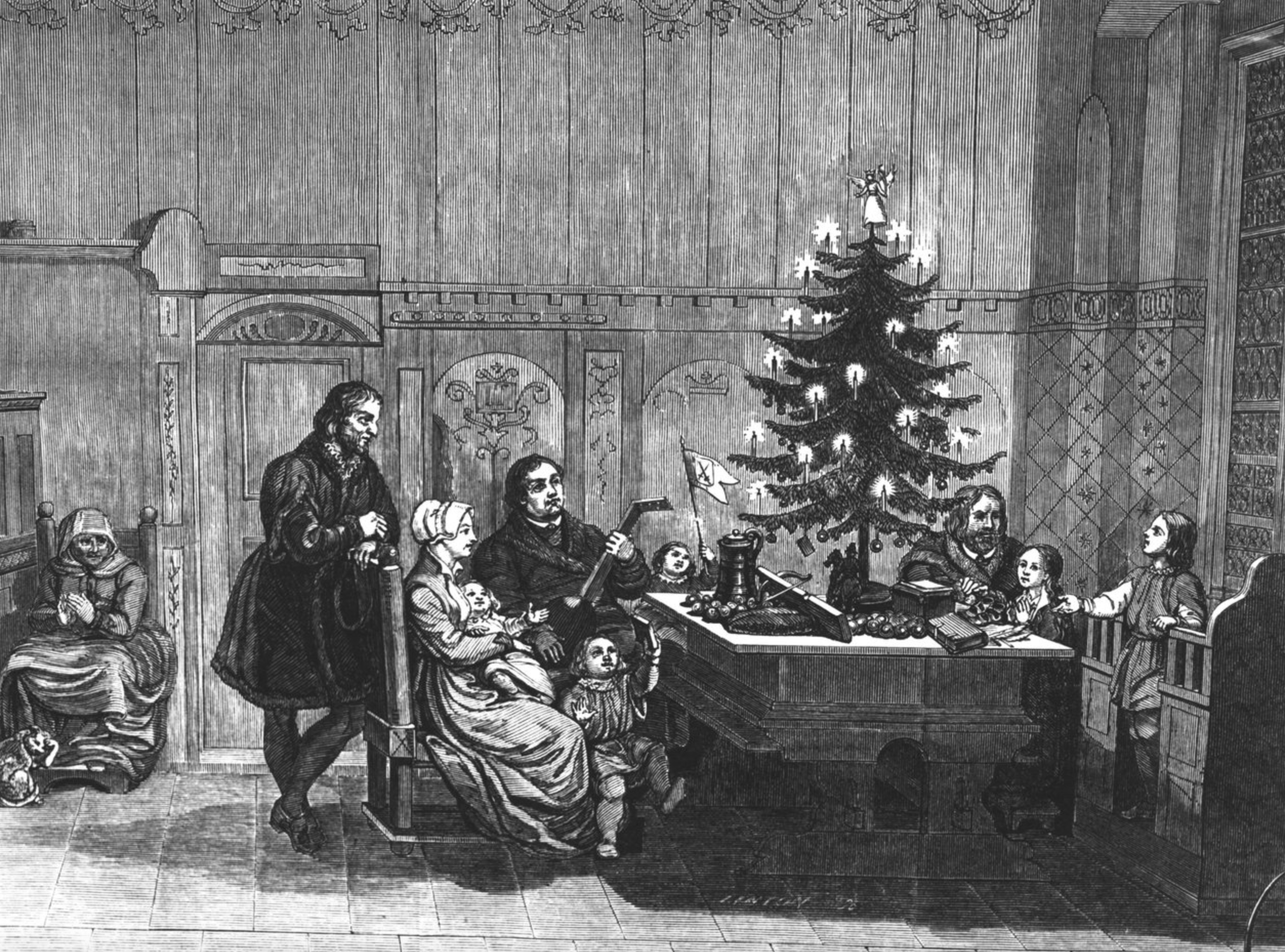
Capturing, with her inimitable wit and poignancy, the grand ambitions and subsequent disappointments of the Christmas period, Didion’s short essay from 1966 sparkles with self deprecation and recognition. The work is a gentler, slighter piece than those that made her one of the most celebrated and influential writers of her generation and beyond, yet it is abundant in trademark charm and acutely observed.
Joan Didion December 25, 2025
You will perhaps have difficulty understanding why I conceived the idea of making 20 hard-candy topiary trees and 20 figgy puddings in the first place. The heart of it is that although I am frail, lazy, and unsuited to doing anything except what I am paid to do, which is sit by myself and type with one finger, I like to imagine myself a “can-do” kind of woman, capable of patching the corral fence, pickling enough peaches to feed the hands all winter, and then winning a trip to Minneapolis in the Pillsbury Bake-Off. In fact, the day I stop believing that if put to it I could win the Pillsbury Bake-Off will signal the death of something.
It was late in September, about the time certain canny elves began strategically spotting their Make It Yourself for Christmas books near supermarket checkout counters, when I sensed the old familiar discontent. I would stand there in the Westward Ho market, waiting to check out my frozen chicken tetrazzini and leafing through the books, and I would see how far I had drifted from the real pleasures. I did not “do” things. I did not sew spangles on potholders for my friends. I did not make branches of marzipan mistletoe for my hostesses. I did not give Corn Dog and Caroling Parties for neighborhood children (Did I know any neighborhood children? Were there any neighborhood children? What exactly was my neighborhood?), the Corn Dogs to be accompanied by Hot Santa’s Grog.
Nor had it ever occurred to me to buy Styrofoam balls, cover them with hard candies, plant them on wooden stalks in small flowerpots, and end up with amusingly decorative hard-candy topiary trees, perfect for centerpieces or last-minute gifts. At the checkout counter, I recognized clearly that my plans for the Christmas season — making a few deadlines — were stale and unprofitable. Had my great-great-grandmother come west in a covered wagon and strung cranberries on scrub oaks so that I might sit by myself in a room typing with one finger and ordering Italian twinkle lights by mail from Hammacher Schlemmer?
I wanted to be the kind of woman who made hard-candy topiary trees and figgy puddings. The figgy puddings were not in the Make It Yourself for Christmas books but something I remembered from a carol. “Oh, bring us a figgy pudding and a happy new year,” the line went. I was unsure what a figgy pudding was, but it had the ring of the real thing.
“Exactly what kind of therapy are we up to this week?” my husband asked when I arrived home with 20 Styrofoam balls, 20 flowerpots, and 60 pounds of, or roughly 6,000, hard candies, each wrapped in cellophane.
“Hard-candy topiary trees, if you don’t mind,” I said briskly, to gain the offensive before he could mention my last project, a hand-knitted sweater which would have cost $60 at Jax, the distinction being that, had I bought it at Jax, it would very probably be finished. “Twenty of them. Decorative. Amusing.”
He said nothing.
“Christmas presents,” I said.
There was a moment of silence as we contemplated the dining room table, covered now with shifting dunes of lemon drops.
“Presents for whom?” he said.
“Your mother might like one.”
“That leaves 19.”
“All right. Let’s just say they’re centerpieces.”
“Let’s just say that if you’re making 20 centerpieces, I hope you’re under contract to Chasen’s. Or maybe to Hilton.”
“That’s all you know,” I countered, wittily.
Provisions for the figgy puddings were rather more a problem. The Vogue Book of Menus and Recipes made no mention of figgy pudding, nor did my cookbook, although the latter offered a recipe for “Steamed Date or Fig Pudding.” This had a tentative sound, and so I merely laid in 20 pounds of dried figs and planned, when the time came, to improvise from there. I thought it unnecessary to mention the puddings to my husband just yet.
Meanwhile, work on the topiary trees proceeded. Pebbles were gathered from the driveway to line the flowerpots. (“Next time it rains and that driveway washes out,” I was informed, “there’s going to be one unhappy Santa’s Helper around here.”) Lengths of doweling to be used as stalks were wrapped with satin ribbons. The 20 Styrofoam balls glistened with candies, each affixed with an artfully concealed silk pin. (As it happened I had several thousand silk pins left from the time I planned to improvise a copy of a Grès evening dress.) There was to be a lemon-drop tree and an ice-mint tree and a cinnamon-lump tree. There was to be a delicate crystallized-violet tree. There was to be a witty-licorice tree.
All in all, the operation went more smoothly than any I had undertaken since I was 16 and won third prize in the Sacramento Valley Elimination Make-It-Yourself-with-Wool Contest. I framed graceful rejoinders to compliments. I considered the probability that I. Magnin or Neiman-Marcus would press me to make trees for them on an exclusive basis. All that remained was to set the candy balls upon their stalks — that and the disposition of the figs — and I had set an evening aside for this crowning of the season’s achievement.
I suppose that it was about 7:00 when I placed the first candy-covered ball on the first stalk. Because it did not seem overly secure, I drilled a deeper hole in the second ball. That one, too, once on its stalk, exhibited a certain tendency to sway, but then so does the Golden Gate Bridge. I was flushed with imminent success, visions of candy trees come true all around me. I suppose it was about 8:00 when I placed the last ball on the last stalk, and I suppose it was about one minute after eight when I heard the first crack, and I suppose it was about 8:15 (there were several minutes of frantic shoring maneuvers) when my husband found me sitting on the dining room floor, crying, surrounded by 60 pounds of scattered lemon drops and ice-mints and cinnamon lumps and witty licorice.
“I’ll tell you what,” he said. “Why don’t we get the grout left over from when you were going to retile the bathroom, and make a ceramic candy floor.”
“If you think you’re going to get any figgy puddings,” I said, “you’d better think again.”
But I had stopped crying, and we went out for an expensive dinner. The next morning I gathered up the candies and took them to Girl Scout headquarters, presumably to be parceled into convalescents’ nut cups by some gnome Brownie. The Styrofoam balls I saved. A clever woman should be able to do something very attractive for Easter with Styrofoam balls and 20 pounds of figs.
Joan Didion (1934 – 2021) was an American writer and journalist. She was one of the pioneers of New Journalism whose sharp, insightful essays gave a voice to modern American life.
Brian Armstrong
2h 12m
12.24.25
In this clip, Rick speaks with Brian Armstrong about the relationship between Crypto and the government.
<iframe width="100%" height="265" src="https://clyp.it/lextfl3r/widget?token=0c05c82a85c25446c18ae9abad7ec983" frameborder="0"></iframe>
Film
<div style="padding:72.92% 0 0 0;position:relative;"><iframe src="https://player.vimeo.com/video/1149087982?badge=0&autopause=0&player_id=0&app_id=58479" frameborder="0" allow="autoplay; fullscreen; picture-in-picture; clipboard-write; encrypted-media; web-share" referrerpolicy="strict-origin-when-cross-origin" style="position:absolute;top:0;left:0;width:100%;height:100%;" title="It's a Wonderful life clip 3"></iframe></div><script src="https://player.vimeo.com/api/player.js"></script>
Architecture of the Cosmos
Trisha Singh December 23, 2025
A Hindu temple does not serve just as a place of worship but as a three-dimensional map of the universe, rendered in stone…
Trisha Singh, December 23, 2025
A Hindu temple does not serve just as a place of worship but as a three-dimensional map of the universe, rendered in stone. Every line, proportion, and orientation of the building is shaped by sacred geometry, a symbolic language that expresses not just both how the cosmos is ordered and how human beings may move within it. Rooted in ancient Indian philosophy, mathematics, astronomy, and ritual practice, Hindu temple architecture transforms space itself into a spiritual path. To understand a Hindu temple is to see how form can guide the devotee from the outer plane toward inner realization.
At the core of this tradition lies the Hindu understanding that the universe is not random or inert, but an ordered, intelligible, and alive entity, replete with consciousness. This order is known as ṛta, the cosmic principle that governs both natural law and moral harmony. Sacred geometry is a visible expression of ṛta, translating metaphysical truth into spatial form, and architecture actively participates in the rituals it hosts.
Central to Hindu philosophy, particularly in the Vedic and Upanishadic traditions, is the idea that the universe (brahmāṇḍa) mirrors the human being (piṇḍāṇḍa). The macrocosm and the microcosm reflect one another, like the old adage of ‘as above, so below’. Sacred geometry serves as the bridge between these two scales of existence. As one enters a temple, they symbolically enter the cosmos, and as they walk through that cosmic journey, move inward toward the Self (ātman), which Hindu philosophy identifies with ultimate reality (Brahman). The temple becomes both a map of the universe and a guide for inner transformation.
The formal principles governing this sacred space are articulated in Vāstu Śāstra, the ancient Indian science of architecture. Vāstu Śāstra integrates geometry, astronomy, directional alignment, and metaphysics, treating space as a living field of energies rather than an empty container. Land itself possesses consciousness, embodied in the figure of the Vāstu Puruṣa, a cosmic being who lies within the square grid of the temple plan. Each part of his body corresponds to specific directions, deities, and natural forces. Constructing a temple is therefore an act of biological creation —aligning human intention with cosmic order.
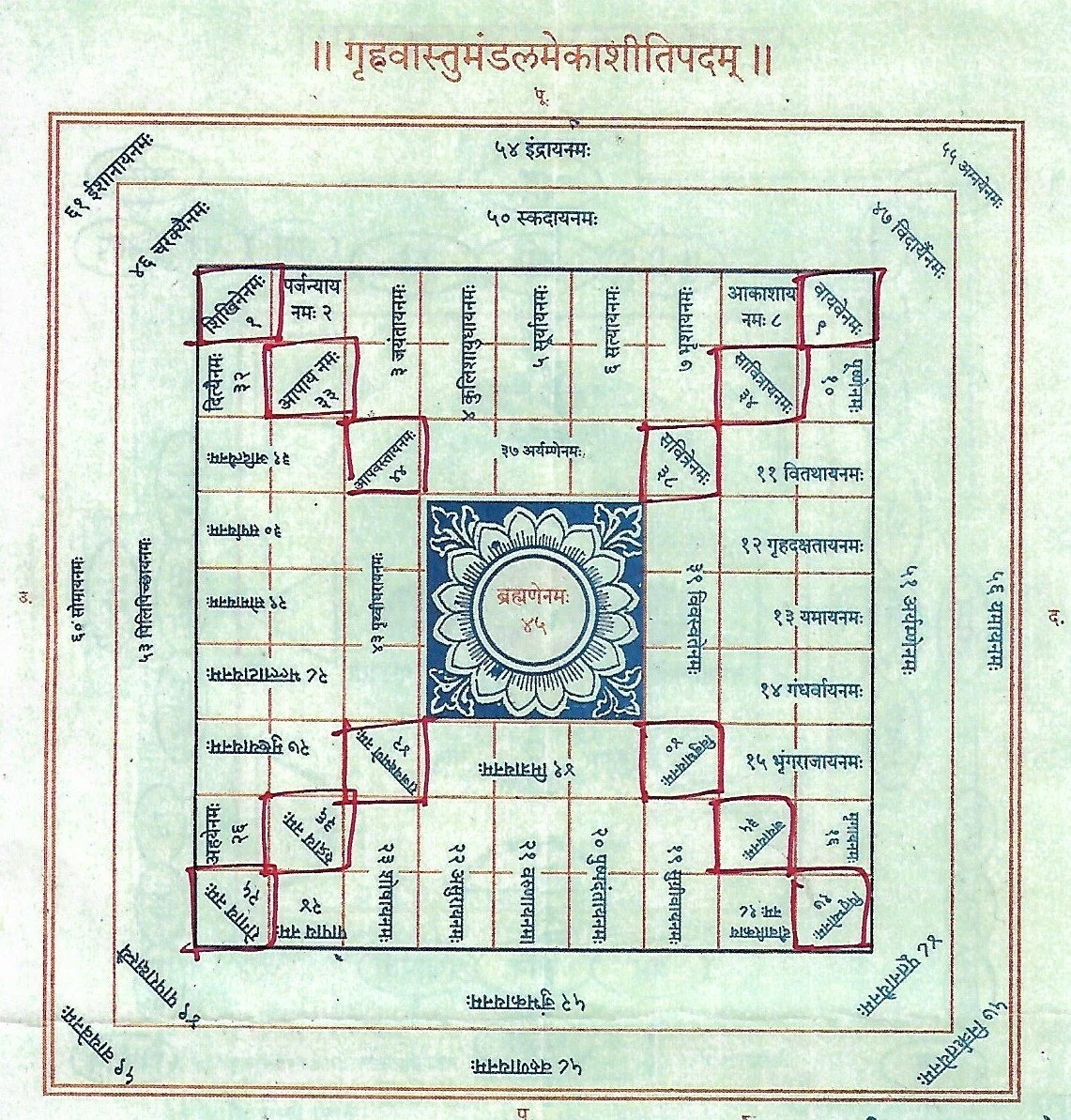
This alignment is most clearly expressed through the Vāstu Puruṣa Maṇḍala, a geometric blueprint that underlyes Hindu temple design. The mandala is both a cosmological diagram and a map of consciousness, taking the form of a geometric grid divided into sixty-four or eighty-one smaller squares, organised around a center. The central square, the Brahma Pada, represents the source of creation: pure, undifferentiated consciousness. The temple’s innermost sanctum, the garbhagṛha, is placed precisely here.
Surrounding this center, the remaining squares are assigned to various deities and cosmic forces, arranged so that energy symbolically flows inward. As we move through the structure, this can be felt tangibly and observed. Complexity of design and adornment gradually gives way to simplicity and a sense of unity. The devotee is a necessary participant in the architecture, moving towards the divine and returning to the source of all.
The geometric language of the temple is built upon two fundamental forms: the square and the circle. The square represents stability, order, and the material world, its corners corresponding to the cardinal directions and the grounded nature of human experience. As such, the square dominates the temple’s plan.
The circle, by contrast, symbolizes infinity, wholeness, and the cosmic order. It represents time, cycles, and the divine. Although temples are rarely circular in structure, their conceptual design often begins with a circle that is “squared.” The boundless reality of Brahman can take form within the finite world without being diminished.
“Unity within diversity, order within complexity, and the presence of the infinite within the finite.”
The system of measurement contributes further to this symbolic system. Hindu temple architecture employs precise units such as the aṅgula and the tāla, as dimensions follow harmonious ratios rather than arbitrary scale. These proportions resonate with cosmic order, much like musical intervals produce harmony through mathematical relationships. Space, like sound, becomes a medium through which balance and coherence are experienced.
We see this attention to proportion most clearly in the temple’s vertical dimension. The rising tower above the sanctum is designed to appear as an organic ascent and evoke the soul’s movement from the earthly realm toward higher planes of existence.
At the base of this ascent lies the garbhagṛha, the inner sanctum and “womb chamber” of the temple. Small, dark, and deliberately austere, it is a perfect square or cube, symbolizing completeness and stability. The absence of natural light and lack of ornamentation draws attention inward, towards our consciousness. As we approach the sanctum, we leave behind the sensory richness of the outer halls and enter a space of stillness and potential, with the architecture mirroring the meditative journey.
Vertical symbolism of the temple extends beyond the tower. Hindu temples are often conceived as representations of Mount Meru, the mythological axis of the universe. The temple’s central vertical line, sometimes called the brahma sūtra, aligns earth and sky, creating a conduit for cosmic energy. At the summit, the kalaśa finial signifies abundance, immortality, and the union of the earthly and the divine.
Most Hindu temples face east, greeting the rising sun as a symbol of knowledge, life, and awakening. In many temples, architectural alignment allows sunlight to illuminate the deity at specific times of the year, linking ritual practice to astronomical cycles. The temple, then, functions not only as a sacred enclosure, but as a calendar and observatory that synchronizes human worship with celestial movement.
Ultimately, the purpose of Hindu temple geometry, as with sacred geometry across cultures, is not about mathematical precision for its own sake. Instead, it functions as a symbolic language, communicating philosophical truths that words alone cannot convey: unity within diversity, order within complexity, and the presence of the infinite within the finite. The temple becomes a mirror and a participant of the universe
Hindu temple’s architecture reveal a worldview in which art, science, and spirituality are inseparable. These structures are designed not only to house deities or inspire awe, but to guide consciousness toward harmony with cosmic order. To walk through a Hindu temple is to traverse a cosmic diagram, moving from the outer world of form and multiplicity toward the silent center of being. The building becomes our teacher.
Trisha Singh is an architect and writer.
Film
<div style="padding:75% 0 0 0;position:relative;"><iframe src="https://player.vimeo.com/video/1149086277?badge=0&autopause=0&player_id=0&app_id=58479" frameborder="0" allow="autoplay; fullscreen; picture-in-picture; clipboard-write; encrypted-media; web-share" referrerpolicy="strict-origin-when-cross-origin" style="position:absolute;top:0;left:0;width:100%;height:100%;" title="Personal Legacies- Materiality and Abstraction clip 16"></iframe></div><script src="https://player.vimeo.com/api/player.js"></script>
Iggy Pop Playlist
Iggy Confidential
Archival - March 23, 2025
Iggy Pop is an American singer, songwriter, musician, record producer, and actor. Since forming The Stooges in 1967, Iggy’s career has spanned decades and genres. Having paved the way for ‘70’s punk and ‘90’s grunge, he is often considered “The Godfather of Punk.”
Film
<div style="padding:56.25% 0 0 0;position:relative;"><iframe src="https://player.vimeo.com/video/1149085400?badge=0&autopause=0&player_id=0&app_id=58479" frameborder="0" allow="autoplay; fullscreen; picture-in-picture; clipboard-write; encrypted-media; web-share" referrerpolicy="strict-origin-when-cross-origin" style="position:absolute;top:0;left:0;width:100%;height:100%;" title="Acting Shakespeare - Using the Verse clip 4"></iframe></div><script src="https://player.vimeo.com/api/player.js"></script>
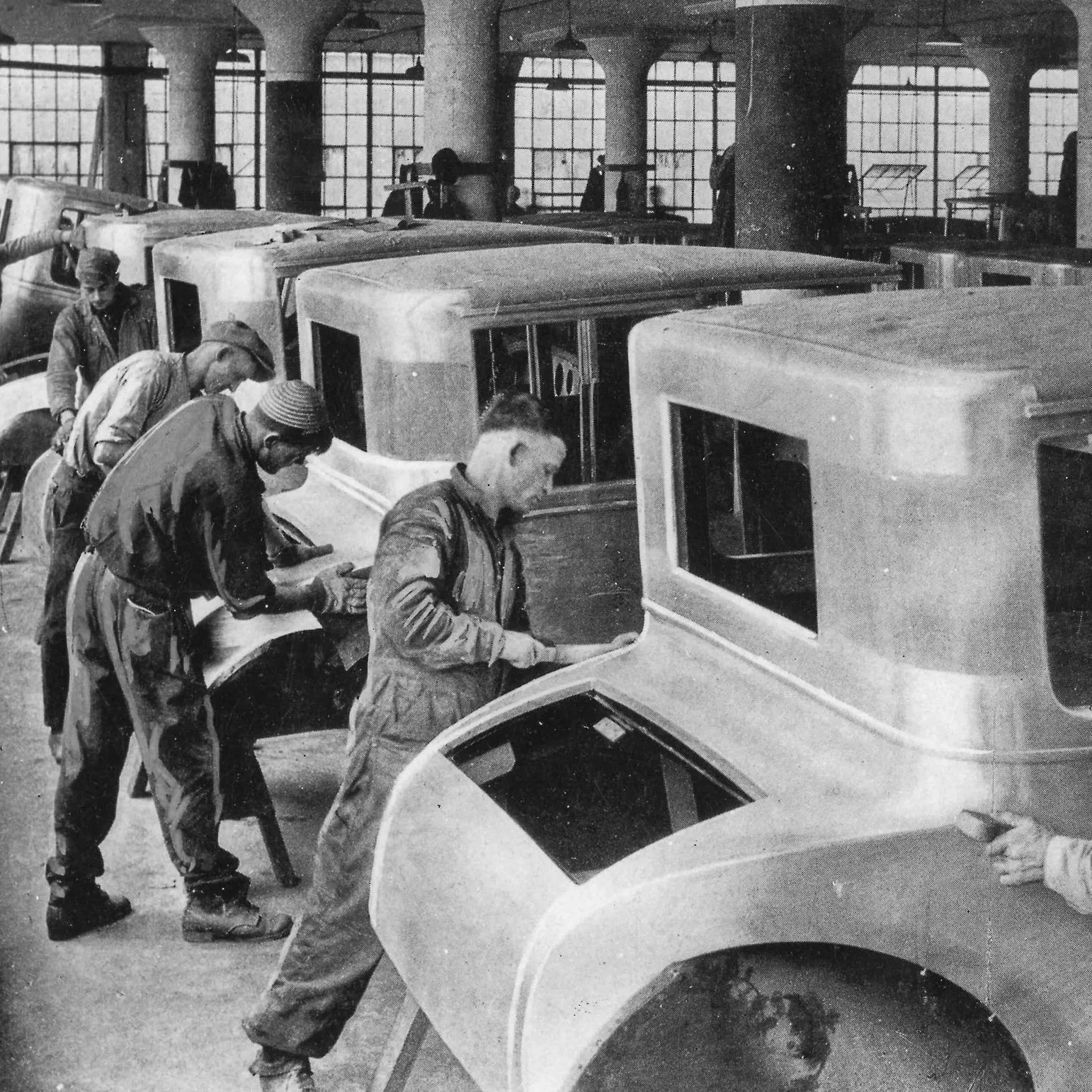
7 Army - The I Ching
Chris Gabriel December 20, 2025
The Army is pure if it is led by a wise man…
Chris Gabriel December 20, 2025
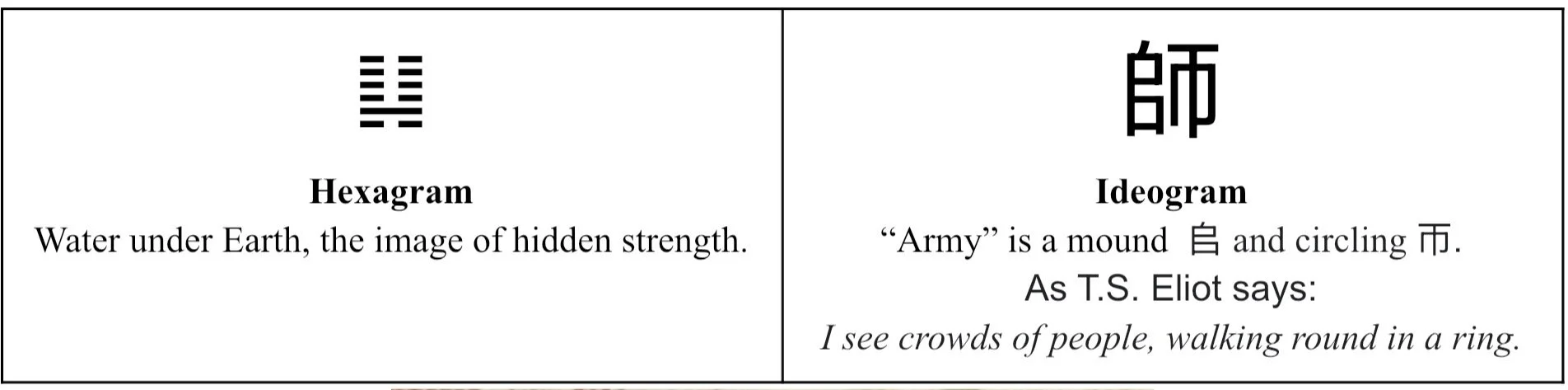
Judgment
The Army is pure if it’s led by a wise man.
Lines
1
The Army goes with discipline.
2
In the middle is the commander with three orders from the King.
3
Sometimes the Army leaves wagons full of corpses.
4
Then the Army rests.
5
Fields full of birds. Catch them. An older boy leads the army. A younger boy is dead.
6
A great one gives orders, opening the country and accepting families. Small ones can’t do this.
Qabalah
Malkuth to Yesod: The Path of Tau. The Universe. Malkuth envelopes the energy of Yesod. The Earth to the Moon.
In this hexagram, we see the image of earth over water. It is something simple atop something dangerous, so in this way we are given the image of the Army. Consider revolutions in which simple folk become warriors. Naturally, this hexagram depicts an aquifer, or an underwater reservoir - a great resource hidden underground.
A clear natural example that intertwines the Army with the underground is an Ant colony and an anthill is not so different from a military bunker.
The lines give us a very stark look at war.
1
An army is worse than useless if it is undisciplined. Yet again, the Ant provides the ideal of the military, absolute devotion and a singular purpose.
2
An army won’t get much done without orders from above.
3
Even when the military functions properly, many people die for the sake of some greater goal.
4
After atrocities and horror, soldiers must rest and recuperate.
5
This is the most significant line in the hexagram. We should not mistake the realistic view of the military here with a denouncement of war - this line clearly advocates for the military acquisition of resources. War comes with the ultimate cost - teenagers leading men in battle against fellow teenagers, and few coming out alive.
6
After war, the land a state has taken is put to use and inhabited.
Another military development through which this hexagram can be understood is camouflage. Camouflage allows something that looks simple to hide something dangerous. Consider the deceptive fulfillment of prophecy by Malcom in Macbeth:
Let every soldier hew him down a bough
And bear ’t before him. Thereby shall we shadow
The numbers of our host and make discovery
Err in report of us.
Hannah Peel Playlist
Archival - December 14, 2025
Mercury Prize, Ivor Novello and Emmy-nominated, RTS and Music Producers Guild winning composer, with a flow of solo albums and collaborative releases, Hannah Peel joins the dots between science, nature and the creative arts, through her explorative approach to electronic, classical and traditional music.
Drunvalo Melchizedek's Unity Breath Meditation
Molly Hankins December 18, 2025
The Unity Breath Meditation moves our consciousness in preparation to receive the new information in his book and the higher dimensional frequencies pouring into Earth at this time…
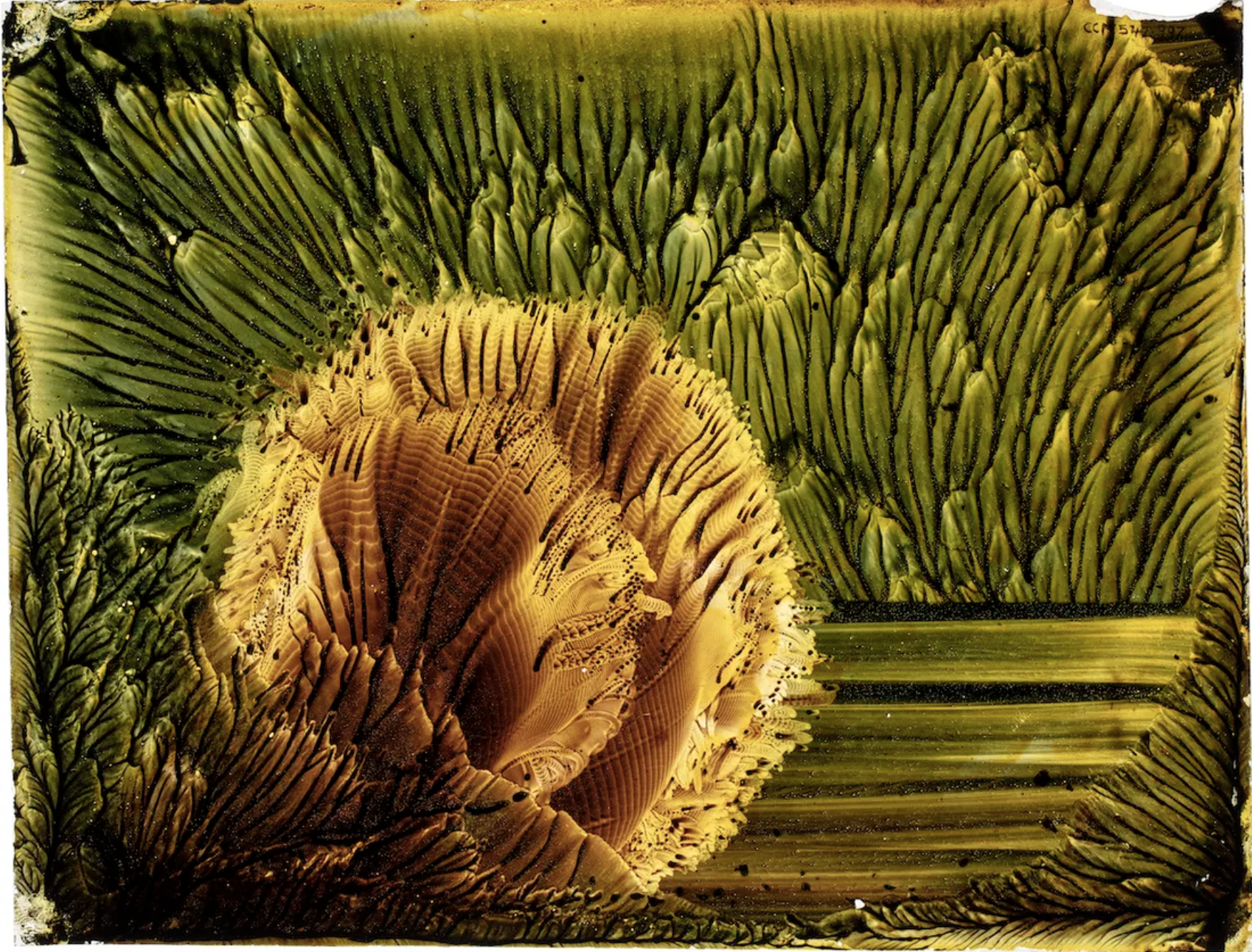
‘Impression Figure’ of recorded sound by Margaret Watts Hughes, Late 1800s.
Molly Hankins December 18, 2025
Ancient Secrets of the Flower of Life author and spiritual teacher Drunvalo Melchizedek began speaking publicly again this year after suffering a stroke, and has announced the completion of his next book due out in 2026. Parts 1 and 2 of Ancient Secrets of the Flower of Life were first published in 1999, and as we wait for the third installation to be released, Drunvalo has been discussing how to prepare for the quantum leap in consciousness we are going through right now as a planet. Many of his teachings discuss moving the seat of our conscious minds from our brain into our hearts. Best articulated in his 2003 book Living In The Heart, he recommends using what he calls the Unity Breath Meditation to move our consciousness in preparation to receive the new information in his book and the higher dimensional frequencies pouring into Earth at this time.
The Unity Breath Meditation was channeled by Drunvalo from the deceased Indian monk and yogi Sri Yuketeswar. “He told me that in India no one would even consider approaching the divine without a certain state of mind and heart,” Drunvalo explained. “And he gave me very specific instructions on exactly how to consciously connect with God.” By connecting emotionally with these ideas, we expand our connection with nature and Source Energy. This expanded channel allows us to cross the threshold into more subtle realms of consciousness, download new states of awareness and embody the integration of those new states.
To begin the meditation, close your eyes and imagine a beautiful, natural setting - including little details like feeling the breeze on your face. “Mother Earth cares about every person on this Earth, she actually knows your name,” Drunvalo says. Connect emotionally to her divine feminine love for you in the meditation, then send that gratitude as a beam of energy down the base of your spine and into the earth’s core. Wait for her to return the energy before moving to the next step. “Trust her, because she can feel when you’re ready,” he says in reference to what kind of energy Mother Earth sends back. Drunvalo believes that it’s dangerous to expand our consciousness too quickly, and that Earth can help us modulate and ground that expansion. It is the emotional connection to the soul of our planet that allows us access to these energies.
Next connect to Father Sky, allowing gratitude to swell for divine masculine energy, and send a beam of energy up into the cosmos or straight to our Sun. Sri Yukteswar specifically recommends placing your energy into a small sphere of light that moves intentionally along the beam, telling us this will activate the unity consciousness grid around the Earth. When Rupert Sheldrake explains the Morphogenetic field of interconnected, living information systems organizing consciousness, he may very well be describing the exact same concept.
Keep breathing as you wait for Father Sky to return the energy, and once received, begin breathing it into your heart along with the energy from Mother Earth. Allow both beams of energy to meet in your heart. Then move your consciousness down into your heart. As you breathe into this space, be aware that the divine is alive there. Source consciousness is expressed through your being, and it loves being you. Now we are in conscious co-creation with that energy, breathe into gratitude for the opportunity to co-create reality. You may find engaging in this meditation increases the intuitive messages from both the natural world and higher consciousness. There is a tiny, sacred place inside your heart - use your imagination to find it.
“Whichever way feels right, is the right way for you. Once you’re in your heart, find the sacred space.”
According to Drunvalo, performing the Unity Breath Meditation and visualization allows us to access the subtle realms of expanded awareness, aligning our frequencies. “I believe that the Unity Breath creates the vibration within you that allows you to find the holy grail, the sacred space of the heart, the place where God originally created all there is. It is so simple. What you have always been looking for is right inside your own heart,” Drunvalo writes in Living In The Heart.
As a precursor to getting into our hearts, Druvalo tells us we must get into our bodies, imagining a pranic tube that runs from just above our heads and through our root chakras into the Earth. Prana is like chi - an energetic life force that can be built, harnessed and channeled into anything. That energy moves along the pranic tube that runs through our spinal column and connects our physical bodies to our souls while we’re alive in human form.
There are distinct masculine and feminine ways of getting into the heart. The masculine way requires you to imagine a toroidal field around your body, moving your consciousness through the field in either direction and into the heart. The feminine way is not prescriptive, we just imagine ourselves to be in the heart and we are there. Whichever way feels right, is the right way for you. Once you’re in your heart, find the sacred space. Drunvalo explained, “The sacred space of the heart is older than creation itself. Before there were galaxies to live within, there was space. All the spaces you have traveled within this creation you have recorded within this space. So at first you might begin to remember what this is all about, what life is all about.” Bring anything you wish to manifest into this sacred place and give it love to accelerate fruition.
What expanded awareness looks like is unique to each of us, but the conscious exchange of higher dimensional energy between Earthly and galactic intelligence that happens during the Unity Breath tends to feel quite enjoyable. Once the channel is opened, stay open to intuitive messages from nature and beyond. Drunvalo also recommends inviting someone you deeply love, living or dead, to be with you in that sacred place within the heart, and to amplify that love into your energy field and the collective. “Now you know your way home,” he writes. “Within the sacred space of the heart, all worlds, all dimensions, all universes, and all of creation found their birth. Interconnecting through your one heart are all the hearts of all life everywhere!” We strengthen this network of hearts making up the unity consciousness grid by meditating on the people we love, then pouring that love into daily living.
Molly Hankins is an Initiate + Reality Hacker serving the Ministry of Quantum Existentialism and Builders of the Adytum.
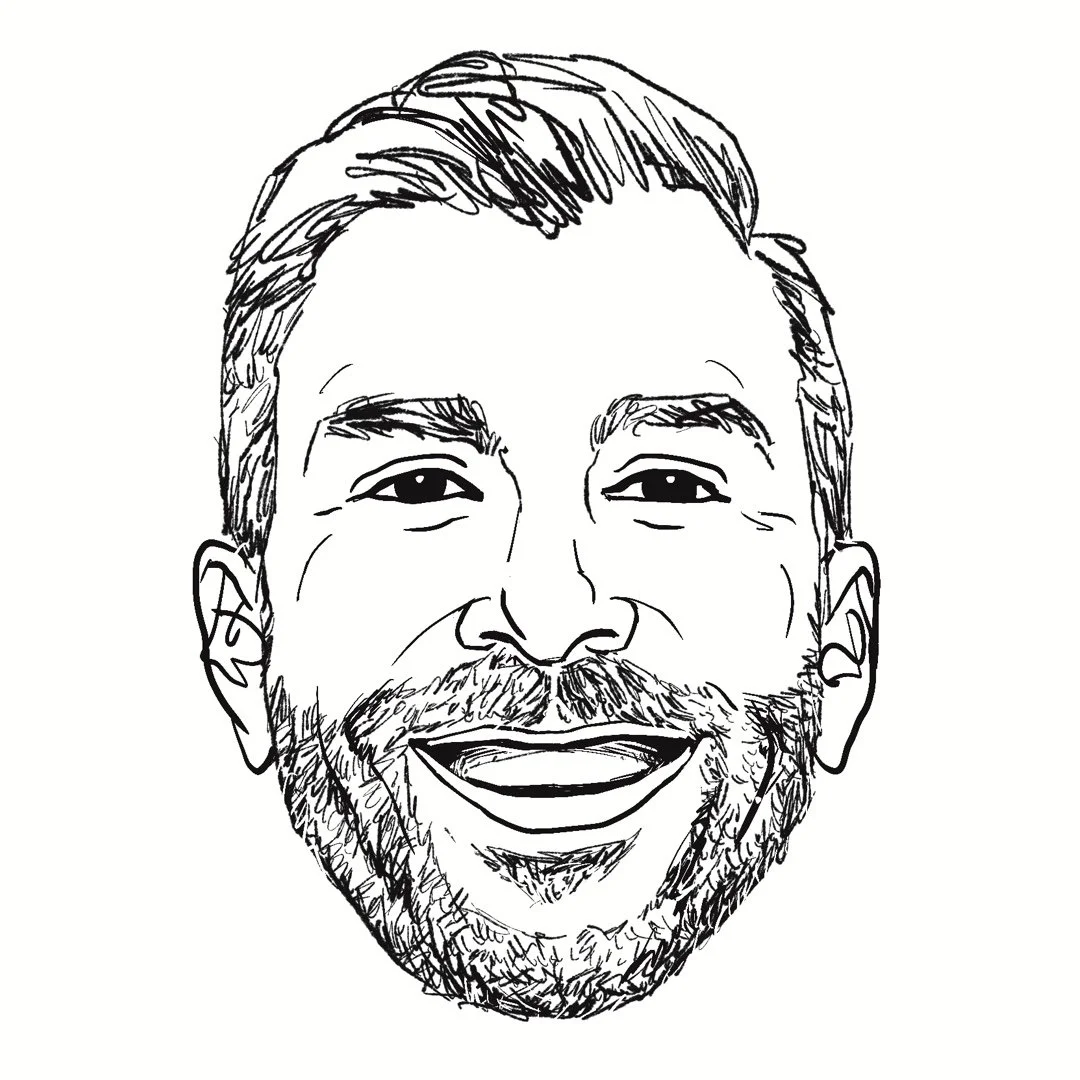
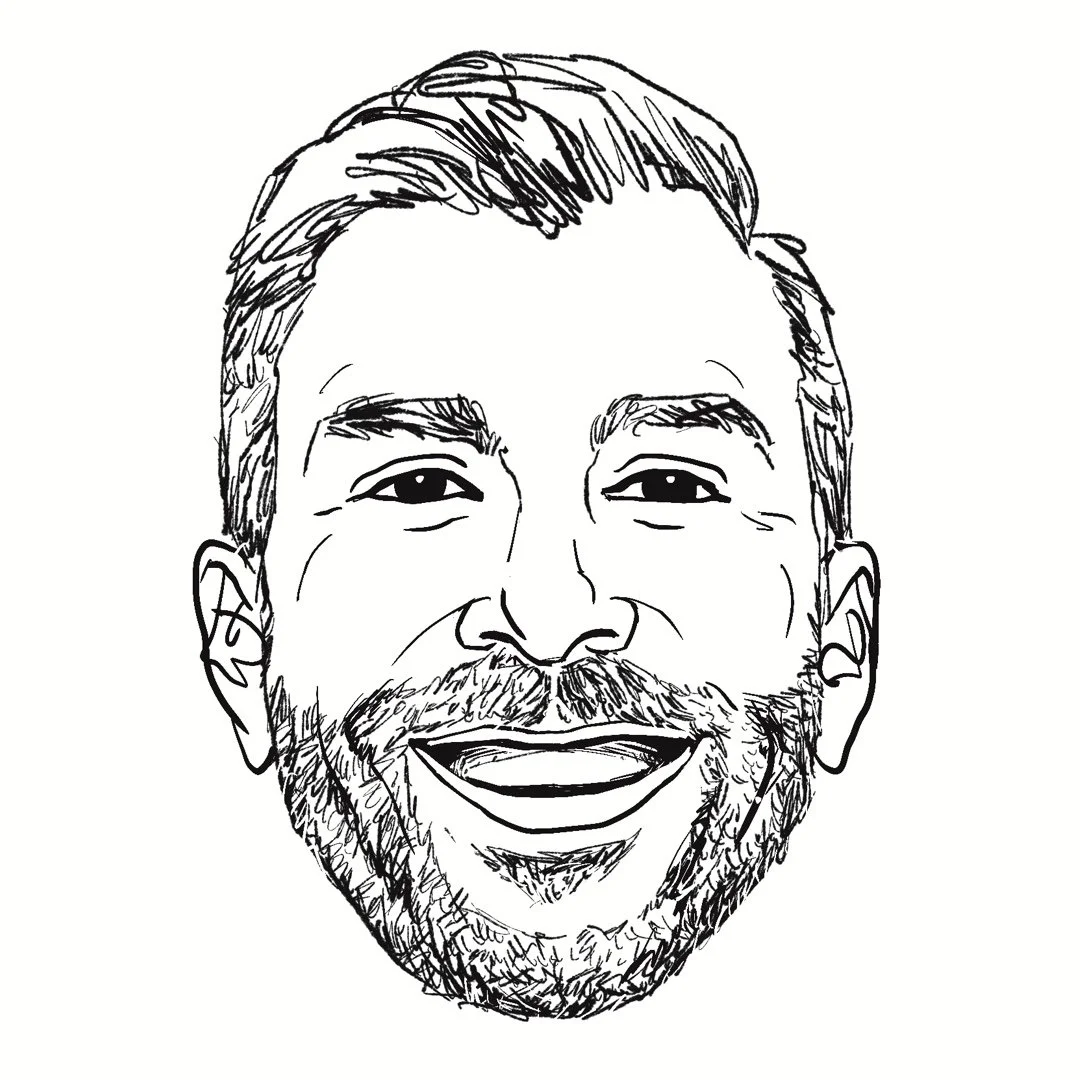
Mike Cessario
1h 16m
12.17.25
In this clip, Rick speaks with Mike Cessario about food marketing and his new approach to it.
<iframe width="100%" height="265" src="https://clyp.it/qbn40tn0/widget?token=59acc50c9fe7db367efa4c0bab5eace6" frameborder="0"></iframe>
Film
<div style="padding:56.25% 0 0 0;position:relative;"><iframe src="https://player.vimeo.com/video/1147126764?badge=0&autopause=0&player_id=0&app_id=58479" frameborder="0" allow="autoplay; fullscreen; picture-in-picture; clipboard-write; encrypted-media; web-share" referrerpolicy="strict-origin-when-cross-origin" style="position:absolute;top:0;left:0;width:100%;height:100%;" title="Carlo Rovelli on The Order of Time clip 9"></iframe></div><script src="https://player.vimeo.com/api/player.js"></script>