
Sapir-Whorf Hypothesis in 5D
Molly Hankins February 12, 2026
Linguistic relativity, as described by anthropology Professor Edward Sapir and his student Benjamin Lee Whorf in the early part of the 20th century, is a worldview shaped by the structure of language.

Punctuation Personified: or, Pointing Made Easy, John Harris. 1824.
Molly Hankins February 12, 2026
Linguistic relativity, as described by anthropology Professor Edward Sapir and his student Benjamin Lee Whorf in the early part of the 20th century, is a worldview shaped by the structure of language. Known as the Sapir-Whorf hypothesis, the theory claims that different languages equate to different interpretations of reality, creating different cognitive patterns. As global consciousness continues its rapid evolution to what many spiritual teachers call the 5th dimension, our use of language can aid that progression, as well stall it.
Author, scientist and magician Peter J. Carroll believes that 5th dimensional consciousness includes access to what’s known as the causal plane, and that 3D life is just the world of effects. When we’re precise with words, we refine our ability to access the causal dimension and create effects in our day-to-day lives, which is easier said than done depending on what languages you speak. English, the language best known for facilitating international commerce, can be especially tricky when it comes to describing higher dimensional concepts. In her book, Waking Up In 5D, author and teacher Maureen St. Germain describes how she found herself moving away from polarized language as her consciousness expanded.
“To discover your own habits, all you have to do is notice the way you speak of your experiences and how that colors your current situation. When you discover your own ‘source code,’ you can change it,” she writes. “Language is a strong and significant key to creating more mastery at every level. Let your language be open-ended, without preference or prejudice, so you can speak the language of the 5th dimension.” Our source code sends the programming instructions for 3D effects to the causal plane, and if the language we use is empowering, then those instructions are far more likely to be carried out with precision. An entire chapter of Waking Up In 5D is devoted to extracting polarizing and disempowering language from our 3D lives so that we can stabilize our ability to affect causality.
She recommends watching our verbs and adverbs first to see where they may have, what she calls, a “polarizing charge.” For example, a verb like the word ‘trying’ combined with an adverb like ‘hopefully’ completely undermines any possibility of acting on the causal plane. If we’re ‘hopefully trying’ or ‘trying hopefully,’ we’re not owning our ability to cause any effect. Instead of saying ‘I can’t’, saying ‘I won’t’ or ‘I don’t want to’ empowers us as active participants in reality creation. Even adjectives like ‘weird’ or ‘strange’ are polarizing, whereas we could just as easily call something ‘interesting’ and neutralize any charge.
“Playfulness is the right energy to come with, because play is creativity without attachment to outcome, and thus play is non-polarizing.”
Sapir describes the same concept in a different way: “It is quite an illusion to imagine that one adjusts to reality essentially without the use of language and that language is merely an incidental means of solving specific problems of communication or reflection. The fact of the matter is that the ‘real world’ is to a large extent unconsciously built upon the language habits of the group.” So for those who only speak and understand English, a language with many words for describing products and value but only one word for love, we must become especially creative with how we use it. Adjectives like ‘detached’ or ‘unconditional’ describe higher dimensional ways of loving that take the word love, as both a noun and verb, beyond polarity.
To consciously shift our use of language is to actively participate in our own evolution. “This is a time to find nonpolarizing, nonpejorative words to describe new and different choices and experiences. The most profound shift will occur in the way you operate, the way you think, and you will discover that you do not need to ‘work.’ Rather, you need to be playful,” St. Germain writes. “The original purpose of the third dimension was to explore the vast variety that polarity can provide. Just imagine the amazing variety we have explored around the extremes of polarity. This cycle has ended and we are winding up the way we did things in the third dimension. Things have changed, the rules have changed, and it’s not the same game.”
Of course we can choose to remain in the same old game of the 3D world, allowing life to happen to us and staying passive in the process. But when we choose to become active agents of our evolution and edit our “source code” to remove polarized and limiting language and emphasize neutrality, we’re stepping into the new game. And playfulness is the right energy to come with, because play is creativity without attachment to outcome, and thus play is non-polarizing.
Author Cormac McCarthy described it best in his novel Blood Meridian, with language serving as the thread of order weaving through our reality: “The man who believes the secrets of the world are forever hidden lives in mystery and fear. Superstition will drag him down. The rain will erode the deeds of his life. But that man who sets himself the task of singling out the thread of order from the tapestry will by that very decision alone have taken charge of the world and it is only by such taking charge that he will effect a way to dictate the terms of his own fate.”
Molly Hankins is an Initiate + Reality Hacker serving the Ministry of Quantum Existentialism and Builders of the Adytum.
Bill Gurley
1h 45m
2.11.26
In this clip, Rick speaks with Bill Gurley about the power of confidence when pitching an idea.
<iframe width="100%" height="265" src="https://clyp.it/kjelmrgw/widget?token=3e74407fb0c8a4983b621416a7e26b6d" frameborder="0"></iframe>
From Cynicism to Sincerity (Part II)
Noah Gabriel Martin February 10, 2026
I dropped the slacker voice when I left Canada, but I get sucked right back into it when I’m home for a visit…
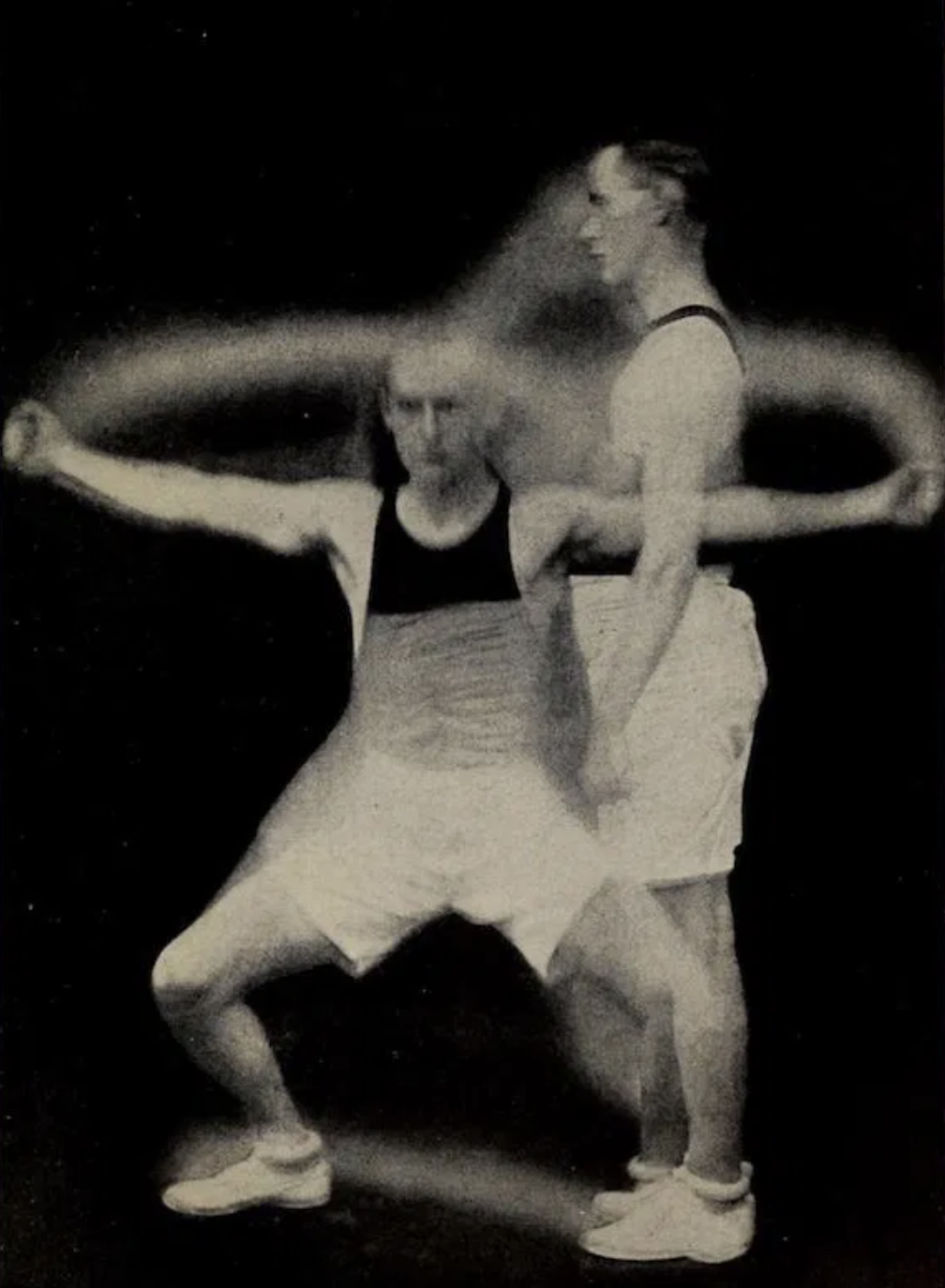
To read part one of Noah Gabriel Martin’s ‘From Cynicism to Sincerity’, click here.
Noah Gabriel Martin February 10, 2026
I dropped the slacker voice when I left Canada, but I get sucked right back into it when I’m home for a visit. It doesn’t happen all the time, but it always happens with certain people: people who I don’t feel all that comfortable with; people who I don’t know how to communicate with. Mostly, I fall back into the voice when talking to men.
In general, falling intonation in English denotes a statement, and so there’s nothing especially gendered about its use to mark the termination of a phrase. But linguists have noted that men emphasise it.
If exaggerated downward inflection is more associated with men’s speech now, when it has come to signal ironic detachment, maybe that’s because it serves a useful purpose in helping men avoid vulnerability. Specifically, the vulnerability that comes with sincerity, or putting your heart on the line - a vulnerability that can be perilous for men.
I noticed the slacker voice only after it had gone, during episodes of what How I Met Your Mother coined ‘revertigo,’ a reversion to old character traits when associating with places or figures from it. In England, my voice had become higher and lost that drop in pitch. When I was reverting I was painfully aware that I was doing it, yet totally unable to pull myself out of it.
This old voice felt strained. My new voice felt more natural, more like my own—not just because speech came more easily, but because it allowed me to express more of myself. Without the constraint of that exaggerated ‘final lowering’ I could have so much more fun with the dynamics of a sentence. Like any armour, the blankness of my old voice weighed me down and inhibited my movement.
I first started to wonder about the etiology and teleology of the voice during a hiking trip last Summer. The revertigo reached its peak when for 6 straight (very straight) days I shared the company of the most closed-off group of guys I’ve encountered in a decade. I didn’t know them well, and they made no effort to strike up a conversation. Meanwhile each of my ouvertures fell to the forest floor with a monosyllabic splat.
I didn’t mind. I was there to hike. I was happy to remain silent, and after making an effort for the first day, that’s pretty much what I did. Maybe they preferred it that way, but I didn’t think so - I got the impression they just didn’t know how to do anything else. Meanwhile, any time I did open my mouth, everything came out as a low mutter, flatter than a pancake.
That’s when I started to suspect a connection between the voice’s performed apathy, the terror of vulnerability, and being a man.
Men’s terror of vulnerability is a consequence of being terrorised. In her book on how patriarchy damages men, bell hooks describes the controlling, demeaning and violent treatment boys are subjected to by their fathers, mothers, and peers.
This terrorism targets, above all else, vulnerability, whether that’s the vulnerability of expressing emotion, or of displaying affection - it targets anything that makes a boy vulnerable to being hurt.
“In trying to make a man invulnerable, patriarchal terror instead does something quite different - it produces a terror of vulnerability.”
The cruel elegance of patriarchal terrorism against boys is that the target and the weapon are the same - hurt. The point is to make a boy into a man that can’t be hurt, and so anything that might hurt a boy is both a legitimate and an effective target for terrorism.
That’s why the most familiar advice given to boys getting bullied is to not let them see you cry; as long as the punishment doesn’t hurt you anymore, you’re no longer an effective target. But this also reveals that the advice is complicit with the bullying. It is not strategic, even if it may look like it; it doesn’t propose a way to defeat the bully. It’s merely an instruction for what’s expected of the victim, an instruction on how to surrender. It’s not just that you’re no longer an effective target, it’s also that you’re no longer a legitimate target: the terrorism has successfully transformed you into a man not vulnerable to patriarchal violence anymore, and, more than likely, a man capable of going on to perpetrate that violence himself.
Because vulnerability is itself the target, any kind of vulnerability is just as likely to make a boy victim to it. It doesn’t matter whether it’s something a man really should remain vulnerable to, or something worth growing out of. Displaying emotions indicates vulnerability, just as showing that you care does, or even revealing too much about how you make up your mind.
As Terrence Real writes in How Can I Get Through To You? “Our sons learn the code early and well; don’t cry, don’t be vulnerable, don’t show weakness—ultimately, don’t show that you care.”
I learned as a boy that if I let you know what I’m enthusiastic about, you can mock me for it because it’s stupid and uncool, and that if I show you affection, you can punish me for it by rejecting me and proving to me that I’m unworthy of reciprocating it. In trying to make a man invulnerable, patriarchal terror instead does something quite different - it produces a terror of vulnerability. It does this just because it can’t make a man invulnerable, and because a man will always remain vulnerable, the terror of vulnerability has plenty of fuel.
The terrorisation of vulnerability in boys is sufficient to explain adult male behaviour that avoids all vulnerability. It explains the masculine reserve that refuses to share its enthusiasms and pain, to show affection, or to ask for it.
That terrorization would explain why my fellow hikers were so withdrawn.
This also explains the Simpsons’ snark, and it would explain why the voice of my generation was a voice that must never take anything seriously, and must always maintain ironic distance from whatever it says. It was a voice terrified of believing in something, and what might happen if someone said what it believed in was stupid.
I miss The Simpsons. I miss the period of my life when everything was a joke and the point of saying anything wasn’t that it was true or that it mattered, but just that it was clever. But I love the voice I have now. I don’t mean the way it sounds, I love what it can do. I love the way it rises and falls; its expressive range; how its sincerity can, like open hands, lift up the things worth saying; and the way it can whisper ‘I love you’ with all the openness to a beloved and a world outside of what I can use my words to control that those words need to really be true.
Dr. Noah Gabriel Martin lectures in philosophy at the University of Winchester and runs the College of Modern Anxiety, a social enterprise that promotes lifelong learning for liberation. He recently began to study dance, which has taught him a lot about being an absolute beginner.
Film
<div style="padding:59.82% 0 0 0;position:relative;"><iframe src="https://player.vimeo.com/video/1163502472?badge=0&autopause=0&player_id=0&app_id=58479" frameborder="0" allow="autoplay; fullscreen; picture-in-picture; clipboard-write; encrypted-media; web-share" referrerpolicy="strict-origin-when-cross-origin" style="position:absolute;top:0;left:0;width:100%;height:100%;" title="Purple Noon clip 3"></iframe></div><script src="https://player.vimeo.com/api/player.js"></script>

Iggy Pop Playlist
Iggy Confidential
Archival - April 20, 2025
Iggy Pop is an American singer, songwriter, musician, record producer, and actor. Since forming The Stooges in 1967, Iggy’s career has spanned decades and genres. Having paved the way for ‘70’s punk and ‘90’s grunge, he is often considered “The Godfather of Punk.”
Film
<div style="padding:54.17% 0 0 0;position:relative;"><iframe src="https://player.vimeo.com/video/1163469190?badge=0&autopause=0&player_id=0&app_id=58479" frameborder="0" allow="autoplay; fullscreen; picture-in-picture; clipboard-write; encrypted-media; web-share" referrerpolicy="strict-origin-when-cross-origin" style="position:absolute;top:0;left:0;width:100%;height:100%;" title="Equus clip 1"></iframe></div><script src="https://player.vimeo.com/api/player.js"></script>
14 Having Enough (Great Wealth) - The I Ching
Chris Gabriel February 7, 2026
Having enough is the origin of prosperity…
Chris Gabriel February 7, 2026
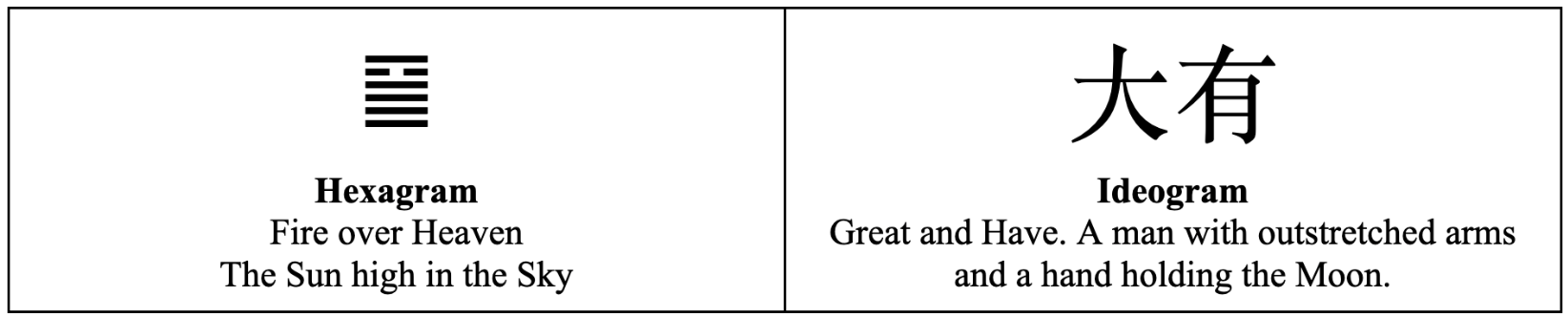
Judgment
Having enough is the origin of prosperity.
Lines
1
Going unharmed.
2
A big wagon carries a load with far to go.
3
The Prince makes sacrifices to the Son of Heaven
4
Without a sound. Without fault.
5
His faith reaches out.
6
Heaven has blessed you.
Qabalah
Tiphereth on the Middle Pillar. The exalted Sun. The 6 of Cups and 6 of Disks, and the Prince of Cups and Prince of Disks.
High in the sky sits the radiant midday Sun. As it rises through the morning, it is satisfied at its zenith, and begins to set, having had enough for the day. While we saw the rising of the sun and of man in our previous hexagram, here we have the apex.
1 At the height of our strength, we will go unharmed. It is a cruel irony, but often it is the weakest who are harmed the most while those with power go unscathed.
2 When we have many things, as those in power tend to, the act of moving becomes a problem. It is easy for someone with nothing to start over somewhere else. This is also the journey of the Sun; we can think of Helios on his chariot who, having reached the height, now starts his journey into the night.
3 In his book The Accursed Share, writer Georges Bataille describes the titular concept as the excess energy in an organism which must be sacrificed:
“The living organism ordinarily receives more energy than is necessary for maintaining life; the excess energy (wealth) can be used for the growth of a system (e.g., an organism); if the system can no longer grow, or if the excess cannot be completely absorbed in it's growth, it must necessarily be lost without profit; it must be spent, willingly or not, gloriously or catastrophically.”
This is especially apt for the hexagram, as he is describing our relation to the “Solar Economy” itself.
“Solar radiation results in a superabundance of energy on the surface of the globe. But, first, living matter receives this energy and accumulates it within the limits given by the space that is available to it. It then radiates or squanders it, but before devoting an appreciable share to this radiation it makes maximum use of it for growth. Only the impossibility of continuing growth makes way for squander. Hence the real excess does not begin until the growth of the individual or group has reached its limits.”
4 Wealth and power do best when they do not flaunt themselves and make noise. It was the superfluous spending of Louis XVI and Marie Antoinette that led the people to revolution, and the monarchy to the guillotine.
5 “He” in this case is the Sun, and as Bataille says “Solar energy is the source of life's exuberant development. The origin and essence of our wealth are given in the radiation of the sun, which dispenses energy - wealth - without any return.”
The sun reaches out to us.
6 As we have seen, it is the blessing of the Sun and the Heavens above that create our own power and wealth.
This hexagram is given to Tiphereth, the Solar center of the Tree of Life, the highest self and source of our higher nature. Though Hexagram 30 shows the direct nature of the Sun, we see here what the Sun does in relation to humanity.
Let us then know when we’ve accumulated enough wealth and power and give away our accursed share in magnanimity.

Hannah Peel Playlist
Archival - February 2, 2025
Mercury Prize, Ivor Novello and Emmy-nominated, RTS and Music Producers Guild winning composer, with a flow of solo albums and collaborative releases, Hannah Peel joins the dots between science, nature and the creative arts, through her explorative approach to electronic, classical and traditional music.
Watching the ‘Apocalypse’ On the Set of Apocalypse Now (1977)
Maureen Orth February 5, 2026
It was the middle of the day in the steamy Philippine jungle and the sun was merciless…

Much has been written, spoken, filmed, and discussed about the making of Francis Ford Coppola’s war epic ‘Apocalypse Now’. ‘Hearts of Darkness’, the documentary made by Francis’s wife Eleanor Coppola and released in 1991, has become the definitive account of the legendary production, but Orth’s account, originally published in Newsweek two years before the film was even released, was the first to lift the veil. A work of masterful fever-dream journalism that captures the depravity, absurdity, and insanity of the production, and revealing how the act of reporting becomes inseparable from the madness it describes.
Maureen Orth February 5, 2026
In the tropics one must before everything keep calm. – Joseph Conrad, Heart of Darkness
It was the middle of the day in the steamy Philippine jungle and the sun was merciless. Director Francis Ford Coppola, dressed in rumpled white Mao pajamas, was slowly making his way upriver in a motor launch. “Right here is where we hang the dead body,” he said to his production designer, Dean Tavoularis. “I want skulls – a pile, no, a wall of skulls.” “Can we light this for night?” he asked his director of photography, Vittorio Storaro. Storaro sighed and stroked his beard. “Fires should be burning behind the curtain,” Coppola said to Tavoularis, pointing to a striking red silk curtain that meandered 300 yards along the riverbank. When the boat docked, a set decorator complained, “Where are we going to get 200 skulls?” Tavoularis shrugged. After what he and everyone else had been through, 200 skulls were just so many coconuts.
For over a year, one of Hollywood’s most successful directors (“Godfather I and II”) had been shooting “Apocalypse Now,” a film about the “untouchable” subject of the Vietnam war. It had started in March 1976 as a $12 million movie that would take four months to shoot. Things quickly escalated. By the time the crew finally left the Philippines a fortnight ago, they had become battle-scarred, if well paid, veterans. “Apocalypse Now” had consumed more than 230 shooting days and a million feet of film and will end up costing about $25 million. (A little more than $7 million came from the sale of distribution rights in foreign countries; United Artists says it has put up $7.5 million and advanced the rest to Coppola, who has put up all his own assets as guarantees on the loans.)
Life on the set – four different locations in the Philippines – also escalated quickly to apocalyptic dimensions. The young crew, composed largely of Americans, Filipinos, and Italians, weathered a typhoon, survived dysentery and sweated through day after day of relentless heat – alleviated by periodic R&R trips to Hong Kong. Stuntmen amused themselves by diving from fourth-story windows into the motel pool below. The prop man, Doug Madison, became adept at fabricating top secret CIA documents, thought nothing of driving 400 miles to fetch a special Army knife, and made a connection with a supplier of real corpses – before he was vetoed. At one point, Coppola asked Tavoularis to produce 1,000 blackbirds, which prompted the designer to consider making cardboard beaks for pigeons and dyeing them black. The film company retained a full-time snake man, who appeared every morning on the set with a sack full of pythons. The Italians brought in pasta and mozzarella from Italy in film cans. Did Coppola want a tribe of primitive mountain people living on the set in their own functioning village? He got it.
Replay Of A National Nightmare
At night, General Coppola reviewed video cassettes of the film in his house in Hidden Valley, a volcanic crater, arriving there in a helicopter that he often piloted himself. By the time he finished shooting, he had lost 60 pounds, and the making of “Apocalypse Now” had come to resemble nothing so much as its subject – Vietnam.
For years, Hollywood has ignored Vietnam on the theory that nobody wants to see America’s worst national nightmare replayed. Now, a number of movies are being made about the war, but none so far-reaching as “Apocalypse.” The original script was written in 1967 by John Milius, an unregenerate hawk, but Coppola has reportedly long since abandoned all but the story line to move closer to the script’s original source, Joseph Conrad’s classic study of moral jungle rot in Africa, “Heart of Darkness.” Coppola’s idea has been to make the film on two levels – both as an entertaining war movie full of action, adventure and spectacular special effects, and as a mythical, highly stylized allegory of the American experience in Vietnam in 1968 and 1969 – all of it set to the rock music of The Doors and filled with psychedelic sound and light.
Martin Sheen plays Army Capt. B. L. Willard, hired by the CIA and sent upriver on a Navy patrol boat crewed by Frederic Forrest, Sam Bottoms, Larry Fishburne and Albert Hall. His mission is to kill Coppola’s “Mr. Kurtz,” one Col. Walter E. Kurtz – an officer gone insane – who lives in a temple resembling Angkor Wat across the border in Cambodia, is worshipped by the Montagnards and is played by Marlon Brando.
One of Kurtz’s entourage is a spaced out hippie photographer who’s had about 200 acid trips too many, a role Denis Hopper evolved for himself. Robert Duvall plays another kind of mad colonel who carelessly risks the lives of his men in order to land in a village that has perfect waves for surfing. As Sheen and his crew head upriver, they encounter a wild rock concert during which 300 horny soldiers storm a stage to get at a delegation of Playboy bunnies; a French plantation family determined to hold out at all costs; exploding bridges, and one peaceful group of Vietnamese whom they murder in panic. One helicopter battle sequence, choreographed to Wagner’s “Ride of the Valkyries,” took seven and a half weeks to shoot and will appear on the screen for only six minutes.
A Film On Two Levels
“I am doing this film half intuitively,” says Coppola, sitting inside his houseboat, where he wrote out the script each day on index cards. “I am spinning a web. The movie has two levels – the level of the life on the boat and the mission and then what happens to Kurtz’s mind when the film becomes a surreal. His mind is blown by the extent of the horror of the war. You have to invent. All I do is see more or less what the truth was and put it in the movie. Of course, the movie has to live in reality and practicality. I’m spending $100,000 a day. Imagine the degree of control I have to have.”
That control wasn’t always easy – to say the least. The first phase of “Apocalypse” ended when the typhoon struck, destroying sets that had taken months to build and stranding the crew in various isolated locations. (One group found itself stuck in a house with a Playboy Playmate, who shut herself up in a room, declaring, “I can do without sex for nine months.”) Even before the typhoon, Coppola fired one of his leading actors, Harvey Keitel, who hated the jungle and couldn’t stand bugs. On the first day of shooting, Keitel and the other actors had been unintentionally left by the camera crew in the middle of the river. “Hello,” announced Keitel fruitlessly into his walkie-talkie. “Hello, this is Harvey Keitel.” Silence. “This is Harvey Keitel.” Silence. Then: “You wouldn’t do this to Marlon Brando. You wouldn’t do this to Marlon Brando.”
“It was hell for a while at the beginning of the movie,” says Gary Fettis, a crew member. “Mostly because Francis was getting ripped off by the Filipinos. Artistically, Francis didn’t know what he was going for and he was a pretty hard guy to be around. The crew didn’t know he didn’t know. But when you’d see him typing away in his houseboat in the mornings, you suspected as much. It created a sense of chaos.”
When Brando showed up last fall with an entourage of seven (his fee for five weeks’ work was $1 million), Coppola still hadn’t written the ending to the movie. He finally shut down production for a few days to talk about Conrad with an old pal from film-school days at UCLA, Dennis Jakob, a fanatical lover of Nietzsche’s philosophy who became the movie’s intellectual catalyst. He also spent hours discussing the war in Vietnam with Brando, and tapes of those conversations figure in the film.
“He piled up garbage. He spread blood and skulls all around. He got old bones from a restaurant in Manila. Rats arrived on the set and people began to complain of the stench of festering flesh.”
A 285-Pound Star
“I tried to write the end in which Kurtz goes mad, over 100 times,” says Coppola, “but I didn’t know what Marlon would look like or how much he would weigh. I went to bed every night at 4 a. m. and told my wife, if she was there, ‘I can’t write it, I can’t write it’.” In fact, Brando showed up weighing 285 pounds, so Coppola decided to make Kurtz 6 feet 5 inches and do most of his body shots using a 6 foot 5 inch double, a coloful ex-boatswain’s mate in Vietnam named Pete Cooper who ran the boats for the crew and served as military adviser to Coppola. Brando shaved off all his hair for the role and requested 5-inch lifts on his shoes to get the feel of the part. On the first day he wore the lifts, he twisted his ankle and retreated at once to his trailer.
Members of the crew refused to ride in a bus with Dennis Hopper, who wore the same set of clothes for the two months he was there. Last March, Keitel’s replacement, Sheen, a 36 year old physical-fitness buff, suffered a heart attack during a 6-mile jog in the 100 degree heat. Sheen, who recovered six weeks later, thinks his attack was precipitated by his own death fears triggered by working on “Apocalypse Now.” “The film really scared the hell out of me,” he says. “I discovered through my sickness that I was acting out my mother’s death. She also died thousands of miles away from home of a heart attack.”
Coppola was forced to rely on the Philippine military for personnel had equipment, since the U.S. Department of Defense refused to cooperate with the project in any way. (Coppola sent angry cables to Washington, D. C., claiming that Defense was harassing him.) On the first day of the big helicopter scene last summer, according to some reports, a Filipino officer pocketed the $15,000 out of which he was supposed to pay his pilots, and the next day the pilots refused to work. Almost every day thereafter, they made new demands for money on the film company – which had come to be regarded in the local countryside as a cross between an invading army and Santa Claus.
Pagsanjan, the sleepy river town north of Manila where the “Apocalypse” crew had its headquarters, had been accustomed to an average wage of less than $2 a day. But for nine months, the movie company pumped in $100,000 a week there. As a result, the robbing of local coconut plantations stopped, rents for homes shot up astronomically, and every night the high-school principal, Ricardo Fabella, went from bar to bar in his jeep urging the Filipino film workers not to waste their windfall wages on liquor and women. “Our people have lost their sense of values,” he said. “Everything I’ve taught them they’ve forgotten.”
At one lavish party Coppola threw to thank the residents of Pagsanjan for their cooperation, he heard himself praised by the governor of Laguna Province as the best ambassador the U.S. ever sent. The next speech was from the local prosecutor who, before he picked up the microphone to sing with the band, mentioned two lawsuits against “Apocalypse” – one for the mutilation of birds (both suits were later dropped). He turned over the mike to Coppola, who serenaded the crowd with “‘A’ You’re Adorable.” “It’s either here or Beverly Hills,” Coppola called to his wife. “Let’s stay here.”
Everything But Real Bullets
Because of the film’s vast arsenal of explosives and weapons, the set was heavily guarded at all times. Coppola was driven by a member of President Ferdinand Marcos’s personal staff. For one scene involving 2,000 South Vietnamese troops and villagers, the film-makers recruited several hundred South Vietnamese refugees. The Philippine Government supplied eighteen helicopters, which were outfitted with new rotor blades and converted into gunships for the Philippine Air Force at the film company’s expense. Dick White, an ex-Vietnam helicopter flying ace and daredevil, supervised the air sequences. “This movie has everything but real bullets,” he says. “With my helicopters, the boats and the high morale of the well-trained extras we had, there were three or four countries in the world we could have taken easily.”
But the longest running real battle on the set was over what the film was really about. “What Francis is trying to say,” says Brando’s stand-in, Pete Cooper, “is that the military people were not second-class citizens and idiots. They were good hometown boys, but the war changed them. The whole military image is going to be changed after this.” “I hate to say it,” says special effects chief Joe Lombardi, “but this whole movie is special effects. You got three stars but the action’s gonna keep the audience on the edge of their seats. It’s a war movie.” “This movie’s about how wrong it was for Americans to go against their nature,” says Dean Tavoularis.
Still, everyone was loyal to the general. One of Coppola’s skills as a director was that he was able to make everyone give his all.” Francis wanted to get me and Dick White drunk and listen to war stories,” says Cooper. “I didn’t want to. For the first four months of this film I was screaming in my sleep – reliving it all. But in the military you’re taught to follow orders. Francis is a brain drainer. You sit with him for ten minutes and he absorbs everything in your body.”
It’s hard to say who gave the most, but nearly everyone agrees that a great catharsis came at Kurtz’s compound – a hot and humid pit a half mile long. The temple inside the pit was destroyed by the typhoon, and was reconstructed with 300-pound blocks placed mostly by hand. To express Kurtz’s “horror,” Tavoularis, who describes his life as “a shambles” after working two years on the film, let his feelings of depression and alienation run wild. He piled up garbage. He spread blood and skulls all around. He got old bones from a restaurant in Manila. Rats arrived on the set and people began to complain of the stench of festering flesh.
“Francis and I reached the same point through different channels,” says Tavoularis. “We both did it by going through a certain madness. He was feverishly rewriting the whole end of the film, talking to Marlon and Dennis Hopper. I was living the house of death I was making. It became such a low level in my life that somehow putting blood on staircases and rolling heads down steps seemed natural to me.” The experience went on for weeks. “There were times,” remembers Delia Javier, a Filipion crew member, “when I feared the consequences for my psyche. Then one night everything fused together. It was what Christians call a miracle.”
Part of the credit for the miracle goes to 250 fierce and primitive Filipino mountain tribesmen, the Ifugaos, still head-hunters during World War II, who were brought from the north to live on the set at Kurtz’s compound. “People said the Ifugaos were very calming in the craziness,” says Eva Gardos, a former Harlem schoolteacher, who was sent to the mountains of the northern Philippines to find “some primitive people” at Coppola’s request. In order to lure the Ifugaos south, Gardos promised them a weekly supply of betel nuts and, in case any of them got sick, live animals for sacrifice.
Four Blows Of The Knife
Brando invited the Ifugaos to his big welcoming party, complete with ice Oscars lighted from inside, spectacular fireworks and a magician. They loved the fireworks. Coppola incorporated Ifugao ceremonies and dances into the film; they were also taught to use guns and to sing – phonetically – ‘The Doors’ “Light My Fire” to the accompaniment of their own instruments. Although they generally were shy, one teenage Ifugao girl got friendly enough with make-up man Fred Blau to ask if she could borrow his tape of John Denver’s “Greatest hits.”
In honor of Coppola, the Ifugaos re-enacted their sacred sacrifice of a water buffalo and Coppola has used this on film as one of his story’s most important symbols. “First the Ifugaos talked to the water buffalo for two days and told it not to be afraid of death,” reports one extra. “Then they killed four pigs and sacrificed a chicken. The meat was passed around and eaten, sometimes raw. Then the elders took long knives and gave the buffalo four blows at the back of the neck. During this time the water buffalo didn’t utter a sound, but he had a big tear in his eye – he really did. Wham, the fourth blow killed him. In the film, Sheen kills Brando the same way.”
Is America ready for “Apocalypse Now”? Just to make sure, United Artists is paying a half million dollars on two political miracle workers – Jimmy Carter’s media consultant Gerald Rafshoon and pollster Pat Caddell – to help Coppola’s staff devise a marketing strategy for the three-hour-plus film. The film is scheduled, if all goes well, to open in Decemmber. It will be shown on a reserved-seat basis at increased admission prices. Caddell’s poll ranges from measuring the impact of Vietnam to finding out how many people know the meaning of the word “apocalypse.”
Maureen Orth (b.1943) is an American journalist and writer. Orth began as one of the first women writers at Newsweek and is currently a Special Correspondent for Vanity Fair,
Film
<div style="padding:56.25% 0 0 0;position:relative;"><iframe src="https://player.vimeo.com/video/1161995438?badge=0&autopause=0&player_id=0&app_id=58479" frameborder="0" allow="autoplay; fullscreen; picture-in-picture; clipboard-write; encrypted-media; web-share" referrerpolicy="strict-origin-when-cross-origin" style="position:absolute;top:0;left:0;width:100%;height:100%;" title="Bridge to Space clip 2"></iframe></div><script src="https://player.vimeo.com/api/player.js"></script>
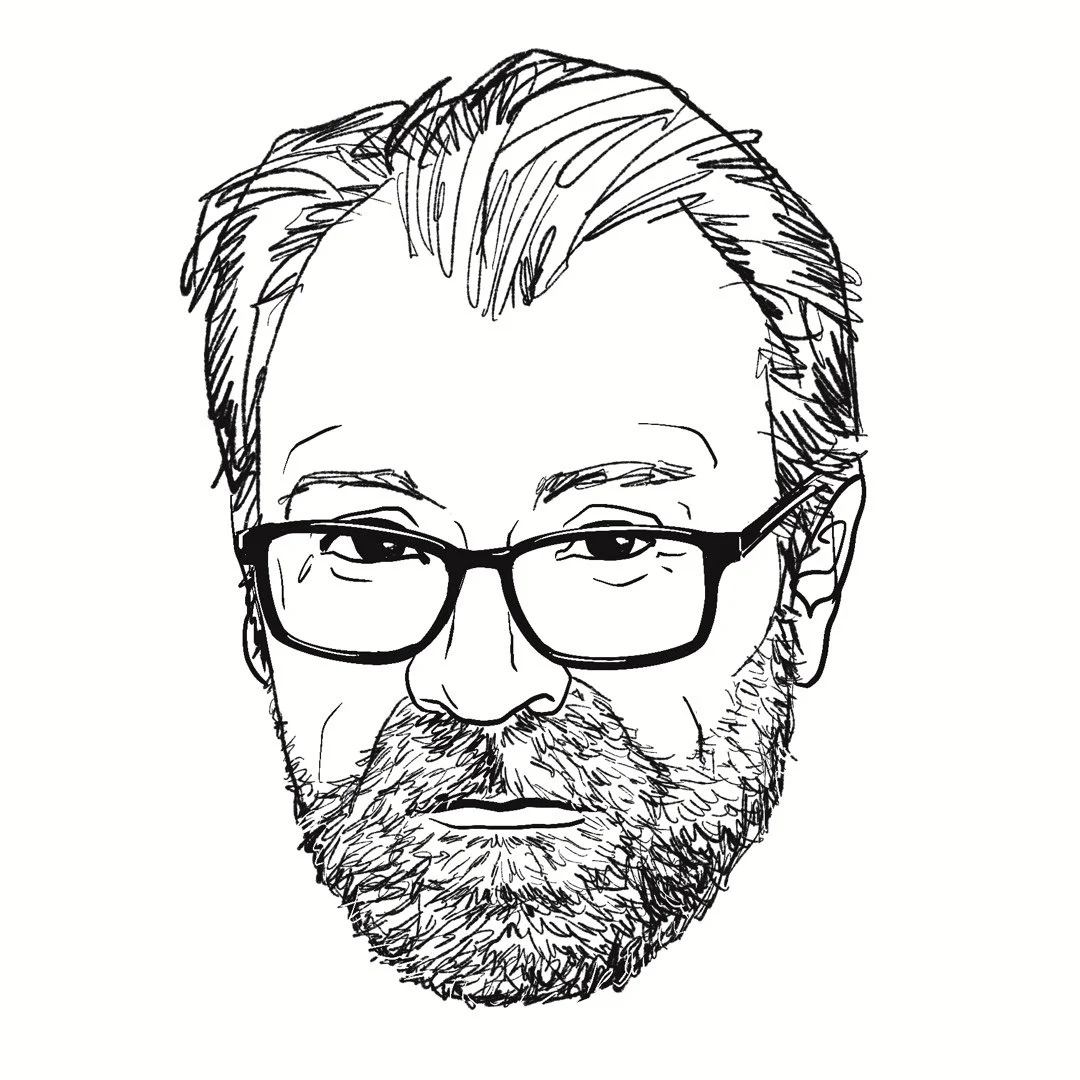
George Saunders
1h 47m
2.4.26
In this clip, Rick speaks with George Saunders about comparison and competitiveness in one’s art.
<iframe width="100%" height="265" src="https://clyp.it/vgdf10qi/widget?token=7d9811d9e67fbfc35a9f8f76e6d9c65b" frameborder="0"></iframe>
Film
<div style="padding:53.96% 0 0 0;position:relative;"><iframe src="https://player.vimeo.com/video/1161992399?badge=0&autopause=0&player_id=0&app_id=58479" frameborder="0" allow="autoplay; fullscreen; picture-in-picture; clipboard-write; encrypted-media; web-share" referrerpolicy="strict-origin-when-cross-origin" style="position:absolute;top:0;left:0;width:100%;height:100%;" title="Two Rode Together clip 1"></iframe></div><script src="https://player.vimeo.com/api/player.js"></script>
On the Termite
André Castor February 3, 2026
Termite mounds - those brown piles of rigid dirt that protrude from the landscape and hide acreage below them - are as ancient as the land they rise from…

Shrine in a termite mound, Kolwezi, Congo, c.1930.
André Castor February 3, 2026
Termite mounds - those brown piles of rigid dirt that protrude from the landscape and hide acreage below them - are as ancient as the land they rise from. In parts of Africa, South America, and Australia, these earthen towers are not just temporary homes, they are enduring monuments, passed down through the generations of termite colonies. Some mounds are known to be over 34,000 years old, but most at least number in the hundreds of years, surviving across centuries and millennia, continually inhabited and rebuilt by successive colonies.
When we think of buildings and cities, we often imagine them as symbols of human ambition, crafted to last for centuries or successive lifetimes. Yet, the termite mound offers a humbling contrast. Here, time itself does not belong to the individuals who build it, but to the community that comes together—over and over again—to tend to it, to repair it, and to keep it alive. It is not a static monument to human achievement, but a living, breathing testament to the persistence of purpose across generations.
The question then arises: What does it mean to build something that outlasts us? What can we learn from these oft-derided insects about living within the cycles of time, about the relationship between the individual and the collective, and about the ways in which our actions are woven into the fabric of a larger, continuous story?
Built by colonies of termites to serve as both nests and climate-controlled environments, these mounds are constructed from earth, saliva, feces, and other organic matter, which is collected by the termites from their surroundings. The architecture is remarkably complex, with a series of tunnels and ventilation shafts that regulate airflow and temperature, providing the colony with a safe, stable environment carefully controlled to maintain optimal conditions of temperature and humidity in the face of extreme weather conditions outside. The mounds can rise up to 30 feet in height and span much large areas below the surface, offering refuge and safety from predator.
Termites help improve soil health, promote water infiltration and enhance nutrient cycling through the aeration process of their building. Their mounds act as natural reservoirs, absorbing and slowly releasing moisture to sustain surrounding vegetation during dry periods. Some species of termites even cultivate fungi within their mounds, creating a symbiotic relationship that helps decompose plant matter, contributing to nutrient recycling in the ecosystem. In these ways, termite mounds are not just homes for termites, but vital structures that play an important role in maintaining the ecological balance of their environment. In the process of thousands of years, these insects build not just for themselves, and their future generations, but the world around them.
“Decay is not the end of things, it is a necessary part of renewal.”
Termite mounds are a reminder that individual lives are but fleeting moments in the vast expanse of time. What these creatures leave behind, in lives that usually last no more a few years for workers and perhaps a few decades for the Queen, is not just the work of a single generation, but the shared contributions of thousands of generations. Each mound is built, maintained, and inhabited by countless termites over thousands of years, but it is always the same mound, never fully finished, always in the process of becoming. The generations may come and go, but the mound itself endures. They are constantly being rebuilt, repaired, and adjusted. They are living structures, continuously in flux, responding to the demands of the environment, to the needs of the colony, and to the rhythms of life itself. Nothing about the mound is static. It is a cycle of construction and deconstruction, creation and decay, over and over again.This challenges the human tendency to view our lives as distinct and separate from one another, as if each of us is isolated in time. How often do we build lives as though they must stand alone, seeking personal recognition, fame, or success? The termite mound offers us a different way of being: a life that belongs to something greater, a purpose that extends beyond the self. The mound’s continuity suggests that the most meaningful actions are not those that bring fleeting personal glory, but those that contribute to a larger, ongoing process—one that connects generations, that transcends time.
For humans, the idea of impermanence is often uncomfortable. We are taught to chase stability, to fight decay, to preserve what we have for as long as possible. But there is a wisdom that we often overlook: decay is not the end of things, it is a necessary part of renewal. The cycles of life, growth, and decay are not to be feared, but understood as fundamental to the very essence of existence.
What if we understood our lives not as isolated projects but as part of an ongoing story—one in which we participate, but do not control? What if our actions, like the termites’ construction of their mounds, were not aimed at permanence or recognition, but at fostering a deeper, intergenerational connection to something larger than ourselves? The mound teaches us that the highest form of meaning may lie not in building for today, but in building for tomorrow, and for the communities that will follow us.
André Castor is a conservationist and researcher who writes about the natural world.
Film
<div style="padding:75% 0 0 0;position:relative;"><iframe src="https://player.vimeo.com/video/1161534021?badge=0&autopause=0&player_id=0&app_id=58479" frameborder="0" allow="autoplay; fullscreen; picture-in-picture; clipboard-write; encrypted-media; web-share" referrerpolicy="strict-origin-when-cross-origin" style="position:absolute;top:0;left:0;width:100%;height:100%;" title="GA Stephanie Maxwell"></iframe></div><script src="https://player.vimeo.com/api/player.js"></script>
13 Coming Together - The I Ching
Chris Gabriel January 31, 2026
Together in the wild. Cross the great river…
Chris Gabriel January 31, 2026
Judgment
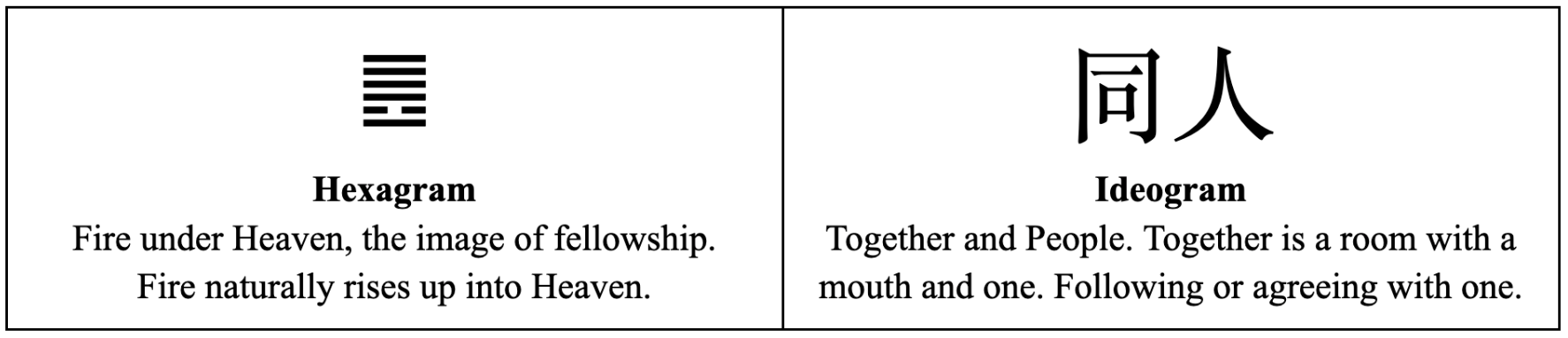
Together in the wild. Cross the great river.
Lines
1
Together at the gate.
2
Together at home.
3
Hiding weapons in high grass. Climbing the high hill. He doesn’t rise for three years.
4
Climbing the wall, but unable to attack.
5
Together we cry, together we laugh. Great leaders meet.
6
Together in the country.
Qabalah
Tiphereth to Kether: The Path of Gimel. The High Priestess.
Here the connection is made from below to above, the Solar Tiphereth seeks to rise to the Heavenly Kether.
In this hexagram we see the rising sun, coming together with the sky. It is pure heat rising. This hexagram is the perfect opposite of hexagram 6 - water under heaven - in which rain splits away from the sky. When fire is below heaven, it moves up. As such, the lines of the hexagram show a progressive coming together of people from within to without.
Judgment: A group of people together in the wild crossing a great river conjures thoughts of the teamwork it takes to “build bridges”, both literally and metaphorically. We can also see the other side of this; crossing the Rubicon and marching on Rome. A group of people cross the river to make everyone join their circle.
1 The group is at the gate, the first impasse. They remain on the boundary. This, again, can be understood in two ways: either as a force seeking to expand into territory out beyond the gate, or they may be the idiomic “barbarians at the gate” seeking to get in.
2 A group at home, amid family. This is a very small community, built on a base natural sympathy. It has no need to spread out. This is the natural human state, totemic and clannish. Getting people to come together was a great labour of history; the combining of disparate families and clans to form cities, states, and empires, against their own selfishness is extraordinarily difficult.
3 When outmatched, it’s best to hide one's strength and wait it out from a good vantage point. It’s useless to fight impossible odds.
4 One climbs the wall to fight the city, but they lack the force to achieve their goals.
5 After much commotion and turmoil, victory comes and peace is made.
6 People have gathered together. From the gate, to the homes, to the whole city, and now the country, but it has not yet reached past itself, the group has not satisfied its expanding desire for empire.
“The Sun never sets on the British Empire.” The rising sun of the hexagram shines its light first on very little, and then on more and more. This is the human desire to gather people together, to have dominion and expand our control. The familial clan shown in line 2 come to control the country in line 6, so we consider the actions necessary for one family to gather its allies and take control of a country. Or how an individual man, like Caesar, can create an empire. This is not solely through violent conquest, as Abraham Lincoln proves in his famous line “Do I not destroy my enemies when I make them my friends?”
Just as the Sun rises and falls, so too do Empires, families, and groups. As Hawthorn says “Families are always rising and falling in America.”. While all powers are destined to fall, the time indicated by this hexagram is that of their rising.
Film
<div style="padding:75% 0 0 0;position:relative;"><iframe src="https://player.vimeo.com/video/1161531196?badge=0&autopause=0&player_id=0&app_id=58479" frameborder="0" allow="autoplay; fullscreen; picture-in-picture; clipboard-write; encrypted-media; web-share" referrerpolicy="strict-origin-when-cross-origin" style="position:absolute;top:0;left:0;width:100%;height:100%;" title="Firing Line - Noam Chomsky clip 1"></iframe></div><script src="https://player.vimeo.com/api/player.js"></script>
Shadow Work in Ancient Egyptian Magic
Molly Hankins January 29, 2026
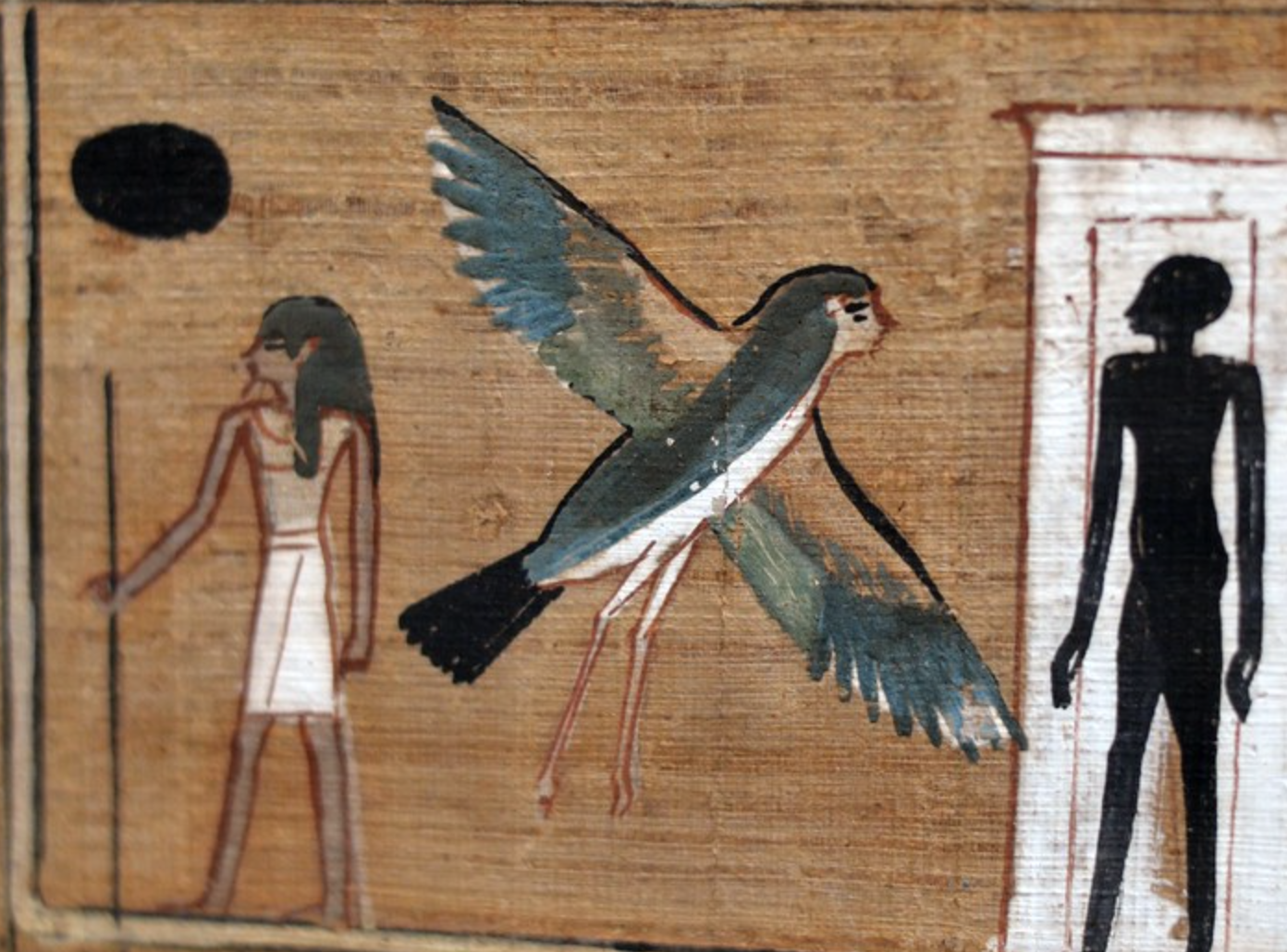
In Biblical terms, the Egyptian concept of ‘shew’ is expressed as a revealing of what’s hidden, whereas ancient Egypt’s great mystery schools are thought to have treated shew as the shadow-self that needs the light of consciousness shone upon it in order to be integrated…
Molly Hankins January 29, 2026
In Biblical terms, the Egyptian concept of ‘shew’ is expressed as a revealing of what’s hidden, whereas ancient Egypt’s great mystery schools are thought to have treated shew as the shadow-self that needs the light of consciousness shone upon it in order to be integrated. Author, vocal coach, and archangelic channeler Stewart Pearce explained the nature of shew in his book Angels and the Keys to Paradise. He writes that to name individual aspects of our shew is to, “identify that aspect of self that dwells far from the light, and therefore is the part that most desires reintegration with the light, with the collective soul.” This yearning to merge the seen and unseen worlds is natural. If we are all sparks of consciousness from the original Creator, we are not designed to ignore what we create. Pearce contends that integration of all our creations is essential to our development both spiritually and magically.
“Thinking and feeling negative shadow complexes sabotages our creative energy within the dynamics of the universe. Carl Jung suggested that, ‘One doesn’t become enlightened by imagining figures of light, but rather by drawing the light into the darkness, and creating a light filled consciousness.’ As we identify, purify and redistribute the energy of our shadow from within, more space is created within our cells for light to reside,” Pearce explained. From the perspective of Egypt’s mystery schools, physical changes occur as light is shown in the darkness of our psyches. The idea of ‘light’ here is not a metaphor because light is considered intelligent, and bringing this higher intelligence into our beings by consciously calling in the light gives us access to both expanded awareness and magical abilities.
The magic Pearce refers too is defined by the famous occultist Aleister Crowley as, “The science and art of causing change to occur in conformity with will.” Developing this capacity means shedding light on any shame or regret blocking the light of higher intelligence, and therefore blocking our ability to act as co-creators of our reality. Pearce believes that what Egypt’s mystery schools were pointing to with their emphasis on integrating the shew is that our shadow can be a portal to the Creator and to working with what he calls ‘Source Energy.’ Consciously shining light on our shew disrupts the ‘karmic holding patterns’ living in our tissues and keeping us in the karmic wheel of repeated reincarnation in order for our consciousness to evolve. Shew work allows us to choose our own path to conscious evolution, rather than relying on the karmic algorithm to furnish experiences for us that force us to evolve.
“If we bring enough of our shew out of darkness we can begin working directly with collective consciousness to affect change on a global scale.”
This shew integration process, which Pearce also calls “dissolving our darkness,’ has certain thresholds to cross as our consciousness evolves. With each milestone, we can begin using our will to create effects at a global and even galactic scale. When we reach enlightenment, we gain the ability to co-create directly with Source Energy. Over the course of many lifetimes, if we bring enough of our shew out of darkness we can begin working directly with collective consciousness to affect change on a global scale. Pearce, who channels the archangelic collective that provides much of the information in his writing, believes we must dissolve 85% of our darkness in order for our will to begin expressing at the level of global consciousness. Symptoms of having crossed this threshold include drastic upticks in synchronicity and seeing ideas we thought were unique to us expressing within the global collective.
Once 90% of our shew is integrated, we can work at the galactic level. This essentially means that we become pawns on the chessboard of life with a sufficiently developed consciousness to be worthy of being played by higher dimensional entities, known in ancient Egyptian mythology as gods. In previous articles on the nature of personal alchemy, we explored how alchemizing our negative emotions prepares our being for magical practice and the ability to “hold” more high dimensional intelligence within our physical vessels. Our ability to co-create and perform magic with greater impact comes from working with increasingly powerful higher dimensional intelligence. From this point, we gain intelligence by virtue of our expanding access and integrate even more of our shew, so we’re heading towards the 95% threshold of enlightenment.
When we’ve cleared enough shew to be able to embody our own higher consciousness and share consciousness with intelligent beings far greater than ourselves, our vessels are prepared to hold the light of Source Energy. This is where we cross the threshold of enlightenment, and as Richard Rudd of the Gene Keys says, the process of getting there can be blissful and playful. Of course there is suffering along the way, but we help each other find bliss and play anyway. Only the presence of undissolved shew can cast darkness enough to block the light, and only when we are able to face those parts of ourselves by consciously seeking out and integrating them, can we begin integrating with Source and experiencing higher consciousness on Earth.
As author and channeler Tom Kenyon put it in his book The Hathor Material, “The goal is not to merely ascend to another octave. The goal is to live our lives as fully and as richly as possible, constantly surrendering to the greater power of love and awareness. Our advice would be not to concern yourself with timetables and phenomena. They will take care of themselves. Besides, they are of such cosmic proportion as to be immune to your thoughts and interventions. It would be far more beneficial to change those things you can, and what you can affect is the amount of love you bring to the world." That change starts with loving the parts of ourselves, of our shew, that we’re afraid or ashamed of.
Molly Hankins is an Initiate + Reality Hacker serving the Ministry of Quantum Existentialism and Builders of the Adytum.
Film
<div style="padding:56.25% 0 0 0;position:relative;"><iframe src="https://player.vimeo.com/video/1159550378?badge=0&autopause=0&player_id=0&app_id=58479" frameborder="0" allow="autoplay; fullscreen; picture-in-picture; clipboard-write; encrypted-media; web-share" referrerpolicy="strict-origin-when-cross-origin" style="position:absolute;top:0;left:0;width:100%;height:100%;" title="Soy Cuba clip 3"></iframe></div><script src="https://player.vimeo.com/api/player.js"></script>More Like This on TG1

Dr. Mary Talley Bowden
1h 37m
1.28.26
In this clip, Rick speaks with Dr. Mary Talley Bowden about Direct Primary Care.
<iframe width="100%" height="265" src="https://clyp.it/lr4zasgk/widget?token=5e66e01199f5d292b2b471db8c6fbebc" frameborder="0"></iframe>

Film
<div style="padding:56.25% 0 0 0;position:relative;"><iframe src="https://player.vimeo.com/video/1158924584?badge=0&autopause=0&player_id=0&app_id=58479" frameborder="0" allow="autoplay; fullscreen; picture-in-picture; clipboard-write; encrypted-media; web-share" referrerpolicy="strict-origin-when-cross-origin" style="position:absolute;top:0;left:0;width:100%;height:100%;" title="Land of the Giants clip 1"></iframe></div><script src="https://player.vimeo.com/api/player.js"></script>