
Otis Black (Lost Songs Project)
Molly Hankins March 26, 2025
There’s not a lot to hide behind when it’s 114 degrees and you’re sawing reclaimed wood…
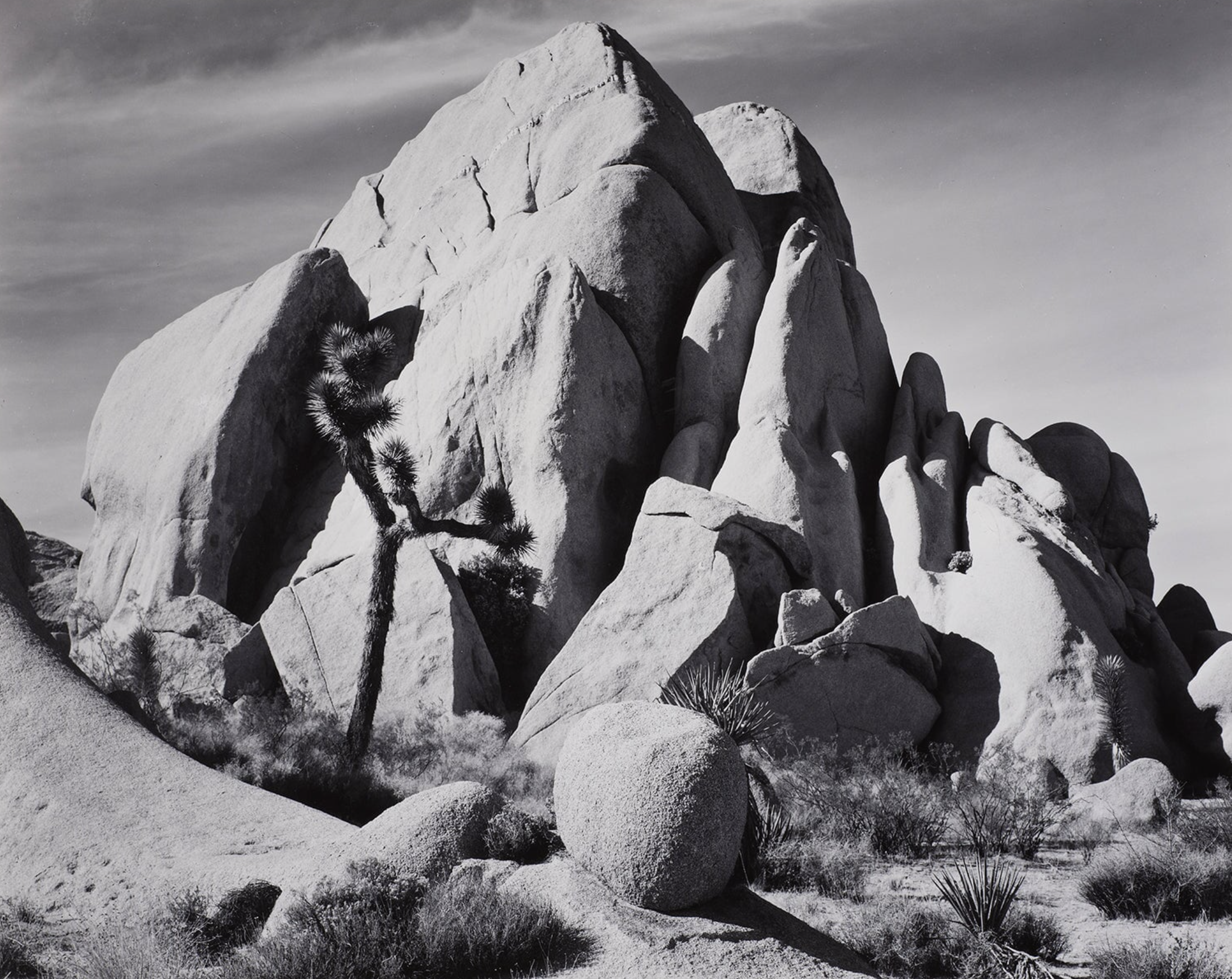
In Joshua Tree National Monument, Ansel Adams. 1942.
Molly Hankins March 26, 2026
Welcome to the latest edition of Lost Songs Project, a series telling the stories behind songs lost to the world until now. We spoke with the LA-based country-Americana artist Otis Black and his co-writer and co-producer Cody Marksohn about their unreleased album, ‘Hellhounds.’ The two songwriters met through a mutual friend and bonded during the 2020 lockdown when Cody, bored out of his mind in Los Angeles, went to help Otis remodel an old house he’d just purchased in Joshua Tree. Even though they barely knew each other, Cody had a family background in construction, was desperate for a project to keep him busy, and knew Otis was someone he eventually wanted to write music with, so he braved the desert summer heat and joined him.
“There’s not a lot to hide behind when it’s 114 degrees and you’re sawing reclaimed wood,” Cody said of the strange period when they went from being musical acquaintances to friends. “But Otis is a great guy and he needed help. I’ve done a bunch of renovations, so I knew how to help. And I think the fact of the matter is that if Otis wasn’t talented, I probably would’ve ignored his texts. But I thought, this guy’s great, I like him a lot and he’s really fucking talented. So why would I not strengthen our relationship? I wanted to be around him. And he’s a crazy musician. So spending more time with someone like that, even doing terrible shit, is still fun.”
Otis had previously been signed to a record label as a 20 year old under the name Otis English. Even with the quick success of his first single “Young Kids, Old Love” in 2016, and subsequently being put in writing sessions with different producers every week, he still wasn’t able to make a living in music. By his own admission, Otis gave up. After the renovation in Joshua Tree was finished, Cody was able to get him to start writing again with the intention of pitching the music to other artists. But as the two hit a flow in their collaboration, it became obvious to both of them that Otis was the right artist to record these songs.
They’ve shared a few tracks off the album with us, and knowing the backstory of how they came to be, you start to hear the liminal space of the blazing desert where they forged their connection amidst the mounting uncertainty of that time period, and how they filled that time with urgent action. Where the action would lead, both in the remodel and song-writing, wasn’t nearly as important as the joy of doing it and building their relationship but both projects became very real very quickly.
Hellhounds 2. Holy Water 3. Carolina 4. Drinking and Driving
MH: Cody, you’ve been writing and producing for other people for a long time, how far into writing these songs did you realize Otis was meant to be the artist?
CM: I always believed. Back when he was signed, he was being put in writing sessions everyday, and I think those people just weren’t taking advantage of being in the room with him. You gotta let him do what he’s good at and then build a song from there, not be like “uhhh so-and-so wants an EDM pop thing with a huge drop. Otis - do it.” Some people are great at that, but I think with Otis, just don’t get in his way and he’ll get to where he’s going. It was very clear very quickly to me, but you can’t force someone or just be like, “you’re doing it!”
OB: I honestly probably would have appreciated that approach.
CM: Well, I guess that’s kind of what our wives did.
OB: My wife’s good at that.
CM: Otis came over one night when we were really at the entry of our flow-state of writing this stuff together. I think we had a few things we knew were sick and we were like, “we love making music, let’s just keep writing this stuff cause we like it. And Otis said “I gotta talk to you about something. I think I wanna be the artist and make this album.” And I was like “Oh my God yes. That’s the best thing I’ve ever heard, that is incredible.” I was so in, and since then almost every time we got together we wrote at least half a song, it felt easy. We were doing our thing with no parameters or assignment. It was just whatever we thought is good, whatever we believed in - that’s what we’re going to do.
OB: I don’t feel like our process is fully getting out of my way. This was a collaborative effort, with me starting by finding something on the guitar or piano for that matter, any instrument that’s in my hand that makes me feel inspired in the moment a just start singing gibberish. Every single one of these songs starts from that point. Then Cody will hear something that I said in my gibberish melodic thing, and be like “that was cool.” Then he’ll start breaking down or…
CM: I translate it.
OB: Lyrically, yea. It’s always taken me a long time to write lyrics. I can churn out an album in a week if it’s just instrumental stuff. Lyrics have always been a troubling point for me and I really have to take time with it to get them right. Cody’s coming from a hip-hop background and a rapping background. I’ll say a few lines and Cody will be able to change around the things that I’m saying,the words that I might be mumbling and paint the beginning of a picture.
CM: For as long as Otis has been learning the musical side, I’ve been obsessing over lyrics. I can’t play instruments or sing melodies, but if someone else is doing that, it’s my favorite thing in the world to go, oh - here’s what you’re saying.
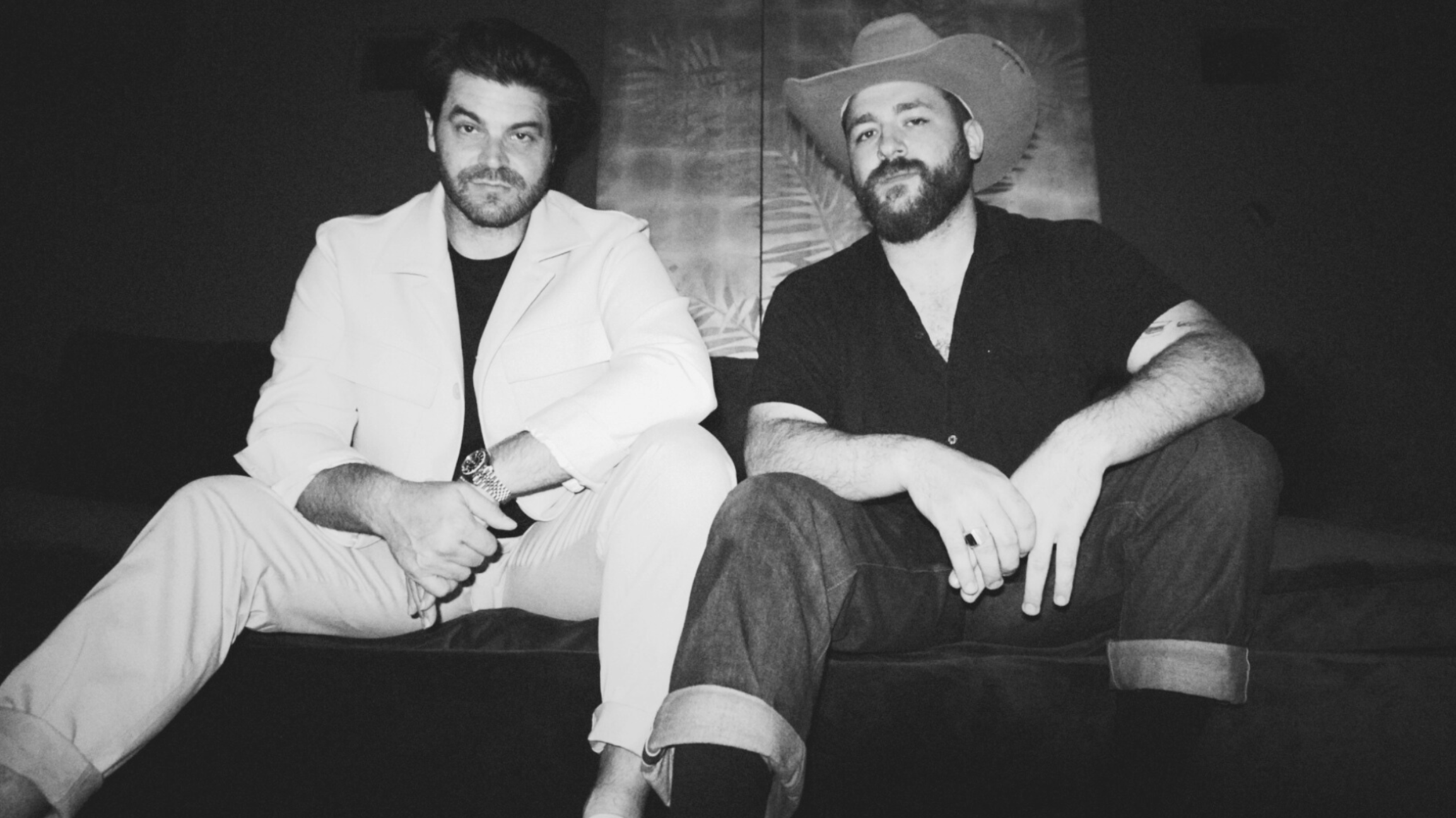
Otis Black & Cody Marksohn
OB: We’ve talked about this a few times and realized how you write is very much a showing of the type of music you grew up listening to. I grew up listening to a lot of classic rock. My favorite band of all time is Zeppelin. When you actually break down the songs of rock music, there’s not a lot going on. It’s not really a lyric-based art-form. It’s like energy and music. And while Led Zeppelin is my all time favorite band, if I were just to pay attention to the lyrics, it loses everything. That’s not what the focus is on, the focus is on the arrangement, the production, the composition of it. And that’s why I feel I’ve always had a problem with coming up with lyrics on the spot is because that’s not what I was raised to do, whereas Cody growing up listening to hip-hop and rap; lyrics are the only thing he focuses on. So coming together on this was an extremely symbiotic relationship.
MH: Are there plans to ever release these songs?
OB: I have to release it at this point. Imagine we come this fucking far and I’m like actually, I want to be a carpenter again.
CM: I feel like there’s such a positive response amongst friends and family that at this point, this is real.
OB: The day I came to Cody and said I think I have to be the artist on this, happened because my lovely wife sat me down. She said, “You’re doing like, sixteen different things right now and you’re turning 30 soon and you should really focus on what you really want to do. You gotta pick something and really stick with it.”
CM: Otis is the only 30 year old I know who was born in the ‘70s.
OB: So I would be over at Cody’s one to two days a week, kinda for funsies, kinda…
CM: Kind of as an outlet.
OB: Well yea, which leads me to ‘Hellhounds,’ which is the first song, the album intro. It’s kind of ambiguous when you listen to the lyrics but it’s about you. Well actually it's about me, trying to get away from writing. I didn’t realize this til after we wrote it by the way; I was driving home, or to the bar where I work, and I was listening to lyrics and went, I think I know what this song’s about, cause when we wrote it I wasn’t really sure. To me that song is about letting a dream go but it still follows you around like an itch on the back of your neck And the lyrics in ‘Hellhounds’ reflect that. It’s like I’m trying my best to get away from the thing that I believe is what I’m here to do, which is to write songs.
MH: It feels like there’s a stark contrast between the timeless sound of these songs and the time y’all wrote them in, which is relatively recently. Do you guys feel that?
CM: Big time. Otis and I had this conversation back and forth a bunch of times through writing this, where we’ve been like, everywhere you look, you’re wondering is that real? Is that video real? Is that dog real? Is this news real? Nothing is revealing itself in a completely believable way. Someone plays a song for you and they say ‘A.I. made that.’ So there’s no artist I can be a fan of now and find their music? It’s just like churned out. So for us, as we wrote it we thought, you know what’s really cool about this? It feels real. Like it’s all real performances on real instruments, no samples, every part of it is a real person playing music.
OB: A couple of these songs are not even technically produced, it’s one mic and one take all the way through, which I really like because it shows a lot of variety. We have full twelve-piece band productions and we still can strip it back to just bare bones, and it creates a lot of dynamic within the album-sphere, the thing that it exists within. But it was semi-conscious. I mean Cody and I had a lot of talks about howthe human element, even if it’s not as prevalent in pop culture, is still something that’s sought after. That was our approach to this. Nothing is quantized, nothing is auto-tuned, it’s all raw on the paper. And I feel like people still want that. I want that.
CM: Same.
OB: And we set out to make an album that we want to listen to.
Find Otis and, someday, ‘Hellhounds’ at Instagram.com/OtisBlackOfficial.
Molly Hankins is an Initiate + Reality Hacker serving the Ministry of Quantum Existentialism and Builders of the Adytum.

Anne Lamott & Neal Allen
2h 20m
3.25.26
In this clip, Rick speaks with Anne Lamott and Neal Allen about how good fiction should be interpreted by the reader.
<iframe width="100%" height="265" src="https://clyp.it/pbzmf1em/widget?token=16ad8acc0e496df4a31935e1ebfc653f" frameborder="0"></iframe>

Intermedia (1966)
Dick Higgins March 24, 2026
Much of the best work being produced today seems to fall between media. This is no accident…
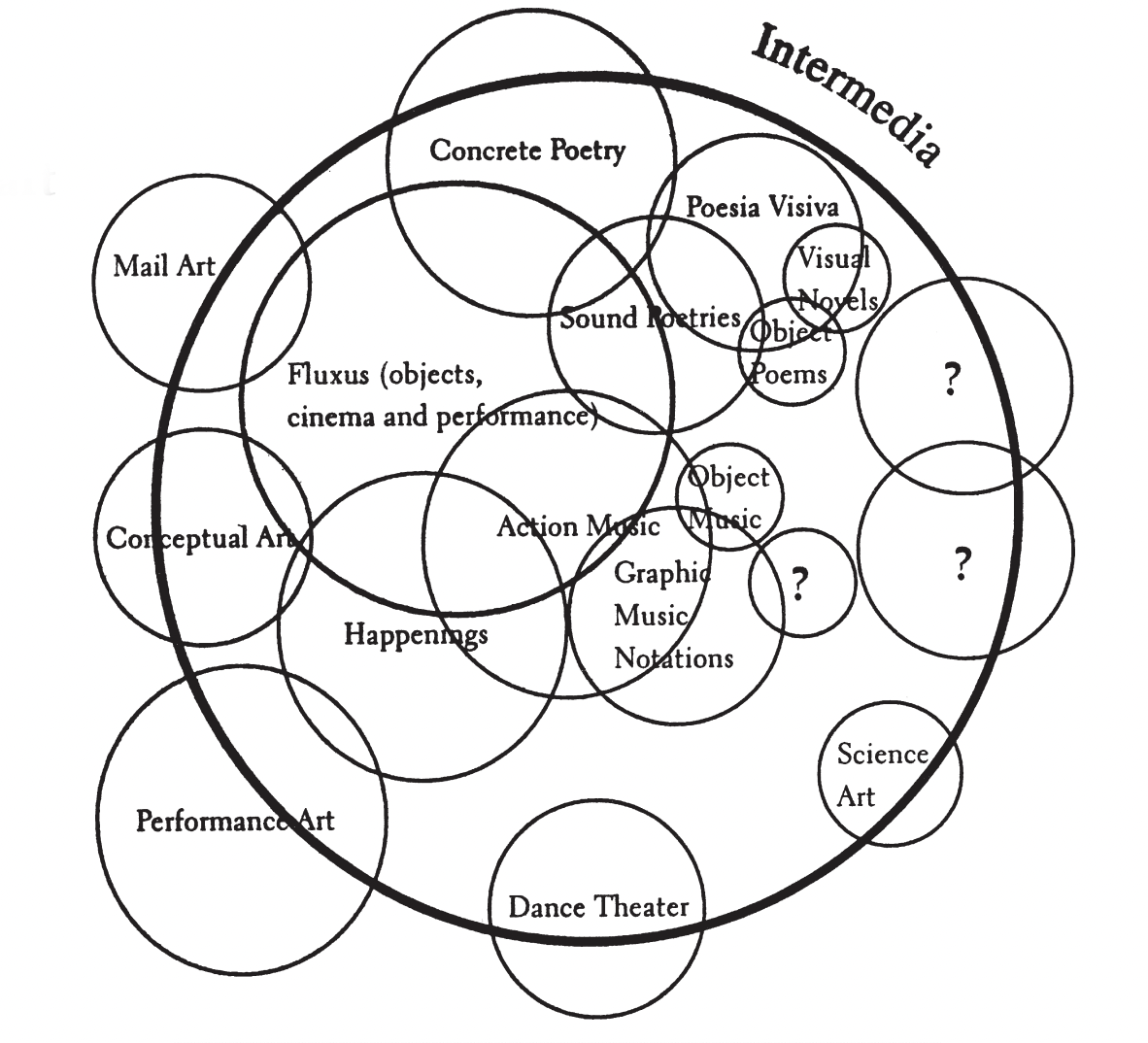
When Dick Higgins sent out the first issue of his soon to be legendary ‘Something Else Press’ newsletter in 1966, it contained only this essay. Higgins was a modest man by nature, and most of his work at the press had been about highlighting the voices of his contemporaries and influences, including John Cage, Merce Cunningham, Claes Oldenburg, and Gertrude Stein, as well as documenting the Fluxus movement, which he himself had founded. The radical influence that this piece had on the artistic scene first in New York, and then America, and soon across the world, always sat uneasy with him, and yet the term he coined, ‘Intermedia’, came to define a generation. Higgins, one of the first artists to use computers in his work, saw that the traditional mediums and classifications were fast becoming redundant, and artists who did not adapt to an increasingly ill-defined world were at risk of becoming redundant. Generously argues and delicately presented, Intermedia remains one of the foundation texts of 20th century art, and Higgin’s prescience only gets more remarkable the further into the future he helped create we get.
Dick Higgins March 24, 2026
Much of the best work being produced today seems to fall between media. This is no accident. The concept of the separation between media arose in the Renaissance. The idea that a painting is made of paint on canvas or that a sculpture should not be painted seems characteristic of the kind of social thought—categorizing and dividing society into nobility with its various subdivisions, untitled gentry, artisans, serfs and landless workers—which we call the feudal conception of the Great Chain of Being. This essentially mechanistic approach continued to be relevant throughout the first two industrial revolutions, just concluded, and into the present era of automation, which constitutes, in fact, a third industrial revolution.
However, the social problems that characterize our time, as opposed to the political ones, no longer allow a compartmentalized approach. We are approaching the dawn of a classless society, to which separation into rigid categories is absolutely irrelevant. This shift does not relate more to East than West or vice versa. Castro works in the cane fields. New York’s Mayor Lindsay walks to work during the subway strike. The millionaires eat their lunches at Horn and Hardart’s. This sort of populism is a growing tendency rather than a shrinking one.
We sense this in viewing art which seems to belong unnecessarily rigidly to one or another form. We view paintings. What are they, after all? Expensive, handmade objects, intended to ornament the walls of the rich or, through their (or their government’s) munificence, to be shared with large numbers of people and give them a sense of grandeur. But they do not allow of any sense of dialogue.
Pop art? How could it play a part in the art of the future? It is bland. It is pure. It uses elements of common life without comment, and so, by accepting the misery of this life and its aridity so mutely, it condones them. Pop and op are both dead, however, because they confine themselves, through the media which they employ, to the older functions of art, of decorating and suggesting grandeur, whatever the detailed content of their artist’s intentions. None of the ingenious theories of the Mr. Ivan Geldoway combine can prevent them from being colossally boring and irrelevant. Milord runs his Mad Avenue Gallery, in which he displays wares. He is protected by a handful of rude footmen who seem to feel that this is the way Life will always be. At his beck and call is Sir Fretful Callous, a moderately well-informed high priest, who apparently despises the Flame he is supposed to tend and therefore prefers anything which titillates him. However, Milord needs his services, since he, poor thing, hasn’t the time or the energy to contribute more than his name and perhaps his dollars; getting information and finding out what’s going on are simply toooooo exhausting. So, well protected and advised, he goes blissfully through the streets in proper Louis XIV style.
This scene is not just characteristic of the painting world as an institution, however. It is absolutely natural to (and inevitable in) the concept of the pure medium, the painting or precious object of any kind. That is the way such objects are marketed since that is the world to which they belong and to which they relate. The sense of “I am the state,” however, will shortly be replaced by “After me the deluge,” and, in fact, if the High Art world were better informed, it would realize that the deluge has already begun.
Who knows when it began? There is no reason for us to go into history in any detail. Part of the reason that Duchamp’s objects are fascinating while Picasso’s voice is fading is that the Duchamp pieces are truly between media, between sculpture and something else, while a Picasso is readily classifiable as a painted ornament. Similarly, by invading the land between collage and photography, the German John Heartfield produced what are probably the greatest graphics of our century, surely the most powerful political art that has been done to date.
The ready-made or found object, in a sense an intermedium since it was not intended to conform to the pure medium, usually suggests this, and therefore suggests a location in the field between the general area of art media and those of life media. However, at this time, the locations of this sort are relatively unexplored, as compared with media between the arts. I cannot, for example, name work which has consciously been placed in the intermedium between painting and shoes. The closest thing would seem to be the sculpture of Claes Oldenburg, which falls between sculpture and hamburgers or Eskimo Pies, yet it is not the sources of these images themselves. An Oldenburg Eskimo Pie may look something like an Eskimo Pie, yet is neither edible nor cold. There is still a great deal to be done in this direction in the way of opening up aesthetically rewarding possibilities.
“Versailles no longer speaks very loudly to us, since we think at 85 miles an hour.”
In the middle 1950s many painters began to realize the fundamental irrelevance of abstract expressionism, which was the dominant mode at the time. Such painters as Allan Kaprow and Robert Rauschenberg in the United States and Wolf Vostell in Germany turned to collage or, in the latter’s case, dé-collage, in the sense of making work by adding or removing, replacing and substituting or altering components of a visual work. They began to include increasingly incongruous objects in their work. Rauschenberg called his constructions “combines” and went so far as to place a stuffed goat—spattered with paint and with a rubber tire around its neck—onto one. Kaprow, more philosophical and restless, meditated on the relationship of the spectator and the work. He put mirrors into his things so the spectator could feel included in them. That wasn’t physical enough, so he made enveloping collages which surrounded the spectator. These he called “environments.” Finally, in the spring of 1958, he began to include live people as part of the collage, and this he called a “happening.”
The proscenium theater is the outgrowth of seventeenth-century ideals of social order. Yet there is remarkably little structural difference between the dramas of Davenant and those of Edward Albee, certainly nothing comparable to the difference in pump construction or means of mass transportation. It would seem that the technological and social implications of the first two industrial revolutions have been evaded completely. The drama is still mechanistically divided: there are performers, production people, a separate audience and an explicit script. Once started, like Frankenstein’s monster, the course of affairs is unalterable, perhaps damned by its inability to reflect its surroundings. With our populistic mentality today, it is difficult to attach importance—other than what we have been taught to attach—to this traditional theater. Nor do minor innovations do more than provide dinner conversation: this theater is round instead of square, in that one the stage revolves, here the play is relatively senseless and whimsical (Pinter is, after all, our modern J.M. Barrie—unless the honor belongs more properly to Beckett). Every year fewer attend the professional Broadway theaters. The shows get sillier and sillier, showing the producers’ estimate of our mentality (or is it their own that is revealed?). Even the best of the traditional theater is no longer found on Broadway but at the Judson Memorial Church, some miles away. Yet our theater schools grind out thousands on thousands of performing and production personnel, for whom jobs will simply not exist in 20 years. Can we blame the unions? Or rents and real estate taxes? Of course not. The subsidized productions, sponsored at such museums as New York’s Lincoln Center, are not building up a new audience so much as recultivating an old one, since the medium of such drama seems weird and artificial in our new social milieu. We need more portability and flexibility, and this the traditional theater cannot provide. It was made for Versailles and for the sedentary Milords, not for motorized life-demons who travel 600 miles a week. Versailles no longer speaks very loudly to us, since we think at 85 miles an hour.
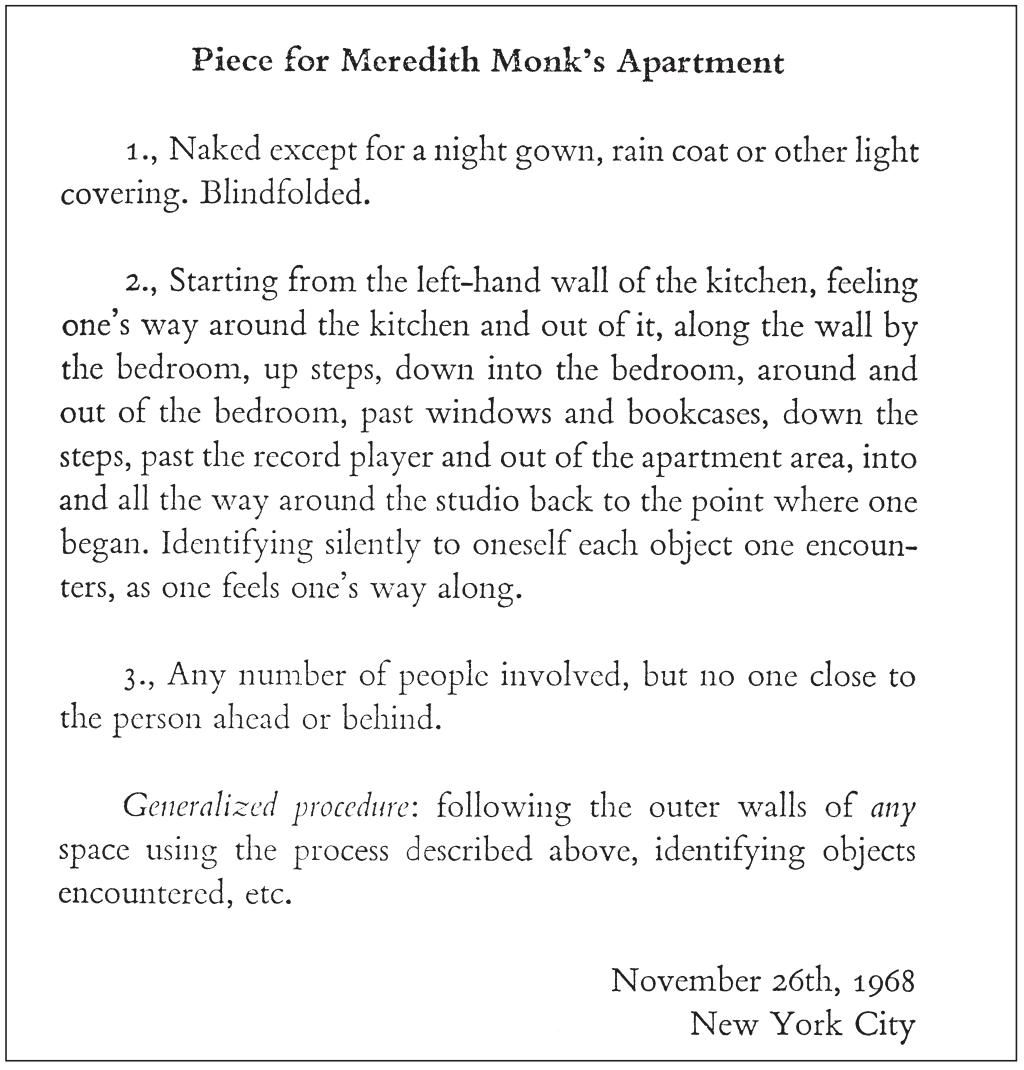
Intermedia Theatre Piece, Dick Higgins. 1968.
In the other direction, starting from the idea of theater itself, others such as myself declared war on the script as a set of sequential events. Improvisation was no help; performers merely acted in imitation of a script. So I began to work as if time and sequence could be utterly suspended, not by ignoring them (which would simply be illogical) but by systematically replacing them as structural elements with change. Lack of change would cause my pieces to stop. In 1958 I wrote a piece, Stacked Deck, in which any event can take place at any time, as long as its cue appears. The cues are produced by colored lights. Since the colored lights could be used wherever they were put and audience reactions were also cuing situations, the performance-audience separation was removed and a happening situation was established, though less visually oriented in its use of its environment and imagery. At the same time, Al Hansen moved into the area from graphic notation experiments, and Nam June Paik and Benjamin Patterson (both in Germany at the time) moved in from varieties of music in which specifically musical events were frequently replaced by nonmusical actions.
Thus the happening developed as an intermedium, an uncharted land that lies between collage, music and the theater. It is not governed by rules; each work determines its own medium and form according to its needs. The concept itself is better understood by what it is not, rather than what it is. Approaching it, we are pioneers again, and shall continue to be so as long as there’s plenty of elbow room and no neighbors around for a few miles. Of course, a concept like this is very disturbing to those whose mentality is compartmentalized. Time, Life, and the High Priests have been announcing the death of happenings regularly since the form gained momentum in the late fifties, but this says more about the accuracy of their information than about the liveliness of the form.
We have noted the intermedia in the theater and in the visual arts, the happening, and certain varieties of physical constructions. For reasons of space we cannot take up here the intermedia between other areas. However, I would like to suggest that the use of intermedia is more or less universal throughout the fine arts, since continuity rather than categorization is the hallmark of our new mentality. There are parallels to the happening in music, for example in the work of such composers as Philip Corner and John Cage, who explore the intermedia between music and philosophy, or Joe Jones, whose self-playing musical instruments fall into the intermedium between music and sculpture. The constructed poems of Emmett Williams and Robert Filliou certainly constitute an intermedium between poetry and sculpture. Is it possible to speak of the use of intermedia as a huge and inclusive movement of which dada, futurism and surrealism are early phases preceding the huge ground swell that is taking place now? Or is it more reasonable to regard the use of intermedia as an irreversible historical innovation, more comparable, for example, to the development of instrumental music than, for example, to the development of romanticism?
Dick Higgins (1938-1998) was an American artist, publisher, poet, composer, theorist, and one of the founders of the art movement Fluxus. As the founder of Something Else Press, Higgins was responsible for the dissemination of many of the avant-garde ideas that took hold in post-war America.
Iggy Pop Playlist
Iggy Confidential
Archival - May 11, 2025
Iggy Pop is an American singer, songwriter, musician, record producer, and actor. Since forming The Stooges in 1967, Iggy’s career has spanned decades and genres. Having paved the way for ‘70’s punk and ‘90’s grunge, he is often considered “The Godfather of Punk.”
20 Looking - The I Ching
Chris Gabriel March 21, 2026
Purifying but not sacrificing. Have faith in what’s great…
Chris Gabriel March 21, 2026
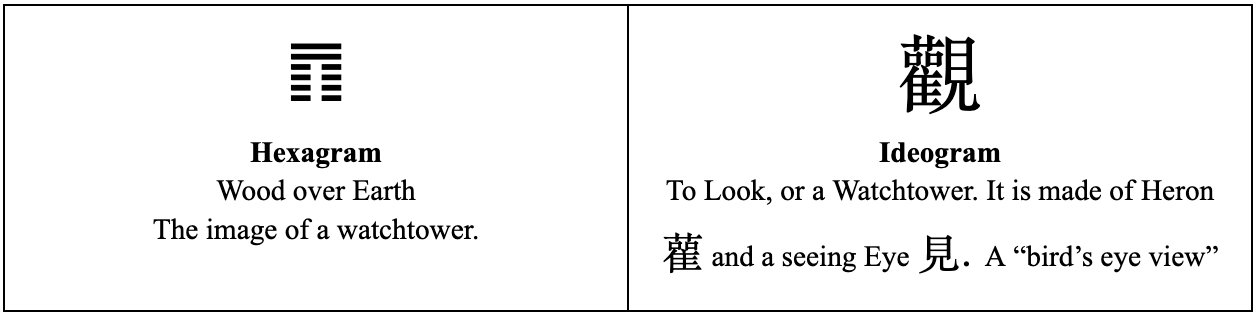
Judgement
Purifying but not sacrificing. Have faith in what’s great.
Lines
1
Looking childishly. Not a problem for small people, but the Sage regrets it.
2
Looking, peeping. Gain a pure woman.
3
Looking at my life, to go or return?
4
Looking upon the country’s light. It’s good to be a guest of the King.
5
Looking at my life. The wise man has no regrets.
6
Looking at his life. The wise man has no regrets.
Qabalah
Hod to Malkuth: the Path of Shin. The Aeon and The Last Judgment.
The Mercurial and intellectual Hod looks down upon the material World of Malkuth.
Mercury to the Earth.
This hexagram’s form in nature is a high tree from which one can see into the distance. The ideogram is directly “a bird’s eye view”, in both meaning and visual image. A bird sitting upon a high tree looking down. For human’s, this is a watchtower with a great view. The hexagram depicts this tower directly.
Judgment: The vantage point offers a clear perspective, but it is not the place to make hasty movements from. This is where we form our judgment and craft a strategy.
1 When we see through the eyes of a child, we see a world full of wonder. This is good for most people, but wisdom needs to be more strategic. A childish perspective can be good, but a childish decision can be catastrophic.
2 Peeping is looking into the private. There are vast differences between a “Peeping Tom” and the idea that Ancestors or Gods are watching our every move, Yet both are profoundly uncomfortable - one violates purity, the other enforces it.
3 Now the hexagram turns its eye inward, like Hamlet. Only from a “high” spiritual tower can we clearly assess our own life. It is nearly impossible to grasp life when we are in the midst of it.
4 Returning to the material world, we now look out upon the country. From this knowledgeable perspective one can give excellent advice to a King.
5 A wise person can look at any life well lived and feel nothing should have been done differently. They may not have led a perfect life, but they are wise enough to see the necessity of it all.
6 Many people with a bit of wisdom can see other peoples lives as well lived, but it is a masterful work to look at one's own life without regret.
While the perspective of the hexagram is very human, the corresponding Tarot card offers an entirely divine image of this dynamic. The Last Judgment shows the Apocalypse; God, from his perfect point of view has passed judgment on the earth. This is “Looking” with the eyes of an Angel rather than a bird, as such even greater judgments and decisions are made. A less fearful deity that strongly corresponds to this hexagram is the Buddhist goddess and Bodhisattva Guanyin, her name contains the name of the hexagram. 觀世音 “Seeing all Sounds”. She, like the Christian Mary, is “Our Lady of Mercy”. She sees all tears and feels mercy for all.
Let us then look upon ourselves and others with sensible judgment and with mercy.
Hannah Peel Playlist
Archival - March 23, 2025
Mercury Prize, Ivor Novello and Emmy-nominated, RTS and Music Producers Guild winning composer, with a flow of solo albums and collaborative releases, Hannah Peel joins the dots between science, nature and the creative arts, through her explorative approach to electronic, classical and traditional music.
Film
<div style="padding:56.25% 0 0 0;position:relative;"><iframe src="https://player.vimeo.com/video/1175800106?badge=0&autopause=0&player_id=0&app_id=58479" frameborder="0" allow="autoplay; fullscreen; picture-in-picture; clipboard-write; encrypted-media; web-share" referrerpolicy="strict-origin-when-cross-origin" style="position:absolute;top:0;left:0;width:100%;height:100%;" title="Bridge to Space clip 3"></iframe></div><script src="https://player.vimeo.com/api/player.js"></script>
Worthwhile Dilemmas
Derek Simpson March 19, 2026
Once the search is in progress, something will be found…
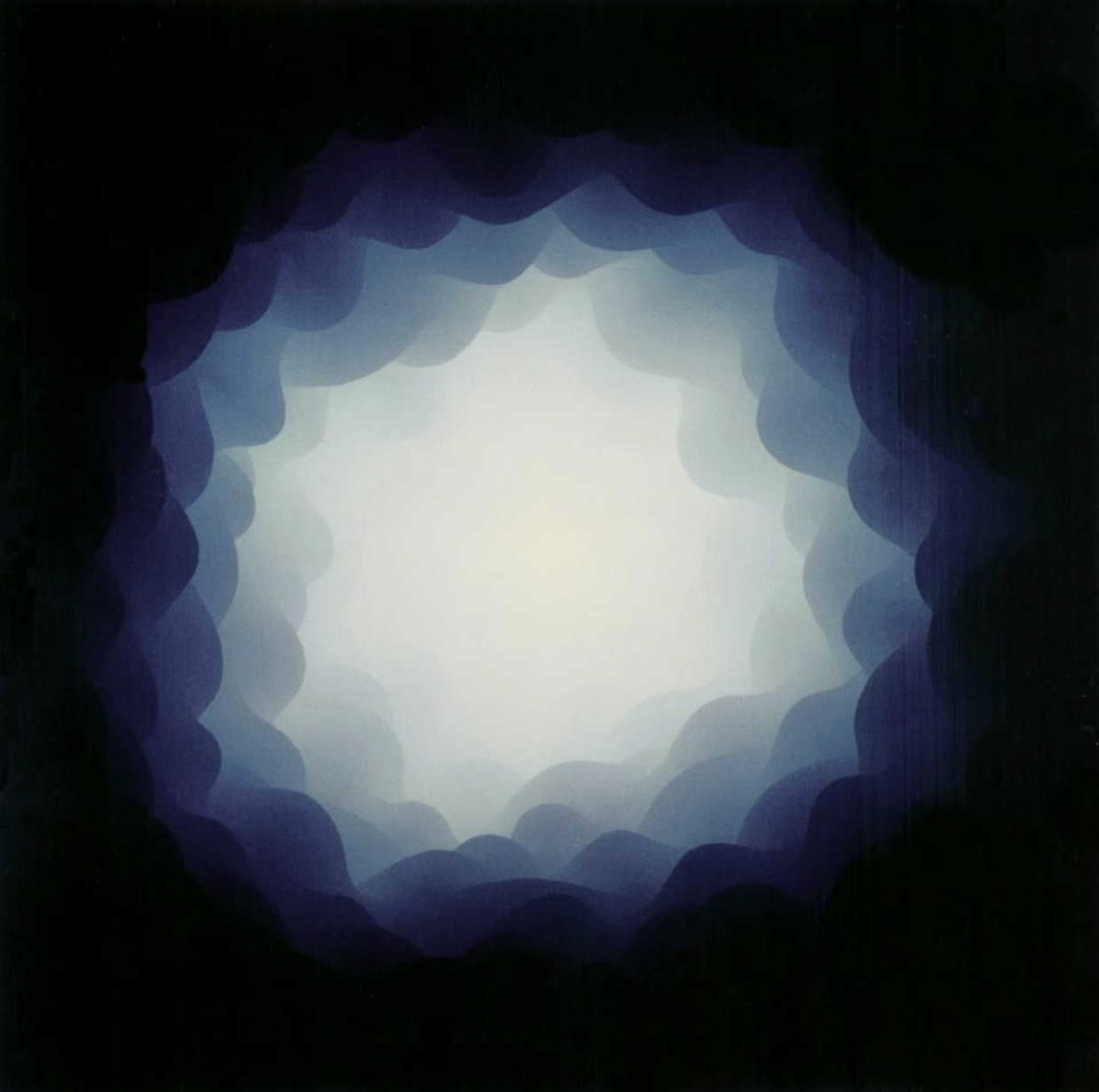
The Clear Light, Peter Schmidt. 1975.
Derek Simpson March 19, 2026
Once the search is in progress,
something will be found
Peter Schmidt and Brian Eno first met in a sort of mentor/mentee dynamic which, over the course of fourteen years, took the amorphous shape of an ongoing collaborative discourse. “He was someone who was using art as a system of knowledge,” said Eno, “not as a system of decoration or simply of earning a living. It was the crucial issue of his life as it is of mine, and it was the matrix around which he considered all of his other theories and personal discussions and problems…”
Over the course of their friendship, there were countless instances of synchronistic thinking where one would discover the other had been employing the same method of working without any prior discussion. At one point, Eno was writing open-ended phrases on index cards and picking one at random to help him open up during instances in which he felt blocked. He would then follow his immediate interpretation of the phrase as a kind of rule. If the phrase felt like it didn’t apply to the problem at hand, Eno would let the contemplation of it inform the work in subtler ways, effectively designing his way into a new opportunity for creative flow. “At the same time, Peter had been keeping a little book of similar messages to himself as regards painting” Eno reflects, “and he’d kept those in a notebook and we were both very surprised to find the other not only using a similar system, but also many of the messages being absolutely overlapping so there was a complete correspondence between the messages.” Upon this discovery, the two combined their respective messages, accumulating, and developing even more in the process. They soon released their collection to the public as a deck of cards known as Oblique Strategies, published in 1975, it prevails as Eno and Schmidt’s major collaborative effort.
Now in its fifth revised edition, the messages that comprise Oblique Strategies range in mystery; Disconnect from desire or Do nothing for as long as possible read like clear pieces of advice alongside the cryptic Towards the insignificant or Where’s the edge? Where does the frame start? Though Eno, a self-proclaimed ‘evangelical atheist’, has sparsely mentioned Oblique Strategies next to words like ‘oracle’ or ‘divination’, we get the sense that each directionless direction echoes some resonant wisdom rooted well within humankind’s longstanding relationship with divinity.
For some years prior to the development of Oblique Strategies, Eno had been studying the works of John Cage, a pioneer of avant-garde composition who was devoted to the study of Zen Buddhism. Many of Cage’s writings in Silence: Lectures and Essays—a book that Eno has repeatedly cited as a seminal influence— discuss and reflect the ambiguous nature of the kōans; specific sacred messages used in Zen Buddhist meditation. A classic kōan, for example, is one that Zen Master Hakuin Ekaku would often tell his disciples—Listen to the sound of one hand.
“Nothing changed and now everything is different.”
“Koan study is a unique method of religious practice which has as its aim the bringing of the student to direct, intuitive realization of Reality without recourse to the mediation of words or concepts…When the koan is resolved it is realized to be a simple and clear statement made from the state of consciousness which it has helped to awaken.”(Sasaki x, xi, xii)
The state of consciousness that a kōan helps to awaken is called satori—a sudden enlightenment described by many as a lightning flash of deep understanding. A more familiar, accessible sudden flash of deep understanding is what we might call inspiration, derived from the Latin inspiro, inspirare meaning ‘to breathe into’. When we are inspired we are “breathing in” new life, or spirit. We could say then, that inspiration is a mundane form of satori, or that satori is an experience of inspiration at some wider, deeper level.
When a disciple meditates on a kōan with intention and discipline for an extended period, an experience of satori is inevitable. Pulling an Oblique Strategies card has a similar effect on the artist concerning an experience of inspiration, only the whole process happens much quicker. One pulls the card with intention, flips it over, reads the sacred message—
Faced with a choice do both
—and the new perspective offered by this suggestion alters conscious reality. Seemingly disparate ideas begin to reveal themselves as inherently connected in unexpected ways. Recognizing these newly revealed connections, we light up with a charge of readily available energy. In a flash, the process is once again set in motion, imbued with new life. Nothing changed and now everything is different.
When we ask ourselves a sacred question or give ourselves a sacred prompt, we establish a magical relationship with language—the tool we use to understand the world around us. This new relationship acknowledges that there are other, more subtle tools for understanding within us which only get sharper when we let them be of use. The more we allow the use of these alternate tools to inform our creative process (as well as our meditation), the more enriched our work, our play, and our lives become.
We’ll end on an exercise, read the statement below.
The most important thing is the thing most easily forgotten
Now feel free to contemplate a bit.
When you’re ready, open yourself up to this next question:
Is the above statement a kōan or an oblique strategy?
Eno, Brian and Peter Schmidt. Oblique Strategies. Brian Eno and Peter Schmidt, 2001. Deck of cards.
“Brian Eno Interview" Ode To Gravity, Hosted by Charles Amirkhanian, KPFA, 02 Feb. 1980, https://archive.org/details/BrianEno/BrianEnoOTGR1.473.wav.
Miura, Isshū and Ruth Fuller Sasaki. THE ZEN KOAN. Harvest Books, 1965.
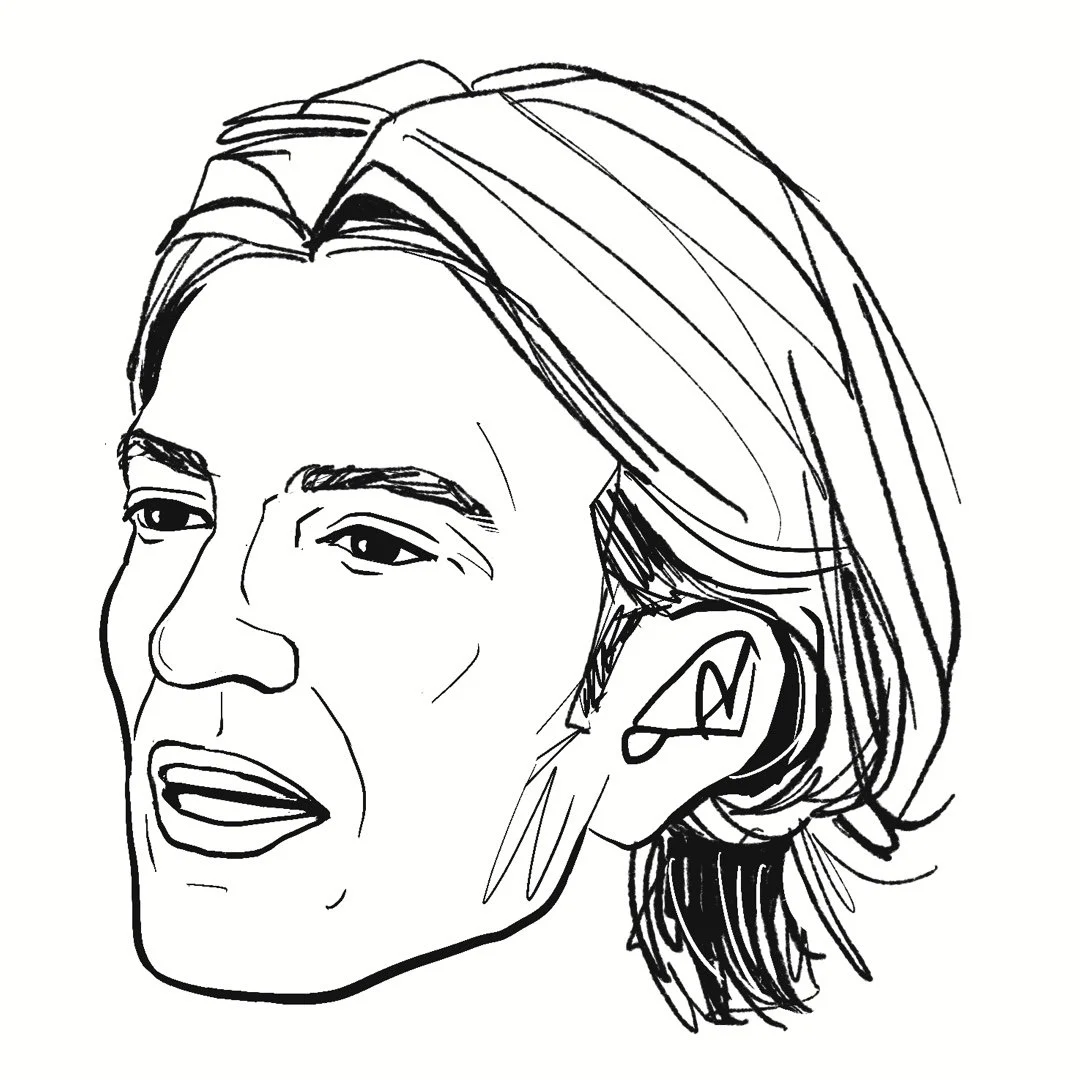
Adam Neumann
2h 59m
3.18.26
In this clip, Rick speaks with Adam Neumann about patience in response to a fall.
<iframe width="100%" height="265" src="https://clyp.it/nqanuwsc/widget?token=8e4f26c29ce7a5a98f23367043eee777" frameborder="0"></iframe>
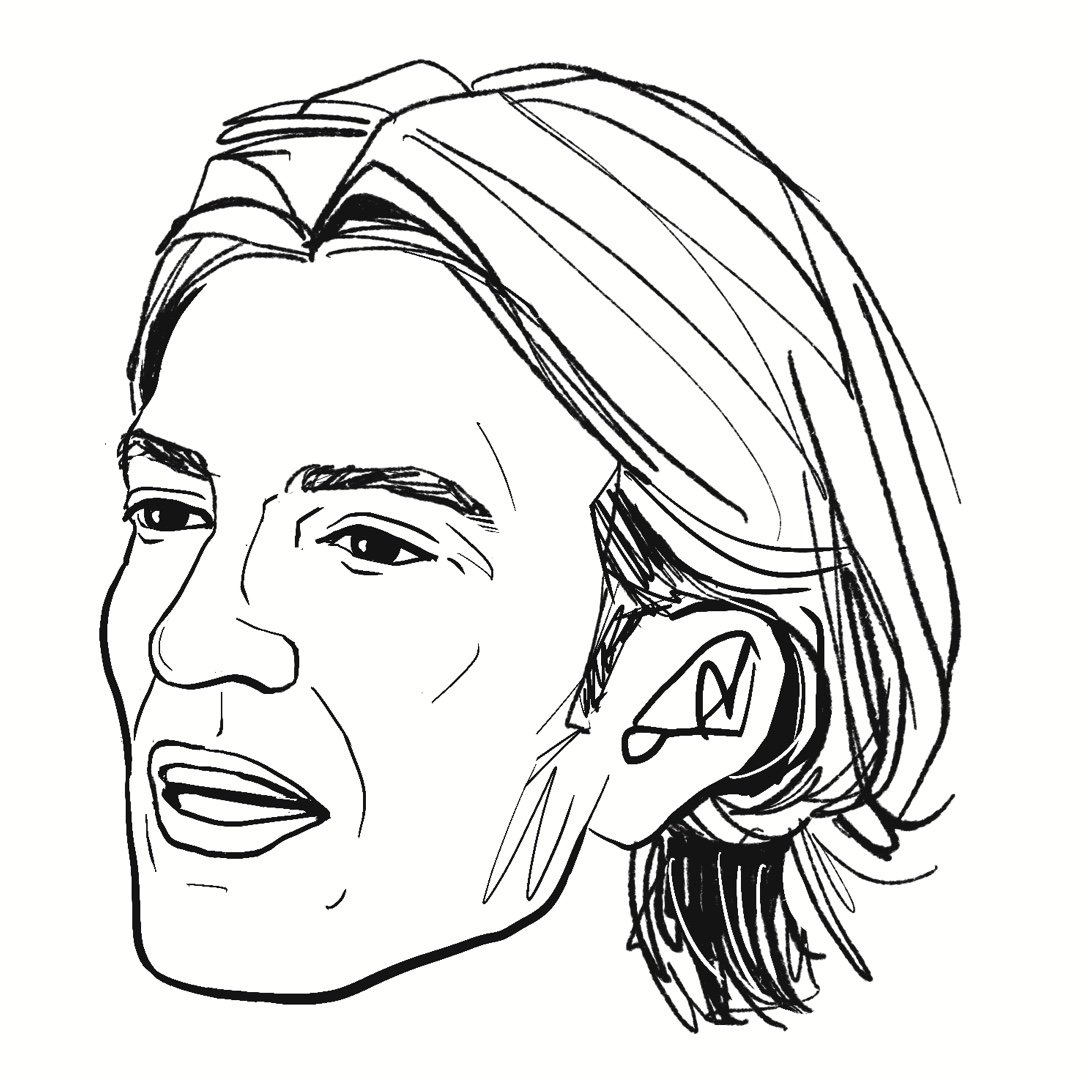
Inhabiting the Space of Sensitivity
Tuukka Toivonen March 17, 2026
Volumes have been written about how digital and consumerist distractions shorten our attention spans and hamper our cognitive abilities…
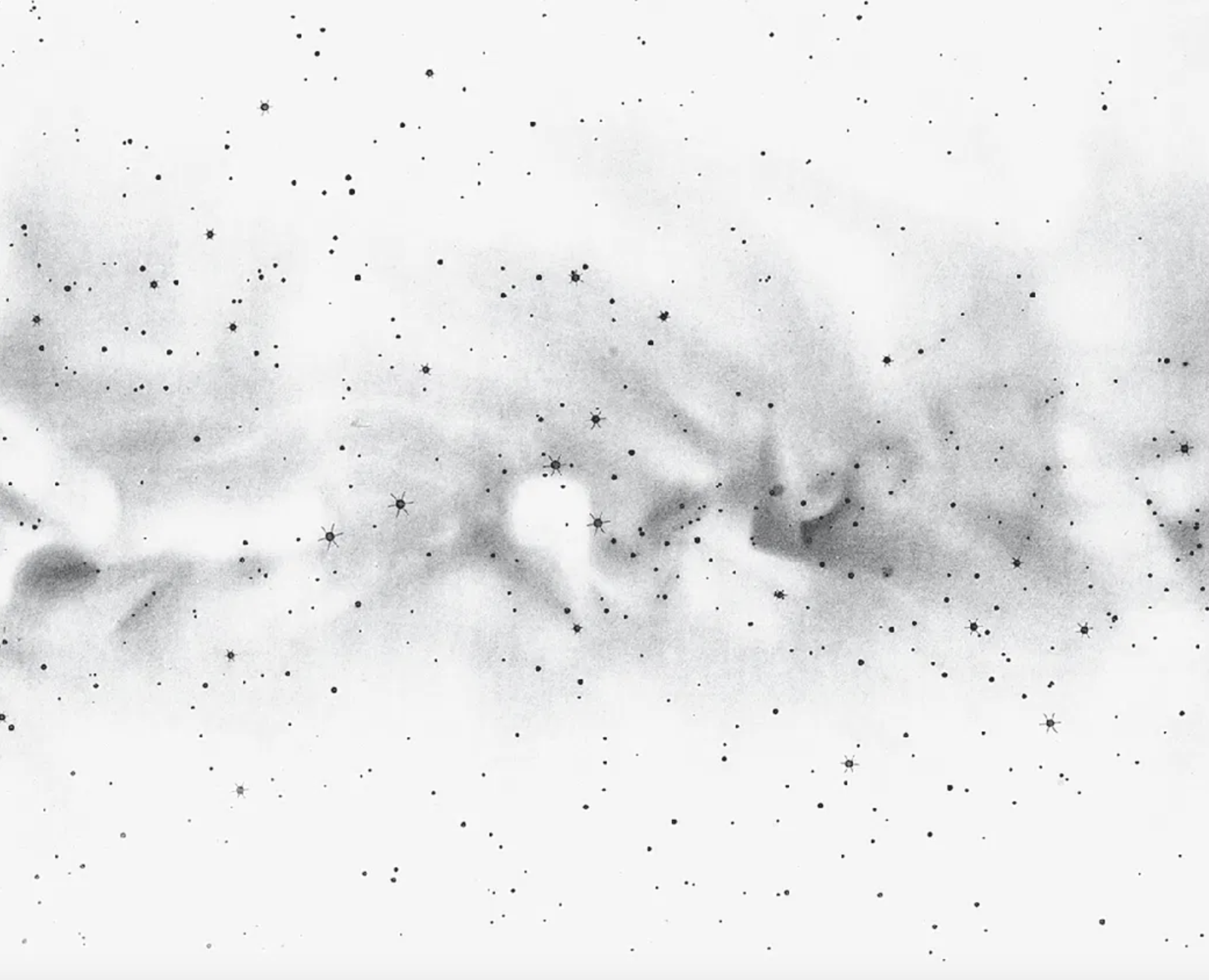
Die südliche Milchstrasse, Anton Pannekoek. 1928.
Tuukka Toivonen March 17, 2026
Volumes have been written about how digital and consumerist distractions shorten our attention spans and hamper our cognitive abilities. Much, too, is being said about how algorithmic technologies, while undoubtedly powerful, are diminishing our ability to think, learn and create in original ways. But how well do we understand that most subtle and most wondrous of faculties on which those endangered abilities rely – sensitivity itself? Are we cherishing and consciously fostering it, allowing it to speak to and gently guide us towards the things that revitalize us and away from those that don’t? Are we ensuring that our sensitivity cooperates with our cognitive thinking abilities to bring forth the highest levels of insight and intelligence within us, genuinely letting incoherence become a catalyst for coherence, as David Bohm’s observations suggest it can?
In an earlier life, I used to view sensitivity as a weakness – the lack of a thick skin. ‘Being sensitive’ meant getting deflated all too easily by others’ comments and dreading their reactions to whatever one might do or create. In Finland where I grew up, ‘a sensitive youth’ (herkkä nuori) denoted a fragile and ‘pure’ young soul who could not bear the hard realities of life. The binary subtext was that such a young person could survive life’s inevitable blows only by toughening up and shedding their excessive sensitivity. In this cultural scheme, sensitivity could only be defined as a burden and a problem to be dispensed with. As I matured and entered a graduate school full of wine and cheese tasting societies, I began to associate sensitivity with a certain sense of sophistication. It was a quality that only those with the time for the so-called finer pleasures could hope to cultivate and demonstrate in specific contexts.
Both of these understandings, I eventually came to realise, grossly missed the mark when it comes to sensitivity and the profound role it actually plays in human life and its unfolding. The more artists I met, the more I noticed that a keen sensitivity appeared key to their creativity, much more so than I had appreciated based on my own academic approach to the creative process. This was not a faculty activated exclusively during moments of sketching, painting or designing, but a far more holistic quality of suppleness and awareness that resonated inwardly and outwardly without any real on-off switch. I would notice how my attuned friends would spot the stealthiest of cats with great ease from a distance or how they would run up to large dogs without a whiff of hesitation, picking up the emotions of their newfound canine friends and instantly entering what seemed like a shared moment of aliveness across species lines. For these friends, great sensitivity was ever-present and active, coloring and energizing every moment and seamlessly guiding their outward behavior.
As deeply inspiring as these episodes were, it took still longer – and many challenging life experiences – for me to register just how untethered I had become from my own sensitivity. It was not until making time to properly slow down that I finally realized the steep costs this had imposed, in the form of a diminished sense of direction, meaning and joy in day-to-day life.
As I sought to restore my fullest abilities to perceive, feel and bring about a deeper coherence, I found myself spending more time in what I now call the Space of Sensitivity. Put simply, this is a sphere that exists for the unhurried and non-judgmental sensing of the fullest range of signals within one’s mind and body.
Such sensing often begins with the detection of various distress signals within oneself, for these tend to be hitched to neglected sources of incoherence. These signals may include moments of impatient irritation, weight pressing down on the chest, abdominal discomfort or headaches triggered by recurrent thoughts or dreams. Fully embracing these signals and their subtle sensorial qualities is vital, for it is such continued observation that begins to dissolve that distress and excavate its lessons.
“Sensitivity can then re-establish its role as a basis for our emotions, enlivening all that we experience and infusing it with rich meaning.”
These lessons of discomfort come in many forms: one may suddenly notice having compromised one’s true wishes to maintain relational harmony, or that one behaved with unnecessary aggression after having been made to feel helpless in the face of unexpected criticism. Through such watchfulness, one begins to identify persisting factors that distort or mute one’s sensitivity, from constant over-stimulation to an internalized need to rush to decisions or the belief that what one genuinely thinks and feels doesn’t really matter that much. Fear, in its many guises, may surface as a key culprit, as may addictive and compulsive tendencies of various kinds, along with the terror of simply spending time with one’s self. A range of practices, from hypnosis and somatic or psychedelic therapy to movement and meditation, can be of help in accessing a deeper layer of root causes that may not be so easily detected.
The Space of Sensitivity is nothing but a convenient conceptual container for inner sensing processes of various kinds. As such, it is not a ‘thing’ or a separate entity. Yet conjuring up such a space is helpful because it foregrounds and re-values these crucial processes in the context of day-to-day life, giving one permission to seriously engage with them and inviting one to treat them as sacred. It becomes easier to attend to inner signals of incoherence, which really are engines of coherence, with great intensity and on a continuous basis. This launches us on a path towards a full recovery of our sensitivity in a very different way compared to more casual reflective activity. Sensitivity can then re-establish its role as a basis for our emotions, enlivening all that we experience and infusing it with rich meaning.
As Bessel van der Kolk has found through his influential work on trauma recovery, the restoration of sensitivity allows us to finally ‘want what we truly want’ and consistently make decisions that serve us. Even more radically, as our embodied intelligence becomes so accessible to us that we need little time to read its messages, we become adept at moving from incoherence to coherence and making decisions quickly. Our sensitivity becomes integral to our very being, making it total, unified, unimpeded, natural, immediate. Once we reach a state of non-division between the ‘senser’ and the ‘sensed’ (to echo the non-dualism of J Krishnamurti), our lives can again unfold as one unified movement with little need for resistance or self-fragmentation. We also regain the power to ‘resonate externally’, as inner harmony frees up our energies and helps us to perceive the more-than-human world vividly and in a way that engenders involvement. The deeper significance of restoring our sensitivity is not as the restoration of some narrow or secondary or purely aesthetic ‘compartment’ within us, but as the rejuvenation of our highest intelligence in the most holistic – and ecological – sense.
Hoping sincerely that your journey into the mysteries of sensitivity will continue well beyond this short moment, I will leave you with an invitation to contemplate the following words of the legendary Japanese monk and philosopher Dōgen (1200–1253):
‘The total world in ten directions is one transparent pearl…The total body is a pair of right dharma eyes. The total body is a true human body. The total body is one word. It is transparently illuminating. The total body is the total mind. When one is a total body, there is no obstruction for it; it is graciously smooth and tumbles [freely].
Tuukka Toivonen, Ph.D. (Oxon.) is a sociologist interested in ways of being, relating and creating that can help us to reconnect with – and regenerate – the living world. Alongside his academic research, Tuukka works directly with emerging regenerative designers and startups in the creative, material innovation and technology sectors.
Film
<div style="padding:75% 0 0 0;position:relative;"><iframe src="https://player.vimeo.com/video/1175793484?badge=0&autopause=0&player_id=0&app_id=58479" frameborder="0" allow="autoplay; fullscreen; picture-in-picture; clipboard-write; encrypted-media; web-share" referrerpolicy="strict-origin-when-cross-origin" style="position:absolute;top:0;left:0;width:100%;height:100%;" title="Better Use of Leisure Time (1950)"></iframe></div><script src="https://player.vimeo.com/api/player.js"></script>
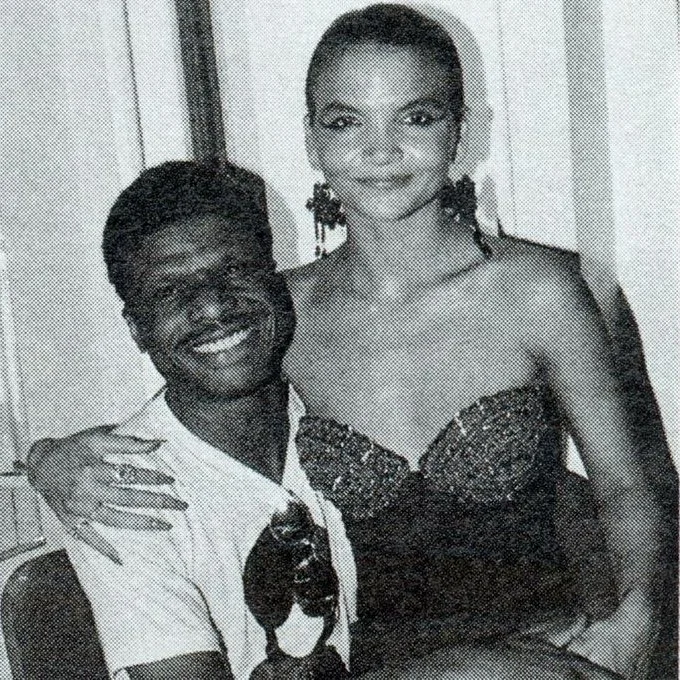
Larry Levan Playlist
Archival 1967-1987
Larry Levan was an influential American DJ who defined what modern dance clubs are today. He is most widely renowned for his long-time residency at Paradise Garage, also known as “Gay-Rage”, a former nightclub at 84 King Street in Manhattan, NY.
19 Approaching - The I Ching
Chris Gabriel March 14, 2026
Approaching is the origin of a pure and bountiful harvest, but after eight months it’s unfortunate…
Chris Gabriel March 14, 2026

Judgement
Approaching is the origin of a pure and bountiful harvest, but after eight months it’s unfortunate.
Lines
1
Approaching together in purity.
2
Approaching together: joint approach.
3
Approaching, but gaining nothing. He worries.
4
Approaching and achieving.
5
Approaching with knowledge makes a prince do great work.
6
Approaching with offerings.
Qabalah
Imperfectly the Path of Vau: Chesed to Chokmah. The Hierophant.
In this hexagram we are given the image of the shoreline, a Lake approaching the Earth. The ideogram gives us the image of supplicants: a crown is met with three kneeling people making requests. This is the role of both a petitioner at the court of a King, and the prayers in which we make our pleas to God. As the tide slowly and humbly meets the earth, so the supplicant petitions the King.
The Judgment tells us it is good to make requests and attempt to make changes in the world, but when no ground is gained, it’s best to move on, lest it becomes begging.
1 A unified group advocating for a cause may be able to sway the powers that be with greater effect than a lone individual.
2 Forming coalitions can allow advocates for multiple causes to gain greater influence.
3 Often pleas are met with no results. This is something to contemplate. One should not go on tilting at windmills, but find the most effective method to achieve one’s goals.
4 The petition is accepted, the low meets the high on even ground now.
5 People with power must attract wise and knowledgeable people. Wise people must approach people with power. It is through interaction that great works can be achieved, for both sides are weaker without the other.
6 Lobbyists know well that the key to making changes can be bringing gifts to those in power.
In each line we see a form of petition and its potential for effect. While the text refers primarily to worldly powers, the corresponding Tarot card, the Hierophant or Pope, gives us the perfect symbol: a worldly power representative of a divine power - unifying supplication as legal and divine. This has of course been the case for much of history: the God-Kings of Egypt, China, and the Americas.
A great deal of ritual magic consists of petitioning spiritual powers. As these lines show, there is little difference between making pleas to a king or a deity; one should make the approach with a group, one should have offerings, and most importantly one must have the knowledge to make use of such an interaction.
While many people may never make pleas to a king or petition a deity, nearly everyone will interview for a job, ask for a raise, or try to gain money from another. This is the mundane function of the hexagram. Therefore, let us grow in wisdom so we can approach those who can change our lives, and not make fools of ourselves.
Film
<div style="padding:75% 0 0 0;position:relative;"><iframe src="https://player.vimeo.com/video/1173814427?badge=0&autopause=0&player_id=0&app_id=58479" frameborder="0" allow="autoplay; fullscreen; picture-in-picture; clipboard-write; encrypted-media; web-share" referrerpolicy="strict-origin-when-cross-origin" style="position:absolute;top:0;left:0;width:100%;height:100%;" title="Firing Line - Noam Chomsky clip 2"></iframe></div><script src="https://player.vimeo.com/api/player.js"></script>
The Mountain and The Fool
Molly Hankins March 13, 2026
On the very first card of the Tarot Major Arcana we find The Fool…
Molly Hankins March 12, 2026
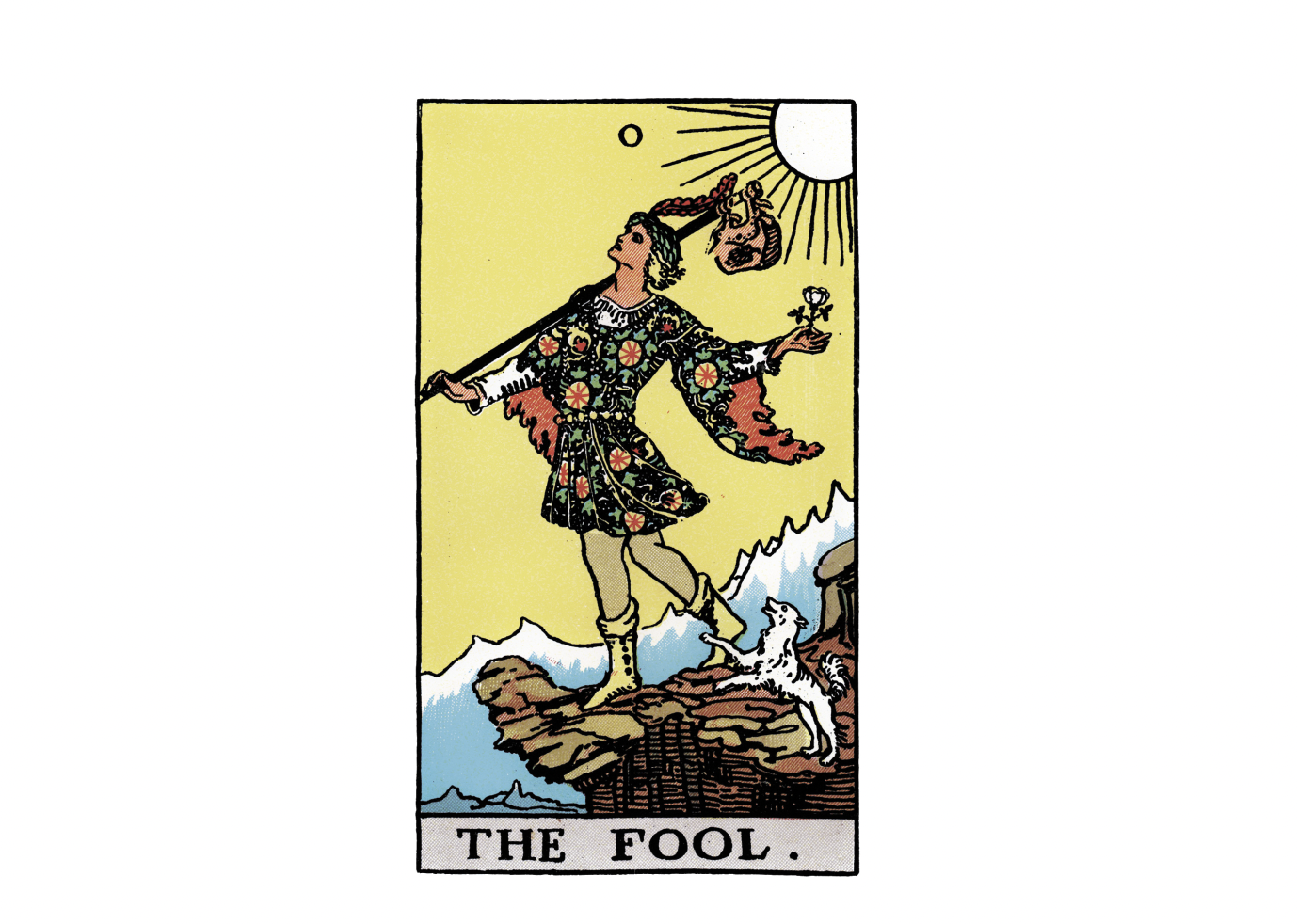
On the very first card of the Tarot Major Arcana we find The Fool. Attributed to the number 0 and the Hebrew letter Aleph (א), he is pictured with a mountain range behind them. Ready to step into the valley of experience, The Fool looks up blissfully, certain of their safety as they’re about to drop off a cliff. And so it is as we leave Source consciousness and step into the valley of separate individuation. Our souls long to know what we’re getting into, but once we take that step into physical incarnation we are stepping off a metaphorical cliff into the great unknown.
At this early stage in the journey, The Fool is still knowingly connected to superconsciousness or source-consciousness, which we forget as we get further into our incarnations. It is exactly this connection that allows The Fool to remain so calm. The number zero represents superconsciousness and harkens to the zero point where consciousness begins; our collective point of origin also known as The Cosmic Egg. Occult author and founder of ‘Builders of the Adytum Mystery School’ Paul Foster Case attributed Aleph to this card because it is the first letter of the Hebrew alphabet. It’s also known as the father, or the ox as it’s expressed in pictograph, a symbol of the motive, life-giving force from which all things derive.
The Fool is accompanied by a small dog: an evolved, domesticated descendent of a wild animal symbolizing how our consciousness evolves. As Case wrote, “The little white dog is a descendent of wolves and jackals. Thus he is a human adaptation, whereby something given in a wild and dangerous state by the modified processes of nature has been changed into a friend, helper and companion of man. He also indicates the truth that all subhuman forms of the Life-power are elevated and improved by the advance of human consciousness.” The dog embodies the same evolution our souls experience while in human form as well - from lower, animalistic tendencies of dominance and submission towards a wider range of conscious expression of creative capacity.
According to Case, the iced-covered mountains in the background of the card refer to the cold, still nature of the Absolute, the Source from which consciousness originates. The human brain and matter itself have been described as ‘warm, wet and noisy,’ most notably by physicist Max Tegmark, the exact opposite expression of cold stillness illustrated by the mountain range. The archetype of The Fool symbolizes the state of Life-power prior to self-expression in the valley of experience. The image of the mountain appears in many of the Tarot Major Arcana cards, including The Emperor, The Lovers, Strength, Temperance, The Star, The Moon and Judgement. The Hermit waits on top of the mountain holding a light for other seekers to make their way back to Source.
“All of us embody the archetype of The Fool as we leave the safety of unexpressed potential and venture into the warm, wet and noisy world of form.”
The image of the mountain is making its way through the pop-culture social media sphere this month, following the release of the new Gorillaz album, The Mountain. Easily the band’s most overtly spiritual record, it was inspired by two trips to India taken by co-founders Damon Albarn and Jamie Hewlett after their fathers passed away within ten days of one another.

The Mountain album cover illustrates what feels like a perfect completion of the cycle of incarnations, the antithesis to The Fool’s depiction. The album art finds the Gorillaz characters all together at the very top of the mountain facing the sun. It feels like consciousness itself split into all these different characters, found each other in the valley of experience, had a great adventure playing and creating in the world of form, and then returned back up the mountain. Scientist and author Itzhak Bentov described the realm of the Creator as ‘the fertile void;’ cold and still at rest but alive with potential for expression. It’s akin to what Paul Foster Case described as the icy peaks of the mountains from which The Fool descends.
The album’s cover art feels like the last stop before these different expressions of consciousness are absorbed back into the fertile void. Three of the band members seem to be looking back down to the valley, but Murdoc (the fictional founder of the band) is looking towards Aleph, expressed as sunlight. Even on his phone, he’s still clearly caught up in the experience of form. The Fool is also looking up, confident in his undertaking even though it might seem quite foolish to come into a realm of duality where inevitably everything and everyone we love in this realm we’ll eventually lose.
According to Bentov, life is the ultimate game of hide-and-seek. Not only do all the different expressions of consciousness ultimately find each other on the proverbial mountain, Bentov also believed that mystical experiences are actually the Creator peaking into the world of form to tell our souls, “Boo! I’m you.” All of us embody the archetype of The Fool as we leave the safety of unexpressed potential and venture into the warm, wet and noisy world of form. Much of The Mountain‘s lyrical content deals with the challenge of saying goodbye to those we love when souls leave their physical bodies. But as the album cover and generally uplifting musical choices in the songs promise, we all ultimately find each other in the end, and again and again throughout the valley of human experience.
Molly Hankins is an Initiate + Reality Hacker serving the Ministry of Quantum Existentialism and Builders of the Adytum.

Kelly Wearstler
1h 23m
3.11.26
In this clip, Rick speaks with Kelly Wearstler about discovering new things along the creative journey.
<iframe width="100%" height="265" src="https://clyp.it/ngn3lod4/widget?token=f143374e07169d9570d3d7e75e06db1e" frameborder="0"></iframe>

Notes On Writing (1959)
C. S. Lewis March 10, 2026
It is very hard to give any general advice about writing. Here’s my attempt…
Script from “The Proper Art of Writing”, Paul Franck. 1655.
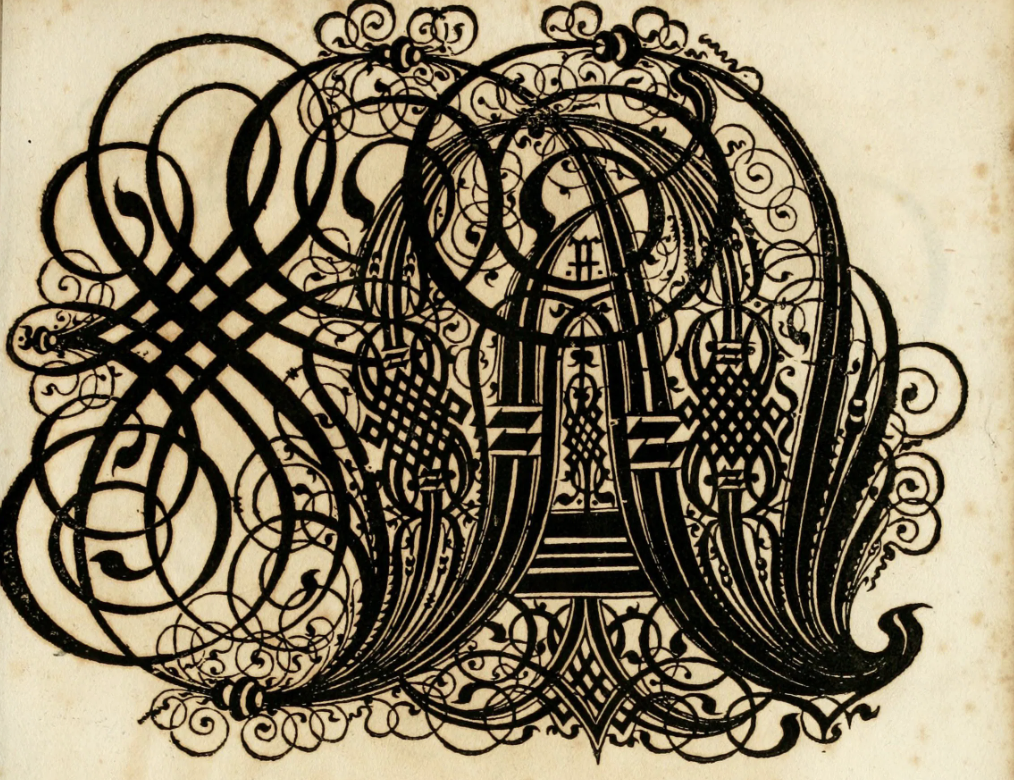
Ask a hundred writers on their advice for writing and you’ll get a hundred different answers. Myriad schedules, techniques, tactics, and maxims that one writer will swear by are meaningless to another, yet so often are decreed as truth. In 1959, the author of the Narnia series C.S. Lewis received a letter from a young schoolgirl in America, asking for his advice on writing. Lewis answered every letter he ever received, and famously spent hours each day on his correspondences which have since been compiled in multiple volumes. His reply, here, was short and to the point. Lewis acknowledges the difficulty and fallibility of writing advice on a general scale, so instead gives a framework with which to think about process of putting pen to paper, and for him it must be pen to paper as per advice number 7.
C.S. Lewis March 10, 2026
It is very hard to give any general advice about writing. Here’s my attempt.
Turn off the Radio.
Read all the good books you can, and avoid nearly all magazines.
Always write (and read) with the ear, not the eye. You should hear every sentence you write as if it was being read aloud or spoken. If it does not sound nice, try again.
Write about what really interests you, whether it is real things or imaginary things, and nothing else. (Notice this means that if you are interested only in writing you will never be a writer, because you will have nothing to write about. . . .)
Take great pains to be clear. Remember that though you start by knowing what you mean, the reader doesn’t, and a single ill-chosen word may lead him to a total misunderstanding. In a story it is terribly easy just to forget that you have not told the reader something that he wants to know—the whole picture is so clear in your own mind that you forget that it isn’t the same in his.
When you give up a bit of work don’t (unless it is hopelessly bad) throw it away. Put it in a drawer. It may come in useful later. Much of my best work, or what I think my best, is the re-writing of things begun and abandoned years earlier.
Don’t use a typewriter. The noise will destroy your sense of rhythm, which still needs years of training.
Be sure you know the meaning (or meanings) of every word you use.
C. S. Lewis (1898 – 1963) was a British author, literary scholar and theologian. Most know as the author of The Chronicles of Narnia

Iggy Pop Playlist
Iggy Confidential
Archival - May 4, 2025
Iggy Pop is an American singer, songwriter, musician, record producer, and actor. Since forming The Stooges in 1967, Iggy’s career has spanned decades and genres. Having paved the way for ‘70’s punk and ‘90’s grunge, he is often considered “The Godfather of Punk.”
Hannah Peel Playlist
Archival - March 1, 2025
Mercury Prize, Ivor Novello and Emmy-nominated, RTS and Music Producers Guild winning composer, with a flow of solo albums and collaborative releases, Hannah Peel joins the dots between science, nature and the creative arts, through her explorative approach to electronic, classical and traditional music.
18 Sin (Decaying) - The I Ching
Chris Gabriel March 7, 2026
Decaying is the origin of prosperity…
Chris Gabriel March 7, 2026

Judgement
Decaying is the origin of prosperity. Before the first three days and after the first three days.
Lines
1
Atone for the sins of the father. This is the son's task.
2
Atone for the sins of the mother. They can’t be purified.
3
Atone for the sins of the father, some regret, but not too much.
4
The father’s many sins bring shame.
5
Atone for the sins of the father and be praised.
6
Though he doesn’t work for the King, he is noble.
Qabalah
Netzach to Hod: The Path of Pe. The Tower.
Netzach spoils the thoughts of Hod
Here we see natural growth rotting under a heavy weight. The ideogram shows us three insects in a bowl, this is the name of a magical poison, Gu. It was prepared by putting snakes, scorpions and centipedes together in a container and letting them fightPoisons mixwith poisons, the “winner” would then be consumed by worms, who would contain the perfected poison. This would then be used in black magic.
In this strange ritual we see the nature of the generational sin depicted in the hexagram, poison progressing in danger from creature to creature.
Judgment: Exodus 20:5 clarifies this perfectly
“I the Lord thy God am a jealous God, visiting the sins of the fathers upon the children unto the third and fourth generation of them that hate me.”
Sin is not localized, it spreads through the generations.
1 Here we see Christ, the Son, who being a man atones for the sins of all men. As Christianity would have all men be Christ-like, the task of any Christian is to atone for their inherited sin. We need not look at it through the lens of religion, Sin in this case is something like “generational trauma” or a family curse. The troubles of past generations are inherited by new ones, and they must be rooted out.
2 The Sins of the Mother are of a different nature, they are closer to nature itself. The sinful, devouring father is a near universally accepted archetype. We are all as familiar with Saturn eating his children, as with Darth Vader. The devouring mother is an altogether ignored archetype, projected onto “wicked step-mothers”. This contributes further to the severity of the mother’s sins, and the profound difficulty of dealing with them.
3 Atoning for sins can bring shame and regret. When undergoing psychoanalysis, one may have a temporary period in which uncovered traumas become acutely activated, but this will pass.
4 Sometimes, the sins of the father are too great to repress and they follow the children everywhere. Consider the children of infamous killers and criminals who may have to change their name to relieve themselves of inherited shame.
5 On the other hand, a terrible parent can produce a brilliant child who restores the pride of a family.
6 Atoning for sins, dealing with traumas, making good. These are profoundly noble pursuits which most are too frightened and weak to accomplish. Doing this elevates one, spiritually and materially.
When we consider the nature of Sin, the hexagram and ideogram give excellent context: the image of decaying, something held down by a heavy weight, under which it rots. Liber AL affirms this in chapter I:41 “The word of Sin is Restriction.” This is not the concept of Sin as a restriction, but rather restriction as the nature of Sin. William Blake expresses this intensely: “Sooner murder and infant in its cradle than nurse unacted desires.”
It is when we repress and restrict natural energies that Sin occurs. Wilhelm Reich spent his career describing this; repressed desires and complexes which form not only psychological diseases, but manifest physically as muscular rigidity and disease.
St. John Chrysostom described a similar understanding to the hexagram, the diseased and decaying character of Sin:
“This man is a slave to sin. For tell me not of this, that he is not eaten of worms, nor lies in a coffin, nor has closed his eyes, nor is bound in graveclothes. Nay, for these things he undergoes more grievously than the dead, no worms devouring him, but the passions of his soul tearing him to pieces more fiercely than wild beasts… this man is gathering unto himself diseases without number, while his eyes are open… before his body, his soul is corrupted and destroyed, and undergoes greater rottenness.”
We must cleanse our souls of Sin, whether the restriction of the mind and body through repression, or the restriction of the Soul through evil. When we cleanse ourselves of these, we do good to our fathers,m and even greater for our children, who can be born without needing to bear the shame we ourselves may have been born into.