
Sunlight
Max Pechstein
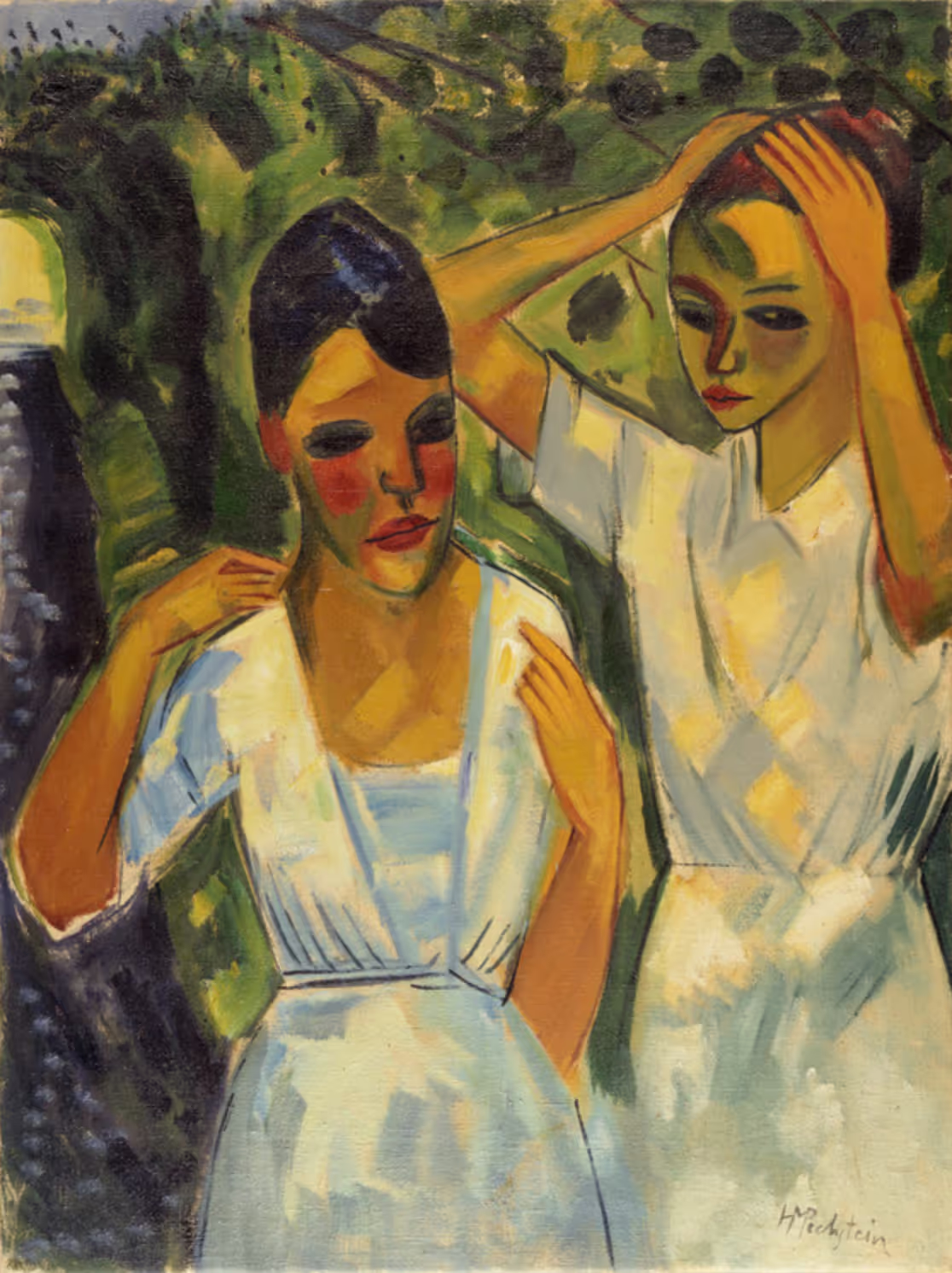
The ‘Die Brücke’ artists prided themselves on their crudeness. Like their French counterparts the Fauves, they rejected both total abstraction and realist depiction, disliking Impressionism’s focus on aesthetic beauty and the neutered, domestic subjects of Pointillism. They were the proton-expressionists, informed by primitive art and the raw expression of emotion, in subject matter explicit and erotic charged. Their very name ‘Die Brücke’, translates to ‘The Bridge’, an acknowledgement the group made that they were to be a bridge to the art of the future, a self fulfilling prophecy that ensured both their importance and their brief life. It was in the early days of this creatively enthused rebellion that a young Max Pechstein joined the group, and became the only artist with formal training to do so. This led, unsurprisingly, to a fractious relationship and resentment between the members, especially as Pechstein gained more commercial success than the others. He was expelled in 1912, and became a darling of the art world until he was vilified as a degenerate by the Nazi’s and his art removed from all institutions. His career revived after the war and Pechstein continued to paint and create to acclaim and through it all, his style always spoke to the Die Brückes. A member for only 6 years in a more than 50 year career but there was not a brushstroke painted that wasn’t informed by the wild philosophies of his youthful rebellion.