
Venus Verticordia
Nikolaus Pfaff
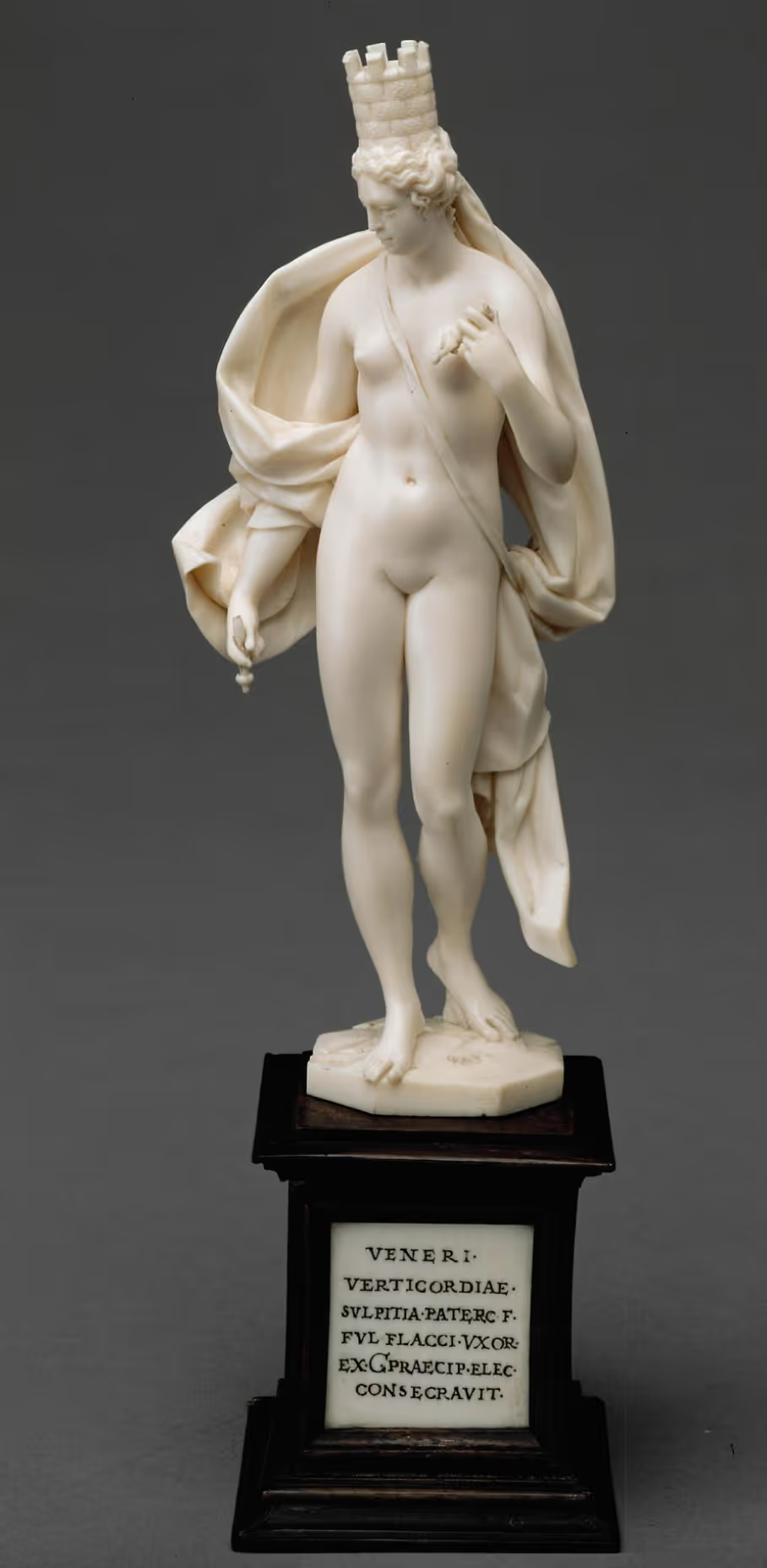
In early 1600s Europe, while Rudolph II ruled Austria, Bohemia and the Holy Roman Emperor, the height of sophistication was the Kunstkammer, or Cabinet of Curiosities. These were decadent cabinets intended to be filled with objects, art works, artefacts and tokens that showed the wealth, culture and worldliness, and it was these cabinets that defined the aesthetic philosophies of the day. Nikolaus Pfaff was a court artist of Rudolph, and one of the most renowned sculptors of his day, working primarily in organic material and finding his speciality in the carving of ivory. This type of work was seen as a collaboration with the divine, where the artist elevated the beauty of life’s building blocks into artistic perfection that highlighted the genius of both creators. Pfaff’s work was mystic and spiritual, combining ideas of antiquities with mythical and folkloric detailing to create pieces of profound wonder.